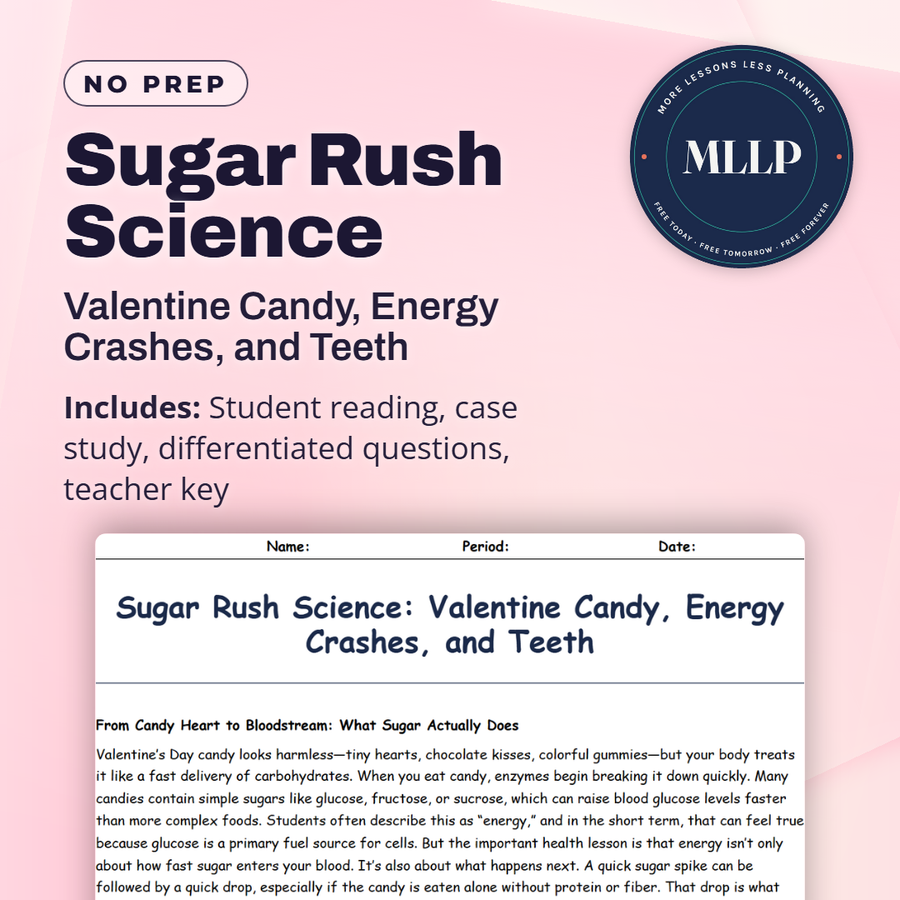
Sugar Rush Science: Valentine Candy, Energy Crashes, and Teeth
Quality reviewed September 2026
Facts verified September 9, 2026
- Subject
- Science
- Grades
- Grades 9-12
- Length
- 8-page student worksheet
- Time
- About one 50-minute class period
- Great for
- Sub plans and independent work
- Includes
- Reading passage, comprehension questions + full answer key
- Format
- Print-and-go PDF
What students do
- Trace blood glucose spikes and the crash that follows sugar on an empty stomach
- Explain how bacteria produce acid and how frequency affects cavity risk
- Compare treat patterns from the table to predict energy and tooth damage outcomes
- Design a realistic Valentine plan that maintains steadier energy and protects teeth
What it covers
- Blood glucose, insulin, and the energy cycle
- Demineralization and how acid threatens tooth enamel
- Smart timing and food pairing strategies
Start reading this worksheet
From Candy Heart to Bloodstream: What Sugar Actually Does
Valentine’s Day candy looks harmless—tiny hearts, chocolate kisses, colorful gummies—but your body treats it like a fast delivery of carbohydrates. When you eat candy, enzymes begin breaking it down quickly. Many candies contain simple sugars like glucose, fructose, or sucrose, which can raise blood glucose levels faster than more complex foods. Students often describe this as “energy,” and in the short term, that can feel true because glucose is a primary fuel source for cells. But the important health lesson is that energy isn’t only about how fast sugar enters your blood. It’s also about what happens next. A quick sugar spike can be followed by a quick drop, especially if the candy is eaten alone without protein or fiber. That drop is what students call a “crash”—tiredness, irritability, brain fog, or feeling hungry again soon after eating. Valentine’s Day makes this especially relevant because candy is often eaten in small bursts all day: a few pieces at breakfast, more at lunch, more after school. That grazing pattern can keep blood sugar bouncing up and down. Your body is constantly trying to stabilize the situation, which can leave you feeling weirdly tired even though you’ve eaten a lot of calories. This reading isn’t about banning treats. It’s about understanding the science so students can make better choices: when to eat sugar, how to pair it, and how to protect teeth while still enjoying the holiday.
Insulin, Glycogen, and the “Crash” After the High
When blood glucose rises, the body releases insulin, a hormone that helps move glucose from the bloodstream into cells. Insulin also supports storage of extra glucose as glycogen in the liver and muscles. This is a normal, healthy process. The goal is balance: enough glucose for energy, not so much that it stays high for too long. A “crash” can happen when a sugary snack raises glucose quickly, insulin responds strongly, and blood glucose falls again soon after. If you’ve ever felt sleepy after eating a lot of candy, you’ve felt that swing. Students sometimes blame sugar for “making you hyper,” but the more consistent pattern is: fast fuel → quick shift → later fatigue. Individual reactions vary, but the biology is the same: your body constantly works to keep blood glucose within a steady range. Food combinations matter. Candy eaten alone is mostly quick carbs. Candy eaten after a meal that includes protein, healthy fats, and fiber tends to create a slower rise and steadier energy. That’s why a Valentine chocolate after lunch usually hits differently than a handful of gummies on an empty stomach. This section also connects to sports and after-school activities. If students rely on candy as “fuel,” they may feel energized briefly and then drop off. Better fuel isn’t always “less food.” It’s smarter food timing and balance. You can enjoy Valentine treats more when your body isn’t stuck on an energy roller coaster.
Tooth Chemistry: How Candy Feeds Acid and Weakens Enamel
Valentine candy doesn’t just affect energy—it affects teeth. Your mouth contains bacteria that use sugar as fuel. When bacteria break down sugars, they produce acids. Those acids can lower pH in the mouth and start dissolving minerals in enamel, the hard outer layer of teeth. This process is called demineralization. Over time, repeated acid attacks can lead to cavities. Sticky candies are especially tricky because they cling to teeth and keep sugar available longer. That doesn’t mean chocolate is “healthy,” but it often clears faster than chewy candies that stick in grooves. Sour candies can also be rough on enamel because they combine sugar with acidity. If a student eats sour candy and then brushes immediately, that can actually be harmful because enamel can be temporarily softened after acid exposure. A smarter approach is to rinse with water and wait a bit before brushing. Frequency matters more than one big moment. A single candy binge can be bad, but constant small sugar hits throughout the day are often worse because the mouth stays acidic longer. That’s why sipping sugary drinks all afternoon can be tougher on teeth than drinking it once with a meal. Valentine’s Day is a perfect time to teach the idea of “damage windows.” After sugar, bacteria produce acid for a period of time. Drinking water, chewing sugar-free gum, or eating a balanced snack can help reduce lingering sugar and support saliva, which naturally protects teeth. The science message is simple: it’s not just the candy—it’s the pattern.
Like what you read? The full reading, the case study, and every question set are in the free download below, along with the answer key.
Why this matters
Ask any student what causes the Valentine candy crash and they will blame the sugar itself, not the insulin spike that follows and drags blood glucose back down fast afterward. Most have felt that slump and blamed the wrong part of the process for years.
Maya's all day grazing pattern in the case study looks like ordinary snacking until students map it against tooth enamel and blood sugar together, and more than a few recognize their own habits in hers. The detail that changes behavior fastest is timing: brushing right after sour candy can damage enamel that acid has already softened. Nobody here gets told to give up candy, only to plan around how their body processes it.
From one teacher to another
Valentine candy hits different when you know the science. Students are surprised to learn the crash isn't actually about sugar making you "hyper". It's about insulin doing its job, then blood glucose falling fast. The teeth part gets real when they realize brushing immediately after sour candy can actually damage enamel. By the case study, they see Maya's all-day grazing pattern in their own snacking habits. Best part: the worksheet doesn't ban treats, it just gives them a playbook for enjoying candy without feeling wrecked afterward.
What you get
Download
Where should I send the next one?
Everything here is free and it stays that way. Leave your email and I'll send you the new lessons as they go up. You can unsubscribe from any one of them.
Related resources
Animal Courtship Biology: Sexual Selection in the Wild
Famous Relationship Cases in Forensics: Evidence vs. Emotion in the Public Eye
Forensic Science and Domestic Violence
Forensic Science: Online Romance Scams
Government and Relationships: How Laws Have Shaped “Love” in U.S. History
Love Hormones: Oxytocin, Dopamine, and the Brain
Every lesson on this site is free to download and use. If one of them saved you a prep period, you can chip in a few bucks toward my three kids' daycare fund. That's genuinely where tips go.