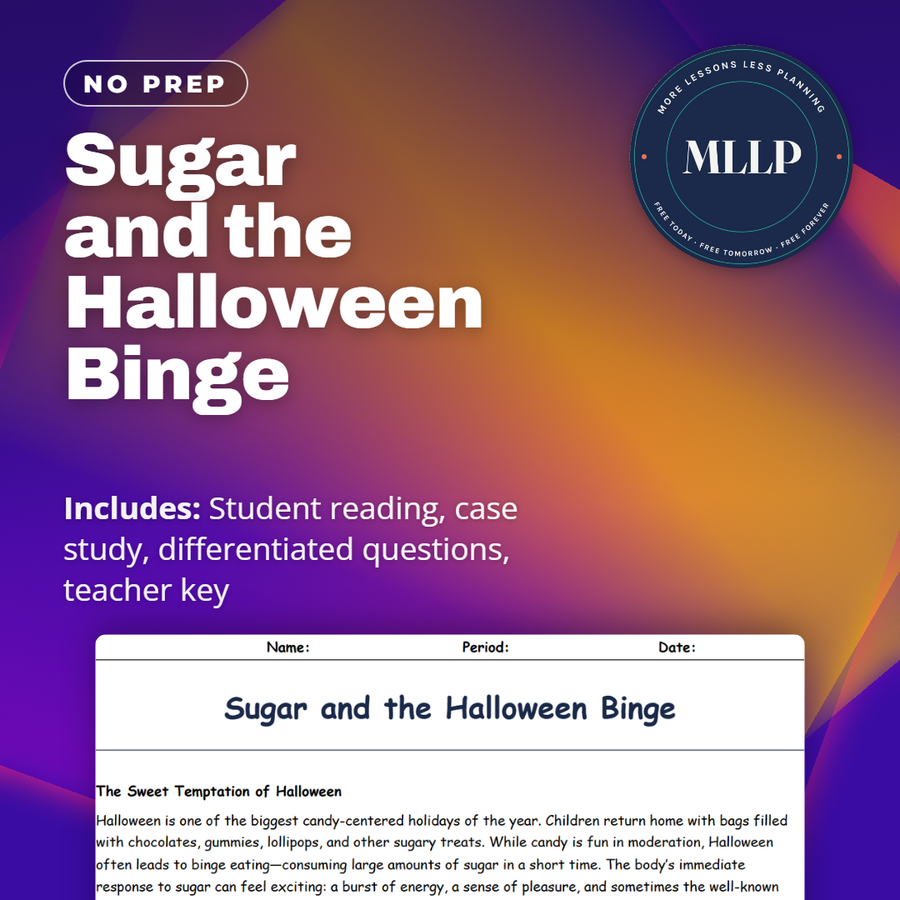
Sugar and the Halloween Binge
Quality reviewed September 2026
Facts verified September 9, 2026
- Subject
- Health & PE
- Grades
- Grades 9-12
- Length
- 6-page student worksheet
- Time
- About one 50-minute class period
- Great for
- Sub plans and independent work
- Includes
- Reading passage, comprehension questions + full answer key
- Format
- Print-and-go PDF
What students do
- Trace how sugar affects the body's energy levels and dopamine release
- Analyze the connection between insulin spikes and energy crashes
- Evaluate Jasmine's case study of candy overconsumption
- Explain long-term health risks of persistent sugar intake
What it covers
- Sugar metabolism and glucose spikes
- Brain chemistry and dopamine reward systems
- Tooth decay and obesity health risks
Start reading this worksheet
The Sweet Temptation of Halloween
Halloween is one of the biggest candy-centered holidays of the year. Children return home with bags filled with chocolates, gummies, lollipops, and other sugary treats. While candy is fun in moderation, Halloween often leads to binge eating—consuming large amounts of sugar in a short time. The body’s immediate response to sugar can feel exciting: a burst of energy, a sense of pleasure, and sometimes the well-known “sugar rush.” But behind that rush are important health consequences, especially for teens whose bodies are still developing. Sugar is a type of carbohydrate that quickly breaks down into glucose, providing the body with energy. However, when too much sugar enters the bloodstream at once, the body responds by releasing high levels of insulin. This hormone helps lower blood sugar, but it can also cause a sudden energy crash. This cycle of highs and lows is one reason many students feel tired or irritable after eating a lot of candy. Beyond short-term effects, regular overconsumption of sugar can lead to more serious health problems, such as tooth decay, obesity, and diabetes.
How Sugar Affects the Body
The teenage body is especially sensitive to large amounts of sugar. Excess sugar not only affects energy levels but also impacts the brain. When sugar is consumed, the brain releases dopamine, a chemical linked to pleasure and reward. This is the same chemical involved in other habits and addictions, which is why sugar can feel hard to resist. Companies take advantage of this by designing candies that are colorful, flavorful, and addictive. In the long run, consistently high sugar intake can overload the liver, which converts excess sugar into fat. This contributes to weight gain and increases the risk of chronic diseases. Halloween bingeing may feel harmless because it happens once a year, but it is also a reminder of how much sugar is hidden in everyday foods like sodas, cereals, and snacks. Understanding these health impacts helps students make informed decisions not only on Halloween but throughout the year.
Like what you read? The full reading, the case study, and every question set are in the free download below, along with the answer key.
Why this matters
Twenty pieces of candy in one night, five pounds collected at the door: that is the real scale behind a Halloween sugar binge, not a vague warning about moderation. What happens inside a student afterward follows a clear pattern: a dopamine surge that makes the next piece feel necessary, then an insulin crash, then cavities that show up within weeks rather than years.
Most students assume a sugar crash is just being tired, not a measurable swing in their own blood chemistry. Following Jasmine's night from reward chemical to insulin drop to dentist visit turns moderation from something adults say into something they can explain themselves.
From one teacher to another
I start with Jasmine, a sophomore who collected five pounds on Halloween and ate twenty pieces in one night. She crashed hard hours later, then kept snacking for a week and got two new cavities. This worksheet walks the science: dopamine makes sugar feel impossible to resist, insulin crashes make you exhausted, and tooth decay isn't coming next year. It's already here. By the end, students aren't being lectured about moderation; they're understanding their own biology.
What you get
Download
Where should I send the next one?
Everything here is free and it stays that way. Leave your email and I'll send you the new lessons as they go up. You can unsubscribe from any one of them.
Related resources
Every lesson on this site is free to download and use. If one of them saved you a prep period, you can chip in a few bucks toward my three kids' daycare fund. That's genuinely where tips go.