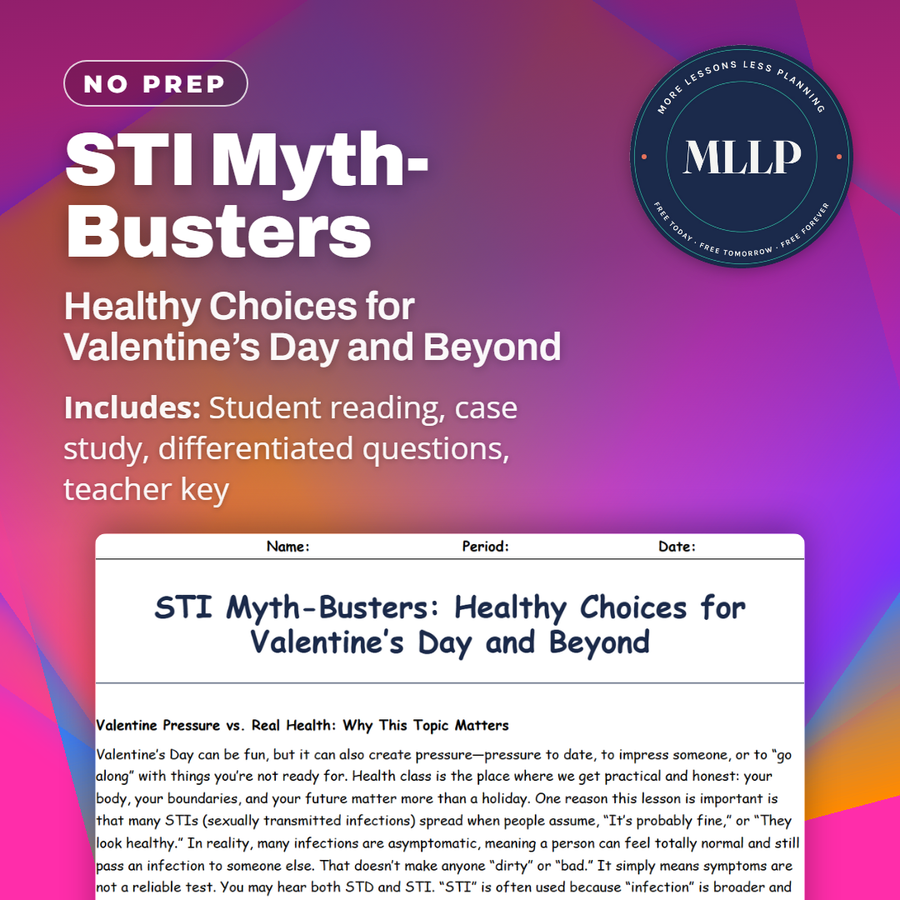
STI Myth-Busters: Healthy Choices for Valentine’s Day and Beyond
Quality reviewed September 2026
Facts verified September 9, 2026
- Subject
- Health & PE
- Grades
- Grades 9-12
- Length
- 8-page student worksheet
- Time
- About one 50-minute class period
- Great for
- Sub plans and independent work
- Includes
- Reading passage, comprehension questions + full answer key
- Format
- Print-and-go PDF
What students do
- Debunk common STI myths using facts about transmission and symptoms
- Design a layered prevention approach combining barriers, testing, and communication
- Analyze pressure language versus respectful health conversations
- Explain why asymptomatic infections matter and require different safety strategies
What it covers
- STI transmission and asymptomatic spread
- Prevention layering: barriers, vaccination, and testing
- Consent, communication, and reducing stigma
Start reading this worksheet
Valentine Pressure vs. Real Health: Why This Topic Matters
Valentine’s Day can be fun, but it can also create pressure: pressure to date, to impress someone, or to “go along” with things you’re not ready for. Health class is the place where we get practical and honest: your body, your boundaries, and your future matter more than a holiday. One reason this lesson is important is that many STIs (sexually transmitted infections) spread when people assume, “It’s probably fine,” or “They look healthy.” In reality, many infections are asymptomatic, meaning a person can feel totally normal and still pass an infection to someone else. That doesn’t make anyone “dirty” or “bad.” It simply means symptoms are not a reliable test. You may hear both STD and STI. “STI” is often used because “infection” is broader and reminds us that not every infection causes immediate “disease” symptoms. Either way, the health message is the same: prevention, testing, and respectful communication protect people. Another key point is that STIs are not just a “romantic relationship” issue. They’re a public health issue, which means reducing stigma helps everyone. When people feel ashamed, they avoid testing and honest conversations. That is exactly what allows infections to spread quietly. This reading focuses on what students can actually control: understanding transmission, using protection consistently, getting accurate information, and practicing consent and communication. The goal is not fear. The goal is knowledge and choices that keep people safe.
How STIs Spread: Transmission Basics Without the Rumors
STIs spread through sexual contact (including vaginal, oral, or anal sex), and some can spread through skin-to-skin contact in the genital area. That’s why prevention is more than “don’t share drinks” or “don’t sit on toilet seats.” Those are common myths. Most STIs require direct contact with bodily fluids or skin contact in specific areas. Understanding transmission helps you focus on actions that matter. Protection methods work best when students understand what they do and what they can’t do. Barrier methods (like condoms and dental dams) can significantly reduce risk by blocking fluids and lowering direct contact. However, they don’t eliminate risk completely, especially for infections that spread through skin-to-skin contact in areas not covered by a barrier. That’s why prevention is layered: safer choices, consistent protection, and honest conversations all matter. Testing is another layer. Because many STIs are asymptomatic, the only way to know your status is testing. People sometimes avoid testing because they assume only “risky” people need it. That’s not how infections work. Infection risk depends on behaviors and exposure, not personality. If someone is sexually active, testing is a responsible health routine (like dental checkups), not a moral judgment. Finally, remember that consent is part of prevention. Consent means you get to choose what you’re comfortable with, and you get to ask questions. “Have you been tested?” and “What protection are we using?” are health questions, not insults. The healthier the relationship, the easier these conversations become.
Protection and Prevention: The Layered Safety Approach
Students sometimes want a single perfect rule, but real health is about stacking protections. First is decision-making: delaying sexual activity, choosing lower-risk behaviors, and avoiding situations where judgment is impaired (like pressure, substances, or fear of losing someone). Second is consistent protection: barriers used correctly every time. “Most of the time” isn’t a strong plan because infections don’t wait for convenient timing. Third is vaccination. Vaccines can prevent certain infections before exposure. The best-known examples are vaccines that protect against HPV (human papillomavirus) and hepatitis B. Vaccines are a prevention tool that doesn’t depend on someone remembering something in the moment. Students don’t need to memorize a medical schedule to understand the concept: prevention can happen before risk exists. Fourth is routine testing and honesty. In healthy relationships, partners can talk about testing history, protection preferences, and boundaries. This is where stigma becomes the enemy. Shame makes people hide information; honesty protects people. A respectful conversation might sound like: “I care about both of us, so I want to be safe. What protection are you comfortable with? When was your last test?” Valentine’s Day is a good time to practice one life skill: separating affection from pressure. Someone who respects you will respect your boundaries, your pace, and your health decisions. That is a major green flag.
Like what you read? The full reading, the case study, and every question set are in the free download below, along with the answer key.
Why this matters
Shame is what actually keeps STI prevention from working, not a lack of information. Around Valentine's Day especially, the pressure to skip an awkward conversation peaks right when that conversation matters most.
Asking "what protection are we using" can feel like accusing a partner of something. I watch the case study's two characters handle that question with no panic and no pressure, and it reframes the question as basic self care instead. By the end, understanding that many infections carry no symptoms at all is what finally convinces students that testing and honest conversation matter more than guessing from appearance.
From one teacher to another
Stigma kills prevention. That's the lesson students need to hear, especially around Valentine's Day when pressure peaks. This worksheet tackles myths head-on: you can't tell by appearance, shame makes people hide information, and respectful conversations actually happen in healthy relationships. The case study shows two people handling this right, no panic, no pressure, just clarity. Students leave understanding that prevention is about control, not fear, and that asking "What protection are we using?" is basic self-care, not an insult.
What you get
Download
Where should I send the next one?
Everything here is free and it stays that way. Leave your email and I'll send you the new lessons as they go up. You can unsubscribe from any one of them.
Related resources

Animal Courtship Biology: Sexual Selection in the Wild
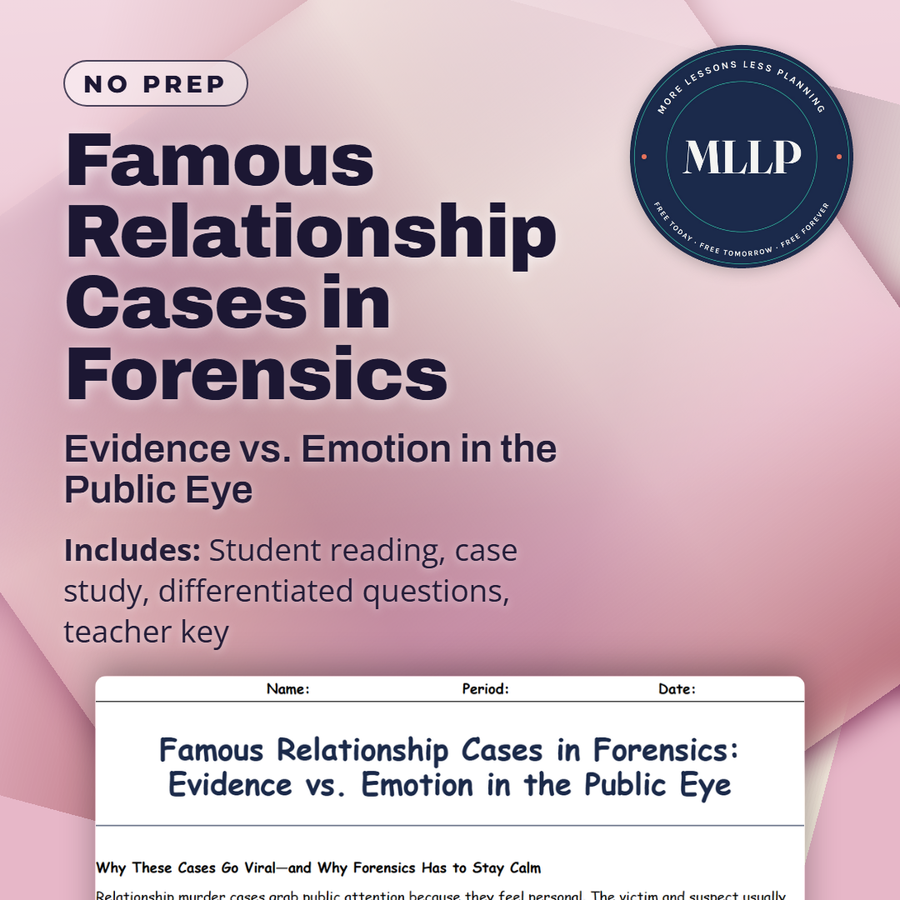
Famous Relationship Cases in Forensics: Evidence vs. Emotion in the Public Eye
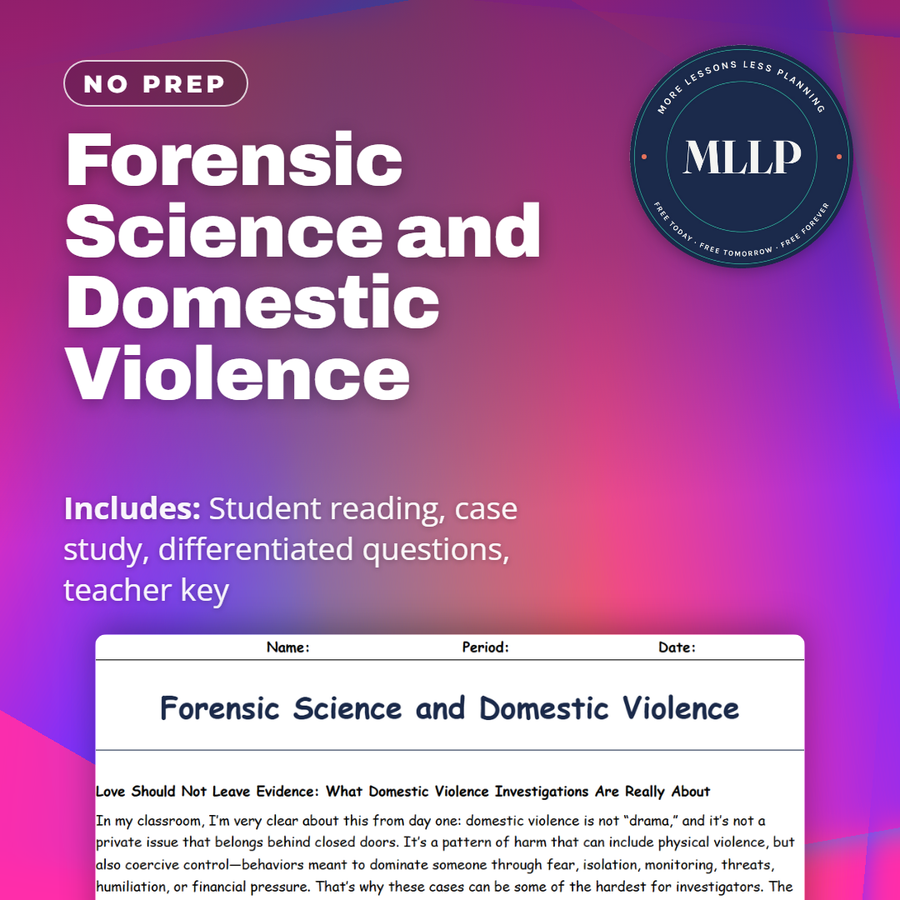
Forensic Science and Domestic Violence
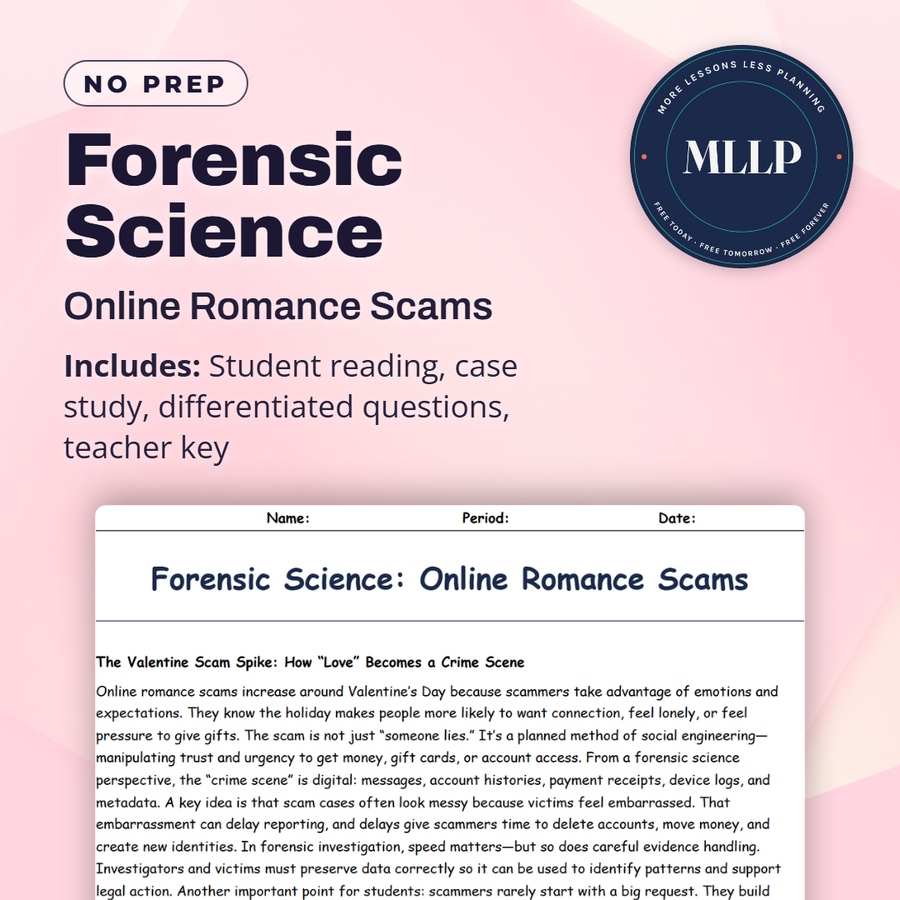
Forensic Science: Online Romance Scams
Government and Relationships: How Laws Have Shaped “Love” in U.S. History
Love Hormones: Oxytocin, Dopamine, and the Brain
Every lesson on this site is free to download and use. If one of them saved you a prep period, you can chip in a few bucks toward my three kids' daycare fund. That's genuinely where tips go.