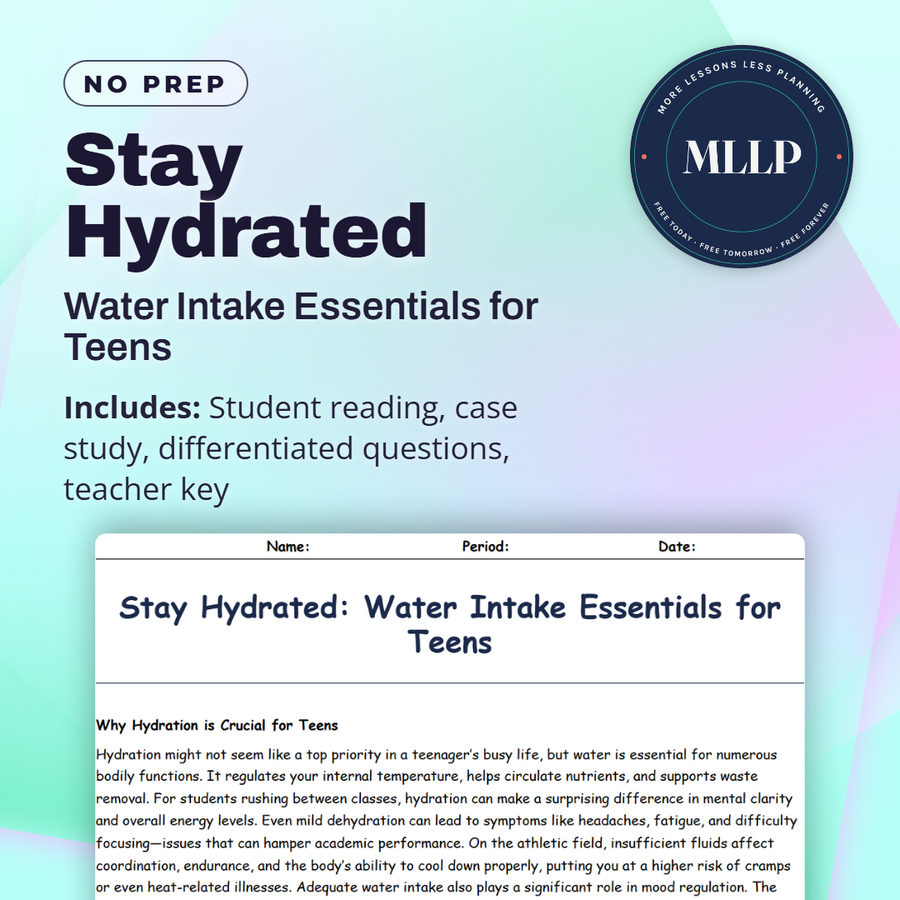
Stay Hydrated: Water Intake Essentials for Teens
Quality reviewed September 2026
Facts verified September 21, 2026
- Subject
- Career & Life Skills
- Grades
- Grades 9-12
- Length
- 7-page student worksheet
- Time
- About one 50-minute class period
- Great for
- Sub plans and independent work
- Includes
- Reading passage, comprehension questions + full answer key
- Format
- Print-and-go PDF
What students do
- Match terms like dehydration, reusable bottle, and sports drink to their definitions
- Fill in blanks about low-sugar sports drinks, water, and dry mouth as an early warning sign
- Answer multiple-choice questions on hydration versus sugary drinks and coconut water
- Write short answers on why cooler weather can mask thirst and how to make water taste better
What it covers
- Why hydration affects focus, mood, and athletic performance, plus how much water teens actually need
- The difference between plain water, sports drinks, and sugary or caffeinated beverages
- A case study following Eli, a soccer player whose cramps and fainting traced back to chronic dehydration
Start reading this worksheet
Why Hydration is Crucial for Teens
Hydration might not seem like a top priority in a teenager’s busy life, but water is essential for numerous bodily functions. It regulates your internal temperature, helps circulate nutrients, and supports waste removal. For students rushing between classes, hydration can make a surprising difference in mental clarity and overall energy levels. Even mild dehydration can lead to symptoms like headaches, fatigue, and difficulty focusing. These issues can hamper academic performance. On the athletic field, insufficient fluids affect coordination, endurance, and the body’s ability to cool down properly, putting you at a higher risk of cramps or even heat-related illnesses. Adequate water intake also plays a significant role in mood regulation. The brain is highly sensitive to fluid imbalances, which can contribute to irritability, stress, or anxiety if you’re not drinking enough. Beyond that, staying hydrated supports healthy skin, aids in digestion, and ensures that joints remain lubricated. While it’s possible to get some fluids from foods (like soups or juicy fruits), most teens still need several cups of water daily, especially if they’re physically active or live in hot environments. Plain water is often your best bet, as it hydrates without adding calories, sugar, or artificial ingredients.
Recommended Intake and Dehydration Signs
While the exact amount of water needed can vary, a common guideline for teens is about 8–10 cups a day. Those who engage in intense physical activities or live in warmer climates might need even more. A practical approach is to sip water consistently throughout the day rather than gulping down large amounts once you already feel thirsty, because thirst can lag behind actual fluid needs. Carrying a reusable water bottle can serve as a visual reminder to stay on top of your intake. Dehydration can sneak up on you. Early indicators include a dry or sticky mouth, dark-colored urine, dizziness, and lack of energy. More severe dehydration can cause rapid heartbeat, extreme fatigue, and confusion, which can escalate into serious medical emergencies if ignored. Athletes, in particular, should pay attention to changes in sweat rate or muscle cramps as signs that their fluid reserves might be running low. If you notice any of these symptoms, take steps to hydrate immediately, ideally with water or an electrolyte solution if you’ve been sweating a great deal.
Water vs. Sugary or Caffeinated Beverages
Sodas, sweet teas, and energy drinks might quench thirst in the short term, but they come loaded with sugar and sometimes excessive caffeine. These drinks can cause quick spikes in blood sugar followed by crashes, which disrupt concentration and mood. Energy drinks, with their high caffeine content, may also interfere with sleep patterns, a concern for teens who already struggle to get enough rest. Moreover, sugary drinks contribute empty calories that can lead to weight gain if consumed regularly. In contrast, plain water is calorie-free and helps your body function at its best. If you find water too bland, infuse it with citrus slices, cucumber, or berries for a refreshing twist. Low-sugar sports drinks can be helpful for athletes engaged in prolonged, vigorous exercise, but are generally unnecessary for everyday hydration. Coconut water is another alternative that provides electrolytes without the added sugars found in many commercial sports drinks. Making water your go-to beverage is a small but impactful step toward better health.
Like what you read? The full reading, the case study, and every question set are in the free download below, along with the answer key.
Why this matters
Energy drinks are marketed directly at teenagers, and most of my students drink one without ever connecting it to how tired or foggy they feel by fourth period. This reading gives them the missing piece: caffeine and sugar crashes mimic dehydration symptoms, and swapping one canned drink for water is a change they can test on themselves within a single school day. It is a rare health topic where a teenager can run the experiment and feel the result immediately, not next year, not after graduation, but by lunch.
From one teacher to another
This is the reading I reach for before a unit on athletic performance, because most of my students think dehydration only happens on the hottest days of August. The passages walk through what water actually does in the body, how little it takes to throw off focus and mood, and why thirst is a late signal rather than an early one. Eli's case study makes the stakes concrete: a soccer player fainting at practice because fruit punch and energy drinks had replaced water in his routine. Students leave with a specific number to aim for, eight to ten cups, instead of a vague idea that hydration matters.
What you get
Download
Where should I send the next one?
Everything here is free and it stays that way. Leave your email and I'll send you the new lessons as they go up. You can unsubscribe from any one of them.
Related resources
Body Image & Eating Disorders: A Student Wellness Guide
Exercise Safety & Guidelines: Teen Fitness Essentials
Healthy Sleep & Recovery: Boosting Teen Wellness
Macronutrients: Proteins, Carbs, and Fats for Teens
Master MyPlate: Dietary Guidelines for Teens
Nutrition’s Impact: Health Effects for High Schoolers
Every lesson on this site is free to download and use. If one of them saved you a prep period, you can chip in a few bucks toward my three kids' daycare fund. That's genuinely where tips go.