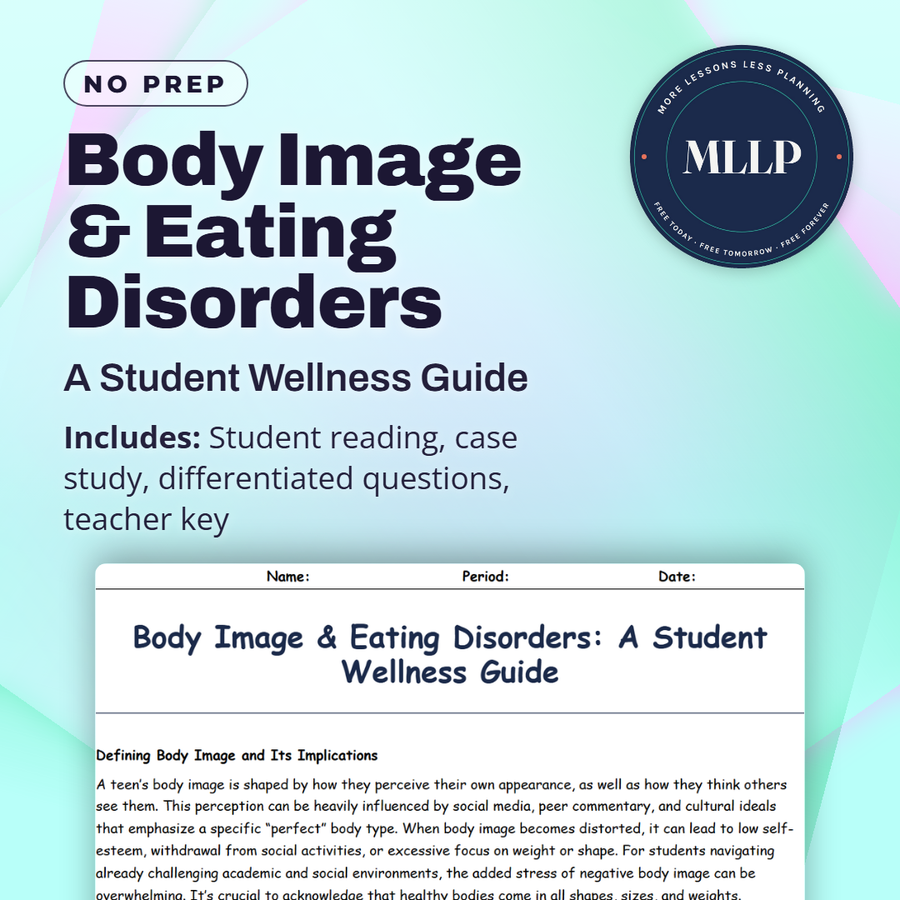
Body Image & Eating Disorders: A Student Wellness Guide
Quality reviewed September 2026
Facts verified September 21, 2026
- Subject
- Career & Life Skills
- Grades
- Grades 9-12
- Length
- 8-page student worksheet
- Time
- About one 50-minute class period
- Great for
- Sub plans and independent work
- Includes
- Reading passage, comprehension questions + full answer key
- Format
- Print-and-go PDF
What students do
- Match terms like anorexia nervosa, bulimia nervosa, and cognitive-behavioral therapy to their definitions.
- Answer multiple-choice questions on what anorexia nervosa actually involves and how media shapes body image.
- Fill in the blank naming negative body image, bulimia nervosa, and cognitive-behavioral therapy in key sentences.
- Answer short-answer questions on why early intervention matters and how friends can support recovery.
What it covers
- How body image forms and how it differs from having a healthy body, plus the physical and psychological risks of anorexia, bulimia, and binge eating disorder.
- How filtered images and offhand comments about weight can distort self-perception, and how body-positive spaces can push back against that.
- A case study about a student who begins skipping meals to match fitness influencers online and faints after a workout.
Start reading this worksheet
Defining Body Image and Its Implications
A teen’s body image is shaped by how they perceive their own appearance, as well as how they think others see them. This perception can be heavily influenced by social media, peer commentary, and cultural ideals that emphasize a specific “perfect” body type. When body image becomes distorted, it can lead to low self-esteem, withdrawal from social activities, or excessive focus on weight or shape. For students navigating already challenging academic and social environments, the added stress of negative body image can be overwhelming. It’s crucial to acknowledge that healthy bodies come in all shapes, sizes, and weights. Genetics, lifestyle, and personal preferences all play roles in determining an individual’s unique body composition. When the focus shifts to what the body can do rather than merely how it looks, teens may find greater acceptance of themselves. Engaging in physical activities for enjoyment or striving for personal fitness goals can build positive self-image. On the other hand, constantly comparing oneself to edited photos on social media often results in dissatisfaction, fueling a cycle of unhealthy behaviors like restrictive eating or overexercising.
Common Eating Disorders and Warning Signs
Anorexia nervosa, bulimia nervosa, and binge eating disorder are three prominent eating disorders that can significantly impact a teen’s health. Anorexia typically involves severe calorie restriction due to intense fear of weight gain. Bulimia is characterized by cycles of binging on large amounts of food, followed by behaviors to prevent weight gain, such as self-induced vomiting. Binge eating disorder entails recurrent overeating episodes without purging. Each carries both physical risks (ranging from malnutrition to electrolyte imbalances) and psychological challenges like anxiety, shame, or depression. Warning signs can vary. A person might start skipping meals, becoming extremely fixated on calorie counts, or making negative remarks about their body shape. They could also engage in secretive behavior around food or display drastic weight fluctuations. Emotional changes, such as increased irritability or extreme mood swings, often accompany these patterns. Early intervention improves the likelihood of successful treatment, so recognizing these signs in oneself or a friend is vital.
Media and Peer Influence on Self-Perception
The media and peer environments can either promote body positivity or exacerbate body dissatisfaction. Teens scrolling through social platforms can easily encounter images that have been filtered or photoshopped. These unrealistic standards suggest everyone else is “perfect,” intensifying insecurities. Peer pressure adds another layer: casual jokes about weight or offhand remarks comparing bodies in the locker room can erode self-esteem, especially in vulnerable individuals. However, the rise of body-positive movements offers an alternative. Accounts celebrating diverse body types and holistic health can serve as uplifting platforms. Surrounding yourself with friends and online communities that embrace uniqueness helps foster a healthier outlook. If faced with negative or toxic influences, limiting exposure, such as unfollowing certain accounts or addressing insensitive comments, can make a real difference. Ultimately, cultivating self-compassion and recognizing that everyone’s body journey is different go a long way toward establishing a positive self-perception.
Like what you read? The full reading, the case study, and every question set are in the free download below, along with the answer key.
Why this matters
The body image pressure in this reading isn't the same one earlier generations dealt with from magazine covers. It's an algorithm that keeps serving the same extreme fitness content back to a student the moment they linger on it, the exact trap Marisol falls into before she faints. Naming anorexia, bulimia, and binge eating disorder by their actual symptoms, instead of leaving students with a vague sense that dieting can go too far, gives them language to flag a friend's behavior or their own before it reaches Marisol's point. Unfollowing a few accounts is a small, doable first step, and the reading makes clear it's one worth taking seriously.
From one teacher to another
I assign this reading alongside our nutrition unit because body image and disordered eating rarely come up in a way that names the actual conditions instead of just warning students to eat healthy. The passages define anorexia, bulimia, and binge eating disorder specifically enough that students can recognize warning signs in themselves or a friend rather than relying on vague ideas about willpower. Marisol's case study, a student who faints after months of restrictive eating and overexercising, keeps the reading grounded in a real consequence.
What you get
Download
Where should I send the next one?
Everything here is free and it stays that way. Leave your email and I'll send you the new lessons as they go up. You can unsubscribe from any one of them.
Related resources
Exercise Safety & Guidelines: Teen Fitness Essentials
Healthy Sleep & Recovery: Boosting Teen Wellness
Macronutrients: Proteins, Carbs, and Fats for Teens
Master MyPlate: Dietary Guidelines for Teens
Nutrition’s Impact: Health Effects for High Schoolers
Physical Activity Perks: Why Movement Matters for Teens
Every lesson on this site is free to download and use. If one of them saved you a prep period, you can chip in a few bucks toward my three kids' daycare fund. That's genuinely where tips go.