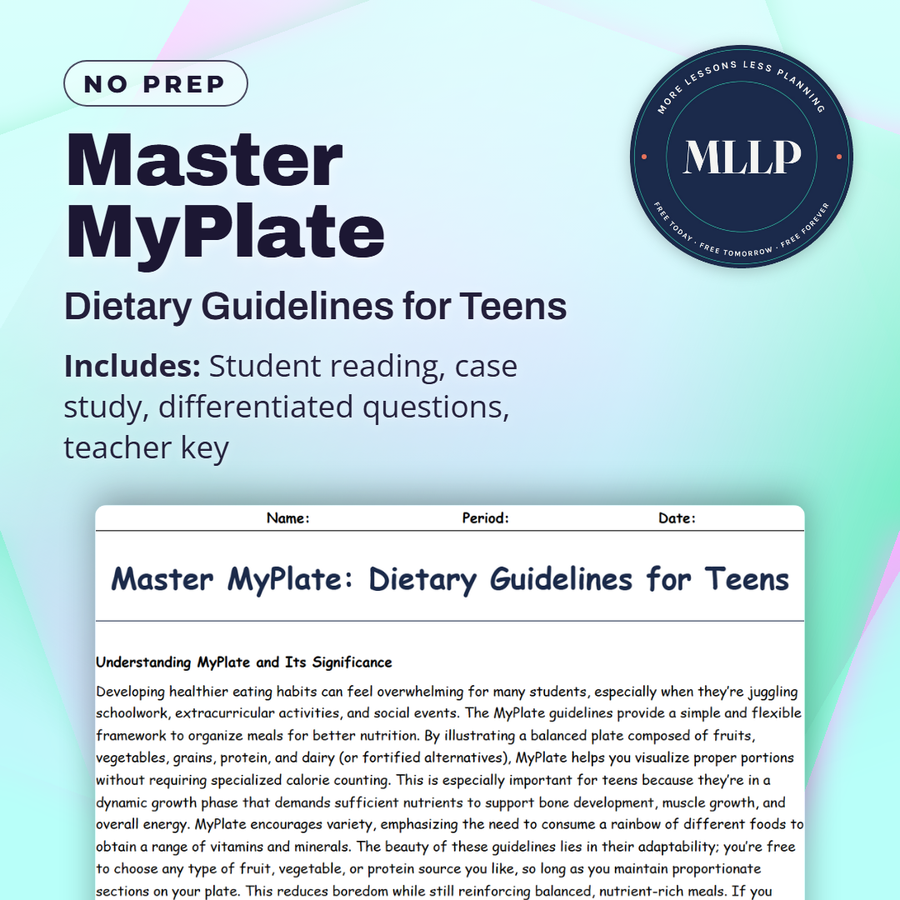
Master MyPlate: Dietary Guidelines for Teens
Quality reviewed September 2026
Facts verified September 21, 2026
- Subject
- Career & Life Skills
- Grades
- Grades 9-12
- Length
- 8-page student worksheet
- Time
- About one 50-minute class period
- Great for
- Sub plans and independent work
- Includes
- Reading passage, comprehension questions + full answer key
- Format
- Print-and-go PDF
What students do
- Connect five MyPlate terms, like Half the Plate, Variety, and Lean Protein, to their definitions
- Use context clues to complete three blanks naming MyPlate, fruits and vegetables, and dairy
- Choose the correct answer on three multiple-choice questions about what belongs on each section of the plate
- Answer short-response questions on handling favorite foods and finding dairy alternatives under MyPlate
What it covers
- How the MyPlate framework divides a plate into fruits and vegetables, grains, protein, and dairy without requiring calorie counting
- What each food group actually contributes, from whole grains for steady energy to calcium and vitamin D for bone growth
- Kayden's shift from bagels and instant noodles to MyPlate-shaped meals, and the energy change he noticed by last period
Start reading this worksheet
Understanding MyPlate and Its Significance
Developing healthier eating habits can feel overwhelming for many students, especially when they’re juggling schoolwork, extracurricular activities, and social events. The MyPlate guidelines provide a simple and flexible framework to organize meals for better nutrition. By illustrating a balanced plate composed of fruits, vegetables, grains, protein, and dairy (or fortified alternatives), MyPlate helps you visualize proper portions without requiring specialized calorie counting. This is especially important for teens because they’re in a dynamic growth phase that demands sufficient nutrients to support bone development, muscle growth, and overall energy. MyPlate encourages variety, emphasizing the need to consume a rainbow of different foods to obtain a range of vitamins and minerals. The beauty of these guidelines lies in their adaptability; you’re free to choose any type of fruit, vegetable, or protein source you like, so long as you maintain proportionate sections on your plate. This reduces boredom while still reinforcing balanced, nutrient-rich meals. If you decide to have pasta for dinner, you might pick whole-grain pasta, a lean protein such as chicken, and fill half your plate with colorful vegetables. A serving of low-fat dairy or a dairy substitute can then round out the meal. When repeated consistently, these choices form the basis for lifelong healthy eating. Teens often struggle with portion distortion—an oversized bowl of cereal in the morning or multiple servings of fries at lunch can seem normal when you’re used to large portion sizes. MyPlate helps combat these tendencies by visually reminding you how a balanced meal might look. That doesn’t mean you must be perfect every time. Even if you attend a weekend party and indulge in pizza, you can return to MyPlate principles the next day. Over time, small adjustments like swapping fruit juice for whole fruit, adding an extra serving of veggies at dinner, or choosing whole-grain bread instead of white bread build into a pattern of improved eating. Taking this approach makes healthy decisions feel sustainable rather than restrictive, a key factor in ensuring teenagers don’t drift into unhealthy extremes.
Applying Food Group Proportions for Adolescents
Each food group within MyPlate serves specific functions, and understanding these can help you make wiser meal choices. Fruits and vegetables should occupy half your plate. This focus on produce is not just a nutritional buzzword; these foods deliver vital fiber, antioxidants, and phytonutrients that keep bodily systems functioning smoothly. They also provide natural hydration and can aid in preventing common issues like constipation. Fruits, in particular, supply natural sugars that can give you a steady energy boost, whereas vegetables usually have lower sugar content but are loaded with essential minerals and vitamins such as potassium and vitamin K. Whole grains form another critical piece of the puzzle. Replacing refined grains like white rice and white bread with brown rice, oatmeal, quinoa, and whole-wheat options helps maintain stable blood sugar and supports longer-lasting energy—ideal for students who need to concentrate in class and still have enough stamina for after-school activities. Protein, on the other hand, powers muscle repair and immune function. Lean sources such as chicken, turkey, beans, tofu, and low-fat dairy give your body the amino acids it needs without going overboard on saturated fats. Speaking of dairy, teens often need calcium and vitamin D to promote bone strength and prevent issues later in life. If dairy bothers you or you’re vegan, look for plant-based milks fortified with calcium and vitamin D. Consistency in portion sizes really does matter. Even a healthy food can be detrimental if consumed in huge excess. MyPlate’s visual cues allow you to estimate how much of each group belongs on your plate so you’re not unintentionally overloading on one category and missing out on others. Since adolescent bodies are growing quickly, you’ll want to ensure the nutrients you get are high-quality rather than empty calories. Eating a large plate of French fries might be tempting, but it doesn’t supply the variety of vitamins, minerals, and antioxidants that half a plate of vegetables could provide. This approach to food encourages a wider perspective: see meals as a way to nourish, rather than just fill up.
Like what you read? The full reading, the case study, and every question set are in the free download below, along with the answer key.
Why this matters
MyPlate works for students regardless of what they're actually eating, since the framework asks about proportion rather than banning specific foods or cuisines, which matters for a class where lunch might be tacos one day and stir-fry the next. It also travels outside the classroom immediately: a student can look at a cafeteria tray or a plate at home tonight and apply the same half-produce, quarter-grain, quarter-protein split without needing a nutrition app or a parent's grocery budget to change. A portable, low-cost tool like that sticks with students longer than a list of foods to avoid ever would.
From one teacher to another
I hand this one out right after students admit they have no idea what a balanced meal looks like beyond avoiding fast food. The three passages walk through the MyPlate framework section by section: why half the plate should be produce, what whole grains add that white bread doesn't, and how dairy or its alternatives support bone growth during a growth spurt. MyPlate skips calorie counting entirely, which makes it an easier framework for students who find tracking overwhelming. Kayden's case study closes the reading, tracing how swapping bagels and instant noodles for a MyPlate-shaped dinner changed his afternoon energy within weeks.
What you get
Download
Where should I send the next one?
Everything here is free and it stays that way. Leave your email and I'll send you the new lessons as they go up. You can unsubscribe from any one of them.
Related resources
Body Image & Eating Disorders: A Student Wellness Guide
Exercise Safety & Guidelines: Teen Fitness Essentials
Healthy Sleep & Recovery: Boosting Teen Wellness
Macronutrients: Proteins, Carbs, and Fats for Teens
Nutrition’s Impact: Health Effects for High Schoolers
Physical Activity Perks: Why Movement Matters for Teens
Every lesson on this site is free to download and use. If one of them saved you a prep period, you can chip in a few bucks toward my three kids' daycare fund. That's genuinely where tips go.