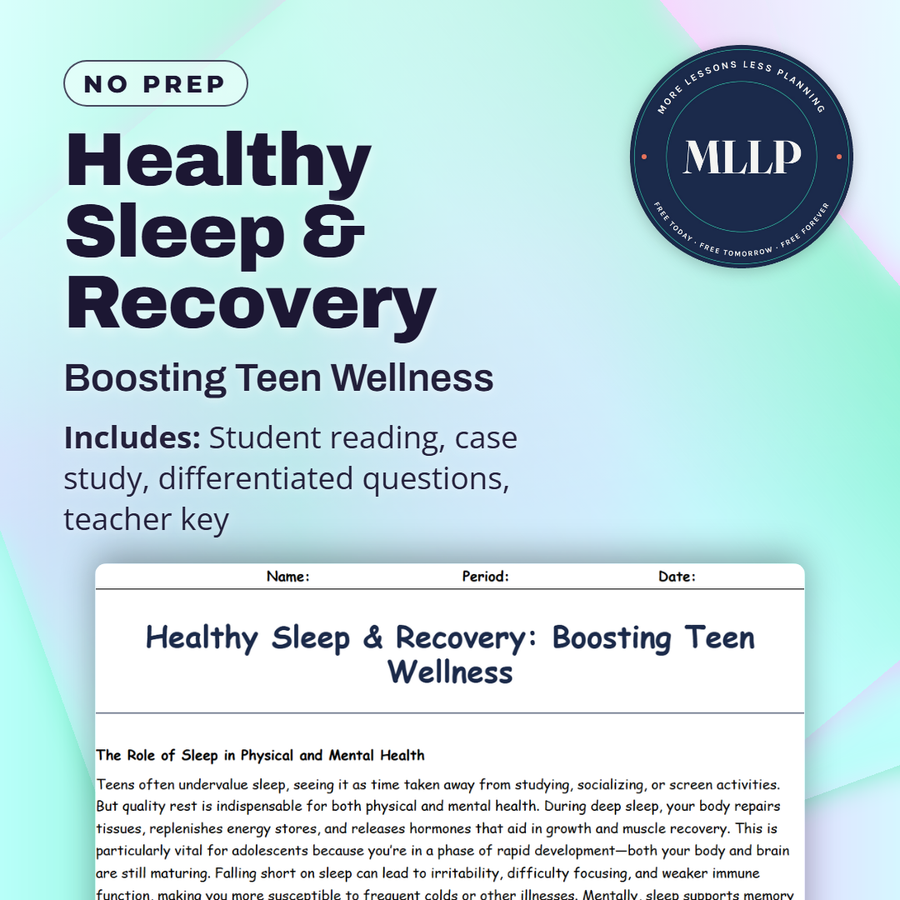
Healthy Sleep & Recovery: Boosting Teen Wellness
Quality reviewed September 2026
Facts verified September 21, 2026
- Subject
- Career & Life Skills
- Grades
- Grades 9-12
- Length
- 6-page student worksheet
- Time
- About one 50-minute class period
- Great for
- Sub plans and independent work
- Includes
- Reading passage, comprehension questions + full answer key
- Format
- Print-and-go PDF
What students do
- Match five sleep-science terms, including melatonin, sleep debt, and screen time, to their definitions
- Fill in three blanks naming sleep debt, screen time, and melatonin using context clues from the passages
- Answer three multiple-choice questions on why teens need 8 to 10 hours of sleep and what protects it
- Write short answers on why late-night cramming backfires and how sleep affects social life and athletic recovery
What it covers
- Why teen bodies and brains need more sleep than adults do, and what happens during those hours of rest
- The habits that build real sleep hygiene, consistent bedtimes, limited screens, and a wind-down routine
- How a junior traded late-night cramming and soda for a strict 11 p.m. bedtime, and what changed within two weeks
Start reading this worksheet
The Role of Sleep in Physical and Mental Health
Teens often undervalue sleep, seeing it as time taken away from studying, socializing, or screen activities. But quality rest is indispensable for both physical and mental health. During deep sleep, your body repairs tissues, replenishes energy stores, and releases hormones that aid in growth and muscle recovery. This is particularly vital for adolescents because you’re in a phase of rapid development—both your body and brain are still maturing. Falling short on sleep can lead to irritability, difficulty focusing, and weaker immune function, making you more susceptible to frequent colds or other illnesses. Mentally, sleep supports memory consolidation. Throughout the day, you learn new concepts and have various experiences. When you rest, your brain organizes and stores these inputs, which can improve recall for exams or skill-based activities. Chronic sleep deprivation, on the other hand, impairs decision-making and creativity. You might find yourself zoning out in class or struggling to concentrate on tasks that used to be routine. If you’re pushing bedtime later and later to finish homework, you might ultimately damage your productivity the following day. Achieving a consistent 8–10 hours of rest can drastically improve both mood stability and cognitive performance.
Establishing a Healthy Sleep Routine
Building sleep hygiene involves cultivating habits that promote better rest. First, aim for consistency: try to go to bed and wake up around the same time daily, even on weekends. This regularity synchronizes your internal clock. Next, consider your bedtime environment. A cool, dark, and quiet room often encourages deeper sleep. If noise is an issue, earplugs or a white noise machine can help. Limiting screen time before bed is also key—the blue light emitted by phones, tablets, and laptops can delay melatonin release, the hormone that signals your body it’s time to sleep. Avoiding heavy meals, caffeine, or intense exercise in the late evening can further enhance sleep quality. You might find it helpful to engage in a relaxing pre-sleep routine, such as reading a book, stretching lightly, or practicing mindfulness. The goal is to wind down, signaling to your body and mind that it’s time to rest. If racing thoughts keep you awake, jot them in a journal or create a to-do list for the following day so you’re not lying in bed overthinking. With these practices in place, you’ll likely drift off more easily and wake feeling genuinely refreshed.
Like what you read? The full reading, the case study, and every question set are in the free download below, along with the answer key.
Why this matters
Sleep is the health topic where students already suspect the answer but ignore it anyway, since staying up late feels like it's buying them more time instead of costing them focus the next day. The reading's honest tradeoff, more study hours versus less retention, mirrors decisions teens make every week around exams, practices, and phones at midnight. Framing sleep as a biological requirement instead of a willpower issue changes how the conversation goes, since it stops sounding like a lecture and starts sounding like biology they can't argue with.
From one teacher to another
Most of my students treat sleep as the first thing to sacrifice when the week gets busy, so this reading starts by explaining what their bodies are actually doing during those hours. Melanie's case study makes the tradeoff concrete: a junior who gave up late-night soda and cramming for a strict 11 p.m. bedtime, and saw her focus improve within two weeks. The three passages lay out the biology of rest, the habits that protect it, and the specific 8 to 10 hour range teens need that adults don't. It gives students a concrete before-and-after instead of a lecture about sleep hygiene.
What you get
Download
Where should I send the next one?
Everything here is free and it stays that way. Leave your email and I'll send you the new lessons as they go up. You can unsubscribe from any one of them.
Related resources
Body Image & Eating Disorders: A Student Wellness Guide
Exercise Safety & Guidelines: Teen Fitness Essentials
Macronutrients: Proteins, Carbs, and Fats for Teens
Master MyPlate: Dietary Guidelines for Teens

Nutrition’s Impact: Health Effects for High Schoolers
Physical Activity Perks: Why Movement Matters for Teens
Every lesson on this site is free to download and use. If one of them saved you a prep period, you can chip in a few bucks toward my three kids' daycare fund. That's genuinely where tips go.