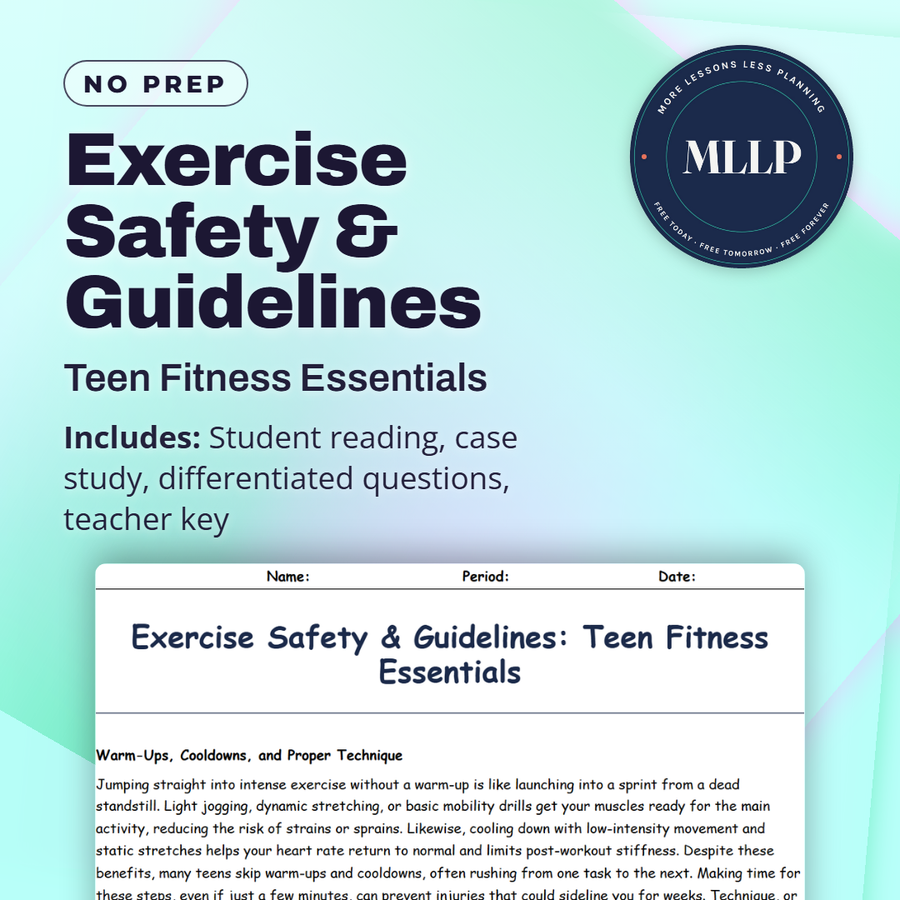
Exercise Safety & Guidelines: Teen Fitness Essentials
Quality reviewed September 2026
Facts verified September 21, 2026
- Subject
- Career & Life Skills
- Grades
- Grades 9-12
- Length
- 7-page student worksheet
- Time
- About one 50-minute class period
- Great for
- Sub plans and independent work
- Includes
- Reading passage, comprehension questions + full answer key
- Format
- Print-and-go PDF
What students do
- Match terms like stress fracture, cross-training, and overtraining to their definitions.
- Answer multiple-choice questions on what overtraining looks like and why warming up before exercise matters.
- Fill in the blank naming form, rest, and injuries in key sentences about safe training.
- Answer short-answer questions on why teens underestimate rest days and how cross-training helps.
What it covers
- Why warm-ups, cooldowns, and proper form matter, and how to balance workout frequency, intensity, and variety.
- How skipping rest leads to overtraining and injury, plus how to spot early warning signs like persistent soreness.
- A case study about a freshman track athlete who trains through shin pain until it becomes a stress fracture.
Start reading this worksheet
Warm-Ups, Cooldowns, and Proper Technique
Jumping straight into intense exercise without a warm-up is like launching into a sprint from a dead standstill. Light jogging, dynamic stretching, or basic mobility drills get your muscles ready for the main activity, reducing the risk of strains or sprains. Likewise, cooling down with low-intensity movement and static stretches helps your heart rate return to normal and limits post-workout stiffness. Despite these benefits, many teens skip warm-ups and cooldowns, often rushing from one task to the next. Making time for these steps, even if just a few minutes, can prevent injuries that could sideline you for weeks. Technique, or proper form, plays an equally significant role in preventing injuries. Whether you’re doing weight training, plyometrics, or yoga, using the correct form helps target the intended muscles and reduces stress on joints. Overextending your arms or rounding your back during exercises can lead to issues like tendonitis or back pain over time. If you’re unsure, consider asking a PE teacher, a qualified coach, or even looking up tutorials from reputable fitness professionals online. Mastering form at a young age sets the stage for more advanced exercises later, giving you a safe foundation for continued progress.
Planning Workout Frequency, Intensity, and Types
Balancing how often you exercise (frequency), how hard you push yourself (intensity), and the kinds of activities you do (type) is crucial. For general health, many guidelines suggest teens aim for at least 60 minutes of moderate to vigorous activity on most days. This could include a mix of cardio, like running or dancing, along with resistance work to build strength. If you’re training for a specific sport, you might follow a more structured schedule that alternates between different training focuses—speed one day, endurance another. Intensity also demands attention. Going all-out every single day can lead to fatigue or overuse injuries. It’s better to vary your workouts: integrate high-intensity intervals or sprint drills a couple of times a week, balanced by moderate sessions or active recovery days. Exploring different types of exercise ensures you develop a well-rounded fitness profile—think cardio, strength, flexibility, and balance. Activities like swimming or martial arts can spice up your routine while targeting muscles that don’t get as much attention in your usual workout.
Like what you read? The full reading, the case study, and every question set are in the free download below, along with the answer key.
Why this matters
Plenty of teen athletes treat pushing through pain as a sign of toughness, which is exactly the instinct that turns Layla's minor shin soreness into weeks on crutches, so this reading gives students a different way to think about a season: recovery is part of getting stronger, not a break from it. It also matters for students who aren't on a team at all, since the same warm-up, rest, and form guidance applies to anyone lifting weights or training for a fall sport tryout on their own. Knowing the difference between normal soreness and an injury worth reporting is a skill that outlasts any single season.
From one teacher to another
Coaches praise toughness so often that recovery gets treated like a pause from training instead of part of it. The passages cover warm-ups and proper form first, then move into how to structure a week of workouts without overdoing any single day or skipping recovery. Layla's case study, a freshman who trains through shin pain until it becomes a stress fracture, makes the cost of skipping rest concrete instead of abstract.
What you get
Download
Where should I send the next one?
Everything here is free and it stays that way. Leave your email and I'll send you the new lessons as they go up. You can unsubscribe from any one of them.
Related resources
Body Image & Eating Disorders: A Student Wellness Guide
Healthy Sleep & Recovery: Boosting Teen Wellness
Macronutrients: Proteins, Carbs, and Fats for Teens

Master MyPlate: Dietary Guidelines for Teens

Nutrition’s Impact: Health Effects for High Schoolers
Physical Activity Perks: Why Movement Matters for Teens
Every lesson on this site is free to download and use. If one of them saved you a prep period, you can chip in a few bucks toward my three kids' daycare fund. That's genuinely where tips go.