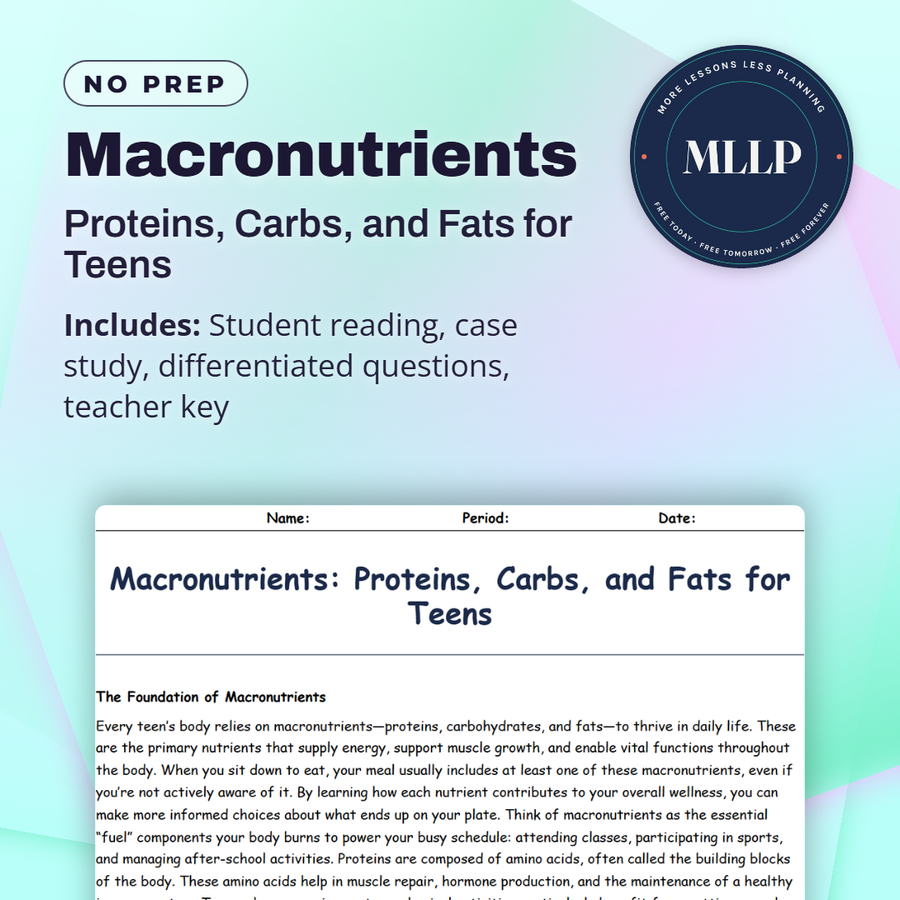
Macronutrients: Proteins, Carbs, and Fats for Teens
Quality reviewed September 2026
Facts verified September 21, 2026
- Subject
- Career & Life Skills
- Grades
- Grades 9-12
- Length
- 9-page student worksheet
- Time
- About one 50-minute class period
- Great for
- Sub plans and independent work
- Includes
- Reading passage, comprehension questions + full answer key
- Format
- Print-and-go PDF
What students do
- Pair five nutrition terms, such as amino acids, complex carbs, and unsaturated fats, with their correct definitions
- Complete three fill-in-the-blank sentences that identify complex carbs, protein, and fat from context in the reading
- Work through three multiple-choice questions on what protein, carbs, and fat each do in the body
- Respond to short-answer prompts on skipping healthy fats and adding more protein to breakfast and lunch
What it covers
- What proteins, carbohydrates, and fats each do for a growing, active body, and where to find the healthier versions of each
- How to portion a plate by hand, using a palm for protein and a fist for carbs, without counting calories
- A basketball player's food diary, and how swapping pastries and fries for whole grains and lean protein fixed his second-half fatigue
Start reading this worksheet
The Foundation of Macronutrients
Every teen’s body relies on macronutrients (proteins, carbohydrates, and fats) to thrive in daily life. These are the primary nutrients that supply energy, support muscle growth, and enable vital functions throughout the body. When you sit down to eat, your meal usually includes at least one of these macronutrients, even if you’re not actively aware of it. By learning how each nutrient contributes to your overall wellness, you can make more informed choices about what ends up on your plate. Think of macronutrients as the essential “fuel” components your body burns to power your busy schedule: attending classes, participating in sports, and managing after-school activities. Proteins are composed of amino acids, often called the building blocks of the body. These amino acids help in muscle repair, hormone production, and the maintenance of a healthy immune system. Teens who engage in sports or physical activities particularly benefit from getting enough protein, as it supports tissue recovery after workouts. Carbohydrates, on the other hand, are the body’s go-to source of quick energy. Once you consume them, they break down into glucose, circulating through your bloodstream to energize cells. While carbs have gained a bad reputation in some diet trends, they remain crucial for fueling both daily tasks and intense exercise. Fats might seem intimidating, but they are equally important. They support hormone regulation, protect vital organs, and help absorb fat-soluble vitamins. Not all fats are created equal, though. Unsaturated fats from avocados, nuts, seeds, and certain fish can be protective and beneficial, while too many saturated or trans fats (like those found in fried foods) may impact heart health in the long run. Understanding these categories helps you appreciate that fats serve a real purpose, so you don’t have to fear them. Instead, focus on eating the right types and monitoring portion sizes.
Balancing Proteins, Carbs, and Fats
Teens often wonder how to strike the perfect balance among these three macronutrients. The goal is to avoid extremes. Consuming too much of one nutrient while neglecting others can lead to uneven energy levels or nutritional gaps. For instance, a meal heavily loaded with protein but lacking in carbohydrates may leave you feeling tired midway through an intense sports session. Conversely, a meal overloaded with simple carbs and not enough protein could cause spikes in blood sugar, followed by a crash that saps your focus in class. One practical approach is to aim for variety on your plate. Consider dividing your meal so that about a quarter is dedicated to lean protein sources (such as chicken, beans, or tofu) and another quarter to complex carbohydrates like brown rice or whole-wheat pasta. The remaining half can be filled with vegetables and fruits, which offer micronutrients and fiber that round out your nutrition. This visual method helps you see if your food choices cover the major nutrient groups without resorting to strict counting or measuring. Maintaining balance also matters throughout the day, not just in a single meal. If you had a carbohydrate-heavy breakfast (for example, a bowl of sugary cereal), you might choose to include more protein and healthy fats at lunch. This kind of day-long balancing act ensures your body gets a steady supply of nutrients. It can also prevent the mid-day energy dips that come from relying too much on quick-fix carbs. Remember, too, that hydration plays a big role in nutrient utilization. Drinking enough water helps your body transport and metabolize these macronutrients efficiently, which supports overall energy levels.
Portion Sizes and Healthier Choices
Portion control is an important factor in managing the intake of proteins, carbs, and fats. Eating large amounts, even of healthy foods, can potentially exceed what your body needs. When you’re active as a teen, your calorie requirements may be higher than those of adults, but that doesn’t mean you have a free pass to indulge without limits. Practicing moderation helps you remain energized without feeling overly full or sluggish. An easy way to gauge portion sizes is by using your hand as a reference. A portion of protein might be roughly the size of your palm, while a portion of carbs could match the size of your clenched fist. This is by no means exact, but it offers a quick guide when you don’t have measuring cups on hand. For fats, be mindful that a little can go a long way. A small handful of nuts or a tablespoon of olive oil might be enough to provide you with the healthy fats your body needs. Choosing healthier food sources can make a big difference. Swapping white bread for whole-grain bread, sugary snacks for a piece of fruit, or fried chicken for grilled can have a meaningful impact on your long-term health. These small, consistent choices support better energy balance and overall nutrition. If you’re uncertain whether you’re getting enough of a particular macronutrient, you might check how you feel a couple of hours after a meal. Consistent hunger or energy crashes could be a sign you need to adjust your protein, carb, or fat intake.
Like what you read? The full reading, the case study, and every question set are in the free download below, along with the answer key.
Why this matters
Half the diet advice teens see online treats entire food groups as enemies, telling them to cut carbs or fear fat without any explanation of what those nutrients actually do. This reading gives students the actual mechanism, why a fat-free diet can hurt hormone regulation, why carbs fuel a workout better than protein does, so they can evaluate claims instead of just repeating them. For students playing a sport or just trying to get through a full day of classes without crashing at 2 p.m., knowing how to balance a plate by hand is more useful than any single rule about clean eating.
From one teacher to another
Alejandro thought he was eating "enough" before basketball games, until a coach-assigned food diary showed he was getting almost no protein or fiber despite feeling full. I lead with his story because the fix wasn't complicated: swapping pastries for toast with peanut butter, and fries for beans or grilled vegetables. From there, four passages cover what protein, carbs, and fats each do in the body, how to eyeball portions using nothing but a hand, and why active teens need more of all three than their less active friends. I use this one when students start repeating diet myths they picked up online, since it explains the actual mechanism instead of just telling them what to avoid.
What you get
Download
Where should I send the next one?
Everything here is free and it stays that way. Leave your email and I'll send you the new lessons as they go up. You can unsubscribe from any one of them.
Related resources
Body Image & Eating Disorders: A Student Wellness Guide
Exercise Safety & Guidelines: Teen Fitness Essentials
Healthy Sleep & Recovery: Boosting Teen Wellness
Master MyPlate: Dietary Guidelines for Teens
Nutrition’s Impact: Health Effects for High Schoolers
Physical Activity Perks: Why Movement Matters for Teens
Every lesson on this site is free to download and use. If one of them saved you a prep period, you can chip in a few bucks toward my three kids' daycare fund. That's genuinely where tips go.