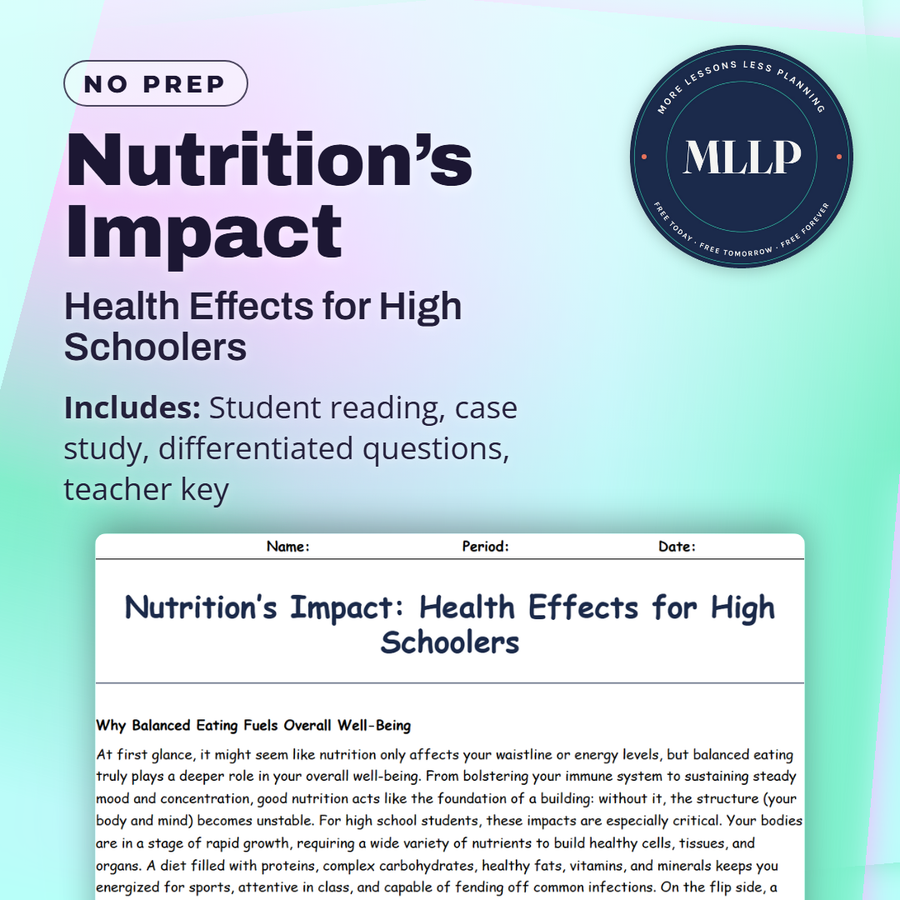
Nutrition’s Impact: Health Effects for High Schoolers
Quality reviewed September 2026
Facts verified September 21, 2026
- Subject
- Career & Life Skills
- Grades
- Grades 9-12
- Length
- 7-page student worksheet
- Time
- About one 50-minute class period
- Great for
- Sub plans and independent work
- Includes
- Reading passage, comprehension questions + full answer key
- Format
- Print-and-go PDF
What students do
- Identify the correct definition for five terms, including Omega-3, Blood Sugar Crash, and Vitamin C
- Supply the missing word in three blank sentences about calcium, energy swings, and Omega-3
- Respond to three multiple-choice questions on how nutrient gaps affect immunity, energy, and long-term health
- Explain in short answers why poor nutrition causes fatigue and colds, and how balanced meals ease stress
What it covers
- How balanced eating affects immunity, mood, and disease risk, not only weight or appearance
- The link between specific nutrients, like B vitamins and Omega-3s, and classroom focus or stress levels
- Taylor the debater's turnaround, from coffee-and-pastry mornings to balanced meals that cut her sick days and sharpened her focus
Start reading this worksheet
Why Balanced Eating Fuels Overall Well-Being
At first glance, it might seem like nutrition only affects your waistline or energy levels, but balanced eating truly plays a deeper role in your overall well-being. From bolstering your immune system to sustaining steady mood and concentration, good nutrition acts like the foundation of a building: without it, the structure (your body and mind) becomes unstable. For high school students, these impacts are especially critical. Your bodies are in a stage of rapid growth, requiring a wide variety of nutrients to build healthy cells, tissues, and organs. A diet filled with proteins, complex carbohydrates, healthy fats, vitamins, and minerals keeps you energized for sports, attentive in class, and capable of fending off common infections. On the flip side, a diet dominated by processed foods, sugary drinks, and excess sodium can lead to issues like low energy, irritability, and susceptibility to illness. Over the long term, such habits can even set the stage for more serious health concerns like diabetes or cardiovascular disease. Teens often overlook these risks because they consider serious health problems a concern for older adults. Yet, patterns established in adolescence can heavily influence future well-being. Choosing nutrient-dense foods now helps you form habits that last a lifetime. And if you’ve ever found yourself exhausted midday or struggling to focus in class, your eating patterns (or lack of consistent meals) could be partly responsible.
Immune Function and Disease Prevention
A balanced diet supports a robust immune system. Nutrients like vitamin C (found in citrus fruits and bell peppers), vitamin A (carrots and sweet potatoes), and zinc (nuts and seeds) can give your body the ammunition it needs to combat bacteria and viruses. Proteins also play a role; amino acids assist in forming antibodies that fend off invaders. When you combine these nutrients with adequate rest and exercise, you’ll likely notice fewer sick days. Conversely, if you constantly run on empty calories from sugary snacks, you might experience more frequent colds or longer recovery times when you do get ill. Disease prevention extends beyond everyday sickness. High salt intake can lead to elevated blood pressure—a condition that may begin silently in adolescence but develop into something more serious in adulthood. A diet heavy in saturated and trans fats can lay the groundwork for cholesterol buildup in your arteries. While you might not see immediate repercussions, your choices now could either safeguard or undermine your health decades down the line. This perspective emphasizes the power you hold to influence your future well-being through what you eat each day.
Like what you read? The full reading, the case study, and every question set are in the free download below, along with the answer key.
Why this matters
Teens tend to file heart disease and diabetes under problems for someday, which makes this reading's point land harder: the sodium and saturated fat patterns forming right now are the ones cardiologists will ask about in twenty years. This reading also reframes nutrition as something that shows up today, in whether a student catches every cold going around the building or whether they can hold focus through a full class period without a sugar crash. That immediate payoff, not a future diagnosis, is usually what gets a sixteen-year-old to actually eat something before third period instead of running on an energy drink.
From one teacher to another
Vitamin C, B vitamins, Omega-3s: this reading names the specific nutrients behind immunity, mood, and focus instead of leaving nutrition as a vague "eat healthier" idea. The three passages build the case from different angles: overall well-being, immune function and disease prevention, and how nutrition affects academic focus and mood. Taylor's case study grounds all three: a debater running on coffee and pastries who kept getting sick before her biggest tournament and felt the difference within weeks of eating real meals. I like that the reading ties eating well to something students already care about, staying sharp and staying well, rather than treating it as a stand-alone topic disconnected from their day.
What you get
Download
Where should I send the next one?
Everything here is free and it stays that way. Leave your email and I'll send you the new lessons as they go up. You can unsubscribe from any one of them.
Related resources
Body Image & Eating Disorders: A Student Wellness Guide
Exercise Safety & Guidelines: Teen Fitness Essentials
Healthy Sleep & Recovery: Boosting Teen Wellness
Macronutrients: Proteins, Carbs, and Fats for Teens
Master MyPlate: Dietary Guidelines for Teens
Physical Activity Perks: Why Movement Matters for Teens
Every lesson on this site is free to download and use. If one of them saved you a prep period, you can chip in a few bucks toward my three kids' daycare fund. That's genuinely where tips go.