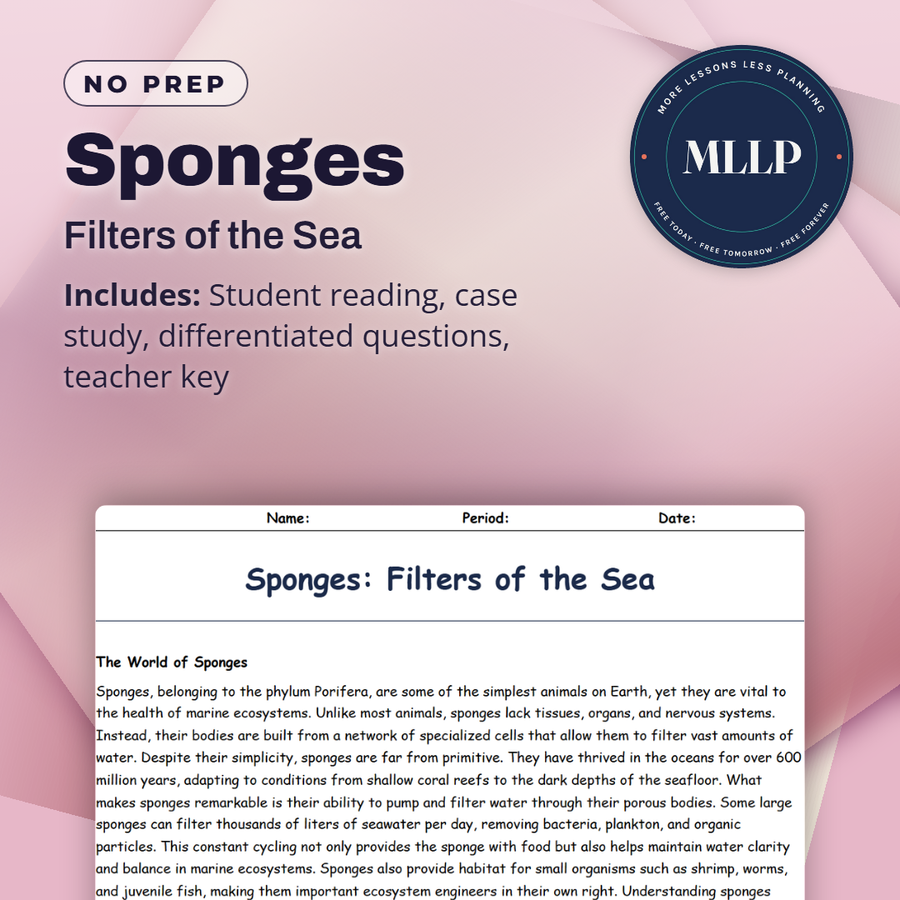
Sponges: Filters of the Sea
Quality reviewed September 2026
Facts verified September 14, 2026
- Subject
- Science
- Grades
- Grades 9-12
- Length
- 6-page student worksheet
- Time
- About one 50-minute class period
- Great for
- Sub plans and independent work
- Includes
- Reading passage, comprehension questions + full answer key
- Format
- Print-and-go PDF
What students do
- Match descriptions like creating currents, forming pores, transporting nutrients, providing structure, and releasing water to the sponge cell or structure each one names
- Fill in the blank sentences on the sponge phylum, the cells that transport nutrients, and how sponges keep reefs healthy
- Answer multiple choice questions on choanocytes, how sponges benefit coral reefs, and what spicules are made of
- Write short answers on sponge nutrient cycling, a threat facing sponge populations, why scientists study sponge chemical compounds, and why barrel sponges are called the lungs of the reef
What it covers
- The specialized cells that make up a sponge, including choanocytes, porocytes, amoebocytes, and spicules
- How sponges filter water, recycle nutrients, and provide habitat for other reef organisms
- A case study on Caribbean barrel sponges and their symbiotic bacteria, nicknamed the lungs of the reef
Start reading this worksheet
The World of Sponges
Sponges, belonging to the phylum Porifera, are some of the simplest animals on Earth, yet they are vital to the health of marine ecosystems. Unlike most animals, sponges lack tissues, organs, and nervous systems. Instead, their bodies are built from a network of specialized cells that allow them to filter vast amounts of water. Despite their simplicity, sponges are far from primitive. They have thrived in the oceans for over 600 million years, adapting to conditions from shallow coral reefs to the dark depths of the seafloor. What makes sponges remarkable is their ability to pump and filter water through their porous bodies. Some large sponges can filter thousands of liters of seawater per day, removing bacteria, plankton, and organic particles. This constant cycling not only provides the sponge with food but also helps maintain water clarity and balance in marine ecosystems. Sponges also provide habitat for small organisms such as shrimp, worms, and juvenile fish, making them important ecosystem engineers in their own right. Understanding sponges gives students insight into how even the simplest organisms can play a huge role in sustaining the balance of ocean life.
Structure and Feeding
The sponge body is made up of specialized cells with distinct functions. Choanocytes, or collar cells, line the interior chambers and use flagella to create currents that draw water into the sponge. These cells capture food particles on sticky collars while oxygen diffuses directly into the sponge’s cells. Porocytes form the pores through which water enters, and amoebocytes move around within the sponge body, transporting nutrients and producing skeletal elements called spicules. Spicules, made of silica or calcium carbonate, provide structure and defense. Some sponges also produce chemical toxins that deter predators, making them less appetizing to fish and invertebrates. Sponges feed by filter feeding, one of the most efficient methods in the ocean. They can trap bacteria as small as 0.1 micrometers, effectively cleaning the surrounding water. This function is crucial in coral reef ecosystems, where sponges recycle nutrients that corals and algae rely on for growth.
Like what you read? The full reading, the case study, and every question set are in the free download below, along with the answer key.
Why this matters
A sponge has no brain, no nervous system, and no true tissues, yet one animal can filter thousands of liters of water a day. This reading breaks that filtering into the cells doing the work: choanocytes pulling water through, porocytes forming its entry pores, amoebocytes moving nutrients, and spicules holding the structure up.
Sponges get treated as background scenery on a reef, so I like pausing on them. The Caribbean barrel sponge hosts symbiotic bacteria that recycle nutrients and produce compounds researchers study for medicine, earning it the nickname lungs of the reef. Disease and overharvesting show what's lost when it declines.
From one teacher to another
Sponges have no tissues, organs, or nervous system, yet they filter thousands of liters of water a day and support entire reef communities. This worksheet covers the specialized cells behind that filtering, including choanocytes, porocytes, amoebocytes, and the spicules that give sponges structure. The case study on Caribbean barrel sponges shows how these animals host symbiotic bacteria that recycle nutrients and produce compounds researchers study for potential medicines. Students connect cellular structure to reef-wide consequences, including what happens when sponge populations decline from disease or overharvesting.
What you get
Download
Where should I send the next one?
Everything here is free and it stays that way. Leave your email and I'll send you the new lessons as they go up. You can unsubscribe from any one of them.
Related resources
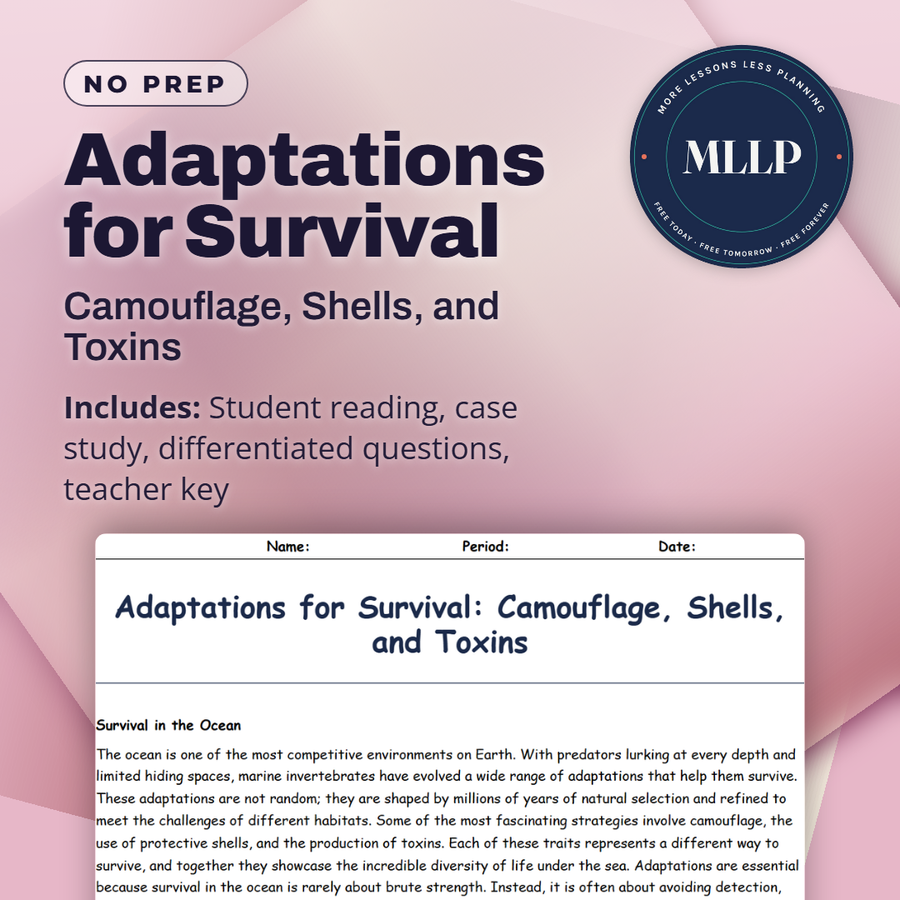
Adaptations for Survival: Camouflage, Shells, and Toxins
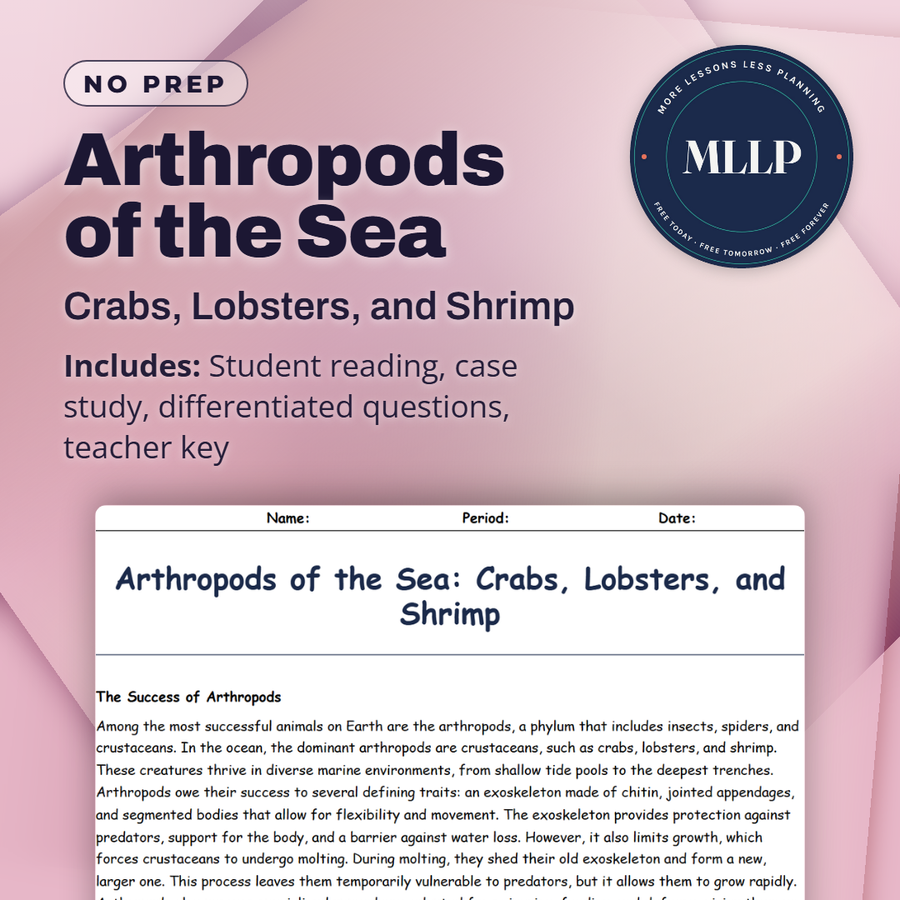
Arthropods of the Sea: Crabs, Lobsters, and Shrimp
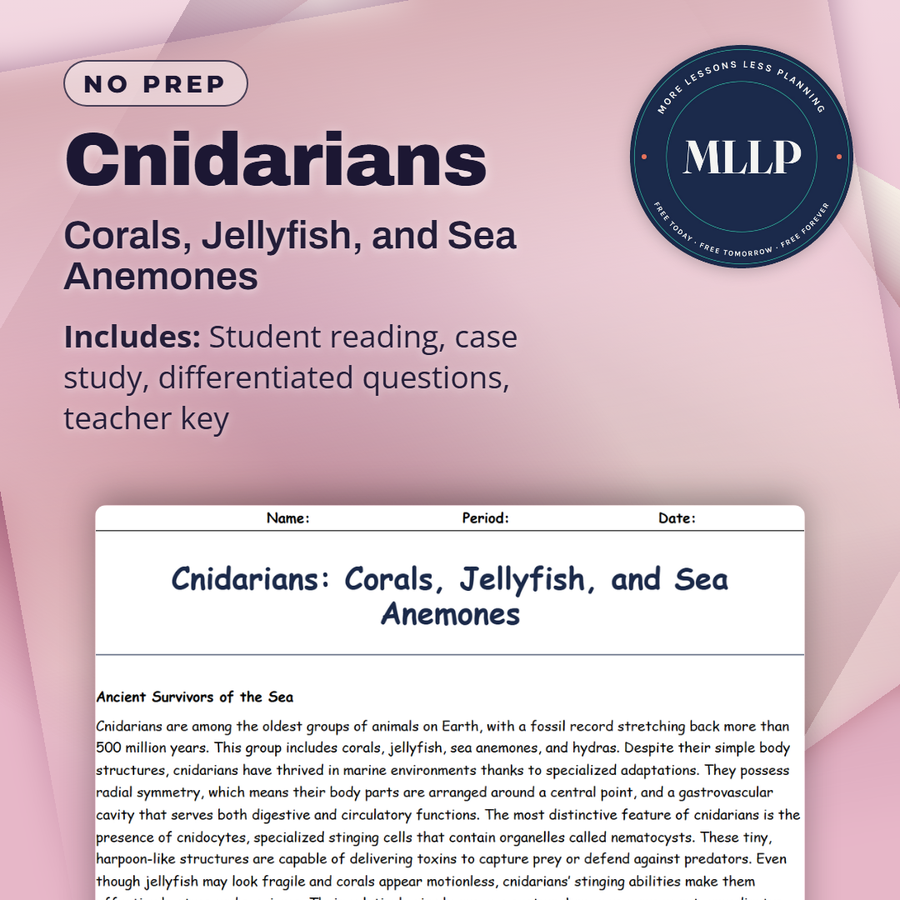
Cnidarians: Corals, Jellyfish, and Sea Anemones
Echinoderms: Sea Stars and Sea Urchins
Exploring Marine Invertebrates: Diversity Beneath the Waves
Invertebrates in Food Webs: Ecosystem Engineers of the Sea
Every lesson on this site is free to download and use. If one of them saved you a prep period, you can chip in a few bucks toward my three kids' daycare fund. That's genuinely where tips go.