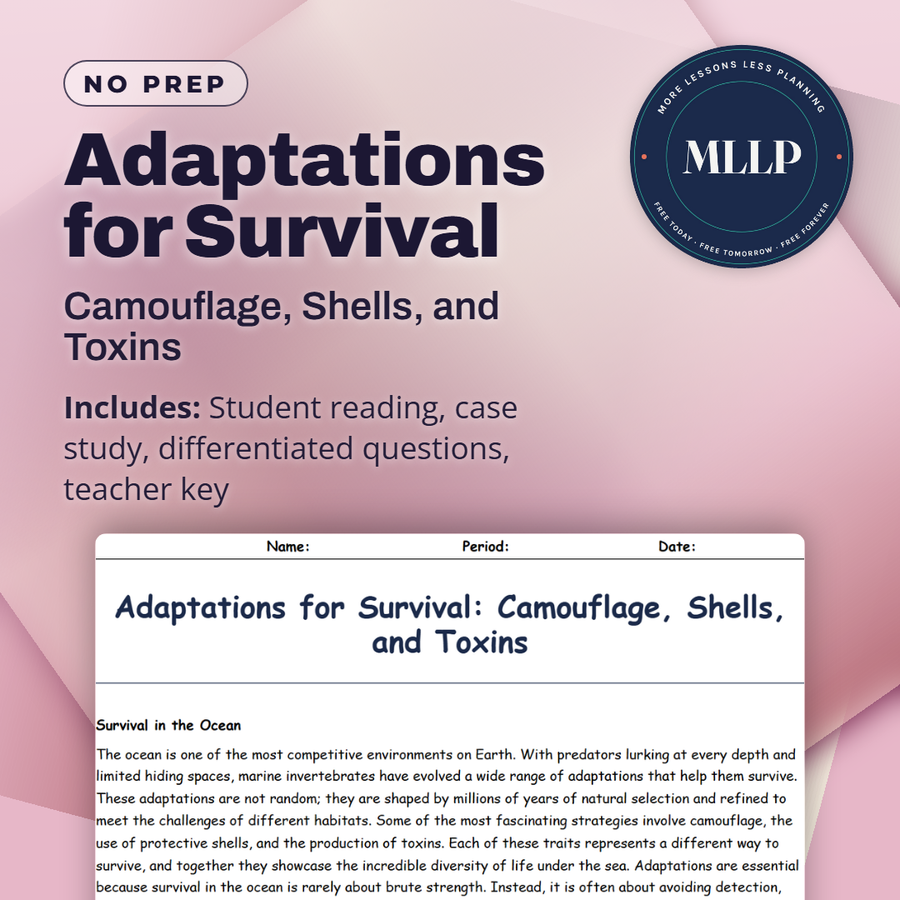
Adaptations for Survival: Camouflage, Shells, and Toxins
Quality reviewed September 2026
Facts verified September 14, 2026
- Subject
- Science
- Grades
- Grades 9-12
- Length
- 6-page student worksheet
- Time
- About one 50-minute class period
- Great for
- Sub plans and independent work
- Includes
- Reading passage, comprehension questions + full answer key
- Format
- Print-and-go PDF
What students do
- Match terms like camouflage, chromatophores, shells, toxins, and aposematism to their correct definitions
- Fill in the blank sentences on shell material, the blue-ringed octopus's toxin, and the stinging cells of cnidarians
- Answer multiple choice questions on chromatophores, the function of mollusk shells, and what counts as aposematism
- Write short answers on countershading, why shells double as habitat, how toxins reshape predator-prey relationships, and how the blue-ringed octopus combines camouflage, toxins, and warning colors
What it covers
- How camouflage, including color-changing chromatophores and countershading, helps marine animals avoid predators
- How shells protect mollusks and go on to become homes for hermit crabs and other organisms
- A case study on the blue-ringed octopus and how it combines camouflage, toxins, and warning coloration
Start reading this worksheet
Survival in the Ocean
The ocean is one of the most competitive environments on Earth. With predators lurking at every depth and limited hiding spaces, marine invertebrates have evolved a wide range of adaptations that help them survive. These adaptations are not random; they are shaped by millions of years of natural selection and refined to meet the challenges of different habitats. Some of the most fascinating strategies involve camouflage, the use of protective shells, and the production of toxins. Each of these traits represents a different way to survive, and together they showcase the incredible diversity of life under the sea. Adaptations are essential because survival in the ocean is rarely about brute strength. Instead, it is often about avoiding detection, deterring predators, or outlasting threats. The invertebrates that succeed are those that can blend in, withstand attacks, or defend themselves chemically. Understanding these adaptations helps us appreciate the delicate balance of ocean ecosystems and the remarkable ways life has found to persist.
Camouflage: Hiding in Plain Sight
Camouflage is one of the most common and effective defenses in the marine world. Many invertebrates, from octopuses to crustaceans, rely on it to escape predators and ambush prey. Camouflage can take several forms. Some species use cryptic coloration, blending in with rocks, sand, or coral. Others can change their color entirely using specialized cells called chromatophores. Octopuses, cuttlefish, and squid are masters of this technique, adjusting their appearance within seconds to mimic their surroundings. Camouflage is not limited to color. Some animals use mimicry, copying the shapes or behaviors of other organisms. For example, certain nudibranchs resemble toxic species, warning predators to stay away even though they are harmless themselves. Still others use countershading, where the top of the body is dark to blend with the ocean floor when viewed from above, while the underside is light to blend with the surface when viewed from below. These combined strategies allow animals to hide in nearly any situation, whether resting on the seabed or swimming in open water.
Shells: Nature’s Armor
While camouflage helps animals avoid being seen, shells provide a more direct form of defense. Mollusks, such as clams, oysters, and snails, rely on their calcium carbonate shells for protection. These hard coverings make it difficult for predators to crush or eat them. Some bivalves can even clamp their shells shut with great force, preventing entry. Over time, shells have become more elaborate, with ridges, spines, or thickened walls to further discourage attackers. Not all shells serve only as armor. For many gastropods, shells also help regulate buoyancy and provide a mobile home that can be withdrawn into during times of danger. Even after the original animal dies, shells continue to play a role in the ecosystem, becoming shelters for hermit crabs or habitats for algae and sponges. The persistence of shells in marine ecosystems highlights their effectiveness as a survival tool. However, shells are not foolproof. Predators such as octopuses have developed strategies to drill small holes into shells, injecting toxins that paralyze the animal inside. This evolutionary arms race demonstrates the constant push and pull between predator and prey in the ocean.
Like what you read? The full reading, the case study, and every question set are in the free download below, along with the answer key.
Why this matters
Most students assume a small, soft marine animal must be defenseless, until they meet the blue-ringed octopus. Camouflage through chromatophores and countershading is one line of defense, warning coloration is another, and venom is a third, and this one small octopus runs all three at once.
Octopuses drill straight through the shells meant to protect other mollusks, and the same toxin research pulled from sponges is now studied for medicine. I assign this after a unit on predator-prey relationships, because it complicates the idea that any single defense is enough on its own.
From one teacher to another
Marine invertebrates survive the ocean's constant predator pressure by blending in, building armor, or going chemical. The worksheet walks through camouflage strategies like chromatophores and countershading, then moves into shells as both defense and long-term habitat for other species. The case study on the blue-ringed octopus ties these ideas together, showing how one small animal pairs camouflage with a lethal toxin and a warning display. Students see how each adaptation trades off differently, from octopuses that drill through shells to the medical potential of sponge toxins.
What you get
Download
Where should I send the next one?
Everything here is free and it stays that way. Leave your email and I'll send you the new lessons as they go up. You can unsubscribe from any one of them.
Related resources
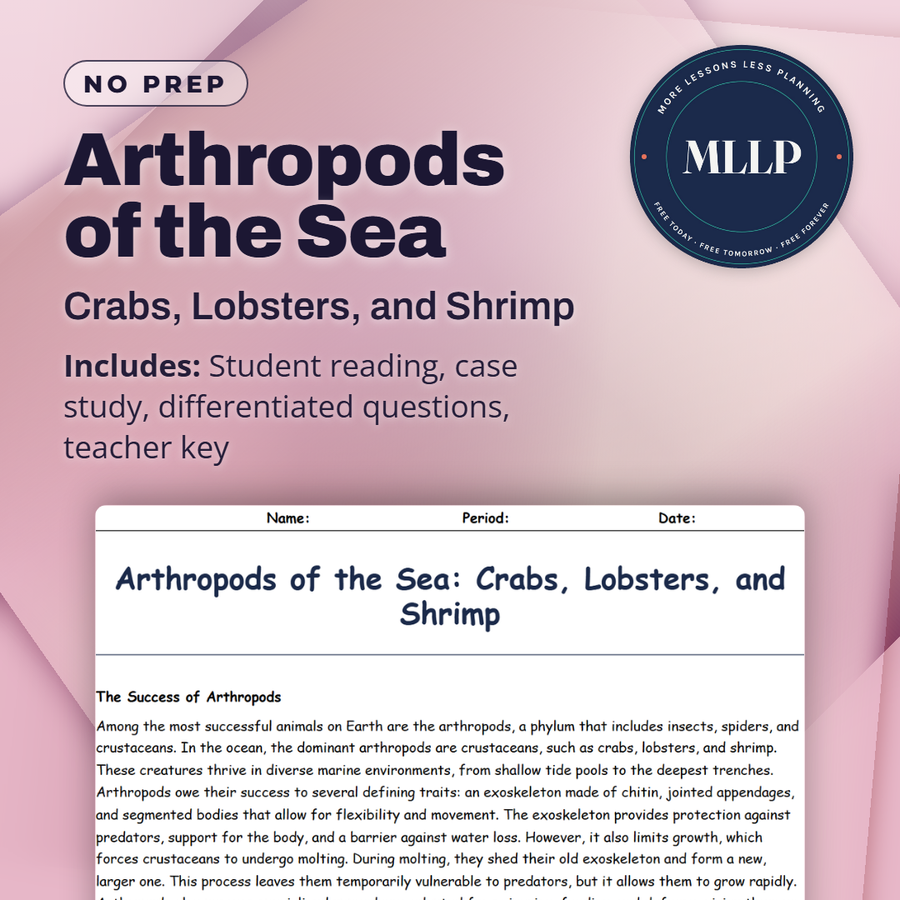
Arthropods of the Sea: Crabs, Lobsters, and Shrimp
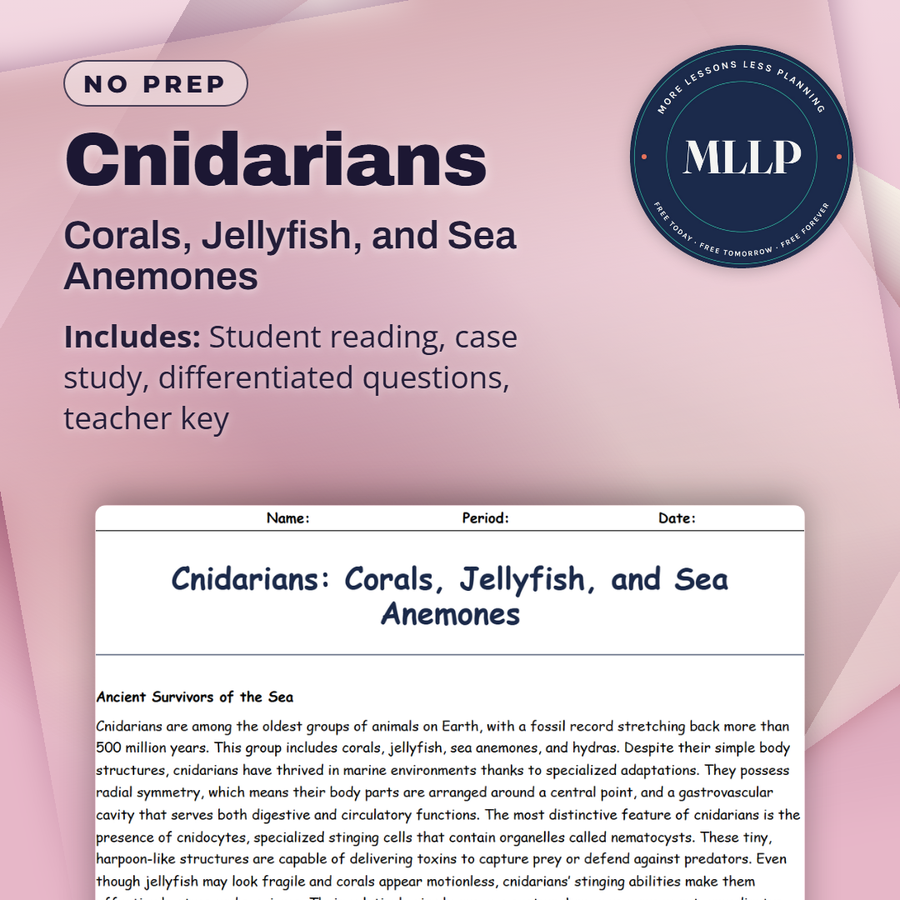
Cnidarians: Corals, Jellyfish, and Sea Anemones
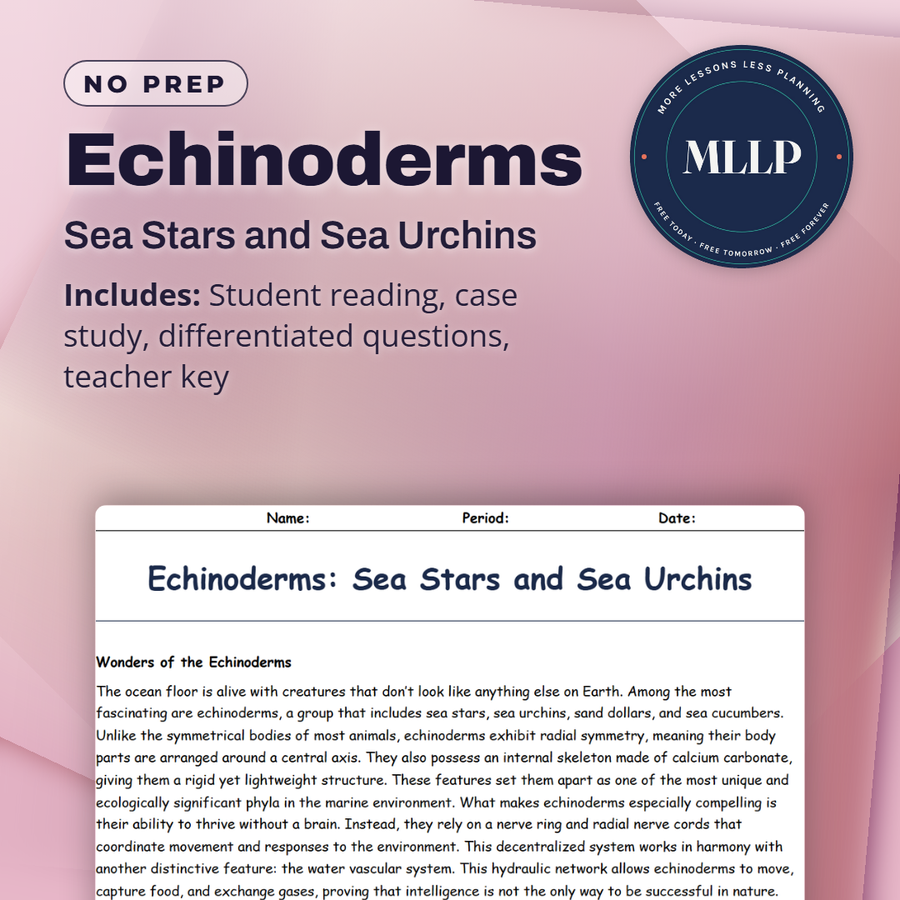
Echinoderms: Sea Stars and Sea Urchins
Exploring Marine Invertebrates: Diversity Beneath the Waves
Invertebrates in Food Webs: Ecosystem Engineers of the Sea
Marine Invertebrate Reproduction: Strategies and Life Cycles
Every lesson on this site is free to download and use. If one of them saved you a prep period, you can chip in a few bucks toward my three kids' daycare fund. That's genuinely where tips go.