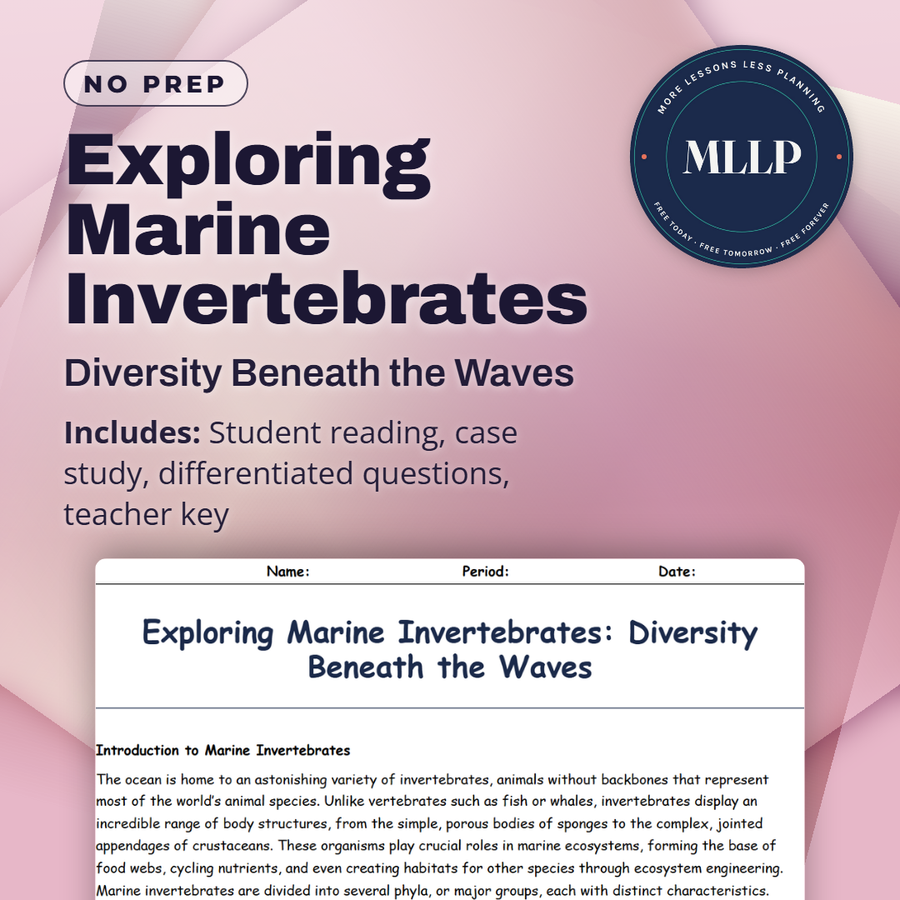
Exploring Marine Invertebrates: Diversity Beneath the Waves
Quality reviewed September 2026
Facts verified September 14, 2026
- Subject
- Science
- Grades
- Grades 9-12
- Length
- 7-page student worksheet
- Time
- About one 50-minute class period
- Great for
- Sub plans and independent work
- Includes
- Reading passage, comprehension questions + full answer key
- Format
- Print-and-go PDF
What students do
- Match descriptions like jointed legs and an exoskeleton, stinging cells, tube feet and regeneration, filter feeding, and soft bodies with shells to the invertebrate group they describe
- Fill in the blank sentences on coral's symbiotic algae, the crustacean exoskeleton, and how worms recycle nutrients
- Answer multiple choice questions on the role of segmented worms, what powers echinoderm movement, and why sponges matter to water quality
- Write short answers on why invertebrates anchor marine food webs, a defense mechanism example, how human activity affects invertebrate populations, and why coral reefs count as ecosystem engineers for nearby communities
What it covers
- An overview of the major marine invertebrate groups, from sponges and cnidarians to mollusks, arthropods, and echinoderms
- How adaptations like camouflage, shells, and toxins help these animals survive across different ocean habitats
- A case study describing coral reefs as invertebrate-built ecosystems, with corals, sponges, and echinoderms each playing a role
Start reading this worksheet
Introduction to Marine Invertebrates
The ocean is home to an astonishing variety of invertebrates, animals without backbones that represent most of the world’s animal species. Unlike vertebrates such as fish or whales, invertebrates display an incredible range of body structures, from the simple, porous bodies of sponges to the complex, jointed appendages of crustaceans. These organisms play crucial roles in marine ecosystems, forming the base of food webs, cycling nutrients, and even creating habitats for other species through ecosystem engineering. Marine invertebrates are divided into several phyla, or major groups, each with distinct characteristics. Among the most studied groups are Porifera (sponges), Cnidaria (jellyfish, corals, and sea anemones), Platyhelminthes and Annelida (flatworms and segmented worms), Mollusca (snails, clams, and squid), Arthropoda (crabs, lobsters, and shrimp), and Echinodermata (sea stars and sea urchins). These organisms showcase an array of adaptations that allow them to survive in environments ranging from shallow reefs to deep-sea trenches with extreme pressure and limited light. Understanding these groups helps us appreciate how marine ecosystems function and why protecting invertebrates is essential for maintaining biodiversity and ocean health. When students recognize how these species interact (who filters water, who builds habitat, who recycles nutrients), they can also recognize how human decisions affect the sea life we depend on for food, shoreline protection, and even future medicines.
Major Groups of Marine Invertebrates
Sponges are some of the simplest animals on Earth, with bodies full of pores that filter microscopic food particles from seawater. They lack tissues and organs but are masters of filtration, cycling vast amounts of water daily and helping keep ecosystems balanced by removing bacteria and suspended particles. Some sponges even provide shelter for juvenile fishes and shrimp, functioning like apartment complexes on the seafloor. Cnidarians, which include corals, jellyfish, and sea anemones, are famous for their stinging cells called cnidocytes. These cells contain tiny harpoons filled with toxins used for defense and capturing prey. Corals form reef structures that provide habitat for thousands of species, making them true ecosystem engineers that shape waves, currents, and light conditions for other organisms. Worms vary greatly. Flatworms are simple, flattened animals often found in coral reefs, where they glide over surfaces in search of small prey. Segmented worms like polychaetes burrow in sediments and recycle nutrients, supporting marine food chains and improving sediment oxygen levels, a bit like gardeners turning soil to help plants grow. Mollusks are a diverse group that includes gastropods (snails), bivalves (clams, mussels), and cephalopods (squid, octopus). They have unique adaptations: shells for protection, siphons for filter feeding, raspy radula tongues for scraping algae, or advanced nervous systems and camouflage for hunting. Cephalopods are problem-solvers; they can navigate mazes, unscrew jars, and change color in milliseconds. Arthropods, especially crustaceans, are among the most abundant invertebrates. Their hard exoskeletons provide protection, but they must molt to grow. Crustaceans are vital scavengers, predators, and prey. Tiny copepods, the “insect-sized” grazers of the sea, link microscopic phytoplankton to fish and whales, moving energy up the food web. Echinoderms, like sea stars and sea urchins, have a water vascular system that powers tube feet for movement and feeding. Many can regenerate lost arms and play critical roles in maintaining ecological balance, such as sea stars controlling mussel beds and urchins grazing algae that would otherwise smother reefs.
Like what you read? The full reading, the case study, and every question set are in the free download below, along with the answer key.
Why this matters
A coral reef works like a small city built by invertebrates: sponges filtering the water, crustaceans scavenging debris, and echinoderms keeping algae in check. The major groups, from sponges to mollusks to echinoderms, each rely on defenses like camouflage, shells, and toxins that serve the same goal of survival.
Sponges and worms rarely get the classroom attention sharks and whales do, mostly because invertebrate sounds like a synonym for simple. Matching each phylum to its defining traits, then applying that to the reef case study, shows how much specialization is packed into animals with no spine at all.
From one teacher to another
This worksheet takes a wide-angle view of marine invertebrates, covering the major groups from sponges to echinoderms in one reading. It walks through what defines each group, then highlights a shared thread running through all of them, adaptations like camouflage, shells, and toxins that help these animals survive predators and harsh conditions. The case study reframes a coral reef as a kind of invertebrate city, with sponges filtering water, crustaceans scavenging, and echinoderms keeping algae in check. Students practice matching each phylum to its defining traits before applying that knowledge to the reef case study.
What you get
Download
Where should I send the next one?
Everything here is free and it stays that way. Leave your email and I'll send you the new lessons as they go up. You can unsubscribe from any one of them.
Related resources
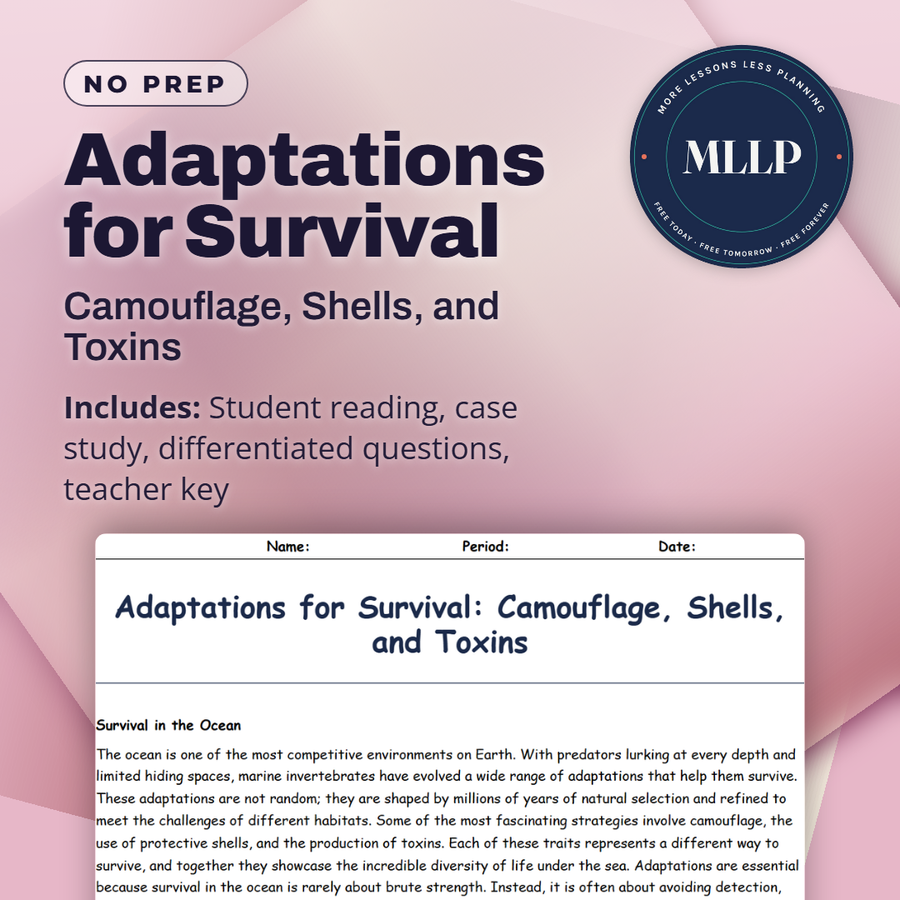
Adaptations for Survival: Camouflage, Shells, and Toxins
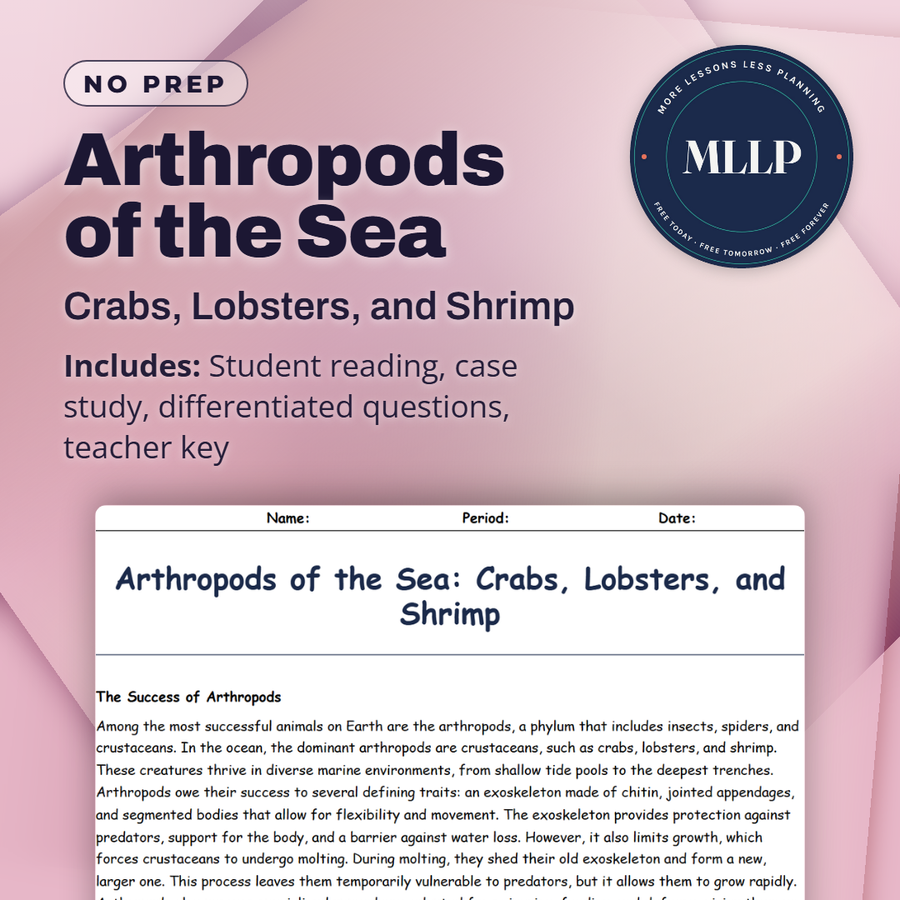
Arthropods of the Sea: Crabs, Lobsters, and Shrimp
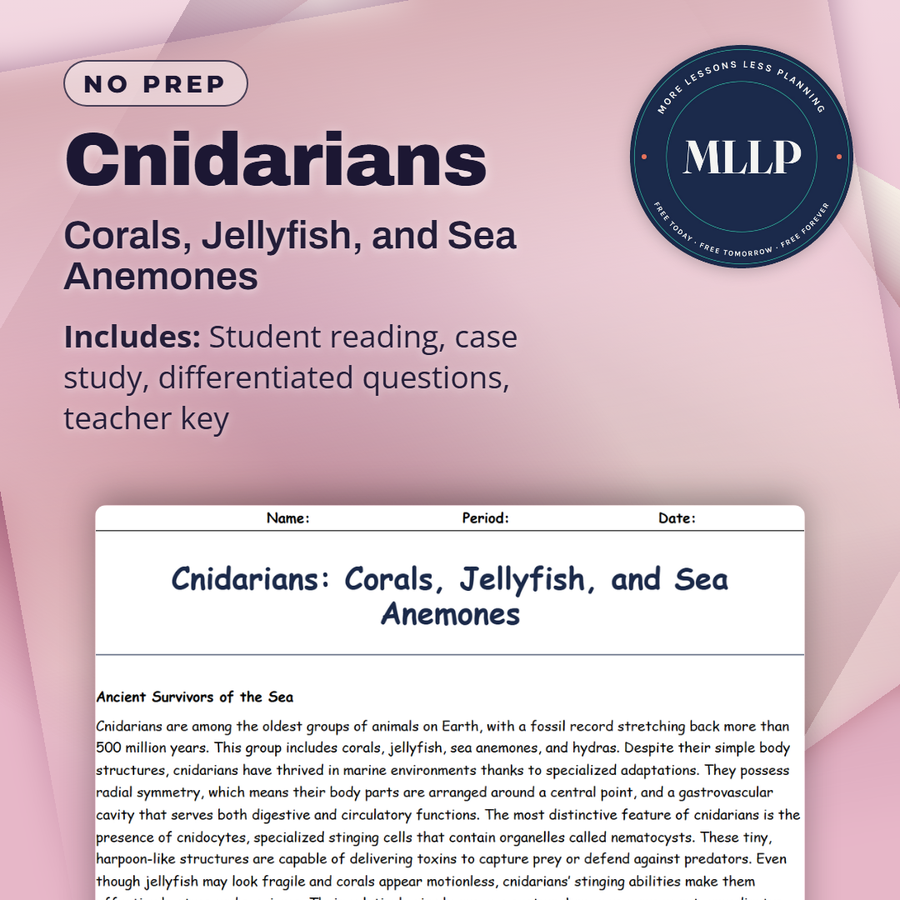
Cnidarians: Corals, Jellyfish, and Sea Anemones
Echinoderms: Sea Stars and Sea Urchins
Invertebrates in Food Webs: Ecosystem Engineers of the Sea
Marine Invertebrate Reproduction: Strategies and Life Cycles
Every lesson on this site is free to download and use. If one of them saved you a prep period, you can chip in a few bucks toward my three kids' daycare fund. That's genuinely where tips go.