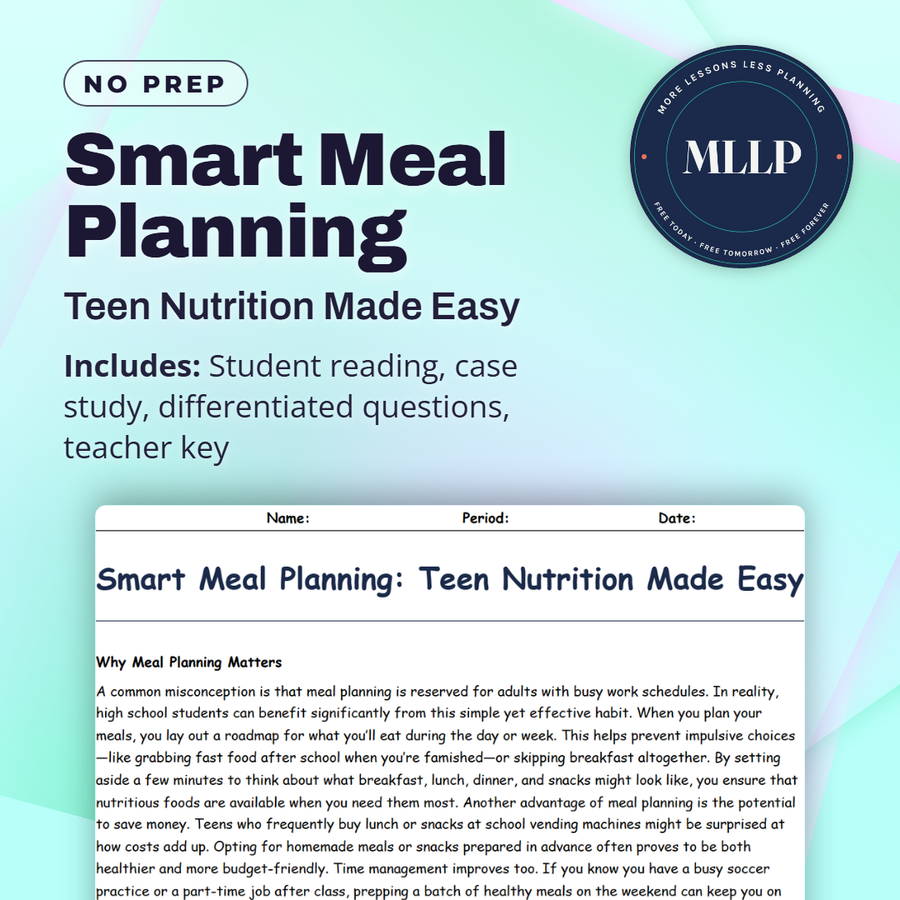
Smart Meal Planning: Teen Nutrition Made Easy
Quality reviewed September 2026
Facts verified September 21, 2026
- Subject
- Career & Life Skills
- Grades
- Grades 9-12
- Length
- 8-page student worksheet
- Time
- About one 50-minute class period
- Great for
- Sub plans and independent work
- Includes
- Reading passage, comprehension questions + full answer key
- Format
- Print-and-go PDF
What students do
- Match terms like bulk purchasing, balanced breakfast, and time management to their definitions
- Fill in blanks about meal prepping, blood sugar, and time management strategies
- Answer multiple-choice questions on saving money, snack choices, and batch cooking
- Write short answers on why meal planning helps a student athlete and how to keep it from feeling repetitive
What it covers
- Why meal planning cuts down on impulsive fast-food runs and saves money over the week
- How to build balanced breakfasts, lunches, and dinners, plus budget-friendly snack ideas
- A case study following Jackson, a busy junior, as he preps a week of meals instead of grabbing burgers after basketball practice
Start reading this worksheet
Why Meal Planning Matters
A common misconception is that meal planning is reserved for adults with busy work schedules. In reality, high school students can benefit significantly from this simple yet effective habit. When you plan your meals, you lay out a roadmap for what you’ll eat during the day or week. This helps prevent impulsive choices (like grabbing fast food after school when you’re famished) or skipping breakfast altogether. By setting aside a few minutes to think about what breakfast, lunch, dinner, and snacks might look like, you ensure that nutritious foods are available when you need them most. Another advantage of meal planning is the potential to save money. Teens who frequently buy lunch or snacks at school vending machines might be surprised at how costs add up. Opting for homemade meals or snacks prepared in advance often proves to be both healthier and more budget-friendly. Time management improves too. If you know you have a busy soccer practice or a part-time job after class, prepping a batch of healthy meals on the weekend can keep you on track, even on hectic days. Planning ahead can also reduce stress: Instead of scrambling for dinner ideas at 7 p.m., you’ll have ingredients ready to go, saving you from last-minute junk food runs. This system doesn’t need to be rigid. You can switch around meals or swap ingredients if you discover a new recipe you’d like to try. The key is having a structure that supports consistent, balanced eating rather than a haphazard routine.
Building Balanced Breakfasts, Lunches, and Dinners
Breakfast sets the tone for the day, yet many teens skip it because they’re too busy or not hungry upon waking. A balanced breakfast can jump-start your metabolism and provide sustained energy. Consider quick options like whole-grain toast with peanut butter and banana slices, or a smoothie made with fruit, yogurt, and spinach. If you prefer savory items, try scrambled eggs with veggies wrapped in a whole-wheat tortilla. The key is to include protein, whole grains, and some form of fruit or vegetable whenever possible. For lunch, think about including three or four food groups. A simple approach is to choose a protein source (like turkey, tuna, beans, or tofu) paired with whole-grain bread or brown rice, plus a side of veggies and a piece of fruit. This combination ensures a good balance of macronutrients while supplying vitamins and minerals that can keep you going through afternoon classes. If you rely on your school cafeteria, you can still plan by scanning the menu in advance and choosing the day’s healthiest options. Dinners can be made less stressful by preparing certain elements in bulk. Cook a batch of brown rice or roast some vegetables at the start of the week, then mix and match with different proteins. One night, add chicken and tomato sauce; another night, toss in beans, spices, and a side salad. Exploring theme nights (like Meatless Monday or Taco Tuesday) can spark creativity. This structure also aids in ensuring variety, so you don’t tire of the same meals repeatedly.
Like what you read? The full reading, the case study, and every question set are in the free download below, along with the answer key.
Why this matters
Money is often the real reason this lands for teens. A lot of my students have their first paycheck now, from a part-time job, and food is one of the first places that money disappears, a fast-food run after practice, vending machine snacks between classes. Meal planning here doubles as a budgeting skill they can use immediately, with money they are already earning. Framing it as financial control, rather than a lecture about vegetables, is what makes a teenager actually consider trying it.
From one teacher to another
I like handing this one to students who eat lunch out of a vending machine more often than they will admit. The reading walks through why a few minutes of planning on Sunday beats scrambling for dinner at 7 p.m., then breaks down what a balanced breakfast, lunch, and dinner actually look like. Jackson's case study gives students a concrete before-and-after, fast-food runs turning into prepped containers of pasta and vegetables. The trade-offs are real for teens: tight schedules, tight budgets, not abstract nutrition advice.
What you get
Download
Where should I send the next one?
Everything here is free and it stays that way. Leave your email and I'll send you the new lessons as they go up. You can unsubscribe from any one of them.
Related resources
Body Image & Eating Disorders: A Student Wellness Guide
Exercise Safety & Guidelines: Teen Fitness Essentials
Healthy Sleep & Recovery: Boosting Teen Wellness
Macronutrients: Proteins, Carbs, and Fats for Teens
Master MyPlate: Dietary Guidelines for Teens
Nutrition’s Impact: Health Effects for High Schoolers
Every lesson on this site is free to download and use. If one of them saved you a prep period, you can chip in a few bucks toward my three kids' daycare fund. That's genuinely where tips go.