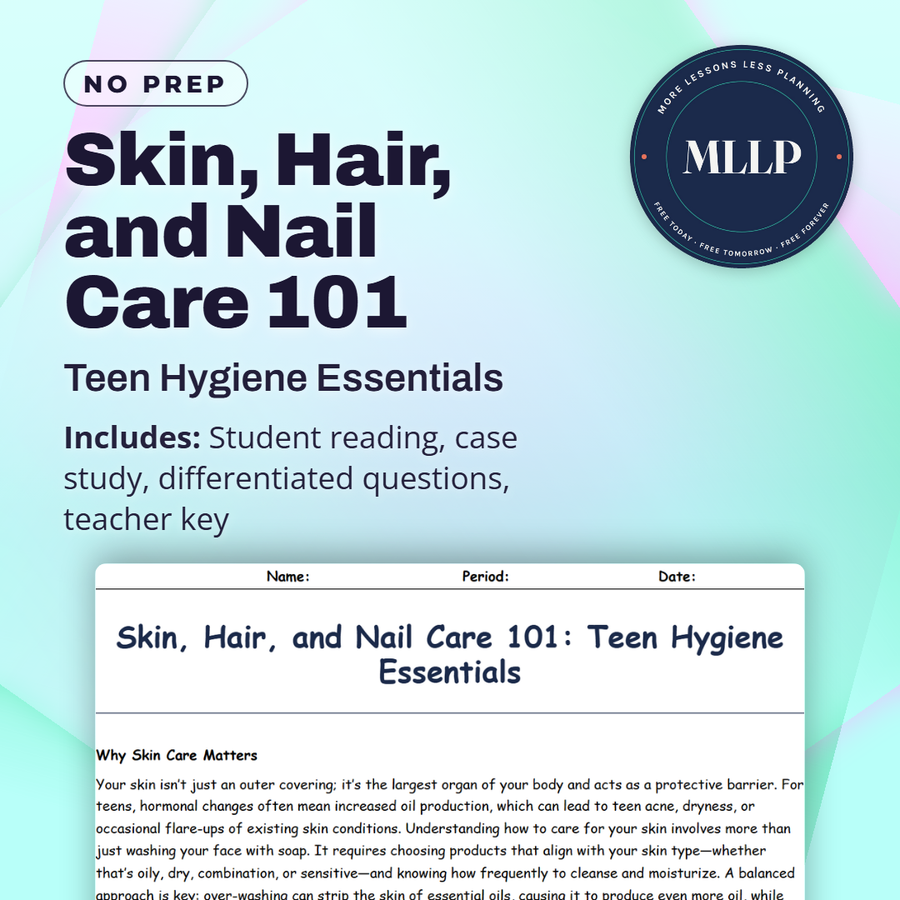
Skin, Hair, and Nail Care 101: Teen Hygiene Essentials
Quality reviewed September 2026
Facts verified September 21, 2026
- Subject
- Career & Life Skills
- Grades
- Grades 9-12
- Length
- 7-page student worksheet
- Time
- About one 50-minute class period
- Great for
- Sub plans and independent work
- Includes
- Reading passage, comprehension questions + full answer key
- Format
- Print-and-go PDF
What students do
- Answer three multiple-choice questions on gentle cleansing, hair-washing frequency, and why nail neglect leads to infection
- Match five terms, including non-comedogenic and cuticle, to their definitions
- Fill in three blanks naming cleansing, avoiding tight hairstyles, and cuticle care as ways to protect skin, hair, and nails
- Answer three short-answer questions on how harsh products backfire, how to wash hair without overdoing it, and why nail care matters more for athletes and musicians
What it covers
- Why skin care is about skin type and consistency rather than harsh scrubbing, plus sunscreen's role in preventing damage
- How hair-washing frequency depends on scalp type, and how heat tools and tight hairstyles cause breakage
- A case study following a student whose harsh face wash, skipped conditioner, and nail-biting habit all needed different fixes
Start reading this worksheet
Why Skin Care Matters
Your skin isn’t just an outer covering; it’s the largest organ of your body and acts as a protective barrier. For teens, hormonal changes often mean increased oil production, which can lead to teen acne, dryness, or occasional flare-ups of existing skin conditions. Understanding how to care for your skin involves more than just washing your face with soap. It requires choosing products that align with your skin type (whether that’s oily, dry, combination, or sensitive) and knowing how frequently to cleanse and moisturize. A balanced approach is key: over-washing can strip the skin of essential oils, causing it to produce even more oil, while under-washing can lead to clogged pores. If you’re dealing with teen acne, gentle practices often work better than harsh treatments. Scrubbing aggressively or using products with strong chemicals may irritate the skin, potentially worsening breakouts. Instead, look for cleansers labeled “non-comedogenic” to ensure they won’t block pores. Avoid popping pimples, as this can cause scarring or further infection. In addition, always remove makeup before bed to allow your skin to breathe overnight. Consistency is your best friend here; a well-structured routine in the morning and evening often keeps breakouts under control. Beyond the face, the rest of your body also benefits from proper skin care. If you have dry patches on your arms or legs, opt for lotions designed to hydrate deeply without leaving a greasy residue. When you’re active, whether playing sports or simply running around at school, shower promptly after sweating. This simple step reduces the risk of body acne, especially around areas where sweat collects. Protecting your skin from the sun is equally essential: use sunscreen with at least SPF 30 when outdoors for extended periods to guard against harmful UV rays that can lead to premature aging and even skin cancer.
Healthy Hair Hygiene
Your hair not only contributes to your appearance but also reflects your overall health. Hair hygiene starts with a well-chosen shampoo and conditioner suited to your hair type: oily, dry, curly, or color-treated. Washing frequency depends on various factors: individuals with oily scalps may need to shampoo daily, while those with curly or dry hair might benefit from washing every two to three days. Overwashing can strip your hair and scalp of natural oils, causing dryness or flakiness, while under-washing can lead to buildup and an unclean feeling. For teens who are active in sports, sweat accumulates on the scalp and can make hair appear greasy or feel itchy. If you’re frequently sweating, rinsing or washing your hair more often might be necessary. When using heat tools like straighteners or curling irons, apply heat protectant sprays to minimize damage. Regular trims can help remove split ends, encouraging healthier hair growth. Even something as simple as avoiding tight hairstyles can protect hair from breakage. By treating your hair with care, you’re ensuring it remains vibrant and resilient, reflecting a proactive approach to self-care.
Like what you read? The full reading, the case study, and every question set are in the free download below, along with the answer key.
Why this matters
This reading treats nail-biting as a stress habit rather than a bad habit, which is often the more honest way to talk about it with a room full of anxious upperclassmen. It also debunks the idea that expensive products fix acne, pointing students toward gentler, non-comedogenic cleansers instead of the harsher options many already have in their bathroom. Skin, hair, and nails get treated as connected parts of the same routine here, which matters because a stressed-out student is far more likely to be biting their nails and skipping conditioner in the same week. That connection between stress and self-care habits is worth naming out loud.
From one teacher to another
Acne, oily hair, and nail-biting rarely get treated as related problems, but this reading ties them together as three habits that respond to the same idea: gentle and consistent beats harsh and occasional. The skin section walks through non-comedogenic cleansers and why over-washing can backfire, the hair section explains why washing frequency depends on scalp type rather than a fixed schedule, and the nail section covers what nail-biting under stress actually does to the skin around the nail bed. David's case study shows a student fixing all three at once: a gentler face wash, a conditioner he had been skipping, and a stress ball instead of biting his nails. I like handing this one to students who think every hygiene problem needs its own separate, more expensive product.
What you get
Download
Where should I send the next one?
Everything here is free and it stays that way. Leave your email and I'll send you the new lessons as they go up. You can unsubscribe from any one of them.
Related resources
First Aid Basics and CPR: A Teen’s Guide to Helping Others
Handwashing and Sanitation: Your First Line of Defense
Health Screenings and Check-Ups: What Teens Should Know
Oral Health for Teens: Why Your Smile Matters
Personal Hygiene for Teens: Habits That Keep You Healthy
Preventing Illness: How Teens Can Avoid Infectious Diseases
Every lesson on this site is free to download and use. If one of them saved you a prep period, you can chip in a few bucks toward my three kids' daycare fund. That's genuinely where tips go.