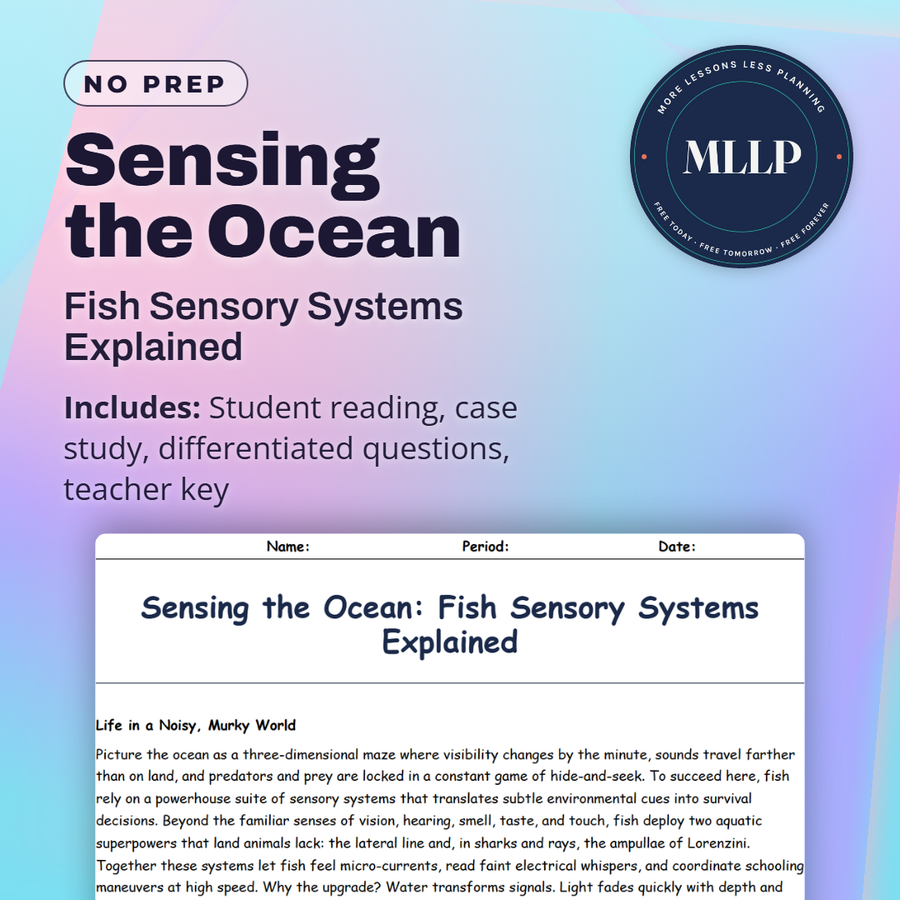
Sensing the Ocean: Fish Sensory Systems Explained
Quality reviewed September 2026
Facts verified September 14, 2026
- Subject
- Science
- Grades
- Grades 9-12
- Length
- 7-page student worksheet
- Time
- About one 50-minute class period
- Great for
- Sub plans and independent work
- Includes
- Reading passage, comprehension questions + full answer key
- Format
- Print-and-go PDF
What students do
- Match terms like the lateral line system, ampullae of Lorenzini, tapetum lucidum, and olfactory receptors to what each one detects
- Fill in the blank sentences on the lateral line, the ampullae of Lorenzini, and the swim bladder's role in hearing
- Answer multiple choice questions on the lateral line's main job, which animals have the ampullae of Lorenzini, and which sense guides salmon home
- Write short answers on schooling and the lateral line, human noise interfering with fish senses, and which sense matters most in different ocean scenarios
What it covers
- How the lateral line lets fish detect pressure changes and coordinate schooling without relying on sight
- How sharks and rays use the ampullae of Lorenzini to detect electrical fields and locate hidden prey
- A case study on leopard sharks and great white sharks, showing how electroreception and the lateral line work together to hunt
Start reading this worksheet
Life in a Noisy, Murky World
Picture the ocean as a three-dimensional maze where visibility changes by the minute, sounds travel farther than on land, and predators and prey are locked in a constant game of hide-and-seek. To succeed here, fish rely on a powerhouse suite of sensory systems that translates subtle environmental cues into survival decisions. Beyond the familiar senses of vision, hearing, smell, taste, and touch, fish deploy two aquatic superpowers that land animals lack: the lateral line and, in sharks and rays, the ampullae of Lorenzini. Together these systems let fish feel micro-currents, read faint electrical whispers, and coordinate schooling maneuvers at high speed. Why the upgrade? Water transforms signals. Light fades quickly with depth and turbidity, sound bends and booms over long distances, chemicals diffuse to create scent trails, and moving bodies carve pressure waves through the water. Evolution met those challenges with sensors tuned to aquatic physics. Schooling fish detect neighbors without looking. Reef fish thread coral mazes by feeling the flow. Cartilaginous fish (sharks, rays, skates) lock onto prey even under sand. In short: the ocean rewards animals that can “listen” with their skin, bones, and nerves, not just their eyes.
Feeling the Flow: The Lateral Line
The lateral line runs like a dotted line along each side of many fish. Inside those tiny pores are canals with neuromasts: clusters of hair cells that bend when water pressure changes. That bending converts hydrodynamic information (waves, wakes, turbulence) into nerve signals. Result: fish “feel” movement around them, whether it’s a predator’s push, a prey fish’s sprint, or the synchronized swish of a school. This sense is especially helpful when visibility drops: at dusk, in plankton blooms, or on stormy coasts. Schooling becomes safer and more efficient: each fish maintains formation by sensing neighbors’ wakes, reducing collisions and conserving energy. Predators read the ripples of fleeing prey; prey detect the pressure signature of an approaching hunter and pivot away moments sooner. Engineers borrow these ideas for underwater robots that use flow sensors to navigate without cameras. To anchor these ideas, compare the big players below:
Reading Electricity: Ampullae of Lorenzini
Sharks, rays, and skates add another superpower: electroreception via the ampullae of Lorenzini, gel-filled pores concentrated on the snout and head. Every living muscle emits a faint electrical field; even a flounder hidden under sand leaks a signal. The ampullae are so sensitive they can register microvolt differences, letting a shark “see” with electricity where light and scent fail. This sense also aids navigation. Many cartilaginous fish likely use Earth’s geomagnetic field, detected indirectly through the same system, to keep long migrations on course. Add this to the lateral line and you get a formidable combination: pressure-wave tracking for motion plus electrolocation for the final pinpoint strike. While most bony fish lack true electroreception, their other senses (especially the lateral line and smell) are often hypertuned to compensate, reflecting different evolutionary pathways to the same goal: reliable meals and avoided mouths.
Like what you read? The full reading, the case study, and every question set are in the free download below, along with the answer key.
Why this matters
A fish senses far more about the water than eyes or a nose could explain. The lateral line reads pressure changes well enough for a whole school to turn in unison, and sharks add a sense we don't have at all, the ampullae of Lorenzini, which detects electrical fields from hidden prey.
Students default to sight as the sense that matters most underwater, so the leopard shark and great white case study pushes back. A leopard shark finds squid it cannot see, and a great white tracks seals through water too murky to see. Matching sense to scenario is the point.
From one teacher to another
Water changes how light, sound, and smell travel, so fish evolved sensory tools that land animals never needed. This worksheet covers the lateral line, which lets fish feel pressure changes and swim in tight schools, along with the ampullae of Lorenzini that let sharks and rays detect electrical fields from hidden prey. The case study follows researchers testing how leopard sharks locate buried squid and how great white sharks track seals through murky water.
What you get
Download
Where should I send the next one?
Everything here is free and it stays that way. Leave your email and I'll send you the new lessons as they go up. You can unsubscribe from any one of them.
Related resources
Fish in the Sea: Anatomy, Physiology, and Adaptations
Gentle Giants: Manatees and Dugongs
Humans and the Ocean: Impacts on Marine Vertebrates
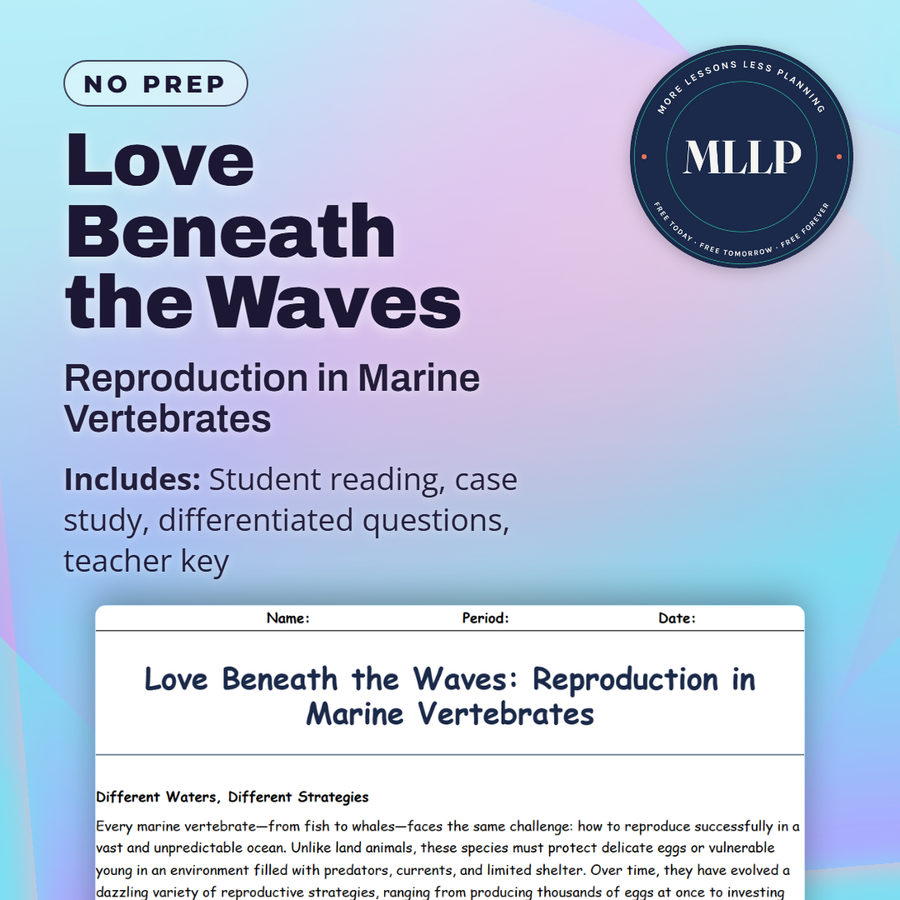
Love Beneath the Waves: Reproduction in Marine Vertebrates
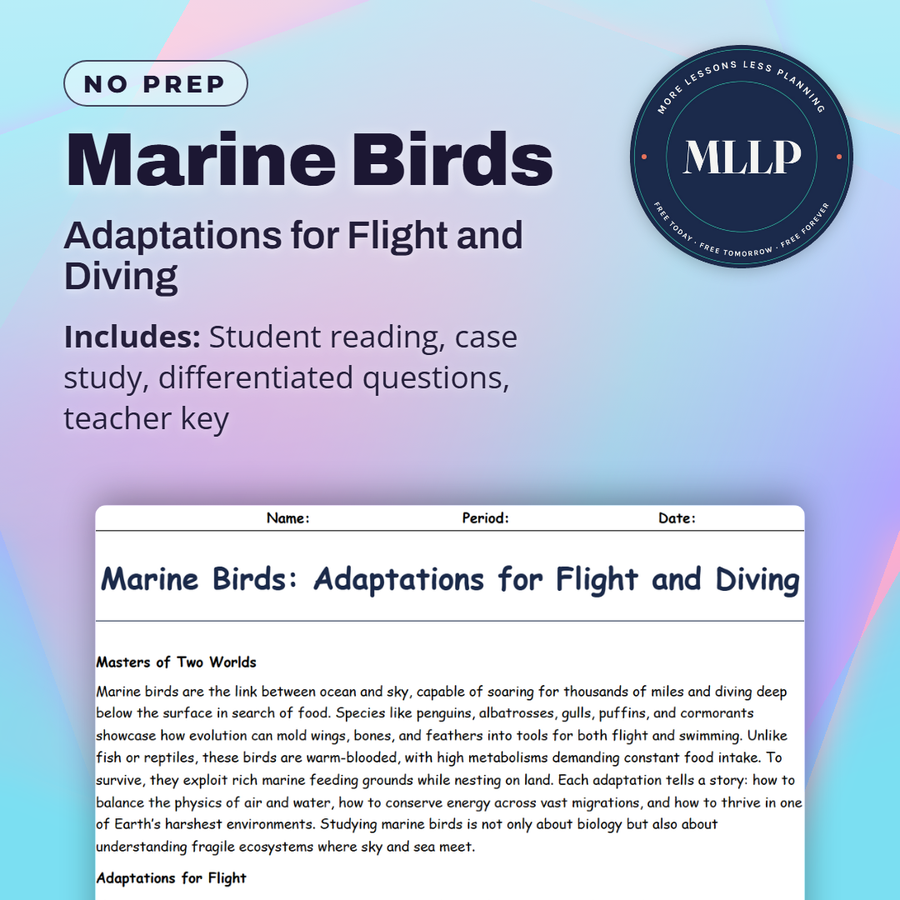
Marine Birds: Adaptations for Flight and Diving
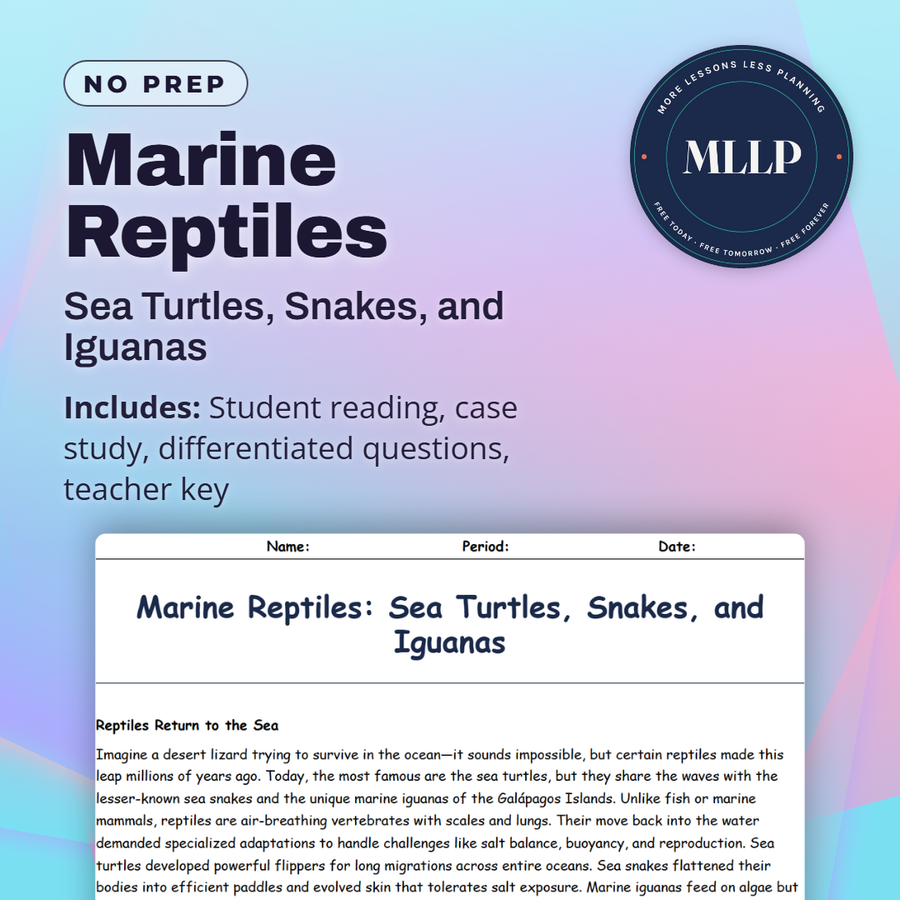
Marine Reptiles: Sea Turtles, Snakes, and Iguanas
Every lesson on this site is free to download and use. If one of them saved you a prep period, you can chip in a few bucks toward my three kids' daycare fund. That's genuinely where tips go.