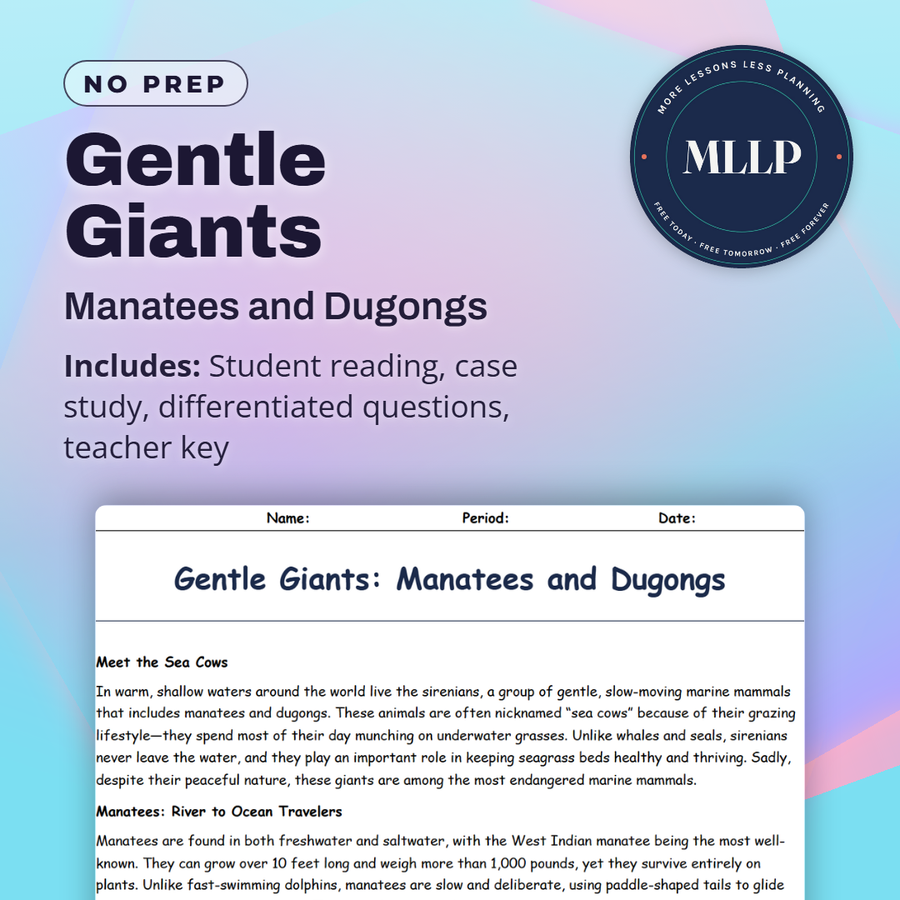
Gentle Giants: Manatees and Dugongs
Quality reviewed September 2026
Facts verified September 14, 2026
- Subject
- Science
- Grades
- Grades 9-12
- Length
- 6-page student worksheet
- Time
- About one 50-minute class period
- Great for
- Sub plans and independent work
- Includes
- Reading passage, comprehension questions + full answer key
- Format
- Print-and-go PDF
What students do
- Match prompts like manatee tail, dugong habitat, dugong snout, and shared trait to the correct description
- Fill in the blank sentences on sea cows, the Indian Ocean, and the seagrass beds damaged by pollution
- Answer multiple choice questions on the main difference between dugongs and manatees, the biggest threat facing slow-swimming manatees, and their shared food source
- Write short answers comparing manatee and dugong tails, dugong vulnerability, and how sirenians help seagrass ecosystems
What it covers
- How manatees travel between rivers and coastal waters while surviving on a plant-based diet
- The differences between dugongs and manatees, including tail shape, habitat, and threats like habitat loss and hunting
- A case study on the Florida manatee crisis, where lost seagrass habitat led to widespread starvation
Start reading this worksheet
Meet the Sea Cows
In warm, shallow waters around the world live the sirenians, a group of gentle, slow-moving marine mammals that includes manatees and dugongs. These animals are often nicknamed “sea cows” because of their grazing lifestyle—they spend most of their day munching on underwater grasses. Unlike whales and seals, sirenians never leave the water, and they play an important role in keeping seagrass beds healthy and thriving. Sadly, despite their peaceful nature, these giants are among the most endangered marine mammals.
Manatees: River to Ocean Travelers
Manatees are found in both freshwater and saltwater, with the West Indian manatee being the most well-known. They can grow over 10 feet long and weigh more than 1,000 pounds, yet they survive entirely on plants. Unlike fast-swimming dolphins, manatees are slow and deliberate, using paddle-shaped tails to glide through rivers and coastal areas. They rise frequently for air and have a gentle, curious nature. Unfortunately, their slow speed makes them vulnerable to boat strikes, one of their biggest threats. Conservation programs now create “manatee zones” where boats must slow down to protect them.
Like what you read? The full reading, the case study, and every question set are in the free download below, along with the answer key.
Why this matters
Manatees and dugongs get grouped together as sea cows so often that most people assume they are the same animal with two names. Tail shape, habitat, and range actually separate them, from the West Indian manatee moving between rivers and coastal water to the dugong's stricter marine life in the Indian and Pacific Oceans, with both sharing a dependence on seagrass.
What reframes the topic for my students is realizing an algal bloom, not a predator, is what left Florida's manatees starving. Seeing how directly a loss of seagrass on land connects to a slow-moving animal's survival turns the tail-shape comparison between manatees and dugongs from trivia into a warning.
From one teacher to another
Manatees and dugongs get grouped together as sea cows, but this worksheet lays out what actually separates them, from tail shape to habitat to diet. Students read about the West Indian manatee's slow pace and vulnerability to boat strikes, along with the dugong's stricter marine lifestyle in the Indian and Pacific Oceans. The case study covers the Florida manatee crisis, when algal blooms wiped out seagrass and left manatees starving.
What you get
Download
Where should I send the next one?
Everything here is free and it stays that way. Leave your email and I'll send you the new lessons as they go up. You can unsubscribe from any one of them.
Related resources
Fish in the Sea: Anatomy, Physiology, and Adaptations
Humans and the Ocean: Impacts on Marine Vertebrates
Love Beneath the Waves: Reproduction in Marine Vertebrates
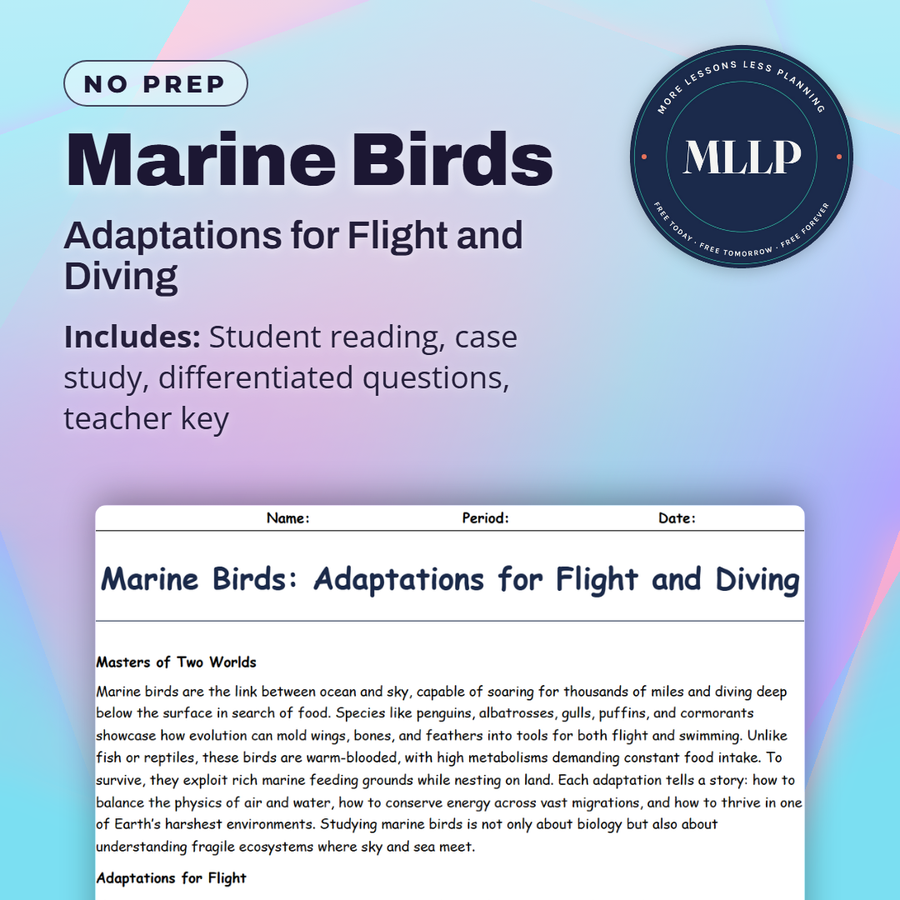
Marine Birds: Adaptations for Flight and Diving
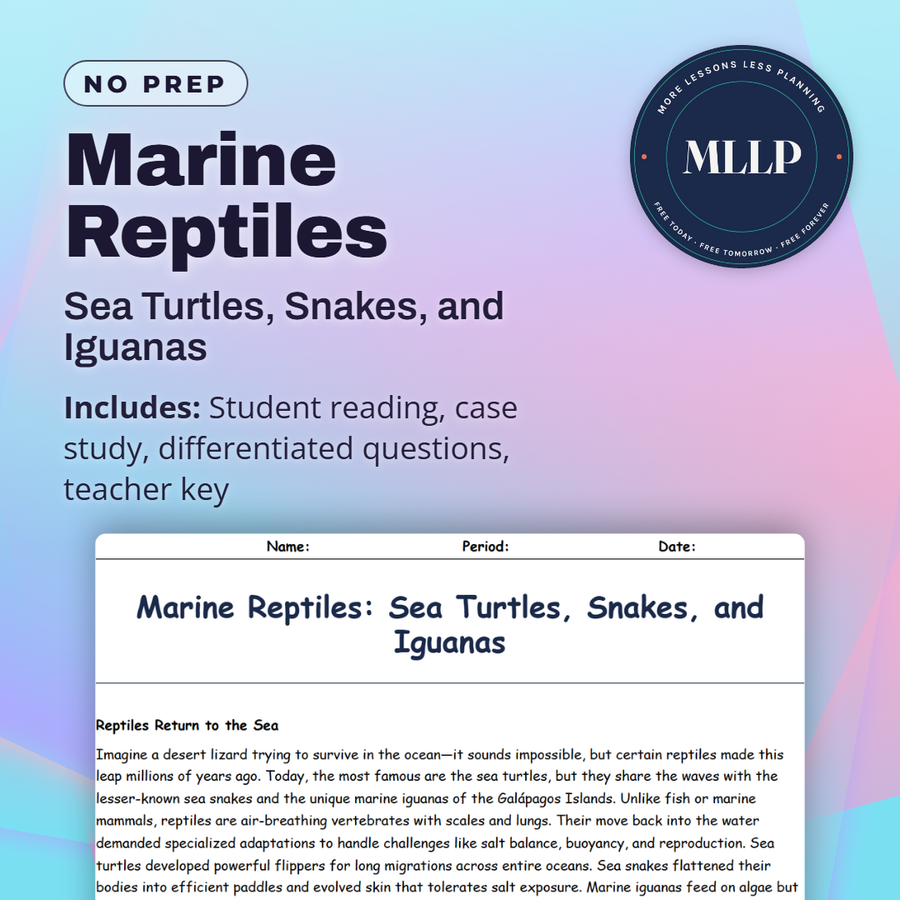
Marine Reptiles: Sea Turtles, Snakes, and Iguanas
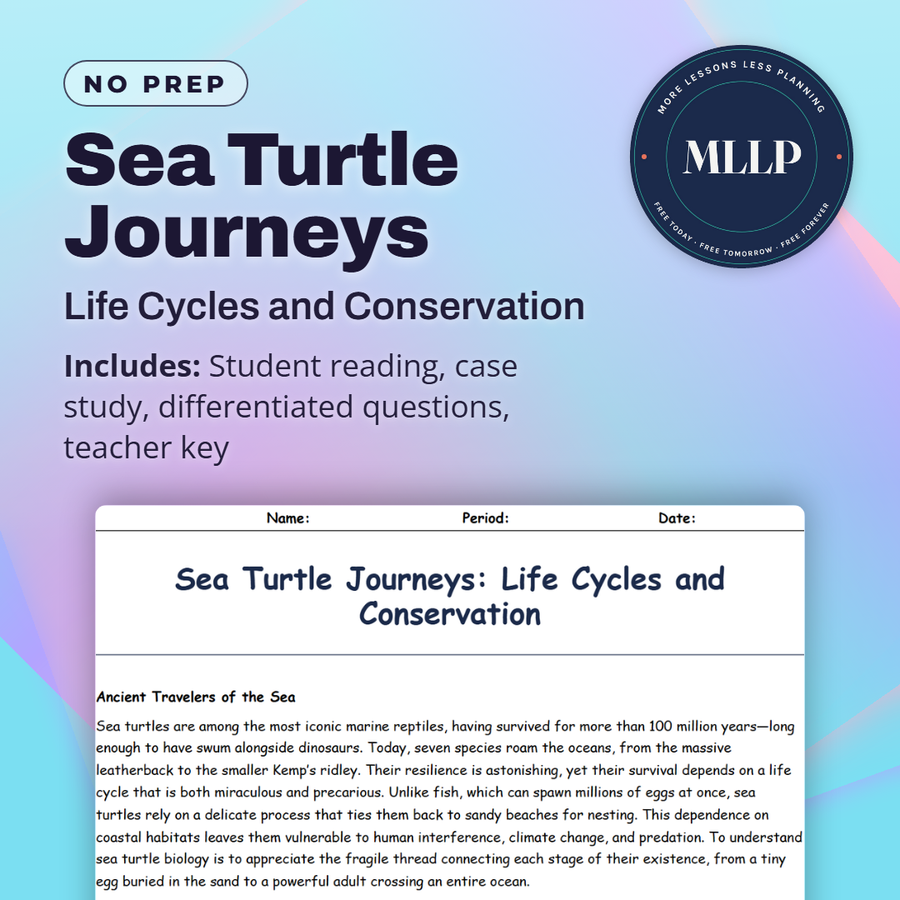
Sea Turtle Journeys: Life Cycles and Conservation
Every lesson on this site is free to download and use. If one of them saved you a prep period, you can chip in a few bucks toward my three kids' daycare fund. That's genuinely where tips go.