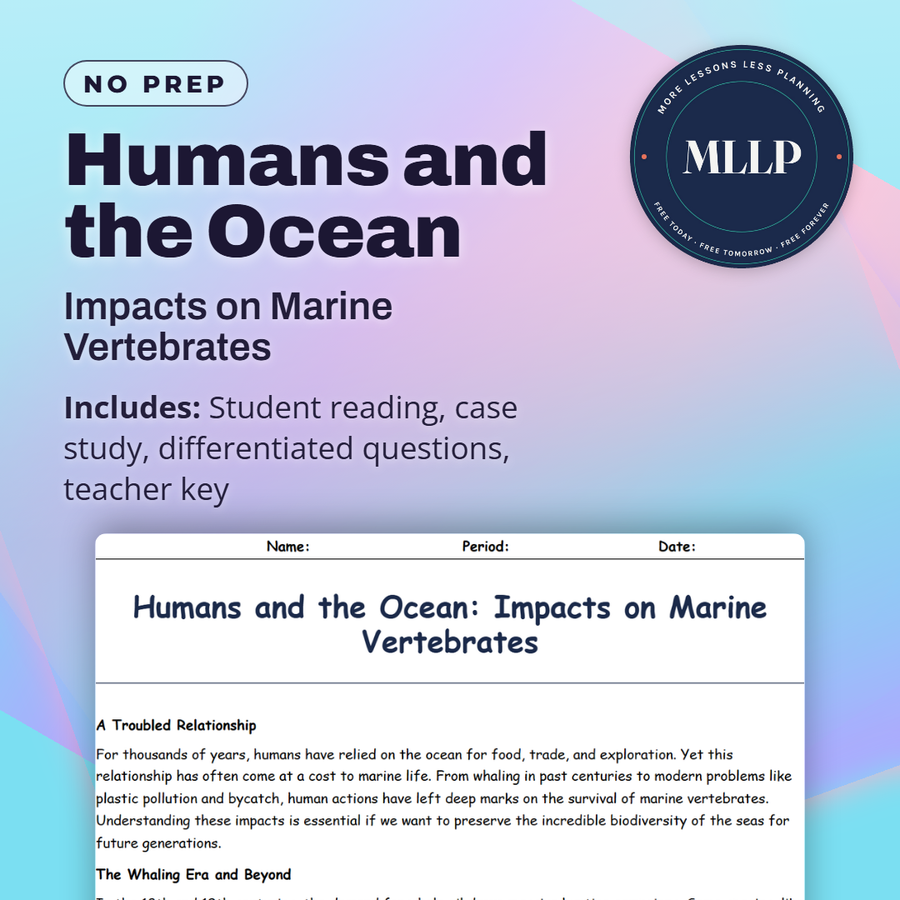
Humans and the Ocean: Impacts on Marine Vertebrates
Quality reviewed September 2026
Facts verified September 14, 2026
- Subject
- Science
- Grades
- Grades 9-12
- Length
- 6-page student worksheet
- Time
- About one 50-minute class period
- Great for
- Sub plans and independent work
- Includes
- Reading passage, comprehension questions + full answer key
- Format
- Print-and-go PDF
What students do
- Match impacts like nearly wiped out whale species, millions of animals caught yearly, and turtles mistaking bags for jellyfish to the correct term
- Fill in the blank sentences on the International Whaling Commission's 1986 ban, plastic bags mistaken for jellyfish, and habitat loss from destroyed mangroves and reefs
- Answer multiple choice questions on what drove historic whaling, what bycatch means, and which option is not a real threat to marine vertebrates
- Write short answers on international cooperation, the ripple effects of overfishing, and ways individuals can reduce their impact on ocean health
What it covers
- How historic whaling nearly wiped out species like the North Atlantic right whale before international bans helped populations recover
- Modern threats to marine vertebrates, including bycatch, overfishing, plastic pollution, and habitat loss
- A case study on the Great Pacific Garbage Patch and how plastic pollution harms both marine vertebrates and the human food chain
Start reading this worksheet
A Troubled Relationship
For thousands of years, humans have relied on the ocean for food, trade, and exploration. Yet this relationship has often come at a cost to marine life. From whaling in past centuries to modern problems like plastic pollution and bycatch, human actions have left deep marks on the survival of marine vertebrates. Understanding these impacts is essential if we want to preserve the incredible biodiversity of the seas for future generations.
The Whaling Era and Beyond
In the 18th and 19th centuries, the demand for whale oil drove massive hunting campaigns. Some species, like the North Atlantic right whale, were nearly wiped out. International agreements like the International Whaling Commission’s 1986 ban on commercial whaling have helped populations recover, but not all whales are safe. Some countries still hunt whales, and collisions with ships remain a serious threat. The history of whaling shows how human exploitation can push species to the brink—and how international action can make a difference.
Bycatch and Overfishing
Fishing provides food for billions of people, but it also unintentionally captures non-target animals, a problem known as bycatch. Dolphins, turtles, seabirds, and even sharks often get caught in nets or hooked on longlines. Bycatch kills millions of animals every year. Overfishing adds another challenge: removing too many fish from the ocean destabilizes ecosystems, leaving predators without enough food. Solutions include safer fishing gear and stricter management of fisheries.
Like what you read? The full reading, the case study, and every question set are in the free download below, along with the answer key.
Why this matters
A sea turtle cannot tell a floating plastic bag from a jellyfish, and that mistake links this reading's oldest story to its newest. Whaling nearly wiped out species like the North Atlantic right whale before a 1986 international ban let populations start recovering, and today bycatch, overfishing, and plastic threaten many of the same animals in quieter ways.
Students tend to picture whaling as a settled, historical problem, so pairing it with the Great Pacific Garbage Patch case study shows them the threat just changed shape. Plastic that starts as ocean waste ends up traced back into the human food chain, which makes the problem feel personal instead of distant.
From one teacher to another
People have depended on the ocean for food and trade for thousands of years, and this worksheet traces the cost that relationship has had on marine vertebrates. Readings cover the whaling era, bycatch in fishing gear, overfishing, and the plastic and habitat loss that threaten species today. The case study zooms in on the Great Pacific Garbage Patch and how plastic works its way from the ocean into the human food chain.
What you get
Download
Where should I send the next one?
Everything here is free and it stays that way. Leave your email and I'll send you the new lessons as they go up. You can unsubscribe from any one of them.
Related resources
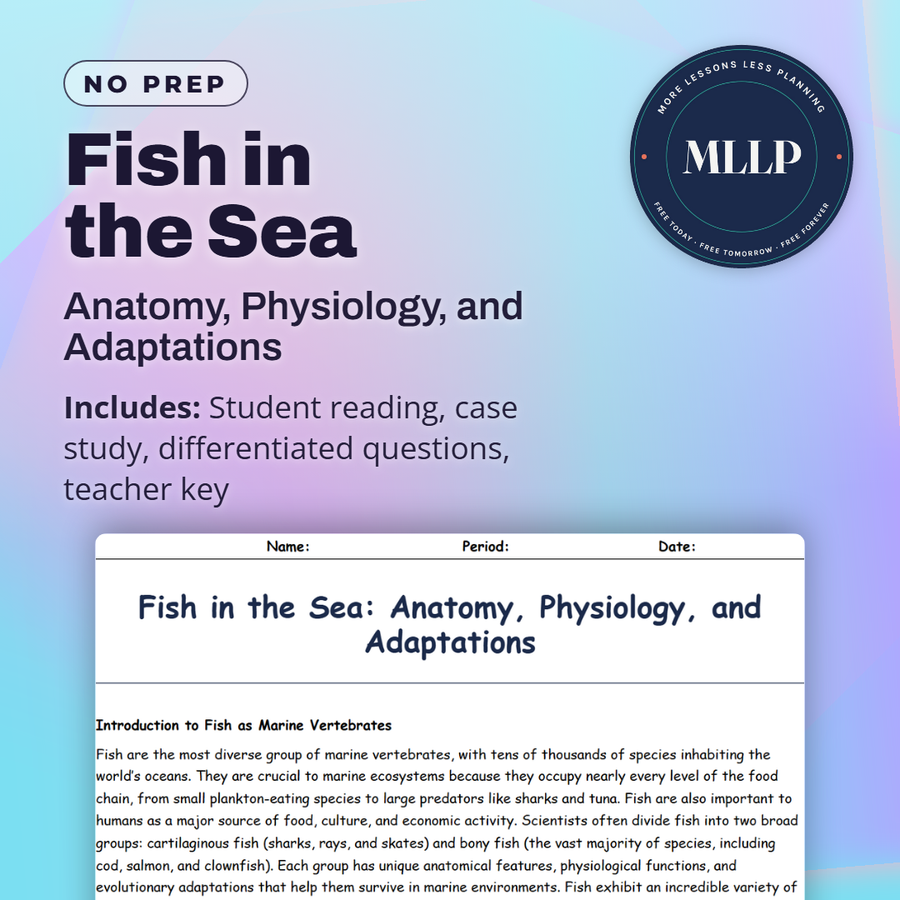
Fish in the Sea: Anatomy, Physiology, and Adaptations
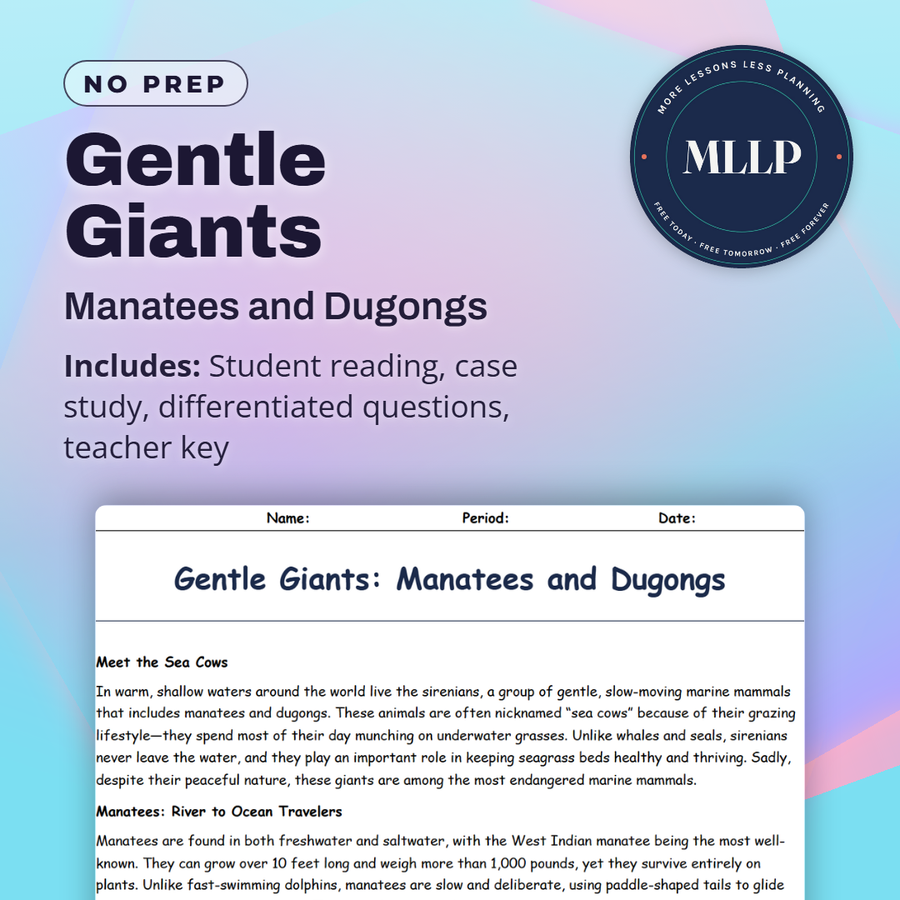
Gentle Giants: Manatees and Dugongs
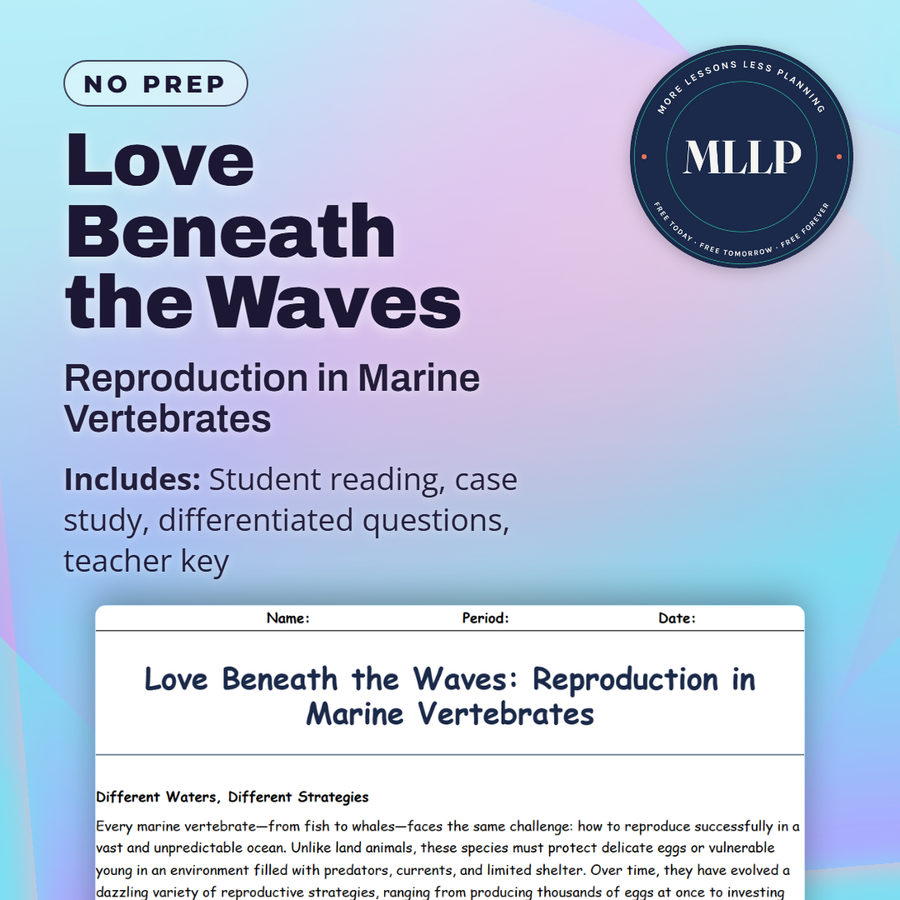
Love Beneath the Waves: Reproduction in Marine Vertebrates
Marine Birds: Adaptations for Flight and Diving
Marine Reptiles: Sea Turtles, Snakes, and Iguanas
Sea Turtle Journeys: Life Cycles and Conservation
Every lesson on this site is free to download and use. If one of them saved you a prep period, you can chip in a few bucks toward my three kids' daycare fund. That's genuinely where tips go.