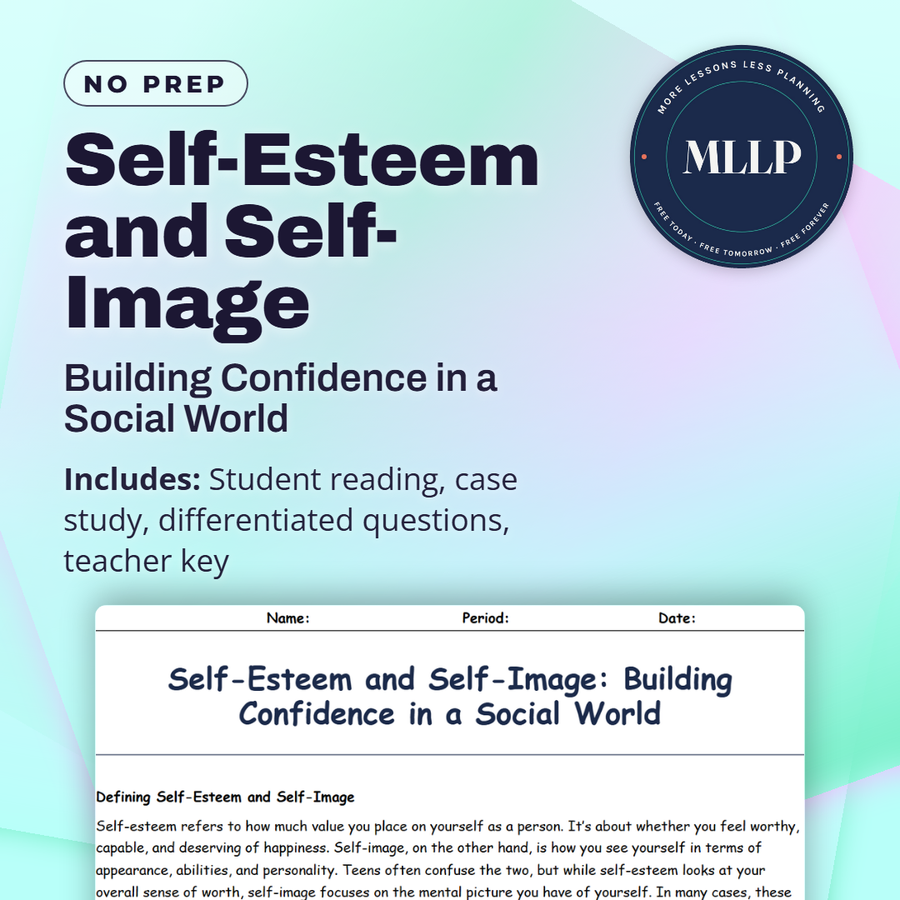
Self-Esteem and Self-Image: Building Confidence in a Social World
Quality reviewed September 2026
Facts verified September 21, 2026
- Subject
- Career & Life Skills
- Grades
- Grades 9-12
- Length
- 7-page student worksheet
- Time
- About one 50-minute class period
- Great for
- Sub plans and independent work
- Includes
- Reading passage, comprehension questions + full answer key
- Format
- Print-and-go PDF
What students do
- Match terms like self-image, the comparison trap, and resilience to their definitions.
- Answer multiple-choice questions on what self-esteem actually means and how social media comparison affects it.
- Fill in the blank to name self-esteem, confidence, and weaknesses in key sentences about a realistic self-image.
- Answer short-answer questions on why small wins matter for self-esteem and how a mentor can help.
What it covers
- How self-esteem, your overall sense of worth, differs from self-image, the mental picture you hold of your looks and abilities, and how social media, peers, and family shape both.
- Practical steps for challenging negative self-talk and building confidence through small, achievable goals.
- A case study about a sophomore guitarist who nearly skips his own recital out of fear of one wrong note.
Start reading this worksheet
Defining Self-Esteem and Self-Image
Self-esteem refers to how much value you place on yourself as a person. It’s about whether you feel worthy, capable, and deserving of happiness. Self-image, on the other hand, is how you see yourself in terms of appearance, abilities, and personality. Teens often confuse the two, but while self-esteem looks at your overall sense of worth, self-image focuses on the mental picture you have of yourself. In many cases, these concepts are closely related: if you have a poor self-image, perhaps feeling you are unattractive or untalented, it can lower your self-esteem. Conversely, if you have high self-esteem, you’re likely to interpret your self-image more positively, noticing your strengths and recognizing your areas for growth without feeling defeated. In high school, these ideas take center stage. You might compare your looks, achievements, or social status to others. While some level of comparison is normal, it can become harmful if it leads you to believe you don’t measure up. A healthy sense of self allows you to celebrate peers’ successes without belittling your own. It also makes you more resilient when facing the inevitable ups and downs of teenage life. Recognizing that nobody is perfect and that everyone has unique strengths helps maintain a balanced perspective on who you are and what you can become.
Influences of Social Media, Peers, and Family
Social media platforms can dramatically affect how teens perceive themselves. Seeing filtered photos of friends or influencers living seemingly glamorous lives can trigger unrealistic comparisons. If your feed is filled with people who appear flawless, you might feel inadequate or believe you’re failing if you’re not matching that same level of perfection. But keep in mind that social media often highlights only the best, most curated moments. Likes and comments can also play into self-worth, making some teens feel validated only when they receive a high number of reactions. Peers and family members also have a big impact. Casual remarks (even if said in jest) about someone’s weight, clothes, or academic performance can linger in a teen’s mind. Similarly, enthusiastic support and positive feedback from friends or family can boost self-esteem and build a healthier self-image. It’s important to remember that everyone experiences setbacks and imperfections. A trusted friend who points out your unique talents or a family member who encourages you to pursue your passions can strengthen your self-image.
Practical Tips for Building Confidence and Self-Acceptance
One of the first steps to improve self-esteem is to identify negative thought patterns. Are you quick to dismiss compliments or dwell on criticism? Challenging these thoughts can help reframe how you see yourself. For instance, if you catch yourself thinking, “I’m bad at everything,” you might challenge that with evidence of something you’ve done well, like a school project or a supportive gesture toward a friend. Over time, these little mindset shifts can accumulate into a more positive self-view. Additionally, focusing on activities that you find genuinely rewarding (whether it’s painting, playing a musical instrument, or practicing a sport) helps build a sense of competence. Setting small, achievable goals in these areas can provide tangible proof of your abilities. Each success story, no matter how small, reinforces the idea that you are capable. Don’t underestimate the power of self-care routines either: adequate rest, balanced nutrition, and regular exercise can help regulate mood and maintain a healthier outlook on life.
Like what you read? The full reading, the case study, and every question set are in the free download below, along with the answer key.
Why this matters
Self-esteem in high school isn't fixed by junior year — it's still being built, which is exactly why a bad week or a cruel comment can knock a student off balance more than it would an adult. The worksheet's distinction between self-esteem and self-image gives students language for a feeling they already have but can't name: that a rough afternoon scrolling can lower how worthy they feel even though nothing in their actual life changed. That distinction is worth teaching directly instead of hoping it sinks in on its own.
If you or someone you know is struggling, call or text 988 (Suicide & Crisis Lifeline, US) or talk to a trusted adult right away.
From one teacher to another
I put this reading in front of students right after we talk about social media habits, because the gap between self-esteem and self-image is one they've never had spelled out for them. The passages trace where a distorted self-image comes from, then hand students concrete ways to push back against negative self-talk. Dominic's case study, a guitarist who nearly skips his own recital out of fear of one wrong note, gives the abstract idea of self-doubt a face students can talk about.
What you get
Download
Where should I send the next one?
Everything here is free and it stays that way. Leave your email and I'll send you the new lessons as they go up. You can unsubscribe from any one of them.
Related resources
Coping Strategies: Healthy vs. Unhealthy Reactions to Stress
Depression and Anxiety in Teens: Signs, Symptoms, and Support
Finding Strength in Others: Support Systems and Community Resources
Getting Help: When to Reach Out and Who to Turn To
Grief and Loss: Helping Teens Understand and Heal
Mindfulness for Teens: Simple Habits for Mental Wellness
Every lesson on this site is free to download and use. If one of them saved you a prep period, you can chip in a few bucks toward my three kids' daycare fund. That's genuinely where tips go.