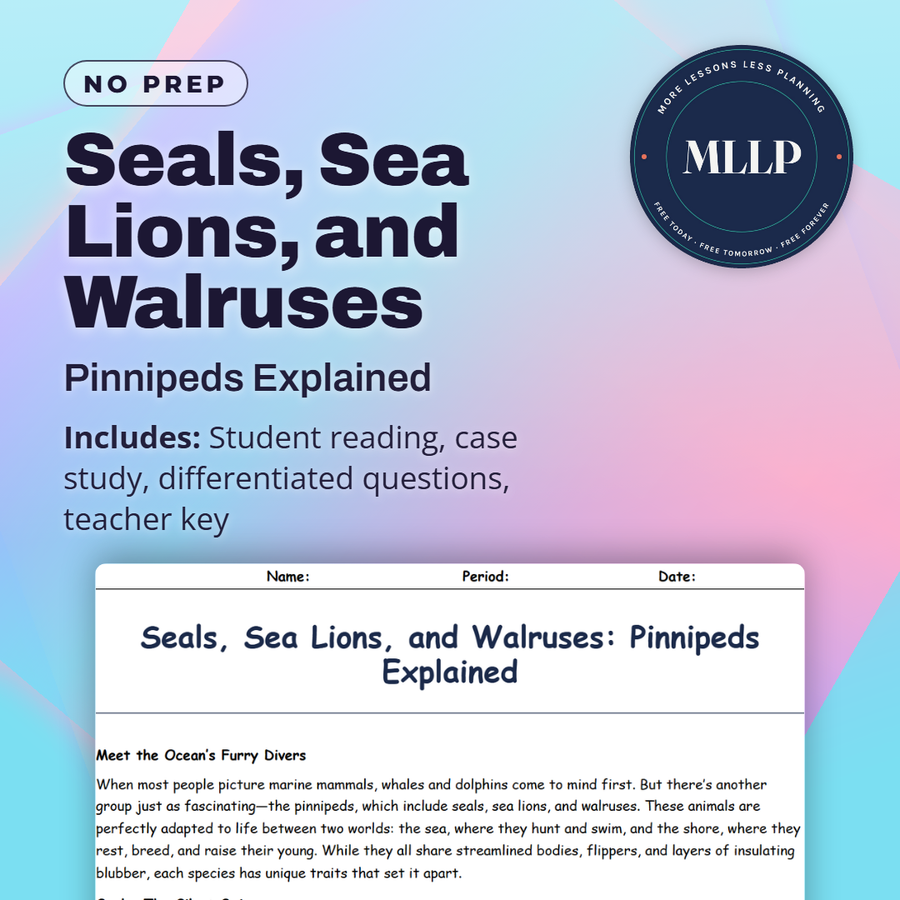
Seals, Sea Lions, and Walruses: Pinnipeds Explained
Quality reviewed September 2026
Facts verified September 14, 2026
- Subject
- Science
- Grades
- Grades 9-12
- Length
- 6-page student worksheet
- Time
- About one 50-minute class period
- Great for
- Sub plans and independent work
- Includes
- Reading passage, comprehension questions + full answer key
- Format
- Print-and-go PDF
What students do
- Match prompts like walrus tusks, seal ears, sea lion locomotion, and seal body shape to the correct description
- Fill in the blank sentences on wriggling seals, walrus blubber, and sea lion colonies
- Answer multiple choice questions on which pinniped has ear flaps, what walruses eat, and the law that helped California sea lions recover
- Write short answers comparing pinniped diets, why walruses are vulnerable to climate change, and anatomical differences between seals and sea lions
What it covers
- The physical differences between seals, sea lions, and walruses, including ears, land movement, and diet
- How walruses use their tusks for dominance, breaking ice, and hauling out, while relying on thick blubber for warmth
- A case study on the California sea lion population recovering after the Marine Mammal Protection Act banned hunting
Start reading this worksheet
Meet the Ocean’s Furry Divers
When most people picture marine mammals, whales and dolphins come to mind first. But there’s another group just as fascinating: the pinnipeds, which include seals, sea lions, and walruses. These animals are perfectly adapted to life between two worlds: the sea, where they hunt and swim, and the shore, where they rest, breed, and raise their young. While they all share streamlined bodies, flippers, and layers of insulating blubber, each species has unique traits that set it apart.
Seals: The Silent Swimmers
True seals, also called earless seals, are masters of stealth in the water. They lack external ear flaps, giving their heads a smooth, rounded appearance. Instead of walking on land, seals move awkwardly by wriggling their bodies, but in the ocean, they are graceful and agile. Their short flippers and torpedo-shaped bodies make them fast swimmers, perfect for chasing fish, squid, and other prey. Harbor seals, for example, can dive for more than 30 minutes and reach depths over 1,500 feet! While not as noisy as their cousins, seals use growls and slaps to communicate, especially during mating season.
Sea Lions: The Noisy Performers
Unlike seals, sea lions have visible external ear flaps and large, strong front flippers. These allow them to “walk” on land by rotating their hind flippers forward, a handy skill when hauling out onto beaches or rocky shores. Sea lions are also famous for their loud barks, which they use to defend territory and interact socially. Highly social and curious, sea lions often gather in large groups called colonies. They are also excellent hunters, able to chase schools of fish with teamwork and speed. Their playful behavior makes them popular in aquariums and zoos, but in the wild, they are hardworking predators and devoted parents.
Like what you read? The full reading, the case study, and every question set are in the free download below, along with the answer key.
Why this matters
Ask a class the difference between a seal, a sea lion, and a walrus and most shrug, when the answer is visible if you know where to look: sea lions have small ear flaps and can walk on land, while seals have none and wriggle on their bellies. Walruses use their tusks to break ice, haul out, and settle disputes.
I use this to stop students lumping every flippered animal together as a seal. The California sea lion case study adds a clean before and after: hunting nearly emptied the population, and the Marine Mammal Protection Act let it rebound, one of the unit's few unambiguous happy endings.
From one teacher to another
Whales and dolphins usually get the spotlight, but this worksheet turns attention to pinnipeds, the group that includes seals, sea lions, and walruses. Readings compare how each species moves on land, communicates, and finds food, from a seal's wriggling crawl to a walrus's tusk-assisted haul-out. The case study covers how the California sea lion population rebounded once hunting was banned under the Marine Mammal Protection Act.
What you get
Download
Where should I send the next one?
Everything here is free and it stays that way. Leave your email and I'll send you the new lessons as they go up. You can unsubscribe from any one of them.
Related resources
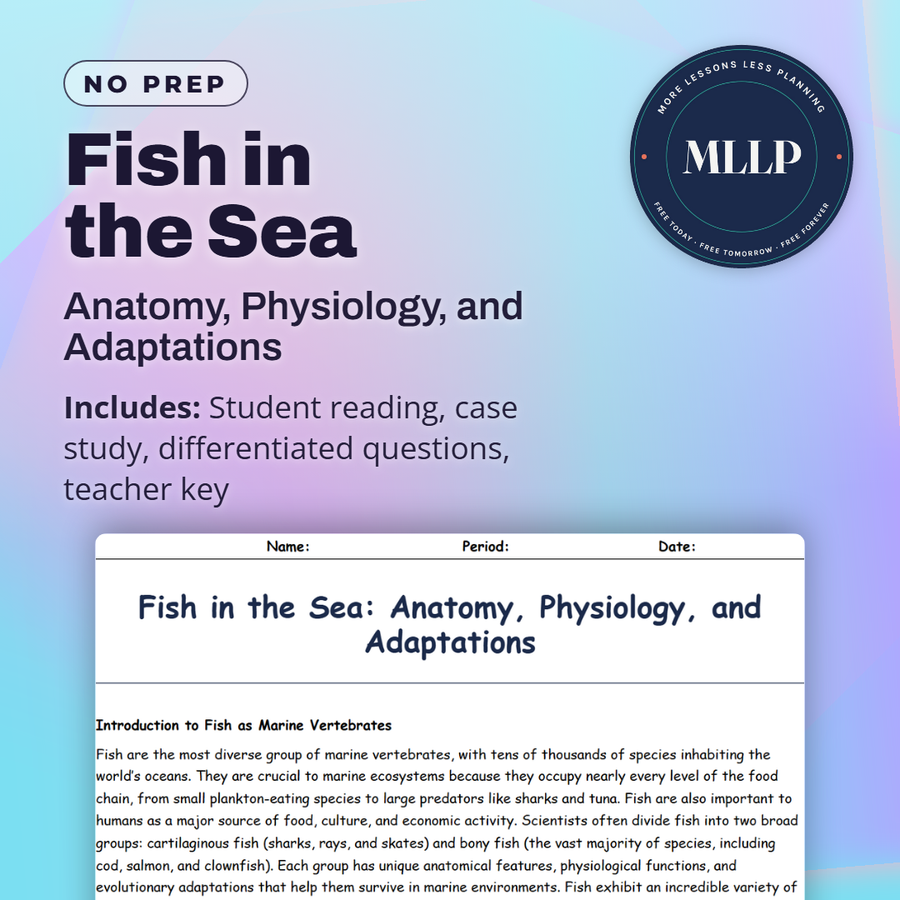
Fish in the Sea: Anatomy, Physiology, and Adaptations
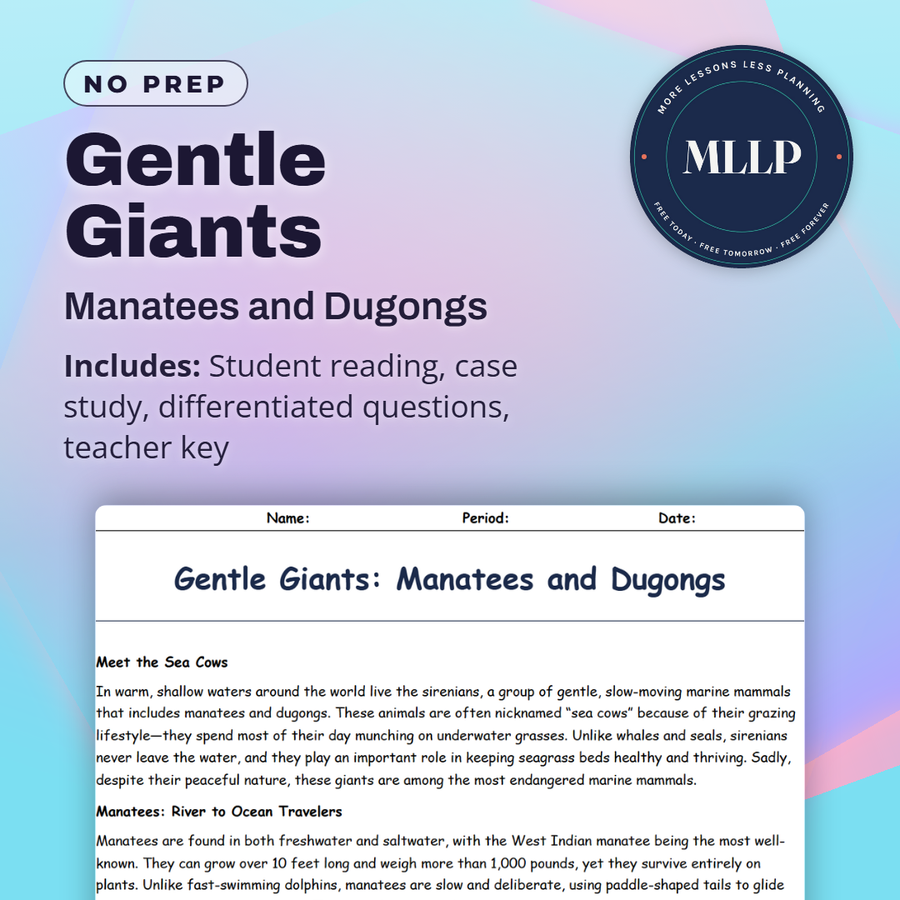
Gentle Giants: Manatees and Dugongs
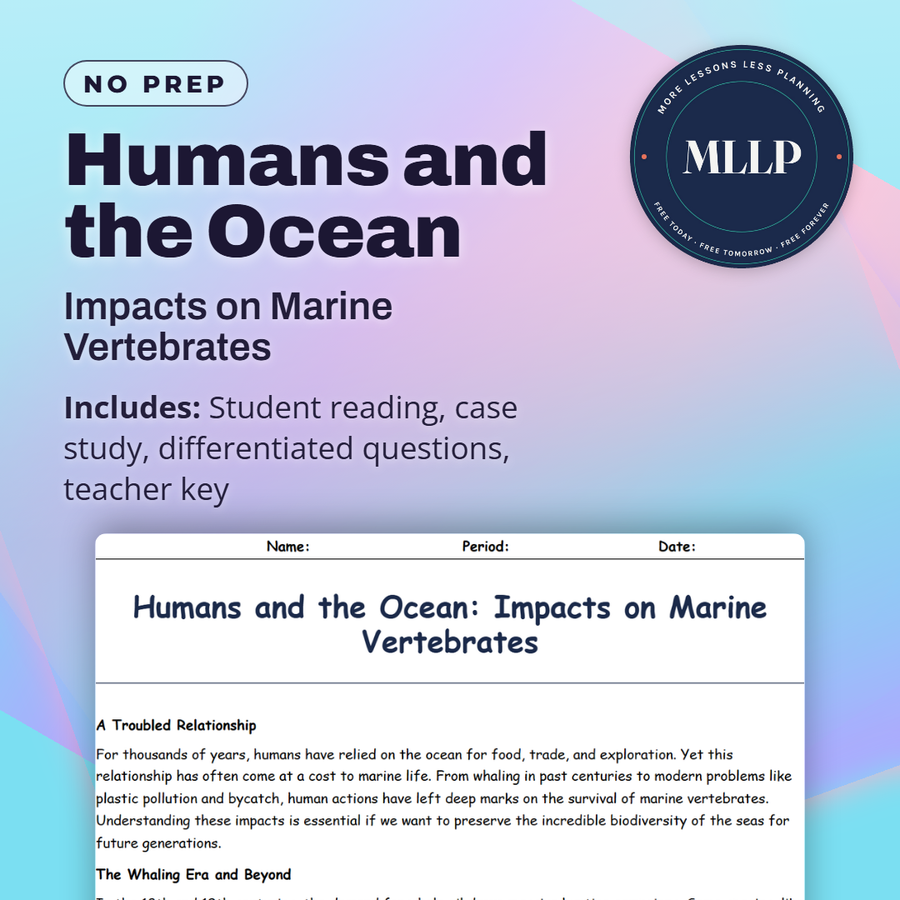
Humans and the Ocean: Impacts on Marine Vertebrates
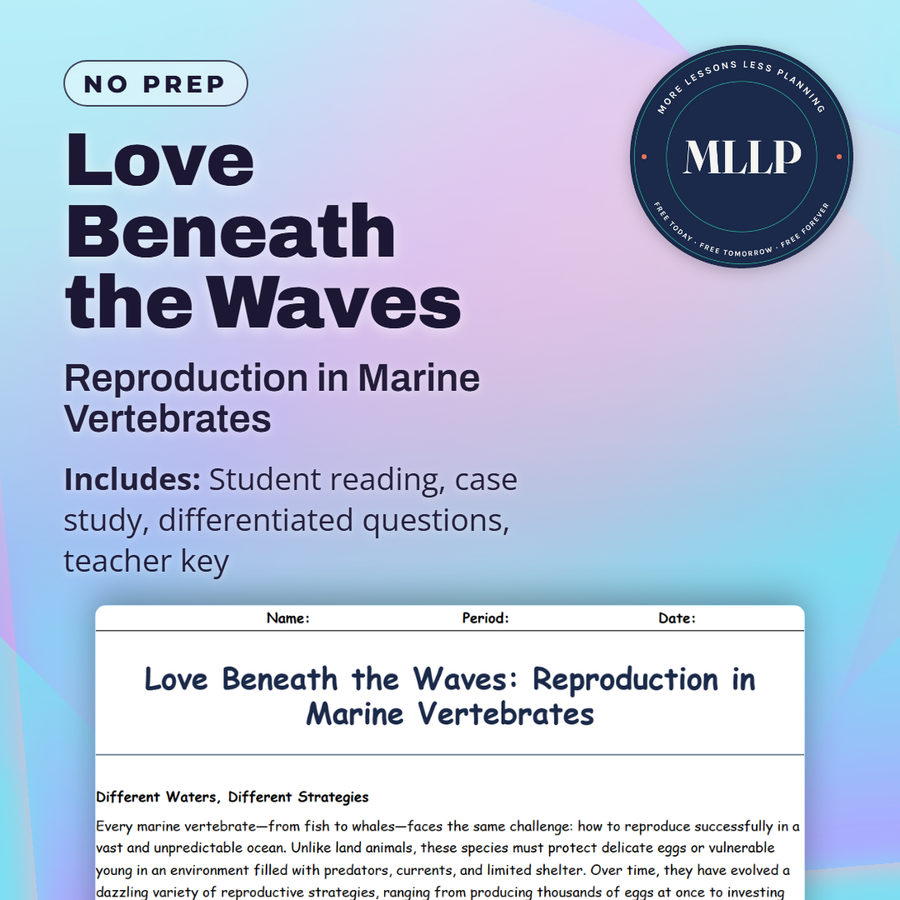
Love Beneath the Waves: Reproduction in Marine Vertebrates
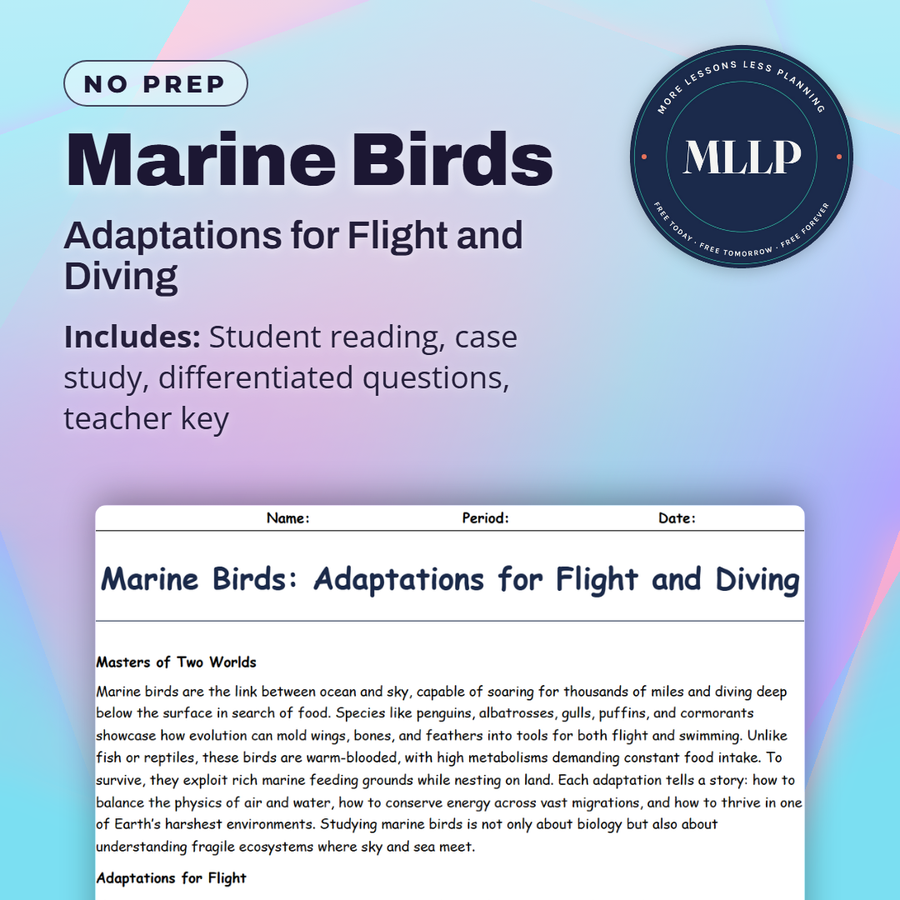
Marine Birds: Adaptations for Flight and Diving
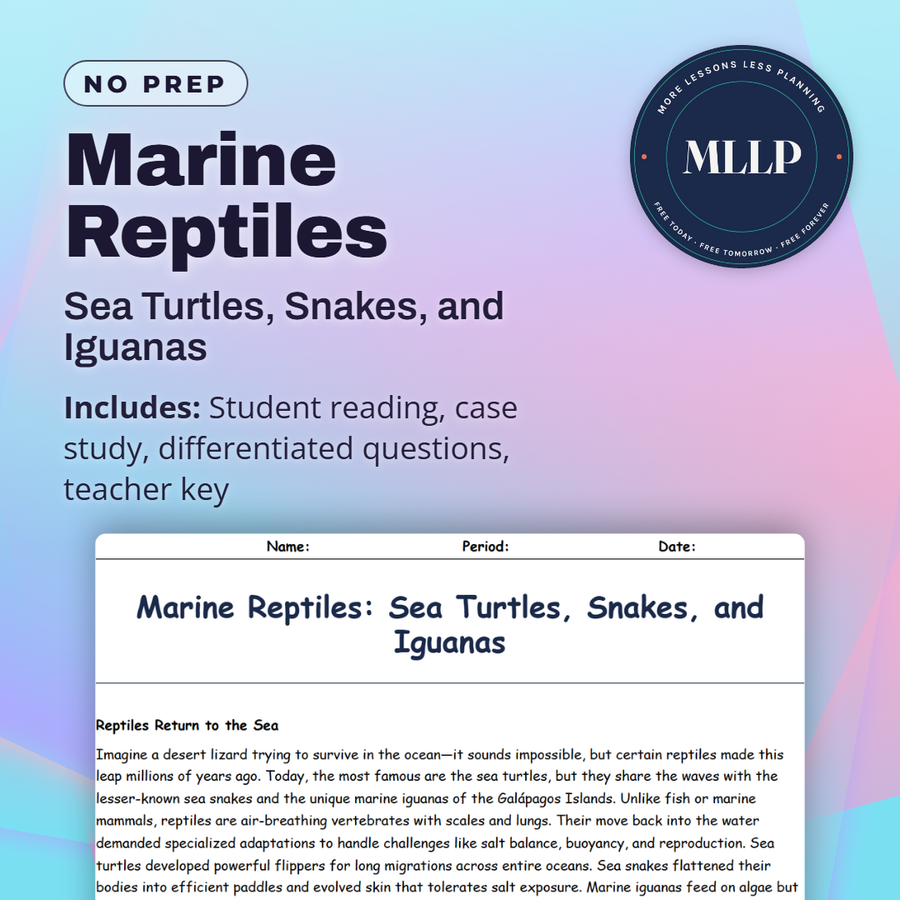
Marine Reptiles: Sea Turtles, Snakes, and Iguanas
Every lesson on this site is free to download and use. If one of them saved you a prep period, you can chip in a few bucks toward my three kids' daycare fund. That's genuinely where tips go.