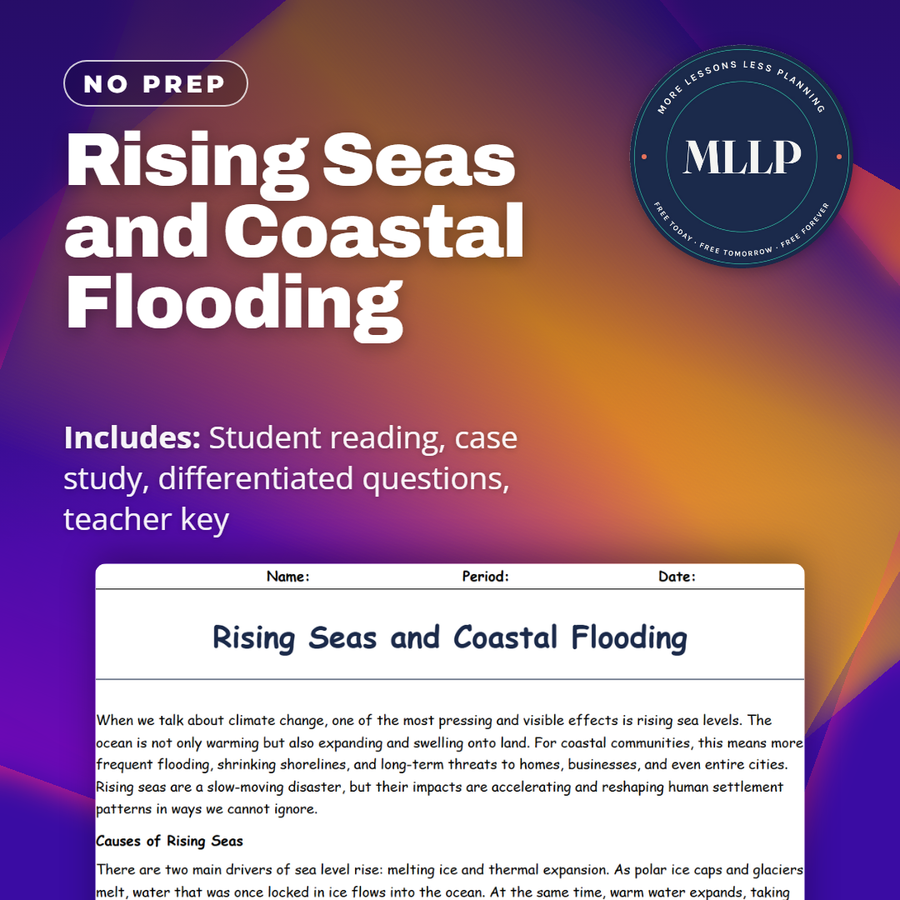
Rising Seas and Coastal Flooding
Quality reviewed September 2026
Facts verified September 14, 2026
- Subject
- Science
- Grades
- Grades 9-12
- Length
- 6-page student worksheet
- Time
- About one 50-minute class period
- Great for
- Sub plans and independent work
- Includes
- Reading passage, comprehension questions + full answer key
- Format
- Print-and-go PDF
What students do
- Match terms like thermal expansion, managed retreat, sunny day flooding, storm surge, and saltwater intrusion to their correct definitions
- Fill in the blank sentences on thermal expansion, the Maldives and Tuvalu, and managed retreat
- Answer multiple choice questions on what causes sea level rise, which nations face existential threats, and what managed retreat means
- Write short answers on how rising seas worsen hurricanes, the economic costs for coastal cities, and adaptation strategies cities can use
What it covers
- The two main drivers of sea level rise, melting ice and thermal expansion
- The human and economic consequences of rising seas for coastal cities and low-lying island nations
- A case study on Miami's ongoing battle with sunny day flooding and storm surge
Start reading this worksheet
When we talk about climate change, one of the most pressing and visible effects is rising sea levels. The ocean is not only warming but also expanding and swelling onto land. For coastal communities, this means more frequent flooding, shrinking shorelines, and long-term threats to homes, businesses, and even entire cities. Rising seas are a slow-moving disaster, but their impacts are accelerating and reshaping human settlement patterns in ways we cannot ignore.
Causes of Rising Seas
There are two main drivers of sea level rise: melting ice and thermal expansion. As polar ice caps and glaciers melt, water that was once locked in ice flows into the ocean. At the same time, warm water expands, taking up more space than cooler water. Together, these processes explain why even small increases in global temperature can translate into significant rises in sea level. Human activities such as burning fossil fuels intensify this process by trapping heat in the atmosphere, which is then absorbed by the ocean.
Flooding Risks and Coastal Impacts
Rising seas increase the risk of both chronic flooding and extreme storm surges. Coastal cities like Miami, New York, and Jakarta already experience “sunny day flooding,” when high tides push seawater onto streets without any storm at all. Storms such as hurricanes and typhoons become far more destructive when they ride on higher seas, pushing storm surges deeper inland. In addition to property damage, these events erode beaches, damage wetlands, and contaminate freshwater supplies with saltwater intrusion.
Like what you read? The full reading, the case study, and every question set are in the free download below, along with the answer key.
Why this matters
Why would a city flood with no rain and no storm in sight? In Miami, seawater now pushes up through storm drains on ordinary sunny afternoons, a preview of what thermal expansion and melting ice are doing to sea level everywhere, and an existential threat to low lying nations like the Maldives and Tuvalu.
My students assume seawalls and pumps are a permanent fix, so I show them what Miami has actually paid for those defenses and how storm surge and saltwater intrusion still get through. Managed retreat sounds abstract until they realize it means a government deciding which neighborhoods stop being defended.
From one teacher to another
Sea level rise sounds gradual until you look at a city like Miami, where seawater already bubbles up through storm drains on clear days, and this reading explains why. Students connect melting ice and thermal expansion to the flooding risks facing coastal cities and island nations like the Maldives and Tuvalu. The Miami case study shows both the money being spent on pumps and seawalls and the limits of those defenses. Vocabulary like storm surge and managed retreat gives students language for both the problem and the response.
What you get
Download
Where should I send the next one?
Everything here is free and it stays that way. Leave your email and I'll send you the new lessons as they go up. You can unsubscribe from any one of them.
Related resources
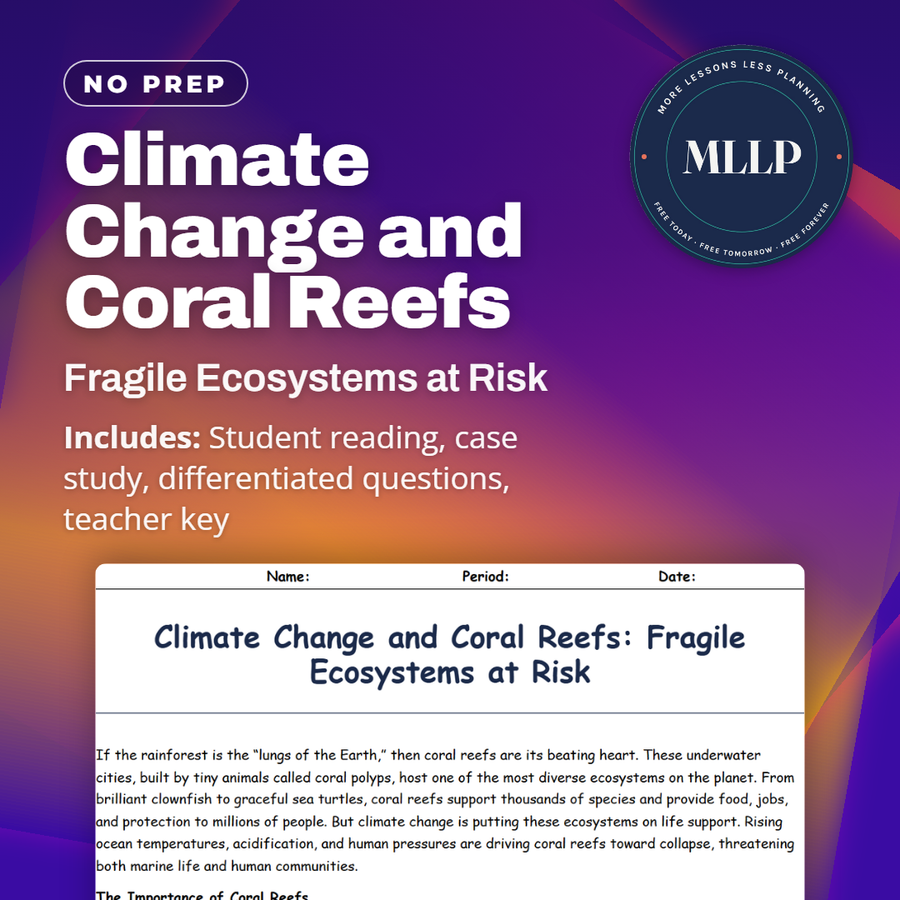
Climate Change and Coral Reefs: Fragile Ecosystems at Risk
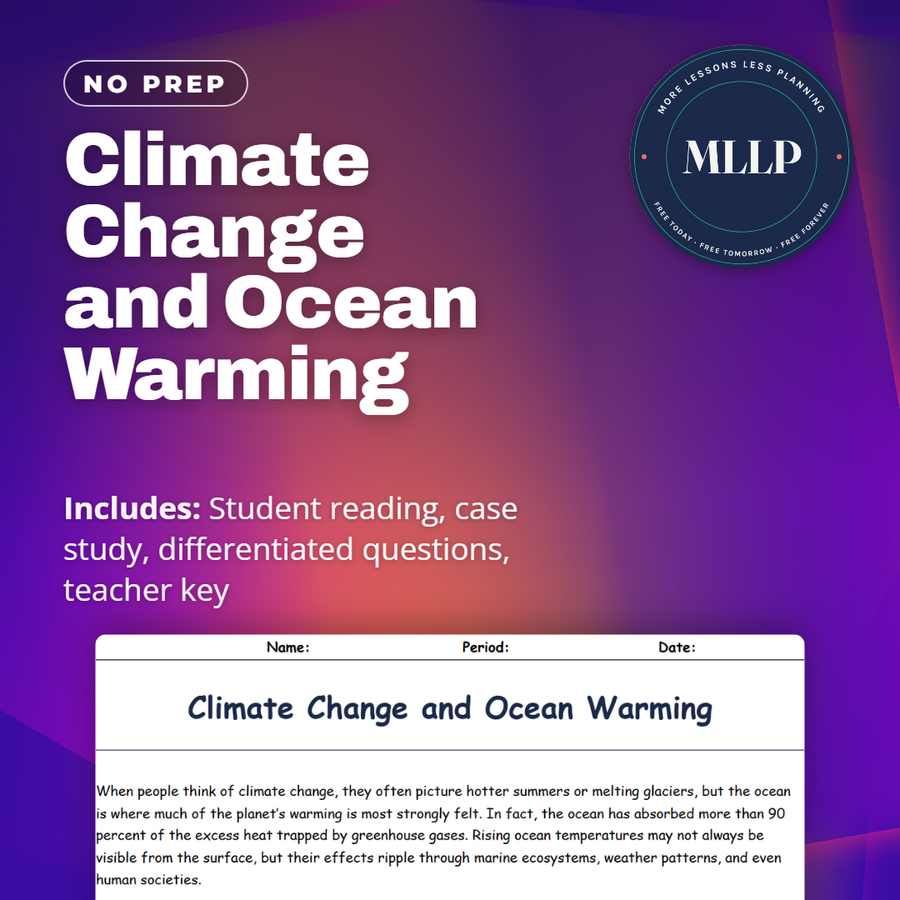
Climate Change and Ocean Warming
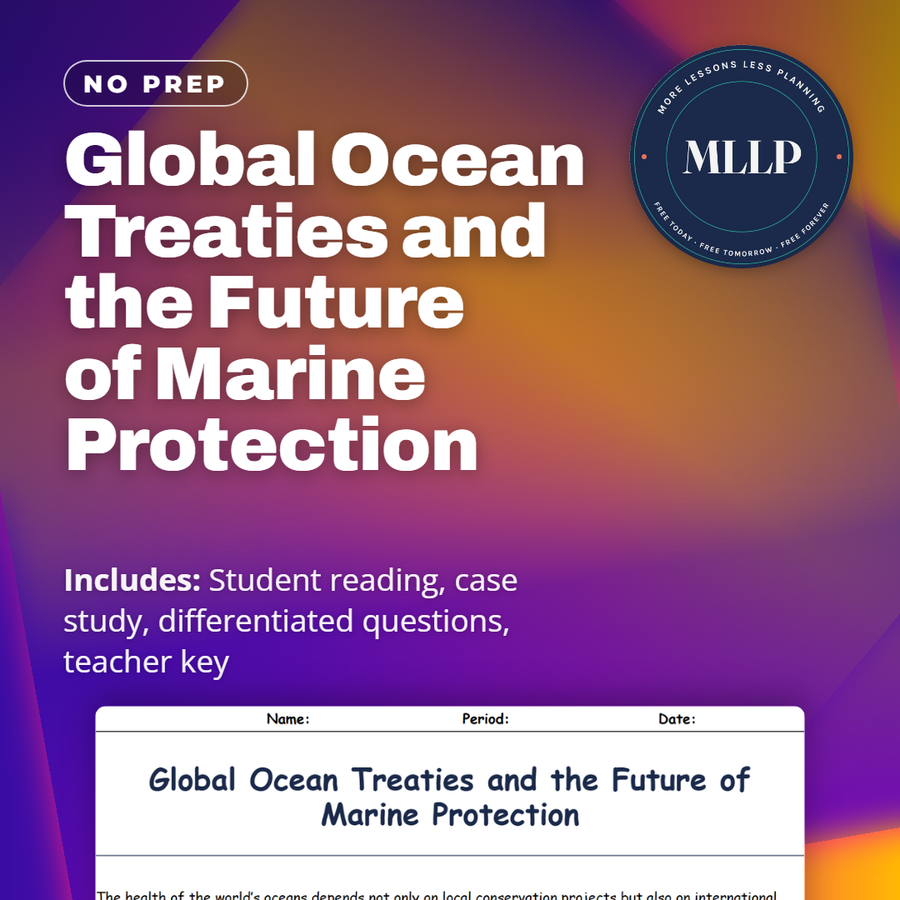
Global Ocean Treaties and the Future of Marine Protection
Marine Pollution: Plastics, Oil Spills, and Chemicals
Nutrient Pollution and the Formation of Dead Zones
Ocean Conservation Strategies and Marine Protected Areas
Every lesson on this site is free to download and use. If one of them saved you a prep period, you can chip in a few bucks toward my three kids' daycare fund. That's genuinely where tips go.