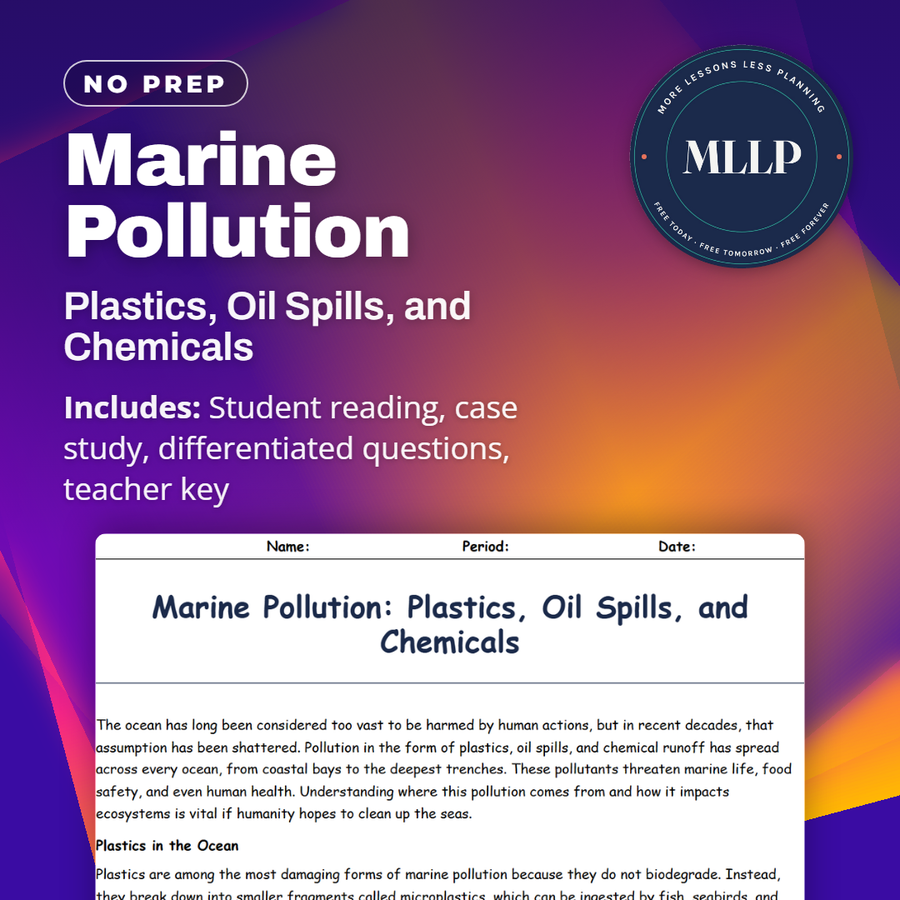
Marine Pollution: Plastics, Oil Spills, and Chemicals
Quality reviewed September 2026
Facts verified September 14, 2026
- Subject
- Science
- Grades
- Grades 9-12
- Length
- 6-page student worksheet
- Time
- About one 50-minute class period
- Great for
- Sub plans and independent work
- Includes
- Reading passage, comprehension questions + full answer key
- Format
- Print-and-go PDF
What students do
- Match terms like plastics, oil spills, fertilizers, industrial waste, and the Deepwater Horizon spill to their correct definitions
- Fill in the blank sentences on microplastics, the Deepwater Horizon spill, and dead zones
- Answer multiple choice questions on why plastics are harmful, the effects of the Deepwater Horizon spill, and how fertilizers fuel algal blooms
- Write short answers on why chemical pollutants are dangerous, ways to reduce marine pollution, and why prevention beats cleanup for oil spills
What it covers
- How plastics break down into microplastics and work their way into marine food webs
- The immediate damage oil spills cause compared to the slower buildup of chemical and fertilizer runoff
- A case study on the 2010 Deepwater Horizon oil spill in the Gulf of Mexico
Start reading this worksheet
The ocean has long been considered too vast to be harmed by human actions, but in recent decades, that assumption has been shattered. Pollution in the form of plastics, oil spills, and chemical runoff has spread across every ocean, from coastal bays to the deepest trenches. These pollutants threaten marine life, food safety, and even human health. Understanding where this pollution comes from and how it impacts ecosystems is vital if humanity hopes to clean up the seas.
Plastics in the Ocean
Plastics are among the most damaging forms of marine pollution because they do not biodegrade. Instead, they break down into smaller fragments called microplastics, which can be ingested by fish, seabirds, and even plankton. Plastic bags, bottles, fishing nets, and packaging materials choke wildlife or fill their stomachs, often leading to starvation. The infamous Great Pacific Garbage Patch, a massive floating accumulation of plastic, highlights how widespread the problem has become. Even humans are affected, as microplastics have been found in seafood and drinking water.
Oil Spills and Their Consequences
While plastics accumulate slowly, oil spills cause immediate and dramatic damage. When crude oil enters the ocean, it coats the feathers of seabirds and the fur of marine mammals, reducing their ability to stay warm and buoyant. Fish and invertebrates are poisoned, and entire ecosystems can be wiped out in a single event. The 2010 Deepwater Horizon oil spill in the Gulf of Mexico released millions of barrels of oil, killing marine life, destroying fisheries, and coating coastlines in black sludge. Recovery has been slow, and some species have never returned to pre-spill numbers.
Like what you read? The full reading, the case study, and every question set are in the free download below, along with the answer key.
Why this matters
Students always want to know which is worse, a plastic bottle or an oil spill, and this reading complicates that question instead of answering it. It separates pollution into three timelines: microplastics that build up slowly through food webs, oil that causes sudden damage like the 2010 Deepwater Horizon spill, and fertilizer runoff that builds toward a dead zone no one notices until fish start dying.
Ranking the three by severity misses the point: each one demands a different kind of prevention. A spill gets attention because it is sudden and visible, while runoff building toward a dead zone can go unnoticed for a long time even though the damage is just as real.
From one teacher to another
Pollution reaches the ocean in more than one form, and this reading separates three of the biggest sources, plastics, oil, and chemical runoff. Each section explains how the pollutant behaves differently, from slow-building microplastics to a sudden disaster like an oil spill. The Deepwater Horizon case study covers the scale of the 2010 spill and its lasting damage to Gulf fisheries. Students see how the same overarching problem, marine pollution, takes very different forms depending on the source.
What you get
Download
Where should I send the next one?
Everything here is free and it stays that way. Leave your email and I'll send you the new lessons as they go up. You can unsubscribe from any one of them.
Related resources
Climate Change and Coral Reefs: Fragile Ecosystems at Risk
Climate Change and Ocean Warming
Global Ocean Treaties and the Future of Marine Protection
Nutrient Pollution and the Formation of Dead Zones
Ocean Conservation Strategies and Marine Protected Areas
Overfishing and the Collapse of Global Fisheries
Every lesson on this site is free to download and use. If one of them saved you a prep period, you can chip in a few bucks toward my three kids' daycare fund. That's genuinely where tips go.