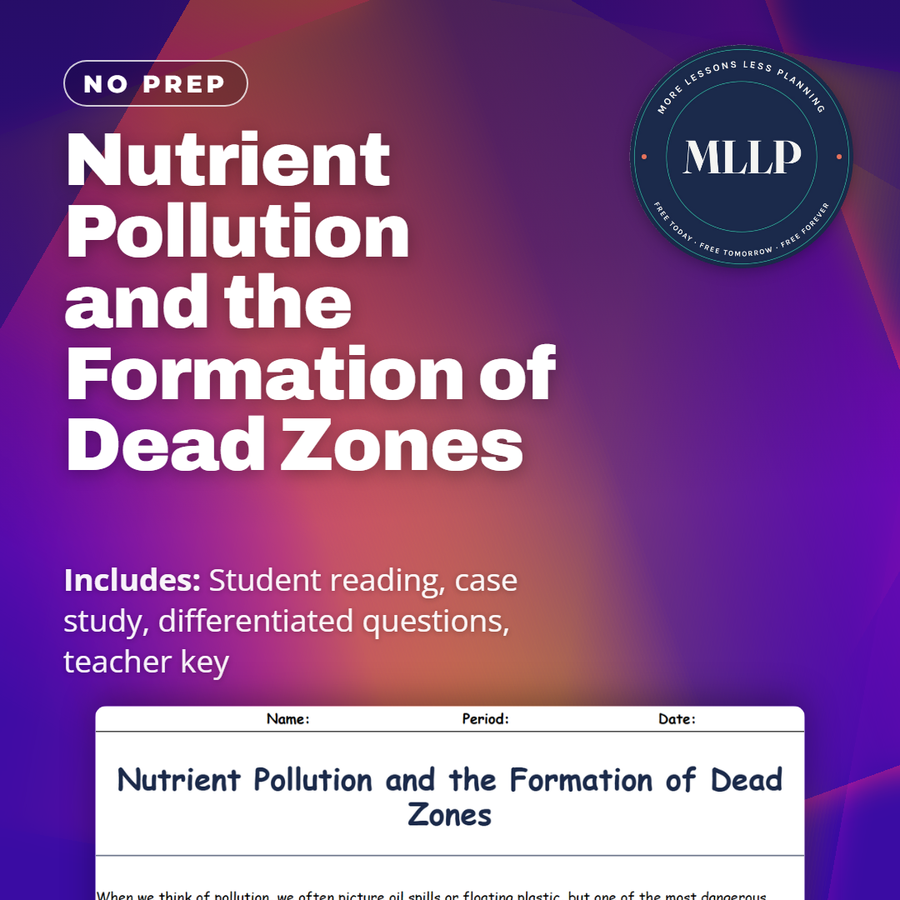
Nutrient Pollution and the Formation of Dead Zones
Quality reviewed September 2026
Facts verified September 14, 2026
- Subject
- Science
- Grades
- Grades 9-12
- Length
- 6-page student worksheet
- Time
- About one 50-minute class period
- Great for
- Sub plans and independent work
- Includes
- Reading passage, comprehension questions + full answer key
- Format
- Print-and-go PDF
What students do
- Match terms like the Gulf of Mexico dead zone, hypoxia, sustainable agriculture, algal blooms, and shrimpers to their correct definitions
- Fill in the blank sentences on dead zones, fertilizer runoff, and cover crops
- Answer multiple choice questions on what causes low oxygen in dead zones, the biggest source of nutrient pollution, and effective ways to reduce runoff
- Write short answers on why dead zones are both an environmental and economic issue, the role of fossil fuels in nutrient pollution, and how cities can cut runoff
What it covers
- How excess nitrogen and phosphorus from farms, sewage, and fossil fuel emissions fuel algal blooms and hypoxia
- The ecological and economic toll of dead zones on fish, shellfish, and fishing communities
- A case study on the Gulf of Mexico dead zone, fed each summer by runoff from the Mississippi River
Start reading this worksheet
When we think of pollution, we often picture oil spills or floating plastic, but one of the most dangerous threats to the ocean comes from an invisible source: nutrient pollution. This type of pollution occurs when excess nitrogen and phosphorus enter waterways from sources such as agricultural runoff, untreated sewage, and fossil fuel emissions. While nutrients are essential for plant growth, too much of them in the ocean can create devastating conditions known as dead zones.
What Are Dead Zones?
Dead zones are areas of the ocean or large lakes where oxygen levels are so low that most marine organisms cannot survive. This condition, called hypoxia, results from excessive nutrients stimulating rapid growth of algae. When these algae die and decompose, the process consumes oxygen in the water, leaving little to none for fish, shellfish, and other marine life. The most famous example is the Gulf of Mexico dead zone, which forms every summer and sometimes grows to the size of New Jersey. Dead zones don’t always kill every living organism, but they can drive species away and permanently alter ecosystems.
Causes of Nutrient Pollution
The largest contributor to nutrient pollution is modern agriculture. Fertilizers applied to crops wash into rivers and streams whenever it rains, carrying nitrogen and phosphorus downstream. Animal waste from large livestock operations adds to the problem. Other sources include untreated sewage, stormwater runoff from cities, and even nitrogen oxides from burning fossil fuels, which settle back into the ocean from the atmosphere. Together, these inputs overwhelm coastal ecosystems, fueling massive algal blooms that strip oxygen from the water.
Like what you read? The full reading, the case study, and every question set are in the free download below, along with the answer key.
Why this matters
A shrimper in the Gulf of Mexico now runs the boat farther out every summer just to find water with enough oxygen to hold shrimp, because fertilizer and sewage runoff feed algal blooms that strip it away first. That dead zone reappears on a predictable seasonal schedule tied to runoff from the Mississippi River.
I ask students to list ocean pollution before we read, and nutrient pollution rarely makes the list next to oil or plastic, even though it costs fishing communities real income every year. Tracing fertilizer from a farm field to a hypoxic patch of open water connects an everyday agricultural choice to a specific economic loss.
From one teacher to another
Nutrient pollution does not look like the oil slicks or plastic bags most people picture as ocean pollution, but this reading shows why it causes just as much damage. Students trace how fertilizer and sewage runoff feed algal blooms that strip oxygen from the water, creating dead zones. The Gulf of Mexico case study follows shrimpers who now travel farther to find catch as the dead zone grows each summer. The reading pairs vocabulary like hypoxia and sustainable agriculture with a concrete, recurring example.
What you get
Download
Where should I send the next one?
Everything here is free and it stays that way. Leave your email and I'll send you the new lessons as they go up. You can unsubscribe from any one of them.
Related resources
Climate Change and Coral Reefs: Fragile Ecosystems at Risk
Climate Change and Ocean Warming
Global Ocean Treaties and the Future of Marine Protection
Marine Pollution: Plastics, Oil Spills, and Chemicals
Ocean Conservation Strategies and Marine Protected Areas
Overfishing and the Collapse of Global Fisheries
Every lesson on this site is free to download and use. If one of them saved you a prep period, you can chip in a few bucks toward my three kids' daycare fund. That's genuinely where tips go.