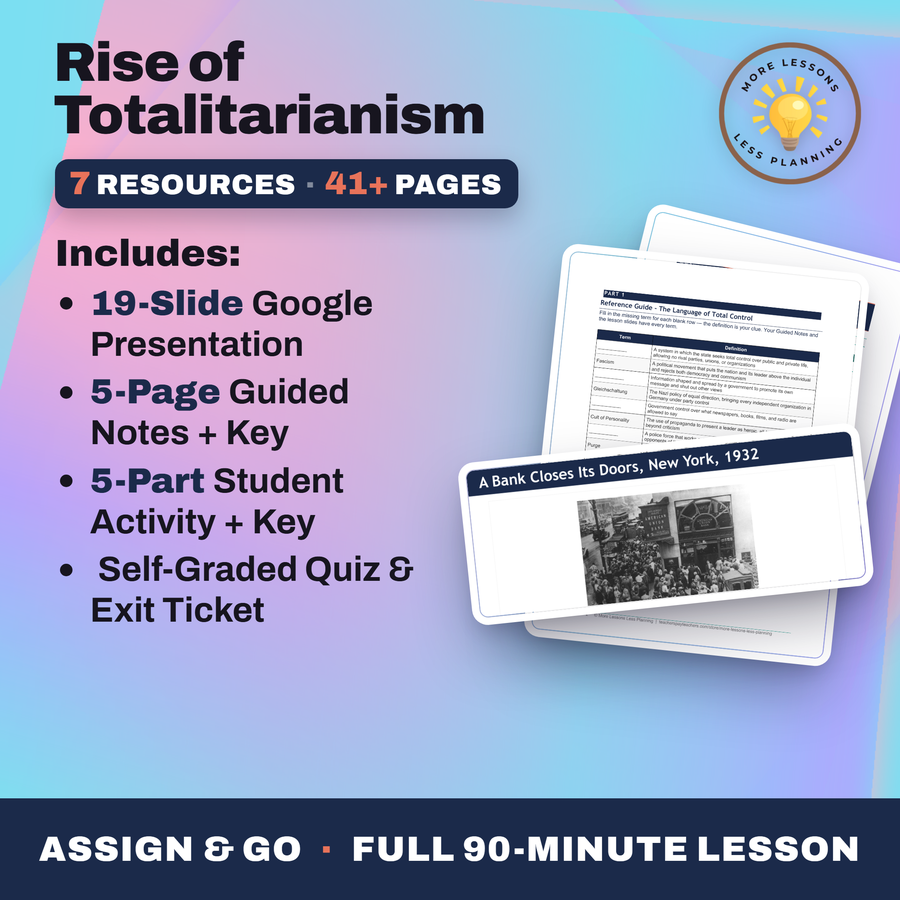

Rise of Totalitarianism
- Grades
- Grades 9-12
- Time
- About two 50-minute class periods
- Includes
- 11 ready-to-teach files
- Format
- Word (.docx) · PowerPoint (.pptx)
- Slide deck
- Guided notes
- Guided notes teacher key
- Activity + answer key
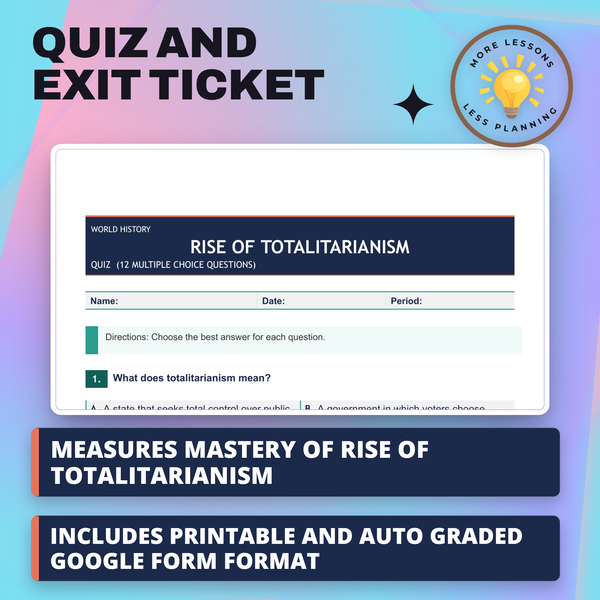
- Quiz + answer key
- Exit ticket + answer key
- Teacher guide
- Teacher presentation notes
What students do
- Compare the crises that brought Mussolini, Hitler, and Stalin to power using the three-country comparison table
- Analyze George Gordon's April 1933 diplomatic dispatch describing the Nazi takeover of Germany's business and farm organizations
- Define totalitarianism and distinguish it from an ordinary one-party state
- Trace the five-step pattern from crisis to permanent fear across all three regimes
What it covers
- How economic collapse and a weak, new democracy opened the door for each dictator
- The tools of control every regime used, from propaganda and censorship to secret police and banned rival parties
- What Gleichschaltung meant in practice, from industry federations to farm societies
Learning targets
- Define totalitarianism and explain what makes it different.
- Identify the crises that made three European countries unstable.
- Explain how Mussolini, Hitler, and Stalin each took total control.
- Compare the methods the three regimes used to hold power.
- Use a 1933 U.S. diplomatic dispatch as evidence about Germany.
Peek inside
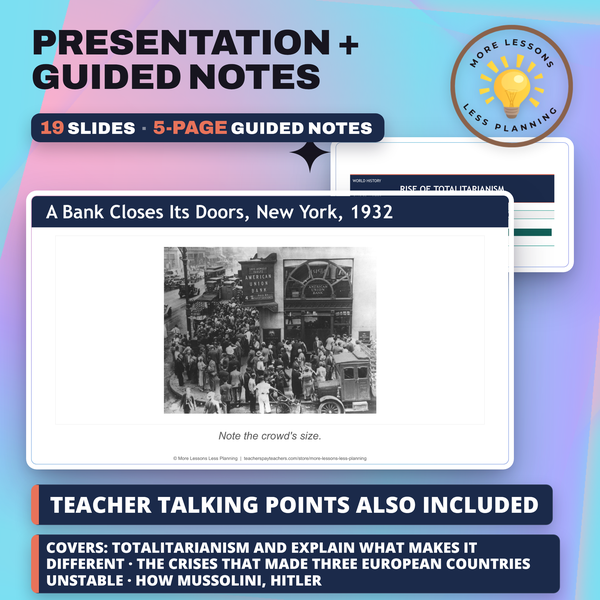
World War I broke apart four European empires and left millions dead.
New democracies replaced old monarchies across central Europe.
Most of those new governments were weak and only a few years old.
Inflation, unemployment, and street violence followed the war.
Many people began to want order more than they wanted a vote.
A Continent of New and Fragile Governments
World War I broke apart four European and left millions dead.
New democracies replaced old across central Europe.
Many people began to want more than they wanted a vote.
1. Mussolini's movement put the Italian nation and its leader above the individual and rejected both democracy and communism; that movement was called .
Why this matters
A diplomat's own dispatch is more convincing than any textbook summary of how a democracy gets dismantled from the inside. George Gordon's April 1933 report described Germany's business and farm organizations folded into Nazi control one group at a time, a process with its own name, Gleichschaltung, that had nothing to do with tanks or soldiers.
Comparing Mussolini, Hitler, and Stalin through the same five-step pattern keeps students from treating each rise to power as a unique accident. I want them able to name the conditions, economic collapse paired with a democracy too new to have earned trust, that opened the door in all three countries.
From one teacher to another
Three dictators, three different countries, one identical playbook: that's the pattern I want students to see before they memorize a single date. Economic collapse plus a wounded, brand-new democracy is what actually opens the door for a totalitarian movement, not a bad leader showing up out of nowhere. This one closes out the interwar section of my World War I unit, right before the class turns to World War II itself.
Every file in this toolkit
Download
Where should I send the next one?
Everything here is free and it stays that way. Leave your email and I'll send you the new lessons as they go up. You can unsubscribe from any one of them.
Related resources
Alliances and the Causes of WWI
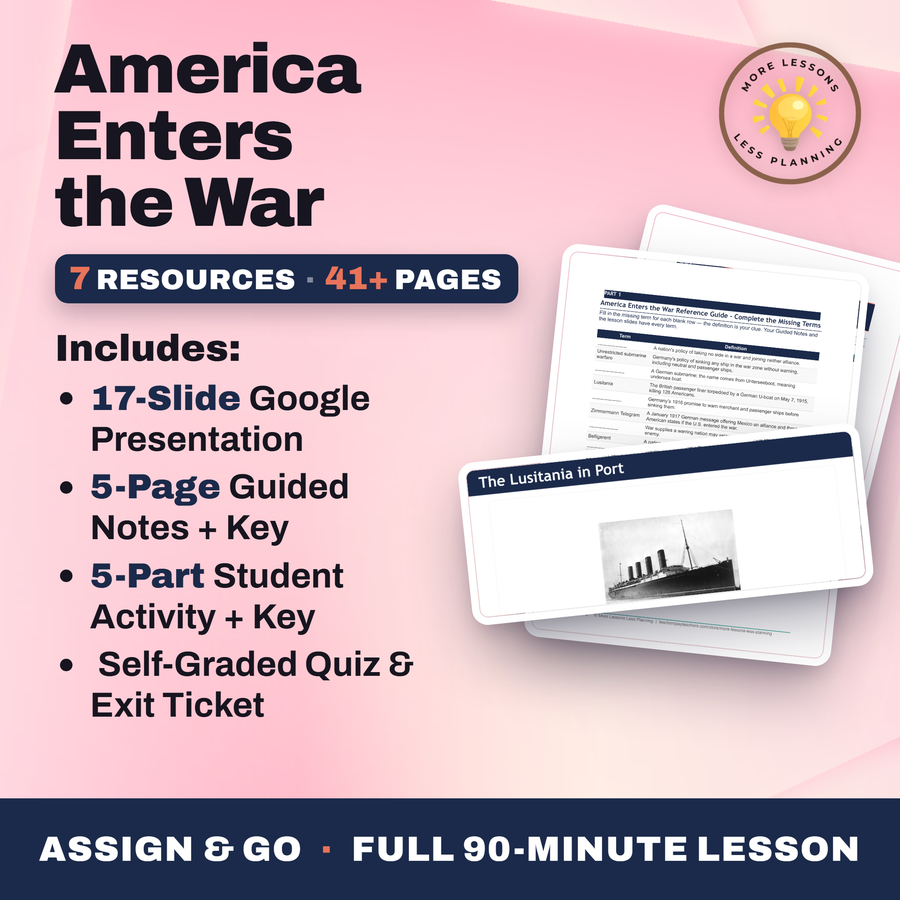
America Enters the War
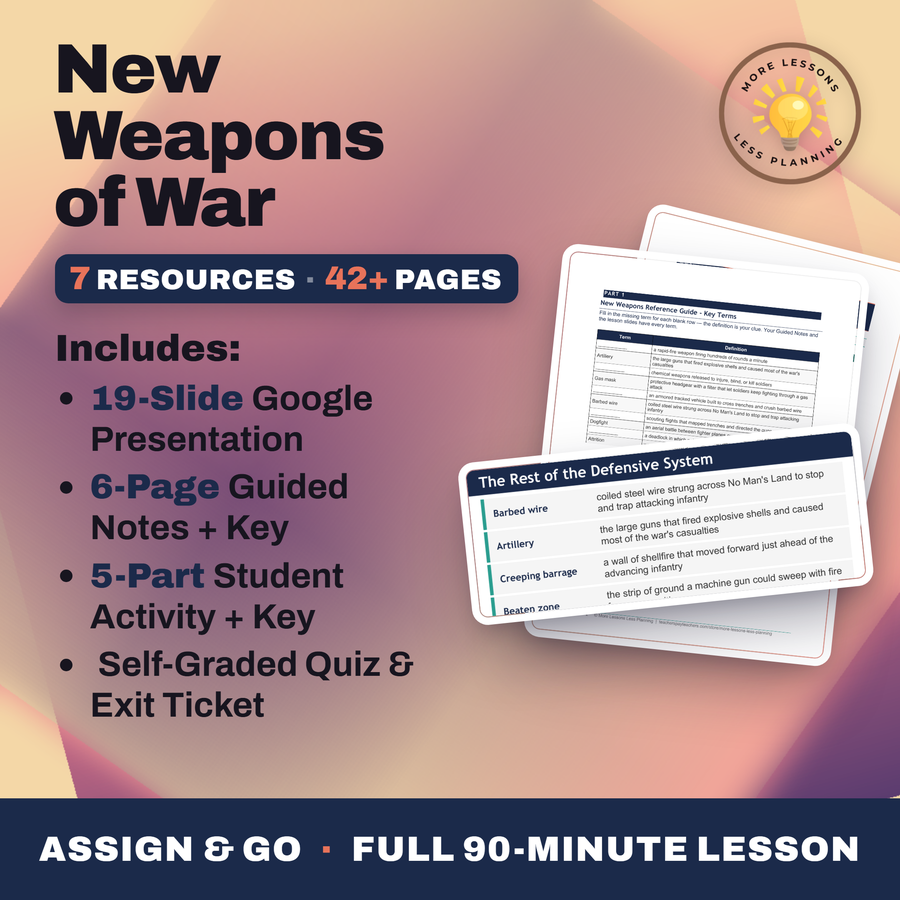
New Weapons of War
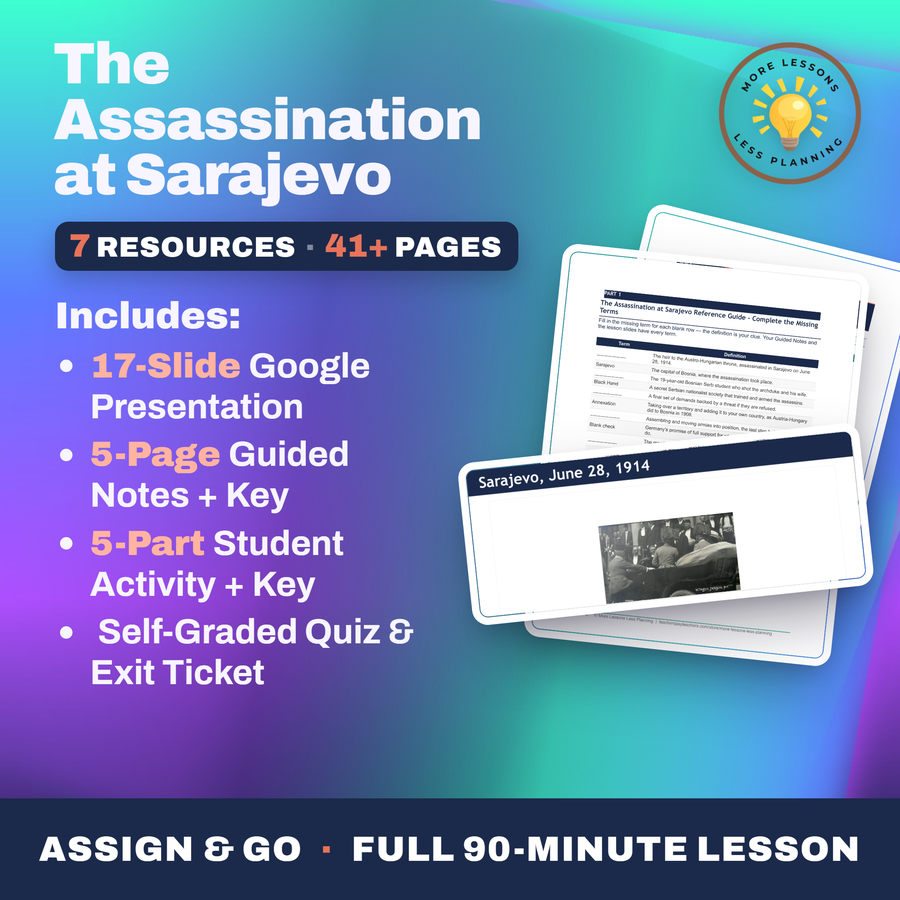
The Assassination at Sarajevo
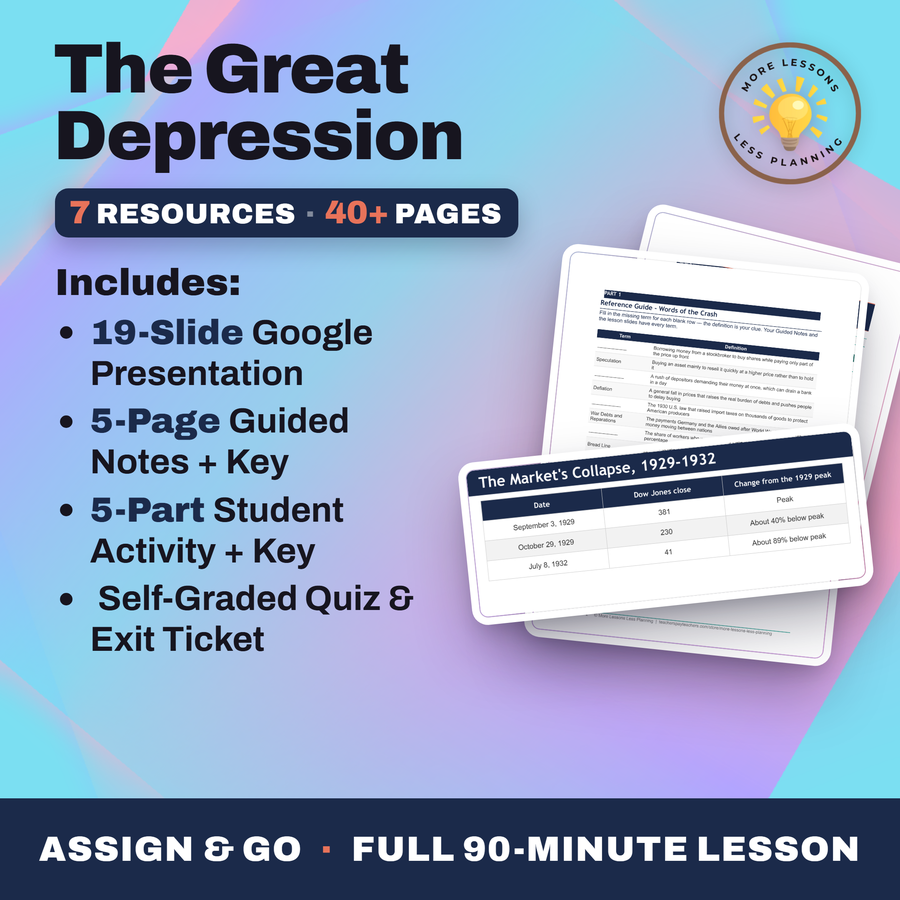
The Great Depression

The Home Front
Every lesson on this site is free to download and use. If one of them saved you a prep period, you can chip in a few bucks toward my three kids' daycare fund. That's genuinely where tips go.