Religion on the Silk Road
- Slide deck
- Guided notes
- Guided notes teacher key
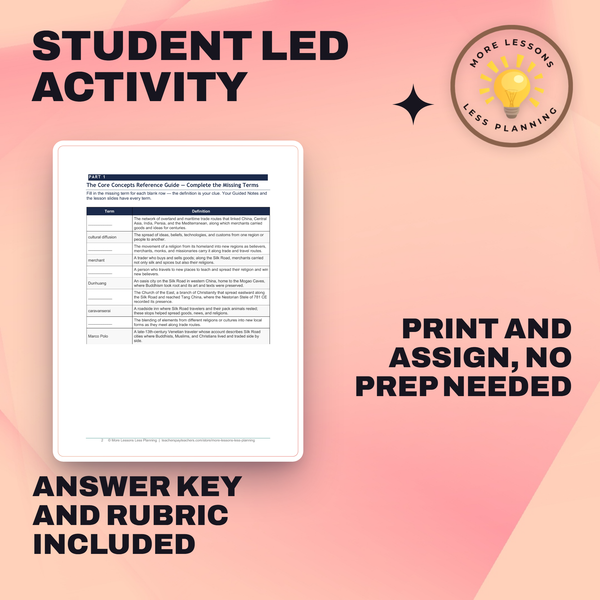
- Activity + answer key
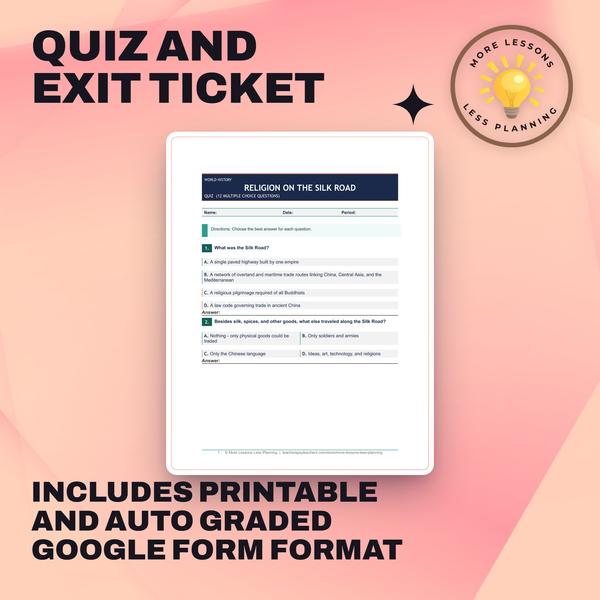
- Quiz + answer key
- Exit ticket + answer key
- Teacher guide
- Teacher presentation notes
Where should I send the next one?
Everything here is free and it stays that way. Leave your email and I'll send you the new lessons as they go up. You can unsubscribe from any one of them.
Every file in this toolkit
Related resources
Confucianism and Social Order
Hinduism - Origins and Beliefs
Pilgrimage Across World Religions
World Religions: A Comparative Introduction
Aggression and Appeasement
Alliances and the Causes of WWI
What students do
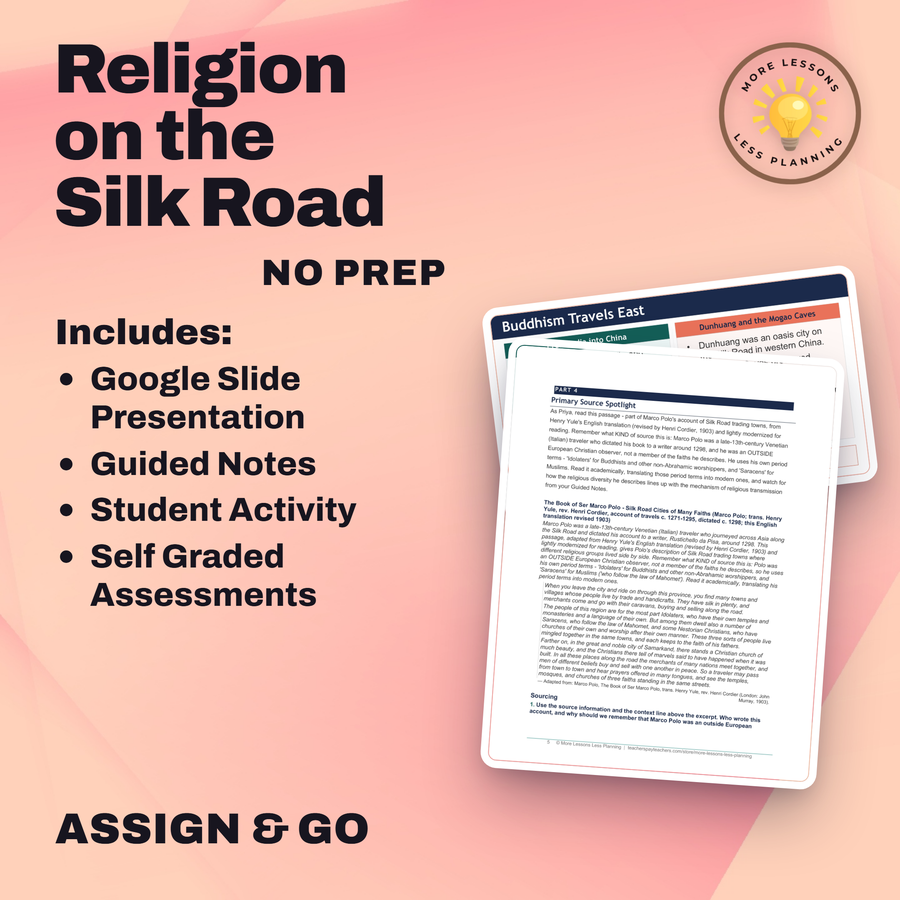
- Analyze Marco Polo's account of Silk Road cities where Buddhists, Muslims, and Christians traded side by side
- Trace how Buddhism, Islam, and Nestorian Christianity each reached new regions along the same trade network
- Explain the mechanism of religious transmission through merchants, monks, missionaries, and caravanserai stops
- Argue why Marco Polo's account counts as an outsider's testimony rather than a neutral insider record
What it covers
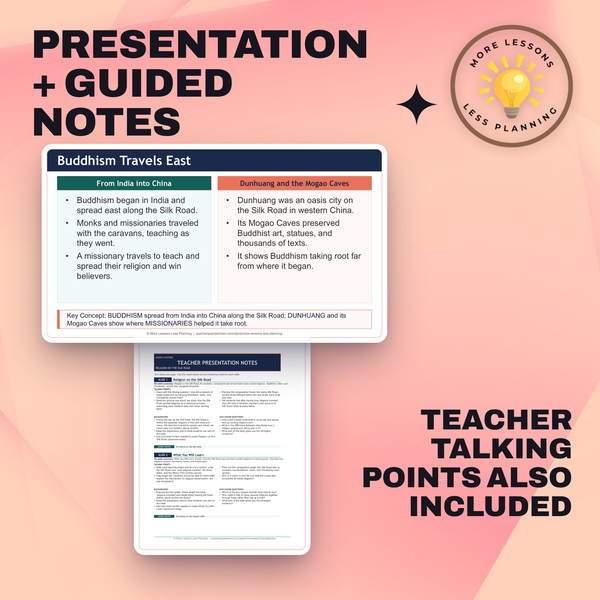
- Dunhuang and the Mogao Caves as physical evidence of Buddhism taking root far from India
- The Nestorian Stele of 781 CE and what it proves about Christianity in Tang China
- Syncretism, and why blending some religious forms didn't make Silk Road faiths the same
- Why Polo's account long postdates the actual transmission of these religions along the route
Learning targets
- Explain what the Silk Road was and how it carried religions as well as goods.
- Describe the mechanism of religious transmission along the routes: merchants, monks, missionaries, caravanserais, and cultural diffusion.
- Trace how Buddhism, Islam, and Nestorian Christianity each spread along the Silk Road into new regions.
- Read a Venetian traveler's account (Marco Polo) of Silk Road religious diversity as a primary source, and judge it as an outside observer's testimony.
From one teacher to another
By the time students reach this one, they already have every term from the unit in hand, and the lesson makes them use all of it at once instead of introducing anything new. They trace Buddhism, Islam, and Nestorian Christianity along the same trade network and have to name the actual mechanism (merchants, monks, missionaries, caravanserai stops) rather than just saying it spread. Marco Polo's account gets read as exactly what it is: a late outsider's testimony, not proof that he caused any of what he's describing.
Every lesson on this site is free to download and use. If one of them saved you a prep period, you can chip in a few bucks toward my three kids' daycare fund. That's genuinely where tips go.