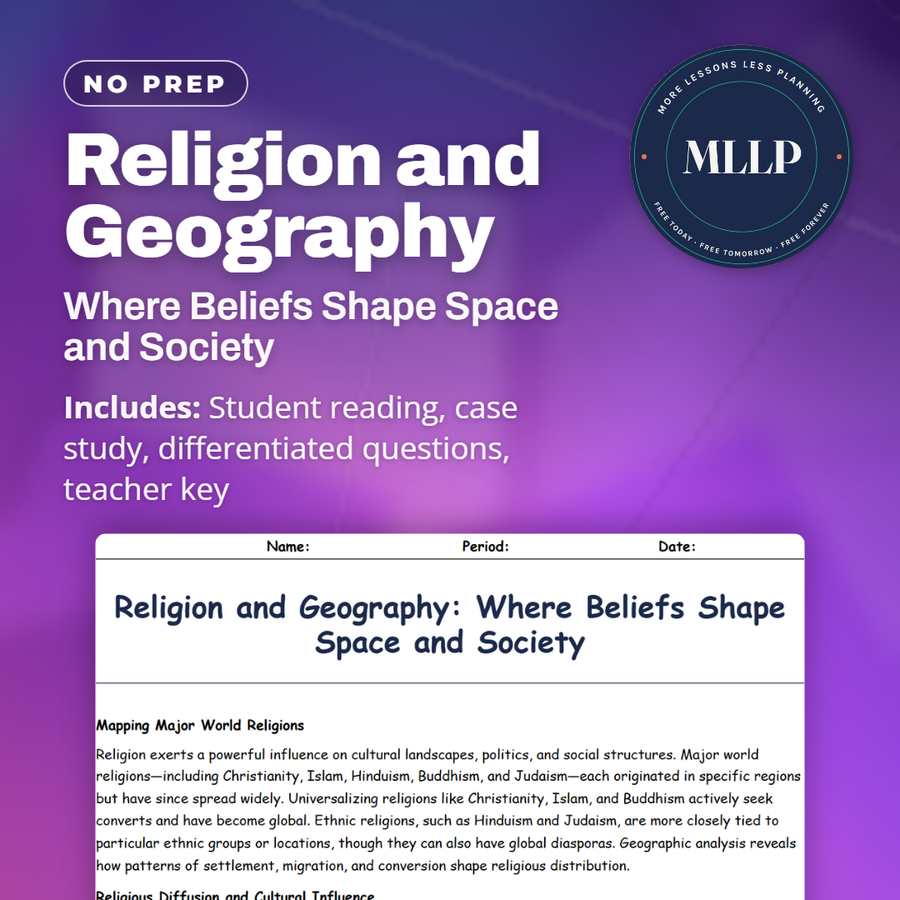
Religion and Geography: Where Beliefs Shape Space and Society
Quality reviewed September 2026
Facts verified September 14, 2026
- Subject
- Social Studies
- Grades
- Grades 9-12
- Length
- 7-page student worksheet
- Time
- About one 50-minute class period
- Great for
- Sub plans and independent work
- Includes
- Reading passage, comprehension questions + full answer key
- Format
- Print-and-go PDF
What students do
- Match terms like Pilgrimage, Sacred Space, and Universalizing Religion to their correct definitions
- Fill in the blank sentences on pilgrimage, ethnic religions, and the Hajj
- Answer multiple choice questions on what universalizing religions do, what makes a space sacred, and how religious conflicts arise
- Write short answers on how pilgrimages shape local economies, why religious diversity can create both richness and tension, and how communities manage the environmental impact of large gatherings
What it covers
- Major world religions and the difference between universalizing religions and ethnic religions
- Sacred spaces and pilgrimage sites like Mecca, Jerusalem, and Varanasi, and how they shape infrastructure and conflict
- A case study on the pilgrim city of Lorash, where a shrine reshaped the local economy, roads, and environment
Start reading this worksheet
Mapping Major World Religions
Religion exerts a powerful influence on cultural landscapes, politics, and social structures. Major world religions (including Christianity, Islam, Hinduism, Buddhism, and Judaism) each originated in specific regions but have since spread widely. Universalizing religions like Christianity, Islam, and Buddhism actively seek converts and have become global. Ethnic religions, such as Hinduism and Judaism, are more closely tied to particular ethnic groups or locations, though they can also have global diasporas. Geographic analysis reveals how patterns of settlement, migration, and conversion shape religious distribution.
Religious Diffusion and Cultural Influence
Similar to other aspects of culture, religion spreads through relocation diffusion (migrants bringing their faith) and expansion diffusion (missionary activities, trade, or conquest). Over centuries, religions have influenced everything from architectural styles (e.g., mosques, churches, temples) to dietary laws and moral codes. In many regions, religious institutions are central community hubs, providing educational and social services. Conflicts can arise when religious beliefs clash with secular governance or with other religious communities, highlighting the complex role religion plays in shaping geographic and political boundaries.
Sacred Spaces, Pilgrimages, and Conflict
Most major religions have sacred spaces: holy sites that attract pilgrims seeking spiritual connections. Cities like Jerusalem, Varanasi, and Mecca hold deep symbolic importance, and they often become points of religious tourism, commerce, or tension. Pilgrimages can boost local economies but also strain infrastructure. Religious conflict may arise over disputed holy sites, as groups assert claims rooted in historical or scriptural narratives. Understanding these geographical overlaps is essential for conflict resolution and interfaith dialogue.
Like what you read? The full reading, the case study, and every question set are in the free download below, along with the answer key.
Why this matters
A shrine in the pilgrim city of Lorash reshaped its roads, its economy, and even its water supply, all because pilgrims kept arriving to visit one sacred space. That is religion doing something concrete and geographic, not just believed, the same force that shapes infrastructure and conflict around places like Mecca, Jerusalem, and Varanasi.
Students tend to think of religion as private belief, so the Lorash case study catches them off guard by showing infrastructure built entirely around a pilgrimage site. I use it to introduce universalizing versus ethnic religions, since students can then ask why some sacred spaces draw pilgrims worldwide while others stay meaningful mainly to one community.
From one teacher to another
This one shows students how religion leaves a visible mark on the map, from sacred rivers to pilgrimage routes. I like that it does not stop at definitions. It works through the Lorash case study to show how a single shrine can reshape a city's roads, economy, and water supply. This pairs well with a unit on cultural landscapes or world religions.
What you get
Download
Where should I send the next one?
Everything here is free and it stays that way. Leave your email and I'll send you the new lessons as they go up. You can unsubscribe from any one of them.
Related resources
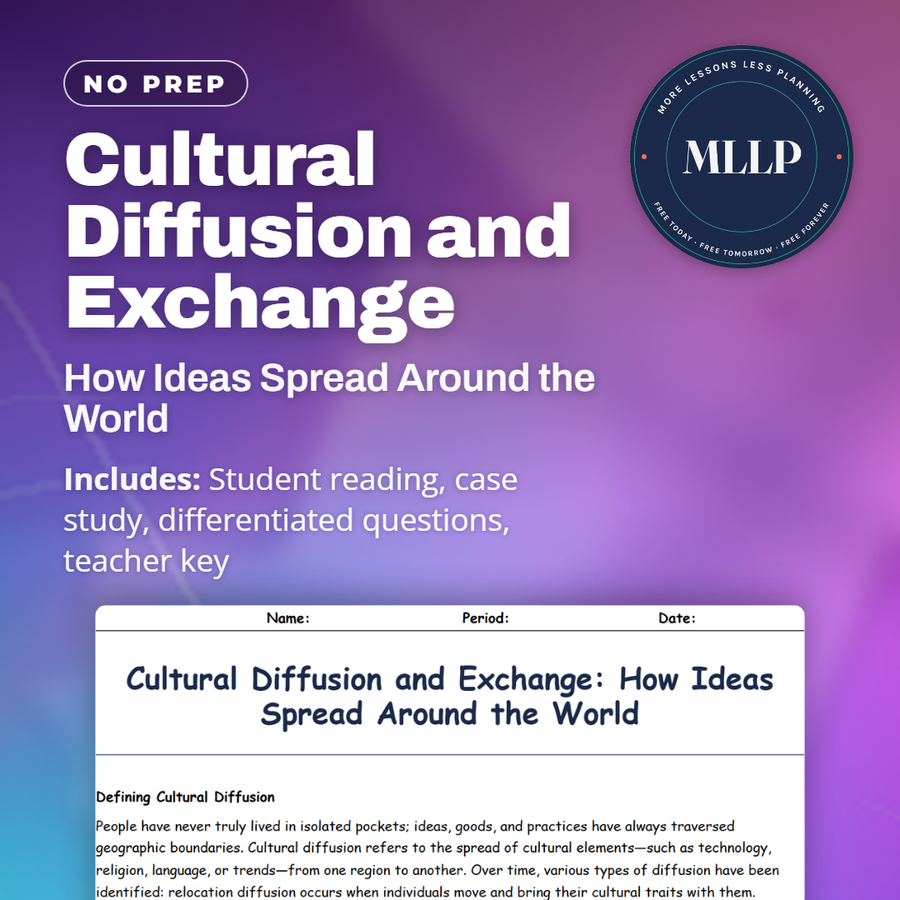
Cultural Diffusion and Exchange: How Ideas Spread Around the World
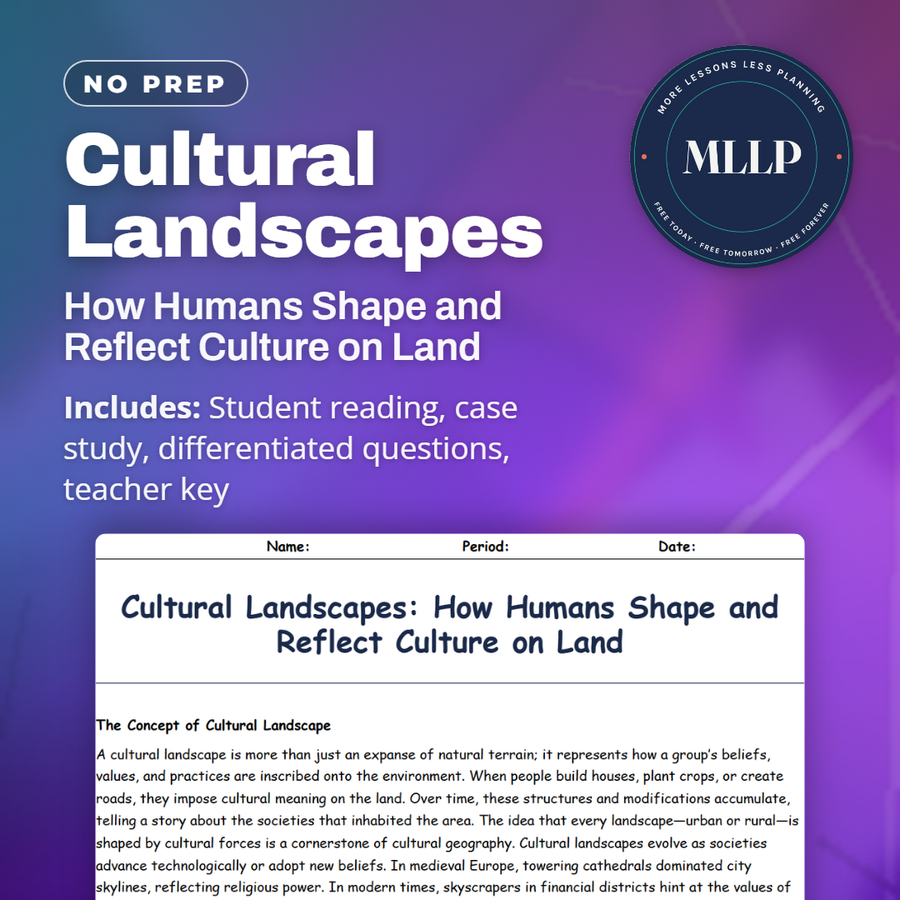
Cultural Landscapes: How Humans Shape and Reflect Culture on Land
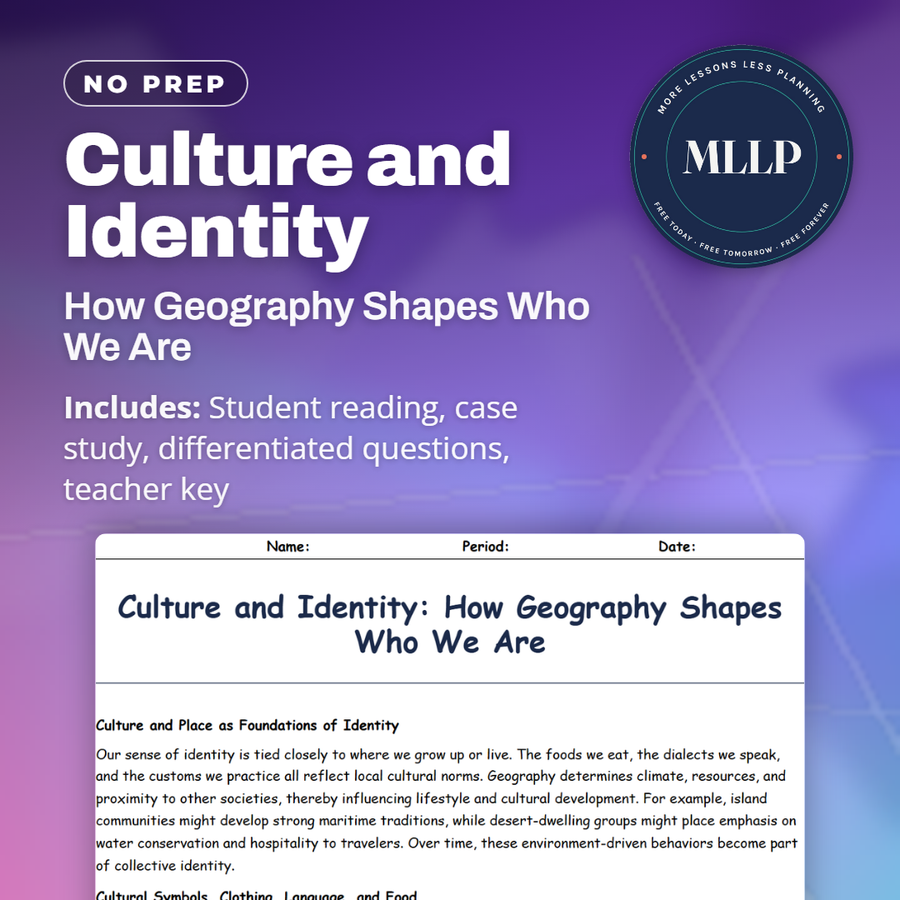
Culture and Identity: How Geography Shapes Who We Are
Ethnicity and Race: Identity, Diversity, and Social Geography
Exploring the Elements of Culture: Language, Religion, and Customs
Folk Culture vs. Popular Culture: Local Traditions and Global Trends
Every lesson on this site is free to download and use. If one of them saved you a prep period, you can chip in a few bucks toward my three kids' daycare fund. That's genuinely where tips go.