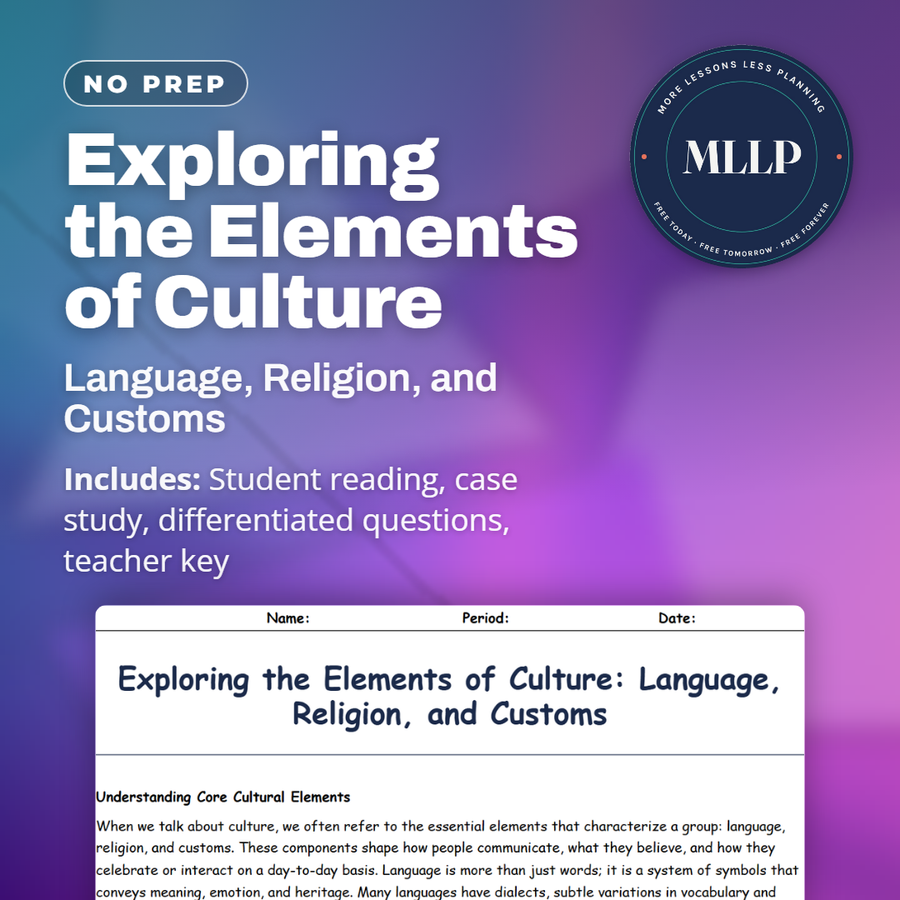
Exploring the Elements of Culture: Language, Religion, and Customs
Quality reviewed September 2026
Facts verified September 14, 2026
- Subject
- Social Studies
- Grades
- Grades 9-12
- Length
- 8-page student worksheet
- Time
- About one 50-minute class period
- Great for
- Sub plans and independent work
- Includes
- Reading passage, comprehension questions + full answer key
- Format
- Print-and-go PDF
What students do
- Match terms like Dialect, Religion, and Diversity to their correct definitions
- Fill in the blank sentences on customs, diversity, and how religion guides daily choices
- Answer multiple choice questions on what customs are, why celebrating multiple religions shows diversity, and why language matters to culture
- Write short answers on how holidays strengthen cultural identity, how losing a language affects a culture, and why communities adapt religious or linguistic practices
What it covers
- Language, religion, and customs as the three core elements of culture, and how they shape daily life
- How language preserves tradition and how religion can guide dietary habits, holidays, and moral codes
- A case study on an Alpine village where three languages and three faiths coexist through rotating traditions
Start reading this worksheet
Understanding Core Cultural Elements
When we talk about culture, we often refer to the essential elements that characterize a group: language, religion, and customs. These components shape how people communicate, what they believe, and how they celebrate or interact on a day-to-day basis. Language is more than just words; it is a system of symbols that conveys meaning, emotion, and heritage. Many languages have dialects, subtle variations in vocabulary and pronunciation that reflect regional identity. Religion, another key element, provides a set of spiritual or philosophical beliefs that can guide ethical behavior and social norms. Even secular societies often carry traditions rooted in religious or philosophical heritage. Customs and traditions, the third essential element, can range from holiday celebrations to ways of dressing. These cultural expressions give each community its distinctive feel and pattern of daily life. Despite global shifts and migrations, local cultures continue to thrive. Even within the same country, one may see significant variations in language usage and religious practice, shaped by historical migration routes, colonization, and trade. As people spread across the globe, they carry customs that adapt to new environments, influencing local cultures in return. This constant interaction means no culture is truly isolated. Over time, different elements of culture blend, resulting in the development of unique hybrids. A small rural town can become a microcosm of global exchange, with churches, temples, or mosques, local festivals, and new traditions introduced by recent immigrants.
How Language and Religion Influence Daily Life
Language is the bridge that allows cultural values to be passed from one generation to the next. Through stories, songs, and even social media posts, language preserves old traditions and introduces new ideas. People use language to build bonds, engage in trade, and express identity. When languages disappear, entire worldviews and collective histories risk vanishing as well. For example, many indigenous communities have seen their languages fade, taking with them unique knowledge about local ecosystems, medicinal plants, and ancestral practices. Religion can similarly have a strong influence on daily routines and social structures. In areas where religion is deeply woven into cultural life, it can guide dietary habits, marriage ceremonies, and moral codes. Religious observances can also shape the weekly calendar, with dedicated days of worship or rest. In some countries, the religious calendar determines national holidays, affecting everything from school schedules to government operations. While religion can unite believers through shared rituals, it can also serve as a point of conflict when different religious groups have contradictory beliefs or political interests. Yet, in many places, people from varied religious backgrounds coexist peacefully, sharing common values of compassion and mutual respect.
Like what you read? The full reading, the case study, and every question set are in the free download below, along with the answer key.
Why this matters
Three languages and three faiths coexist in the Alpine village this reading follows, with traditions rotating through daily life. That single example explains culture better than a definition, because it shows language, religion, and customs working together, not as three separate vocabulary words.
Students usually assume a shared culture means shared belief, so a village where three faiths coexist without merging into one identity surprises them. I push them further with the question about losing a language, since most have thought about learning a new one but never about one disappearing.
From one teacher to another
This one breaks culture down into language, religion, and customs, which gives students a clear structure for talking about any culture they study afterward. I like the case study on the Alpine village where three languages and three faiths rotate through daily life, since it shows diversity working as a source of unity instead of division. It pairs naturally with a unit on world religions or language families.
What you get
Download
Where should I send the next one?
Everything here is free and it stays that way. Leave your email and I'll send you the new lessons as they go up. You can unsubscribe from any one of them.
Related resources
Cultural Diffusion and Exchange: How Ideas Spread Around the World
Cultural Landscapes: How Humans Shape and Reflect Culture on Land
Culture and Identity: How Geography Shapes Who We Are
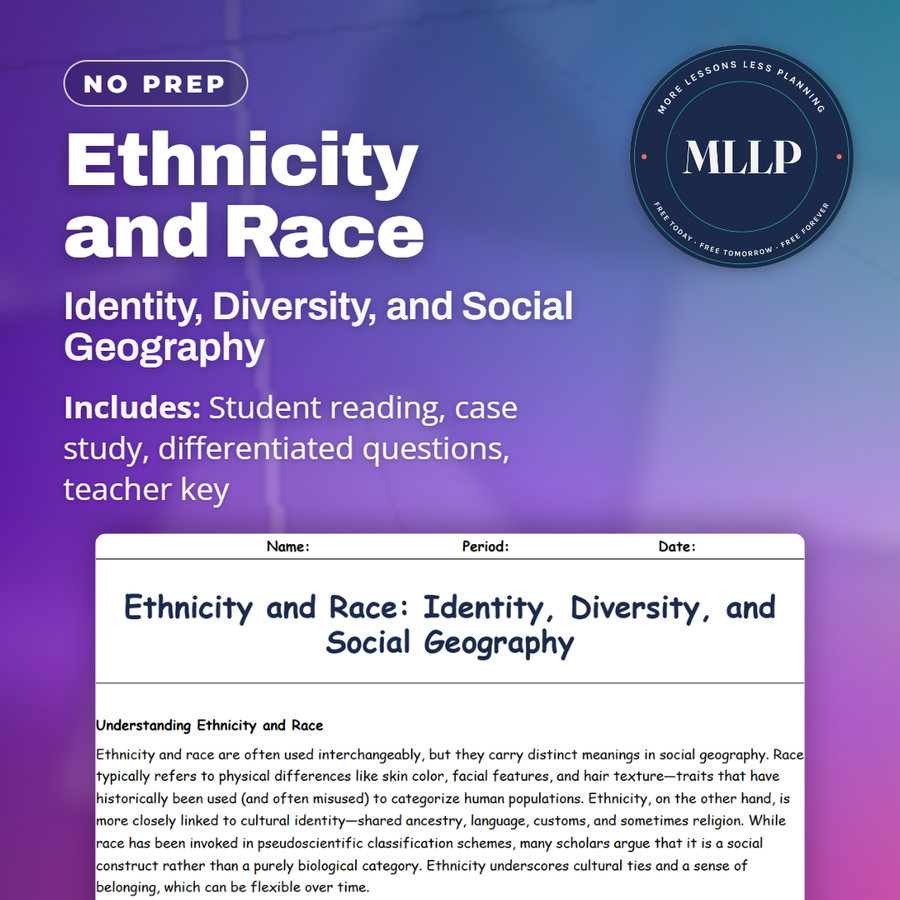
Ethnicity and Race: Identity, Diversity, and Social Geography
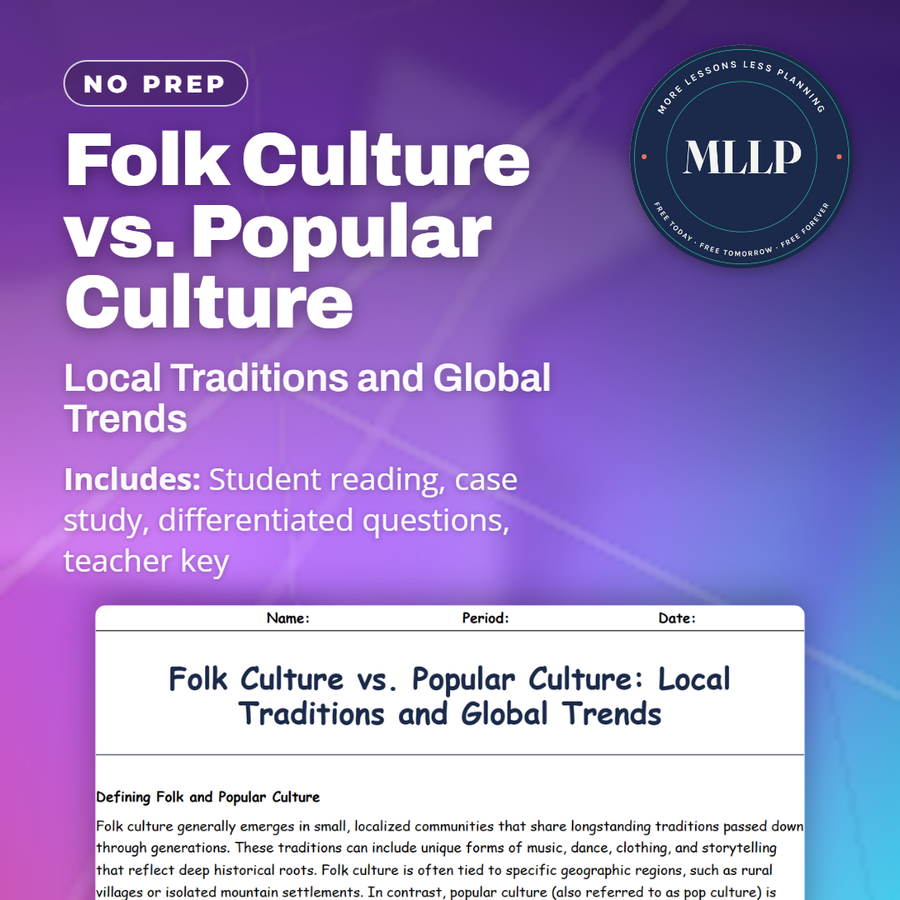
Folk Culture vs. Popular Culture: Local Traditions and Global Trends
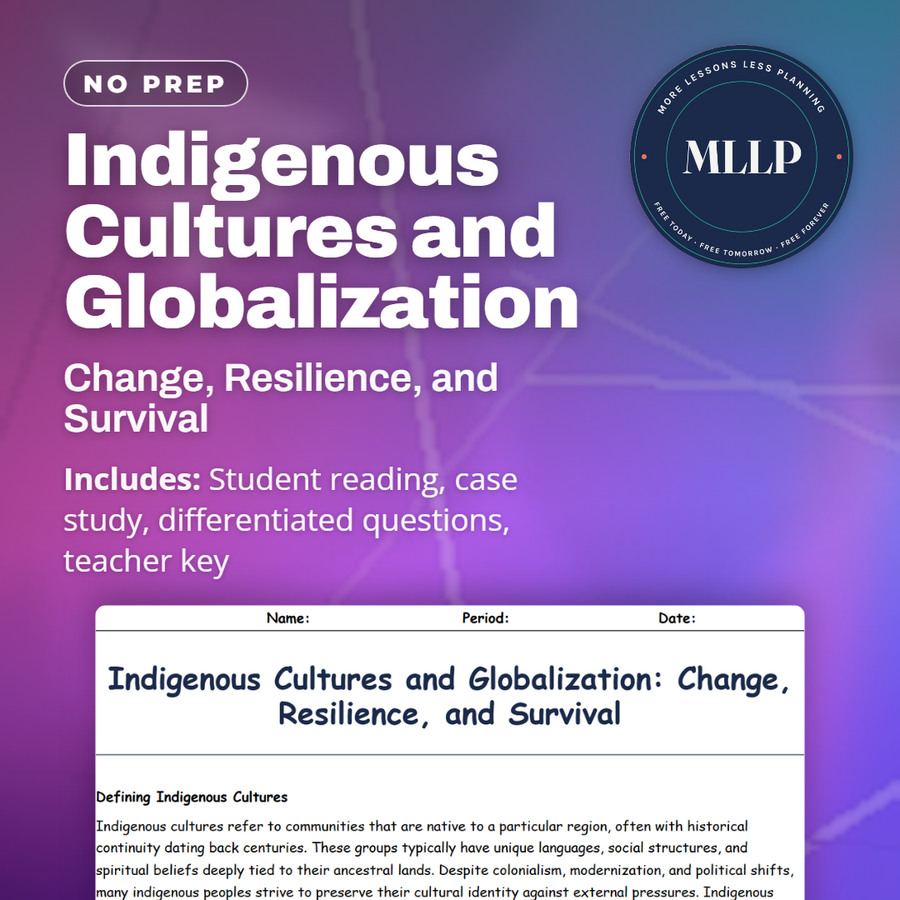
Indigenous Cultures and Globalization: Change, Resilience, and Survival
Every lesson on this site is free to download and use. If one of them saved you a prep period, you can chip in a few bucks toward my three kids' daycare fund. That's genuinely where tips go.