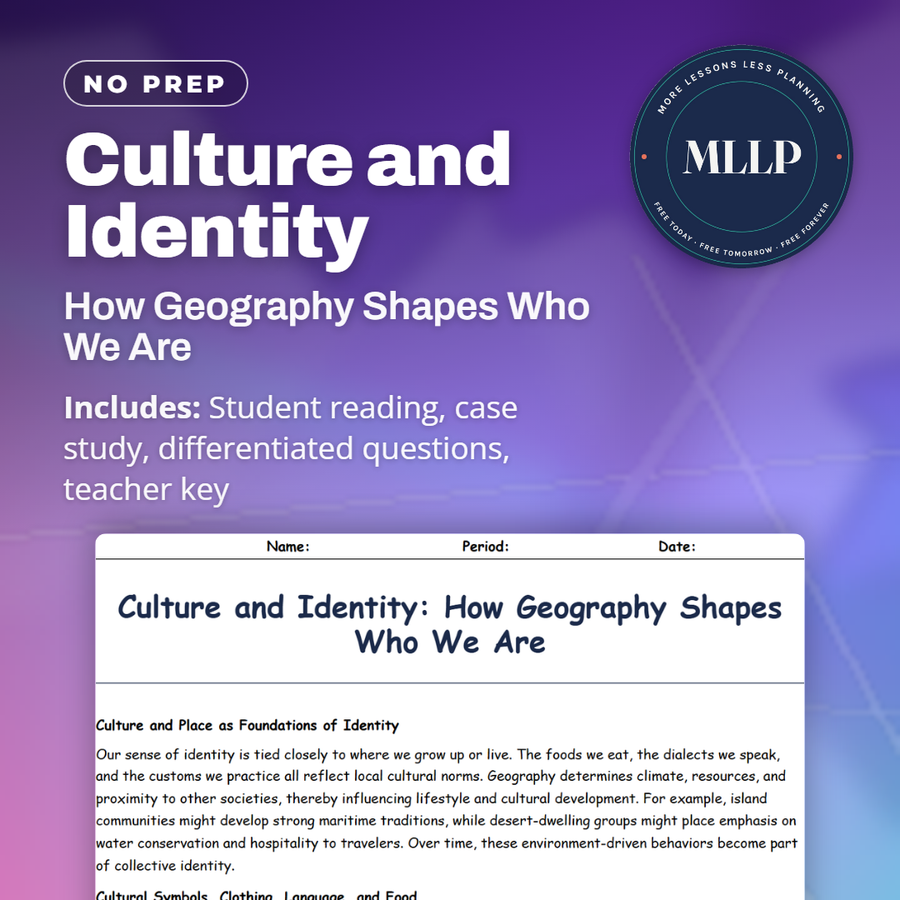
Culture and Identity: How Geography Shapes Who We Are
Quality reviewed September 2026
Facts verified September 14, 2026
- Subject
- Social Studies
- Grades
- Grades 9-12
- Length
- 7-page student worksheet
- Time
- About one 50-minute class period
- Great for
- Sub plans and independent work
- Includes
- Reading passage, comprehension questions + full answer key
- Format
- Print-and-go PDF
What students do
- Match terms like Cultural Pride, Hybridity, and Nationalism to their correct definitions
- Fill in the blank sentences on hybridity, nationalism, and how identity shifts over time
- Answer multiple choice questions on what shapes identity, when nationalism becomes problematic, and what builds a sense of belonging
- Write short answers on how clothing reflects tradition and change, why border divisions create new identities, and how communities keep youth engaged in cultural traditions
What it covers
- How environment, language, and migration shape identity, from island communities to desert-dwelling groups
- Symbols of identity like clothing, food, and national flags, plus the tension between cultural pride and nationalism
- A case study on the Nuri people, divided by a colonial-era border, and how their shared culture persisted across two nations
Start reading this worksheet
Culture and Place as Foundations of Identity
Our sense of identity is tied closely to where we grow up or live. The foods we eat, the dialects we speak, and the customs we practice all reflect local cultural norms. Geography determines climate, resources, and proximity to other societies, thereby influencing lifestyle and cultural development. For example, island communities might develop strong maritime traditions, while desert-dwelling groups might place emphasis on water conservation and hospitality to travelers. Over time, these environment-driven behaviors become part of collective identity.
Cultural Symbols, Clothing, Language, and Food
Symbols such as flags, anthems, or emblems often represent a shared identity. Clothing styles, like kilts in Scotland or saris in parts of South Asia, embody traditions passed across generations. Language remains one of the most potent symbols; it unites speakers in a shared worldview and fosters community pride. Food is another pillar of identity: regional cuisines reflect local agricultural conditions, trade history, and cultural preferences. Spices, cooking methods, and communal eating rituals can all signal belonging to a specific place or group. The global exchange of culinary practices, while delightful, can also dilute or transform local cuisine.
Sense of Belonging, Nationalism, and Cultural Pride
A sense of belonging arises when individuals recognize themselves as part of a larger community. This can manifest on various scales: local, regional, national, or global. Nationalism is a stronger form of belonging focused on nation-states; it can foster unity but sometimes alienates or excludes minority groups. Likewise, cultural pride can be a source of strength, celebrating unique heritage and achievements. However, taken to extremes, it can fuel conflicts or discrimination against those deemed “outsiders.” Balancing pride in one’s cultural identity with respect for others is key to social harmony.
Like what you read? The full reading, the case study, and every question set are in the free download below, along with the answer key.
Why this matters
A border drawn during the colonial era can split a people in two without erasing what they share. That is the situation for the Nuri people here, split by that same kind of border, yet their shared culture persisted across both nations.
My students tend to treat identity as fixed, so the line this reading draws between cultural pride and nationalism catches them off guard: one is belonging, the other can turn exclusionary. Clothing, food, and flags are the symbols that carry that pride, and once named, students start noticing them at home.
From one teacher to another
This one gets students thinking about identity as something shaped by place as well as by personal choice. I like that it covers the difference between cultural pride and nationalism, since the reading draws a clear line between pride in a shared culture and nationalism that turns into exclusion. The case study on the Nuri people split by a border shows how politics and geography can pull a shared culture in two directions while it still holds together. This pairs well with a unit on nationalism or human migration.
What you get
Download
Where should I send the next one?
Everything here is free and it stays that way. Leave your email and I'll send you the new lessons as they go up. You can unsubscribe from any one of them.
Related resources
Cultural Diffusion and Exchange: How Ideas Spread Around the World
Cultural Landscapes: How Humans Shape and Reflect Culture on Land
Ethnicity and Race: Identity, Diversity, and Social Geography
Exploring the Elements of Culture: Language, Religion, and Customs
Folk Culture vs. Popular Culture: Local Traditions and Global Trends
Indigenous Cultures and Globalization: Change, Resilience, and Survival
Every lesson on this site is free to download and use. If one of them saved you a prep period, you can chip in a few bucks toward my three kids' daycare fund. That's genuinely where tips go.