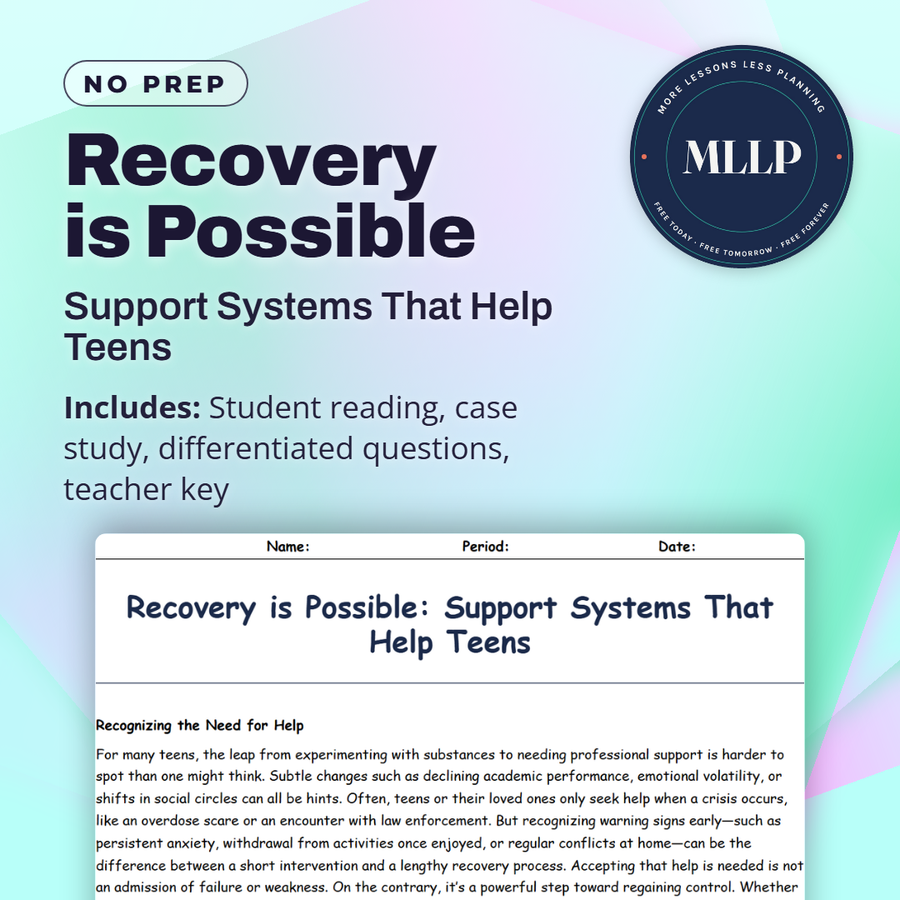
Recovery is Possible: Support Systems That Help Teens
Quality reviewed September 2026
Facts verified September 21, 2026
- Subject
- Career & Life Skills
- Grades
- Grades 9-12
- Length
- 8-page student worksheet
- Time
- About one 50-minute class period
- Great for
- Sub plans and independent work
- Includes
- Reading passage, comprehension questions + full answer key
- Format
- Print-and-go PDF
What students do
- Match five terms - outpatient program, family therapy, hotlines, school counselor, and rehab - to the definition that names each one
- Fill in three blanks naming outpatient treatment, family therapy, and the value of hearing from peers in recovery
- Answer three multiple-choice questions on what rehab centers typically offer, what family involvement in recovery includes, and why peer support groups help
- Write short answers on why empathy works better than harsh punishment, what mentors and success stories offer, and how a teen might choose between support options
What it covers
- The range of real support options - school counselors, hotlines, rehab centers, and family therapy
- Why empathy, not judgment, is what actually gets a struggling teen to accept help
- Kimberly's case study, moving from marijuana to prescription pills and alcohol, and the outpatient program and family therapy that got her back on track
Start reading this worksheet
Recognizing the Need for Help
For many teens, the leap from experimenting with substances to needing professional support is harder to spot than one might think. Subtle changes such as declining academic performance, emotional volatility, or shifts in social circles can all be hints. Often, teens or their loved ones only seek help when a crisis occurs, like an overdose scare or an encounter with law enforcement. But recognizing warning signs early (such as persistent anxiety, withdrawal from activities once enjoyed, or regular conflicts at home) can be the difference between a short intervention and a lengthy recovery process. Accepting that help is needed is not an admission of failure or weakness. On the contrary, it’s a powerful step toward regaining control. Whether the issue is alcohol misuse, prescription drug abuse, or reliance on illegal substances, the sooner a teen acknowledges the problem, the more options they’ll have for treatment. Being honest with oneself is the first step: “Am I really just doing this occasionally, or is it becoming a habit I can’t break?” Similarly, parents, friends, and teachers who notice these red flags should consider intervention or at least a compassionate conversation.
Types of Support Available
Support can come in many forms. School counselors are often the first line of defense, offering confidential discussions and referrals to outside programs. They may coordinate with teachers to ensure academic accommodations if needed, for instance, adjusting deadlines or excusing absences related to treatment sessions. Hotlines provide immediate, anonymous support for those in crisis or needing guidance on next steps; these services often have trained professionals who understand the nuances of teen substance issues. Beyond the school environment, rehab centers or outpatient clinics specialize in adolescent addiction treatment. These centers offer a structured environment with individual counseling, group therapy, and sometimes medical supervision to manage withdrawal symptoms. Additionally, some communities have free or low-cost support groups modeled after programs like Alcoholics Anonymous (AA) or Narcotics Anonymous (NA), tailored to younger participants. The key is finding a setting that makes a teen feel safe and understood, whether that’s a small community meeting or a more intensive residential program.
Role of Family and Community
Family involvement in recovery can significantly boost success rates. This might mean participating in family therapy sessions, where everyone learns better communication and coping strategies. It also involves setting clear boundaries at home: disposing of any substances that could tempt relapse and establishing consistent rules. Moreover, family members may need education about the nature of addiction: it’s a chronic condition that can involve relapses before full recovery. Patience and encouragement are just as critical as accountability. Communities at large play a part by creating resources like youth centers, after-school programs, or clubs that offer healthy alternatives to substance use. Local sports leagues, art workshops, and volunteer initiatives can provide teens with a sense of belonging and purpose. Religious or spiritual organizations may also offer mentorship or support groups focused on sobriety. When a community collectively prioritizes prevention and recovery, it provides multiple safety nets for teens who might otherwise slip through the cracks.
Like what you read? The full reading, the case study, and every question set are in the free download below, along with the answer key.
Why this matters
Recovery gets almost no classroom time compared to how much time we spend on the dangers of a substance, and that gap leaves students without a script for what to do if they or a friend actually need help. Kimberly's case study matters because her turning point wasn't one dramatic moment; it was her parents choosing family therapy over blame, a decision a student's own parents could realistically make too. I also want students to walk away knowing recovery is a process with setbacks built in, rather than a one-time fix, so a relapse doesn't feel like proof that trying was pointless.
If you or someone you know is struggling, call or text 988 (Suicide & Crisis Lifeline, US) or talk to a trusted adult right away.
From one teacher to another
Every other reading in this set names a substance and its risks; this one exists to answer the question a student usually asks right after, which is what actually happens if someone gets help. I walk through the real range of support that exists, starting with school counselors since that's the option students have the most access to, then hotlines, rehab, and family therapy for more serious cases. Kimberly's case study shows why family involvement changes outcomes: her parents assumed rebellion until they found out otherwise, and it was outpatient treatment plus family therapy, rather than punishment, that got her back to a stable routine. Students finish the reading having to weigh which kind of support fits a given scenario, a harder and more useful question than simply listing the options.
What you get
Download
Where should I send the next one?
Everything here is free and it stays that way. Leave your email and I'll send you the new lessons as they go up. You can unsubscribe from any one of them.
Related resources
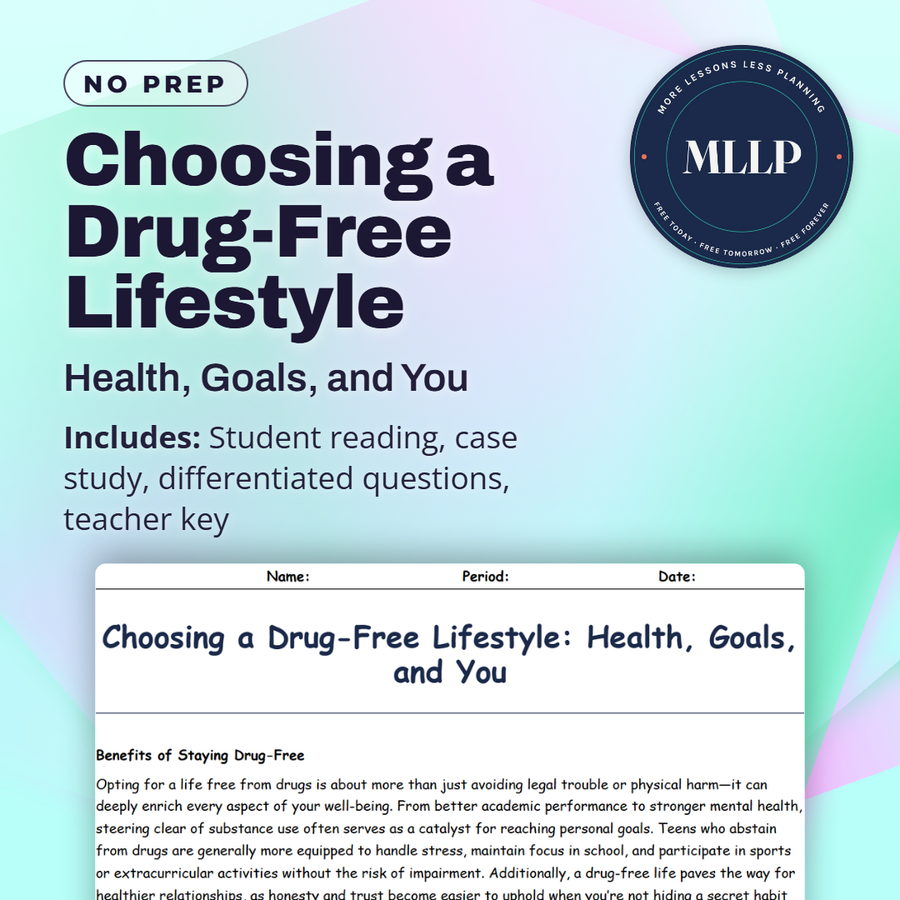
Choosing a Drug-Free Lifestyle: Health, Goals, and You
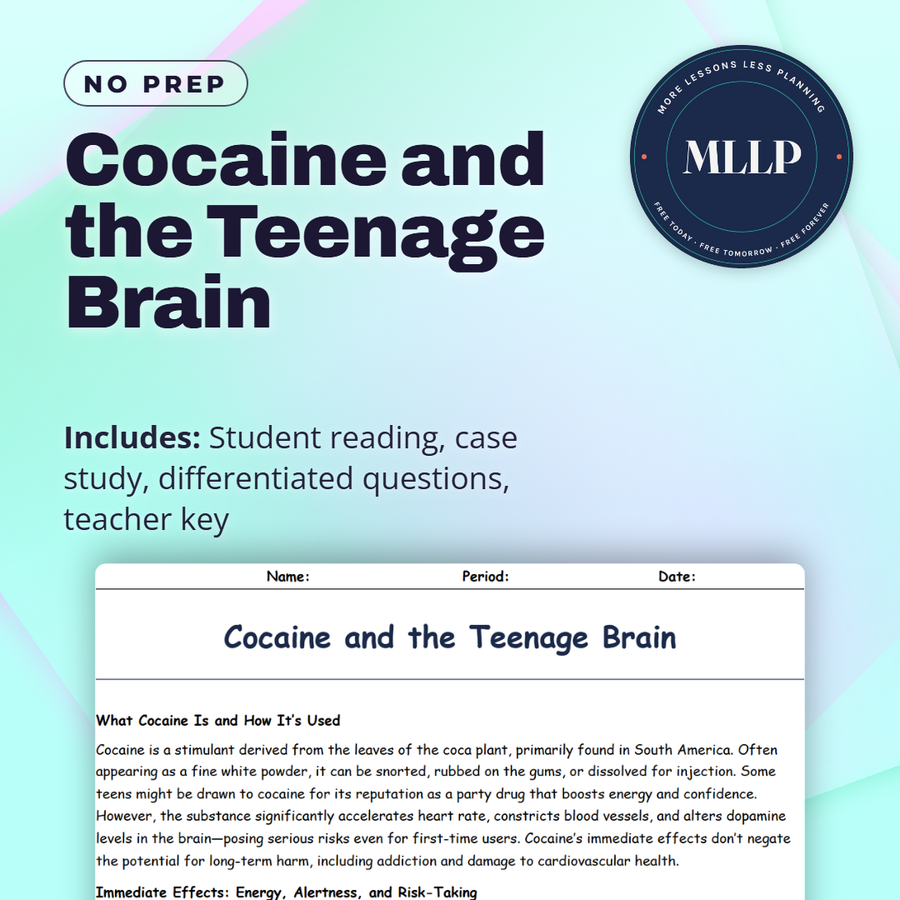
Cocaine and the Teenage Brain
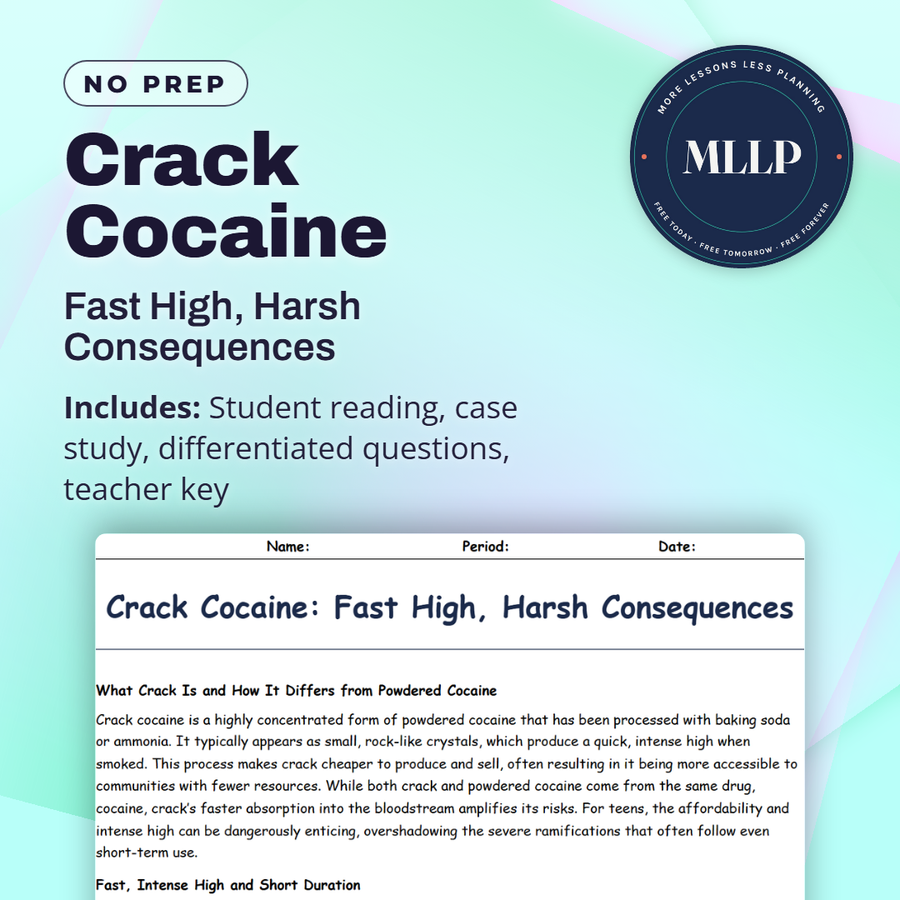
Crack Cocaine: Fast High, Harsh Consequences
Heroin and Teens: Understanding the Risks and Realities
How Addiction Changes the Brain: Science for Students
How to Handle Peer Pressure and Say No with Confidence
Every lesson on this site is free to download and use. If one of them saved you a prep period, you can chip in a few bucks toward my three kids' daycare fund. That's genuinely where tips go.