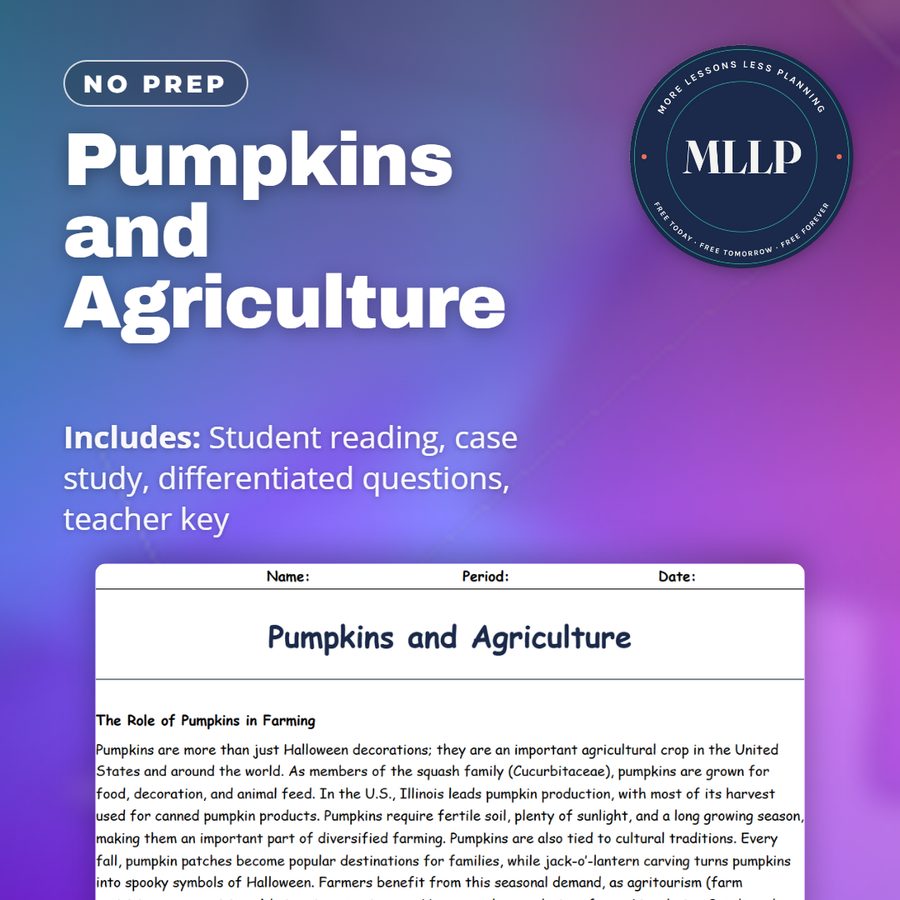
Pumpkins and Agriculture
Quality reviewed September 2026
Facts verified September 9, 2026
- Subject
- Science
- Grades
- Grades 9-12
- Length
- 6-page student worksheet
- Time
- About one 50-minute class period
- Great for
- Sub plans and independent work
- Includes
- Reading passage, comprehension questions + full answer key
- Format
- Print-and-go PDF
What students do
- Analyze the environmental impact of Halloween pumpkin waste
- Identify sustainable alternatives to landfill disposal
- Evaluate Illinois's role in U.S. pumpkin production
- Connect agriculture, tradition, and climate change
What it covers
- Pumpkin farming and U.S. agricultural production
- Methane emissions and food waste problems
- Composting and sustainability practices
Start reading this worksheet
The Role of Pumpkins in Farming
Pumpkins are more than just Halloween decorations; they are an important agricultural crop in the United States and around the world. As members of the squash family (Cucurbitaceae), pumpkins are grown for food, decoration, and animal feed. In the U.S., Illinois leads pumpkin production, with most of its harvest used for canned pumpkin products. Pumpkins require fertile soil, plenty of sunlight, and a long growing season, making them an important part of diversified farming. Pumpkins are also tied to cultural traditions. Every fall, pumpkin patches become popular destinations for families, while jack-o’-lantern carving turns pumpkins into spooky symbols of Halloween. Farmers benefit from this seasonal demand, as agritourism (farm activities open to visitors) brings in extra income. However, the popularity of pumpkins during October also raises important environmental questions about sustainability and food waste.
Food Waste and Environmental Impact
Every year, millions of pumpkins are grown specifically for Halloween carving, and most of them end up in landfills after the holiday. Once in landfills, decomposing pumpkins release methane gas, a greenhouse gas more powerful than carbon dioxide. This waste contributes to climate change and shows the environmental cost of seasonal traditions. There are, however, sustainable alternatives. Pumpkins can be composted instead of thrown away, returning nutrients to the soil without producing harmful gases. They can also be donated to farms for animal feed, or used in recipes like soups, pies, or roasted seeds. Encouraging families to treat pumpkins as food rather than disposable decorations is an important step in reducing waste.
Like what you read? The full reading, the case study, and every question set are in the free download below, along with the answer key.
Why this matters
Eight million pumpkins went to landfills in the U.K. alone after a single Halloween, and every one of them rotting released methane, a gas roughly twenty five times stronger than carbon dioxide. A decoration thrown out after one night turns out to have a chemistry problem attached to it.
Students rarely connect a jack-o'-lantern on a porch to a farm field in Illinois, let alone to a compost pile weeks later, so tracing that full path changes how they see the holiday. I like that they start asking what actually happens to their own pumpkin instead of assuming a landfill is the only ending available, which is the shift from tradition to choice this reading is built to produce.
From one teacher to another
Here's the moment that lands: in the U.K. alone, 8 million pumpkins went to landfills after Halloween, and each one rotting produced methane, a greenhouse gas 25 times stronger than carbon dioxide. This worksheet turns a holiday decoration into an environmental lesson. Students trace pumpkins from Illinois fields to jack-o'-lanterns to composting sites, realizing that fun traditions have environmental costs they can actually control.
What you get
Download
Where should I send the next one?
Everything here is free and it stays that way. Leave your email and I'll send you the new lessons as they go up. You can unsubscribe from any one of them.
Related resources
Every lesson on this site is free to download and use. If one of them saved you a prep period, you can chip in a few bucks toward my three kids' daycare fund. That's genuinely where tips go.