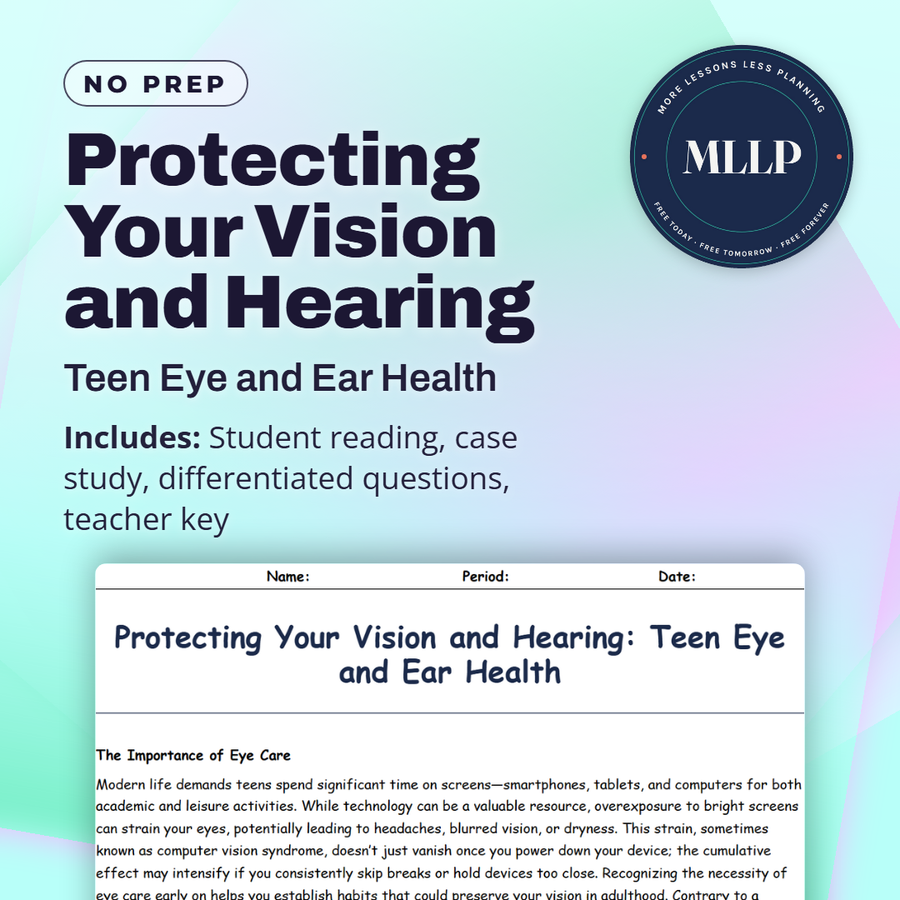
Protecting Your Vision and Hearing: Teen Eye and Ear Health
Quality reviewed September 2026
Facts verified September 21, 2026
- Subject
- Career & Life Skills
- Grades
- Grades 9-12
- Length
- 7-page student worksheet
- Time
- About one 50-minute class period
- Great for
- Sub plans and independent work
- Includes
- Reading passage, comprehension questions + full answer key
- Format
- Print-and-go PDF
What students do
- Answer three multiple-choice questions on how earbud volume, screen time, and UV exposure affect vision and hearing
- Match five terms, including tinnitus and digital eye strain, to their definitions
- Fill in three blanks identifying tinnitus, a correct prescription, and eye strain from the reading's key terms
- Answer three short-answer questions on why teens underestimate loud music and when protective gear like goggles or earplugs is worth wearing
What it covers
- Why screen time strains the eyes and what the 20-20-20 rule does about it
- How earbud volume and loud events put hearing at risk, since damaged hair cells in the ear never grow back
- A case study following a gamer whose late-night headphone use led to tinnitus and blurred vision at the same time
Start reading this worksheet
The Importance of Eye Care
Modern life demands teens spend significant time on screens: smartphones, tablets, and computers for both academic and leisure activities. While technology can be a valuable resource, overexposure to bright screens can strain your eyes, potentially leading to headaches, blurred vision, or dryness. This strain, sometimes known as computer vision syndrome, doesn’t just vanish once you power down your device; the cumulative effect may intensify if you consistently skip breaks or hold devices too close. Recognizing the necessity of eye care early on helps you establish habits that could preserve your vision in adulthood. Contrary to a common misconception, wearing glasses with the correct prescription does not weaken your eyes. Rather, they support proper vision, allowing you to perform tasks more comfortably. Regular eye exams help detect issues such as nearsightedness, farsightedness, or astigmatism. By catching these problems early, you can avoid straining your eyes to read a whiteboard or digital screen. Protecting your eyes from ultraviolet (UV) light is also crucial. Prolonged sun exposure without sunglasses can increase the risk of eye diseases later in life. Even if it’s overcast, UV rays can still penetrate cloud cover, so consider wearing sunglasses that offer UV protection when you’re outdoors for extended periods. Just as you’d wear safety gear in a lab, you should also think about protective eyewear in other scenarios (like playing certain sports or performing tasks where debris could fly into your eyes). Small decisions, like keeping a safe distance from fireworks or wearing goggles while doing a science experiment, can prevent serious, long-term damage. Ultimately, eye care becomes a mix of daily habits (like taking screen breaks every 20 minutes) and sensible precautions that safeguard this vital sense.
Hearing Health and Common Risks
Your ears also face daily stressors, including loud music from earbuds or headphones, bustling hallways, and social gatherings. While our hearing is resilient in many ways, certain hair cells inside the ear do not regenerate once damaged. Loud volumes, especially through earbuds placed directly into your ear canal, can cause noise-induced hearing loss over time. If you need to raise the volume to drown out background noise, you might be setting yourself up for problems like tinnitus (ringing in the ears) down the road. Concerts and sporting events frequently reach decibel levels that can harm your hearing if you remain unprotected for too long. Earplugs or noise-reducing headphones can help mitigate the risk without sacrificing your ability to enjoy music or conversations. Even everyday activities like mowing the lawn or operating loud machinery warrant ear protection. Consider hearing checks part of routine teen health, especially if you notice difficulty understanding conversations in noisy environments or if you experience ringing in your ears after an event. Early detection can lead to interventions like hearing aids or lifestyle adjustments to avoid further damage.
Like what you read? The full reading, the case study, and every question set are in the free download below, along with the answer key.
Why this matters
Hearing loss from loud earbuds does not heal the way a sprained ankle does. The cells inside the ear that pick up sound cannot regrow once damaged, which makes this reading's warning about headphone volume different from most health advice a teenager hears. Screens are not optional the way junk food is, so the reading focuses on habits students can actually keep, like the 20-20-20 rule, instead of telling them to simply look at a phone less. That practical angle matters because most teens will not put down a phone or turn off music, so the useful lesson is how to protect hearing and vision while still living an ordinary, screen-filled day.
From one teacher to another
Two senses drive this worksheet: what screens do to teenage eyes, and what earbuds do to teenage ears, both explained through actual mechanics rather than vague warnings. Carlos, the gamer in the case study, discovers both problems at once, a ringing in his ears from nightly headphone sessions and a blurred whiteboard he had been squinting at for weeks. From there the reading moves into fixes: the 20-20-20 rule for screen breaks, lower headphone volume, and UV-blocking sunglasses for anyone outside for long stretches. I like that it treats eye and ear care as one topic instead of two separate lectures, since for most teens the damage comes from the same daily habits.
What you get
Download
Where should I send the next one?
Everything here is free and it stays that way. Leave your email and I'll send you the new lessons as they go up. You can unsubscribe from any one of them.
Related resources
First Aid Basics and CPR: A Teen’s Guide to Helping Others
Handwashing and Sanitation: Your First Line of Defense
Health Screenings and Check-Ups: What Teens Should Know
Oral Health for Teens: Why Your Smile Matters
Personal Hygiene for Teens: Habits That Keep You Healthy
Preventing Illness: How Teens Can Avoid Infectious Diseases
Every lesson on this site is free to download and use. If one of them saved you a prep period, you can chip in a few bucks toward my three kids' daycare fund. That's genuinely where tips go.