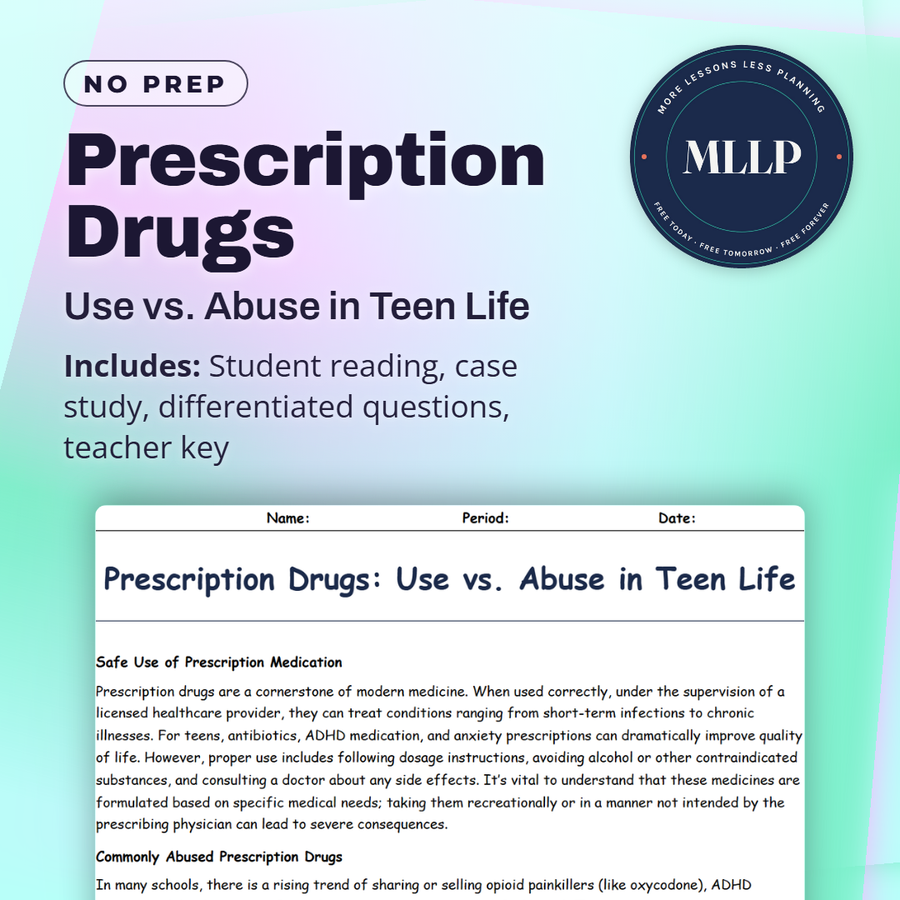
Prescription Drugs: Use vs. Abuse in Teen Life
Quality reviewed September 2026
Facts verified September 21, 2026
- Subject
- Career & Life Skills
- Grades
- Grades 9-12
- Length
- 7-page student worksheet
- Time
- About one 50-minute class period
- Great for
- Sub plans and independent work
- Includes
- Reading passage, comprehension questions + full answer key
- Format
- Print-and-go PDF
What students do
- Match five terms - refusal strategy, dependence, tolerance, opioid, and overdose - to the definition that names each one
- Fill in three blanks identifying prescription drug abuse, dependence, and the kind of depression that mixing sedatives with alcohol can cause
- Answer three multiple-choice questions on which drug category is often prescribed for pain, what combining substances can trigger, and what tolerance means
- Write short answers on why teens underestimate prescription drug danger, how peers can help, and what a first step looks like if dependence is suspected
What it covers
- The line between prescribed use and misuse, and how tolerance quietly builds toward dependence
- Refusal strategies and where a teen can turn for help, from school counselors and coaches to hotlines
- Alicia's case study, from a legitimate opioid prescription for a sports injury to a near-fatal overdose
Start reading this worksheet
Safe Use of Prescription Medication
Prescription drugs are a cornerstone of modern medicine. When used correctly, under the supervision of a licensed healthcare provider, they can treat conditions ranging from short-term infections to chronic illnesses. For teens, antibiotics, ADHD medication, and anxiety prescriptions can dramatically improve quality of life. However, proper use includes following dosage instructions, avoiding alcohol or other contraindicated substances, and consulting a doctor about any side effects. It’s vital to understand that these medicines are formulated based on specific medical needs; taking them recreationally or in a manner not intended by the prescribing physician can lead to severe consequences.
Commonly Abused Prescription Drugs
In many schools, there is a rising trend of sharing or selling opioid painkillers (like oxycodone), ADHD stimulants (like Adderall or Ritalin), and anxiety medications (like Xanax). Teens may use stimulants to pull all-night study sessions or opioids to experience a euphoric “high.” Yet, these drugs carry high addiction potential, and misuse can spiral into life-threatening problems. A student might start by taking a pill to manage stress or physical pain and end up developing tolerance and dependence. Opioid misuse, in particular, has reached epidemic levels in certain regions. Teens often underestimate the strength of these medications and the potential for overdose.
Dangers of Mixing Substances
One hidden danger is the mixing of prescription drugs with other substances, including alcohol or illicit drugs. Combining different depressants, such as anxiety meds and alcohol, can slow breathing to dangerously low levels. Alternatively, mixing stimulants with certain over-the-counter cold medications could trigger severe cardiovascular stress. The body’s pathways for metabolizing drugs can become overwhelmed, leading to toxic buildup or organ damage. Medical professionals strongly advise against taking prescriptions in any way that deviates from the label instructions or pharmacy guidance.
Like what you read? The full reading, the case study, and every question set are in the free download below, along with the answer key.
Why this matters
A lot of the prescription misuse I've seen doesn't start with a kid looking to get high; it starts with real pain and a prescription that stops working as well as it did on day one. Alicia's case study matters because her decisions are the kind any student could plausibly make: taking one extra pill, then two, then buying from a classmate rather than telling a parent the pain is still there. Naming tolerance and dependence as a predictable medical process, rather than a personal failure, is what makes a student more likely to ask for help before things escalate the way they did for her.
If you or someone you know is struggling, call or text 988 (Suicide & Crisis Lifeline, US) or talk to a trusted adult right away.
From one teacher to another
I built this one to follow how a straightforward medical situation can turn into a life-threatening one, because that's the pattern I actually see. The reading opens by laying out safe use, including why sharing a prescription is illegal even with good intentions, before naming the specific drugs it wants students to recognize: opioids, stimulants like Adderall, and anxiety medication like Xanax. It closes with Alicia, who starts with a legitimate opioid prescription for a sports injury and ends up buying pills from a classmate and mixing them with a friend's anxiety medication, a decision that lands her in the hospital.
What you get
Download
Where should I send the next one?
Everything here is free and it stays that way. Leave your email and I'll send you the new lessons as they go up. You can unsubscribe from any one of them.
Related resources
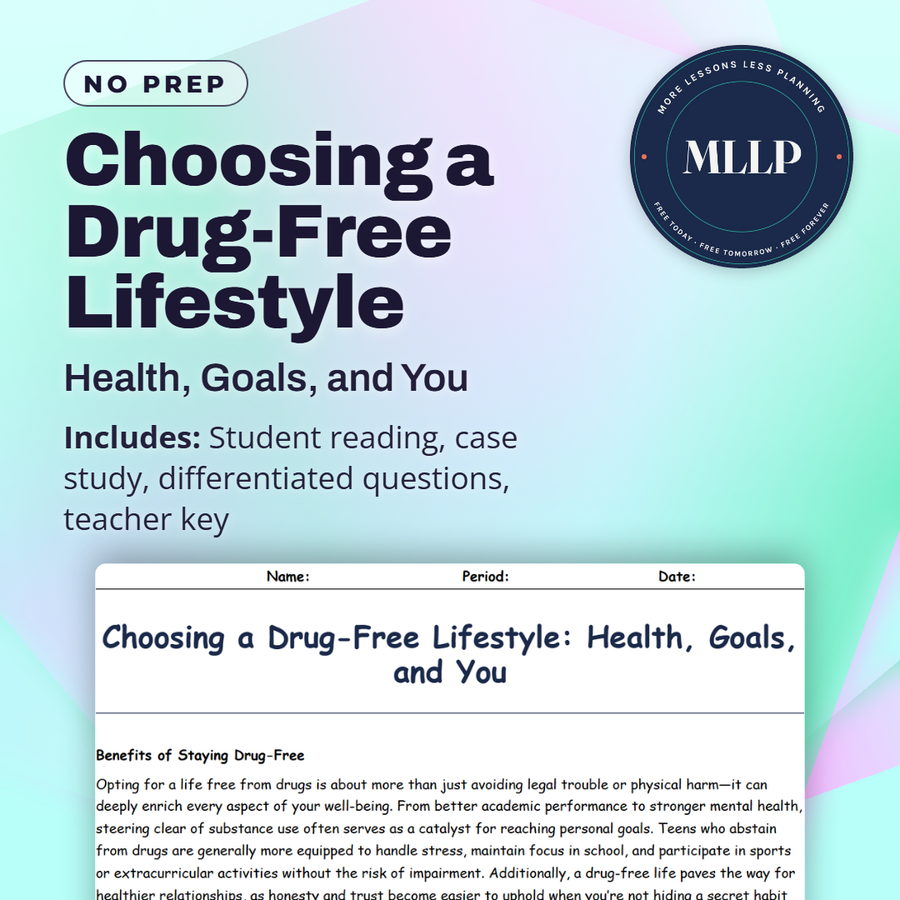
Choosing a Drug-Free Lifestyle: Health, Goals, and You
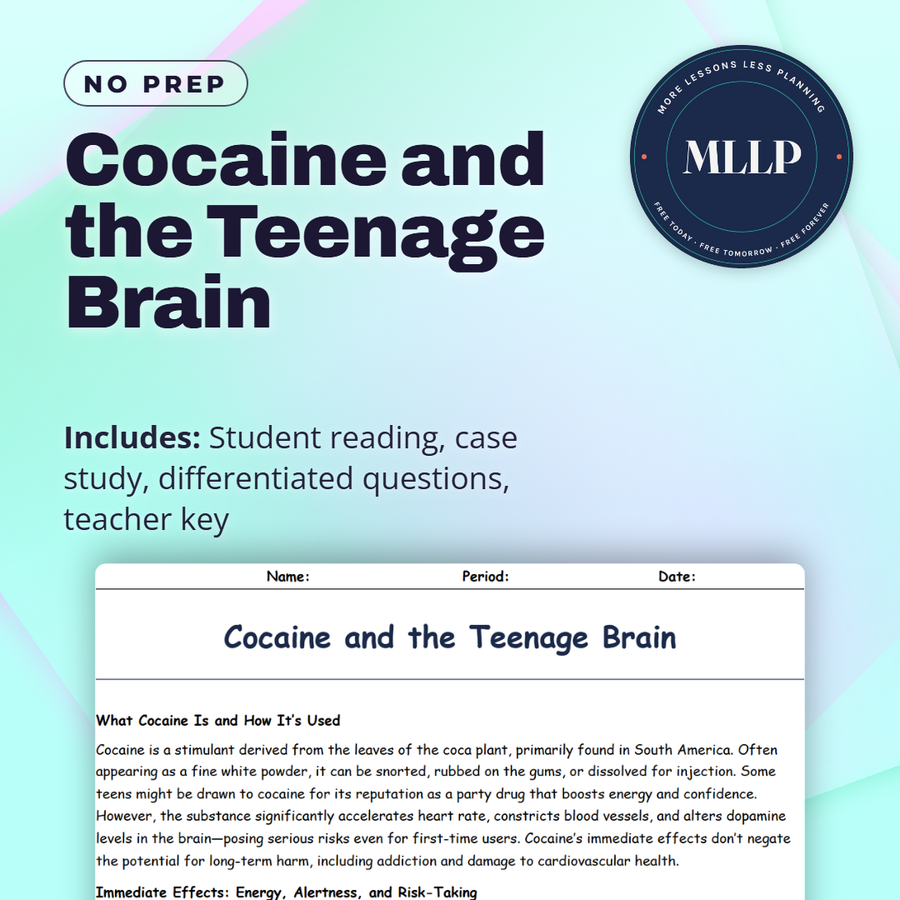
Cocaine and the Teenage Brain
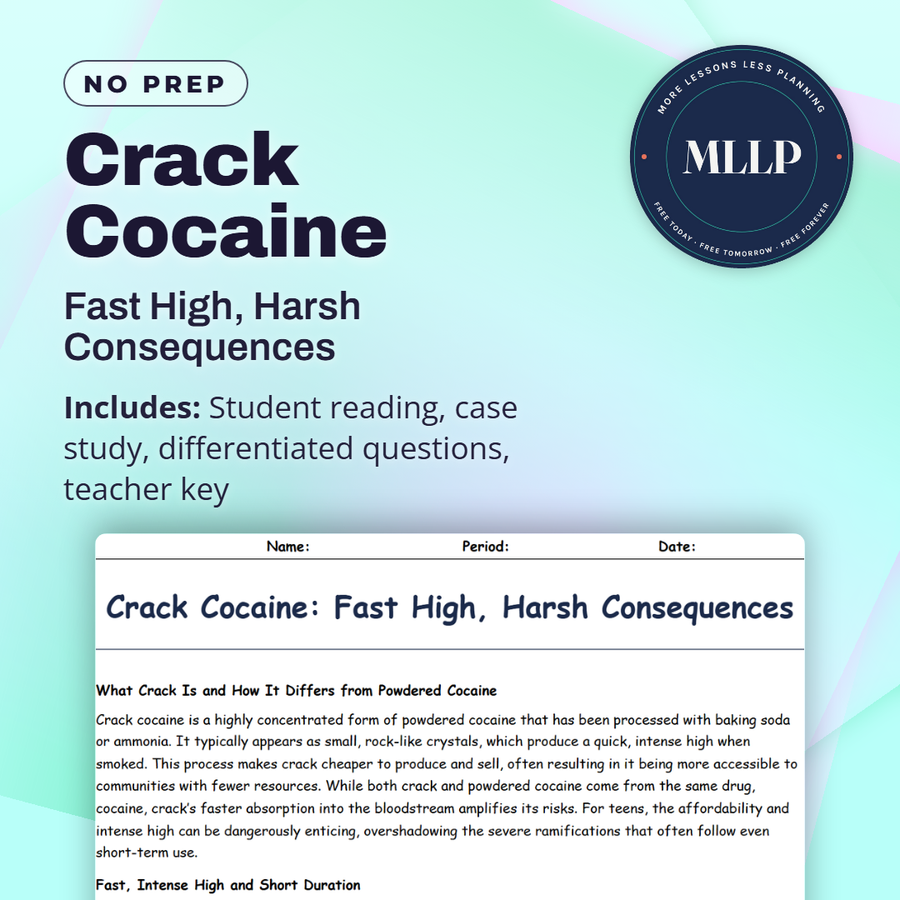
Crack Cocaine: Fast High, Harsh Consequences
Heroin and Teens: Understanding the Risks and Realities
How Addiction Changes the Brain: Science for Students
How to Handle Peer Pressure and Say No with Confidence
Every lesson on this site is free to download and use. If one of them saved you a prep period, you can chip in a few bucks toward my three kids' daycare fund. That's genuinely where tips go.