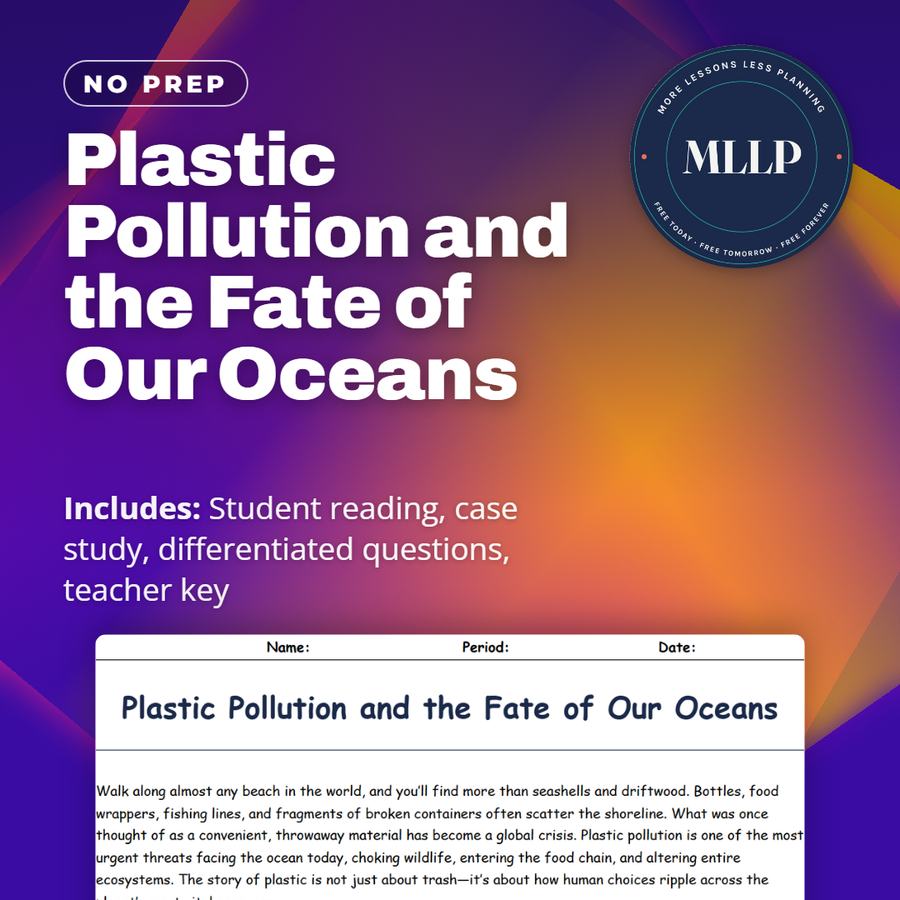
Plastic Pollution and the Fate of Our Oceans
Quality reviewed September 2026
Facts verified September 14, 2026
- Subject
- Science
- Grades
- Grades 9-12
- Length
- 7-page student worksheet
- Time
- About one 50-minute class period
- Great for
- Sub plans and independent work
- Includes
- Reading passage, comprehension questions + full answer key
- Format
- Print-and-go PDF
What students do
- Match terms like microplastics, the Great Pacific Garbage Patch, ghost gear, tourism losses, and toxic pollutants to their correct definitions
- Fill in the blank sentences on garbage patches, sunlight, and The Ocean Cleanup
- Answer multiple choice questions on why plastics persist, which animals mistake plastic bags for jellyfish, and effective solutions to plastic pollution
- Write short answers on how microplastics enter the food chain, why prevention beats cleanup, and one change students could make to cut plastic waste
What it covers
- Why plastic breaks down into microplastics instead of disappearing, and how it spreads through ocean currents
- The impact of plastic pollution on marine life, ecosystems, and coastal economies
- A case study on the Great Pacific Garbage Patch and cleanup efforts by organizations like The Ocean Cleanup
Start reading this worksheet
Walk along almost any beach in the world, and you’ll find more than seashells and driftwood. Bottles, food wrappers, fishing lines, and fragments of broken containers often scatter the shoreline. What was once thought of as a convenient, throwaway material has become a global crisis. Plastic pollution is one of the most urgent threats facing the ocean today, choking wildlife, entering the food chain, and altering entire ecosystems. The story of plastic goes beyond trash. It’s about how human choices ripple across the planet’s most vital resource.
Why Plastic Pollution is a Global Problem
Plastics became popular in the mid-20th century because they were cheap, versatile, and long-lasting. Those same qualities are now haunting us. A plastic bottle can take hundreds of years to break down, and even then, it doesn’t disappear completely. Instead, it breaks into microplastics: tiny fragments that drift through the water, wash onto shores, and are swallowed by marine life. Scientists estimate that more than 8 million tons of plastic enter the ocean every year. The sources are everywhere: litter washed down storm drains, abandoned fishing nets drifting at sea, and even microbeads from face washes and toothpaste. Once in the water, plastics travel with ocean currents, concentrating in “garbage patches” like the infamous Great Pacific Garbage Patch, which is estimated to be twice the size of Texas. The result is a world where the ocean floor, surface, and even Arctic ice contain traces of human waste.
Impacts on Marine Life and Ecosystems
The consequences of plastic pollution are devastating. Sea turtles mistake floating plastic bags for jellyfish, often leading to suffocation or starvation. Seabirds pick up bottle caps and lighters, feeding them to their chicks who cannot digest them. Fish swallow microplastics, which can accumulate in their tissues and eventually work their way up the food chain (all the way to human dinner plates). Ecosystems also feel the strain. Coral reefs, already under stress from climate change, are smothered when plastic bags drift onto them, blocking sunlight and spreading harmful bacteria. Floating plastics provide rafts for invasive species, allowing them to colonize new areas and disrupt local marine life. In short, plastic pollution is reshaping the ocean in ways scientists are only beginning to understand.
Like what you read? The full reading, the case study, and every question set are in the free download below, along with the answer key.
Why this matters
Why does a plastic bottle tossed on a beach outlast the person who threw it away. It does not disappear, it fragments into microplastics that keep traveling through the food chain, all the way from plankton up to the fish on someone's dinner plate. The Great Pacific Garbage Patch shows what that fragmentation looks like once it accumulates at ocean scale.
The Ocean Cleanup's actual results are worth bringing in here, since students need to see that removing plastic already in the ocean is far harder than keeping new plastic out of it. Ghost gear and toxic pollutants stop being vocabulary words once traced back to a source students recognize.
From one teacher to another
A plastic bottle tossed on a beach can take centuries to break down, and this reading follows what happens to it in the meantime. Students see how plastics fragment into microplastics that travel through the food chain, all the way from plankton to dinner plates. The Great Pacific Garbage Patch case study covers the scale of the problem and the limits of current cleanup technology. Vocabulary like ghost gear and toxic pollutants ties directly to the sources named in the reading.
What you get
Download
Where should I send the next one?
Everything here is free and it stays that way. Leave your email and I'll send you the new lessons as they go up. You can unsubscribe from any one of them.
Related resources
Climate Change and Coral Reefs: Fragile Ecosystems at Risk
Climate Change and Ocean Warming
Global Ocean Treaties and the Future of Marine Protection
Marine Pollution: Plastics, Oil Spills, and Chemicals
Nutrient Pollution and the Formation of Dead Zones
Ocean Conservation Strategies and Marine Protected Areas
Every lesson on this site is free to download and use. If one of them saved you a prep period, you can chip in a few bucks toward my three kids' daycare fund. That's genuinely where tips go.