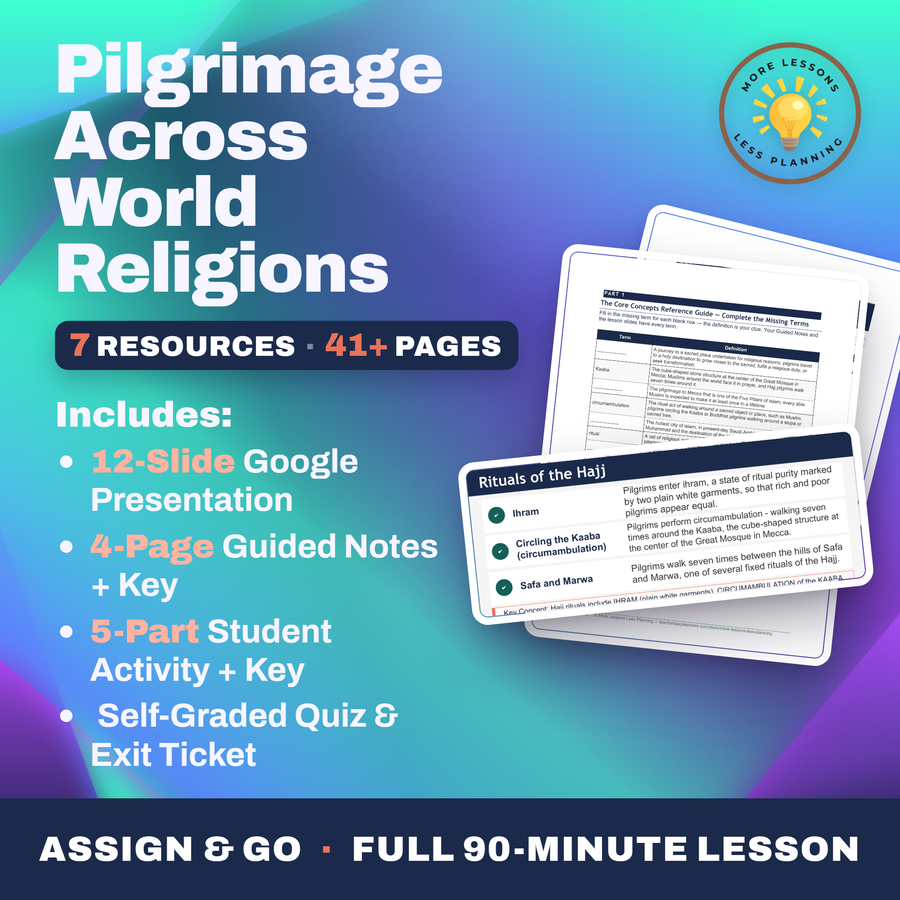

Pilgrimage Across World Religions
- Slide deck
- Guided notes
- Guided notes teacher key
- Activity + answer key
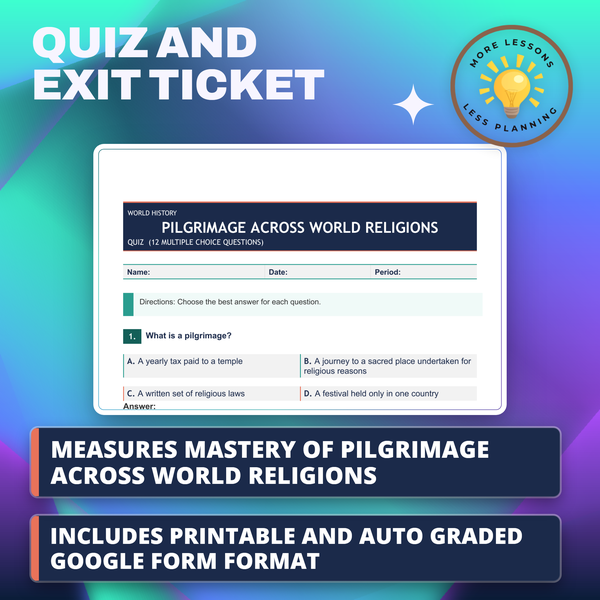
- Quiz + answer key
- Exit ticket + answer key
- Teacher guide
- Teacher presentation notes
Where should I send the next one?
Everything here is free and it stays that way. Leave your email and I'll send you the new lessons as they go up. You can unsubscribe from any one of them.
Every file in this toolkit
Related resources
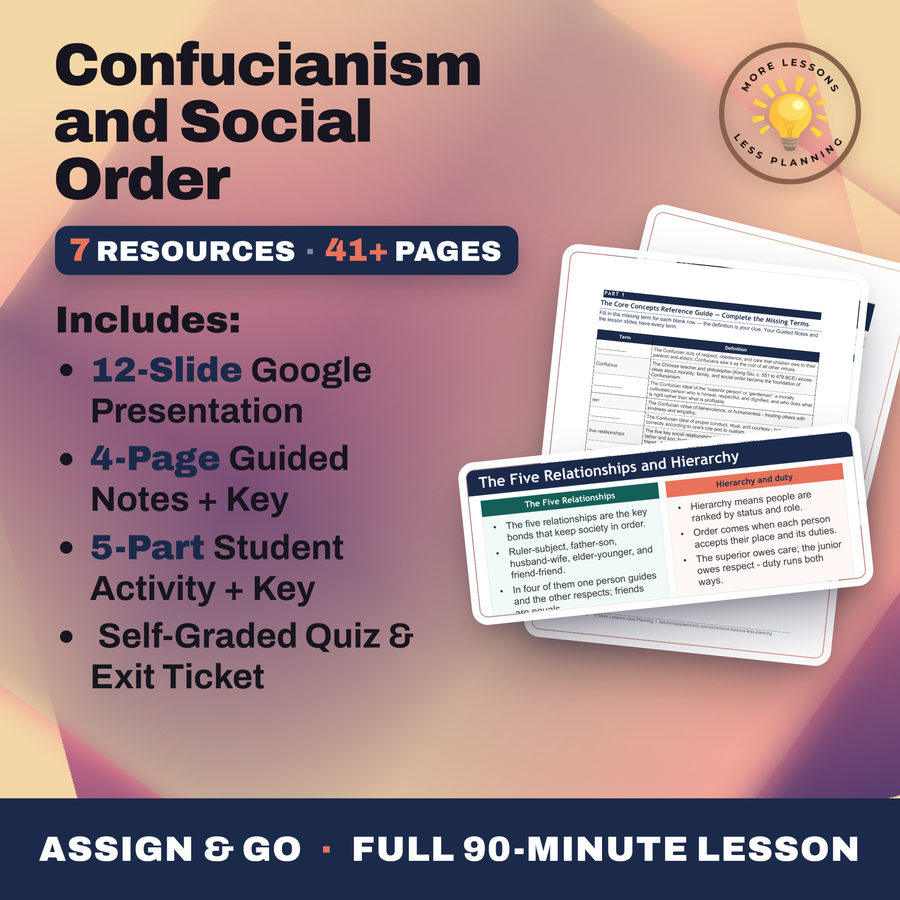
Confucianism and Social Order
Hinduism - Origins and Beliefs
Religion on the Silk Road
World Religions: A Comparative Introduction
Aggression and Appeasement
Alliances and the Causes of WWI
What students do
- Analyze Ibn Battuta's own account of arriving at Mecca and performing the Hajj
- Compare the Hajj to Mecca with Buddhist pilgrimage to Bodh Gaya using the same four features
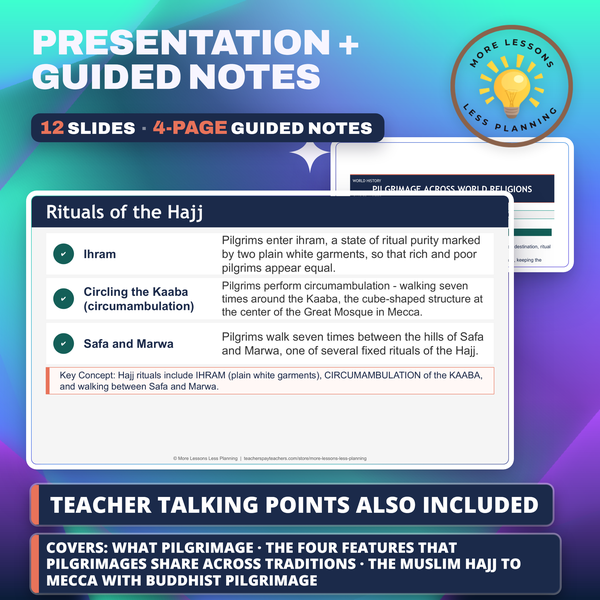
- Map the fixed Hajj rituals, from entering ihram to circling the Kaaba seven times
- Argue why sharing a human pattern of pilgrimage doesn't mean two religions believe the same thing
What it covers
- The four features that show up across pilgrimage traditions: destination, ritual, community, and transformation
- Why Ibn Battuta dictated his account decades after his own journey, and what that means for reading it as evidence
- The four sacred sites in the Buddha's life, with Bodh Gaya as the most important
- How ihram's plain white garments make rich and poor pilgrims look the same
Learning targets
- Explain what pilgrimage is and why believers across religions undertake it.
- Identify the four features that pilgrimages share across traditions: a sacred destination, ritual acts, community, and transformation.
- Compare the Muslim Hajj to Mecca with Buddhist pilgrimage to Bodh Gaya, keeping the shared human pattern and the distinct beliefs both in view.
- Read a Muslim traveler's account of the Hajj (Ibn Battuta) as a primary source and explain what it shows about pilgrimage.
From one teacher to another
Ibn Battuta's own account of reaching Mecca is the document students spend the most time with here, and it's worth pausing on because he dictated it from memory decades after the actual journey. Reading it against the fixed rituals of the Hajj, then setting the whole thing beside the Buddhist pilgrimage tradition centered on Bodh Gaya, is what finally gets the four shared features to click. It's the sharpest lesson I've got for showing kids that two traditions can share a pattern without sharing a faith.
Every lesson on this site is free to download and use. If one of them saved you a prep period, you can chip in a few bucks toward my three kids' daycare fund. That's genuinely where tips go.