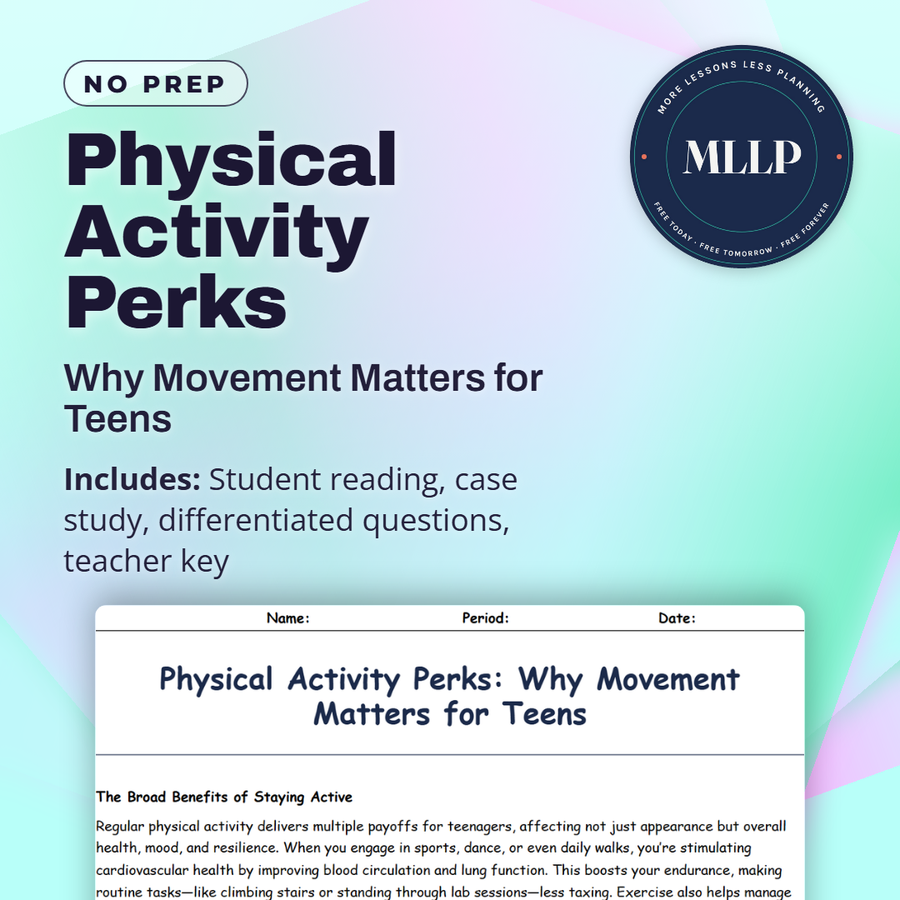
Physical Activity Perks: Why Movement Matters for Teens
Quality reviewed September 2026
Facts verified September 21, 2026
- Subject
- Career & Life Skills
- Grades
- Grades 9-12
- Length
- 6-page student worksheet
- Time
- About one 50-minute class period
- Great for
- Sub plans and independent work
- Includes
- Reading passage, comprehension questions + full answer key
- Format
- Print-and-go PDF
What students do
- Link five movement-related terms, including Endorphins, Cardiovascular Health, and Anxiety Relief, to their definitions
- Complete three blanks about cortisol, camaraderie, and cardiovascular health using clues from the reading
- Select the correct answer on three multiple-choice questions about how movement affects mood, stress, and social connection
- Respond in short answers to questions about low-pressure ways to stay active and why short activity breaks help during long study sessions
What it covers
- The physical, mental, and social payoffs of regular movement, from lower cortisol to stronger friendships
- Easy, low-cost ways to build activity into a normal week without joining a gym or a competitive team
- Devon, a shy sophomore whose beginner basketball season eased his anxiety and carried over into class and friendships
Start reading this worksheet
The Broad Benefits of Staying Active
Regular physical activity delivers multiple payoffs for teenagers, affecting not just appearance but overall health, mood, and resilience. When you engage in sports, dance, or even daily walks, you’re stimulating cardiovascular health by improving blood circulation and lung function. This boosts your endurance, making routine tasks (like climbing stairs or standing through lab sessions) less taxing. Exercise also helps manage body weight by balancing calorie intake with usage. But beyond these physical aspects, an active lifestyle supports mental well-being. Exercise releases endorphins, often called “feel-good” chemicals, which elevate mood and reduce stress or anxiety. For teens juggling exams and social pressures, consistent movement can act as a natural stress-relief valve. Staying active can also foster better social connections. Team sports and group classes offer an environment for building friendships, honing leadership skills, and learning effective communication. Even solo activities like running or yoga can deepen self-awareness and provide a sense of accomplishment. If you’ve ever felt that extra boost of self-esteem after a good workout, you’ve experienced one of the intangible perks of an active routine.
Easy Entry Points to Stay Active
Intense workouts at the gym aren’t the only option. Simple changes, like choosing to bike or walk to school, can add significant health benefits over time. Engaging in short 10-minute exercise breaks between study sessions can boost concentration and allow you to return to your tasks refreshed. If you prefer structured activities, consider trying out for a sports team, joining a dance club, or attending group fitness classes at a local community center. Even daily chores, like cleaning your room or mowing the lawn, count as physical activity when done vigorously. For teens who love technology, fitness apps and online workout videos provide convenient, on-demand routines. Whether you’re a fan of high-intensity interval training (HIIT) or prefer a more relaxed approach like Pilates, there’s likely a program suited to your interests. The key is to pick something enjoyable enough to stick with. You don’t have to dedicate hours every day. Aiming for at least 60 minutes of moderate to vigorous activity most days of the week can yield noticeable improvements in energy, mood, and even academic performance.
Like what you read? The full reading, the case study, and every question set are in the free download below, along with the answer key.
Why this matters
Movement is one of the few stress-management tools a teenager can use without asking permission or spending money, and it works precisely because so much of a teenager's stress comes from things they can't control: a test schedule, a family situation, a packed after-school shift. This reading treats exercise as a coping mechanism with a measurable effect on cortisol, not as an appearance goal, which changes how students hear it. For a student like Devon in the case study, the value wasn't fitness at all, it was walking into a classroom less anxious, and that reframing usually means more to a teenager than any claim about health outcomes decades away.
From one teacher to another
I start with Devon before the vocabulary: a shy sophomore who signed up for beginner basketball hoping it would help with his anxiety, and it did, in ways that spilled into his classes and friendships too. From there, the three passages build out the actual mechanism, endorphins, lower cortisol, better blood flow to the brain, so students understand why movement affects mood as much as muscles. I chose this reading because it covers activity options beyond organized sports: dance, walking, ten-minute study breaks, things a student who hates team sports can still use. The short-answer questions specifically ask what a student who dislikes competition could try instead, which keeps the reading from assuming every teen wants to play on a team.
What you get
Download
Where should I send the next one?
Everything here is free and it stays that way. Leave your email and I'll send you the new lessons as they go up. You can unsubscribe from any one of them.
Related resources
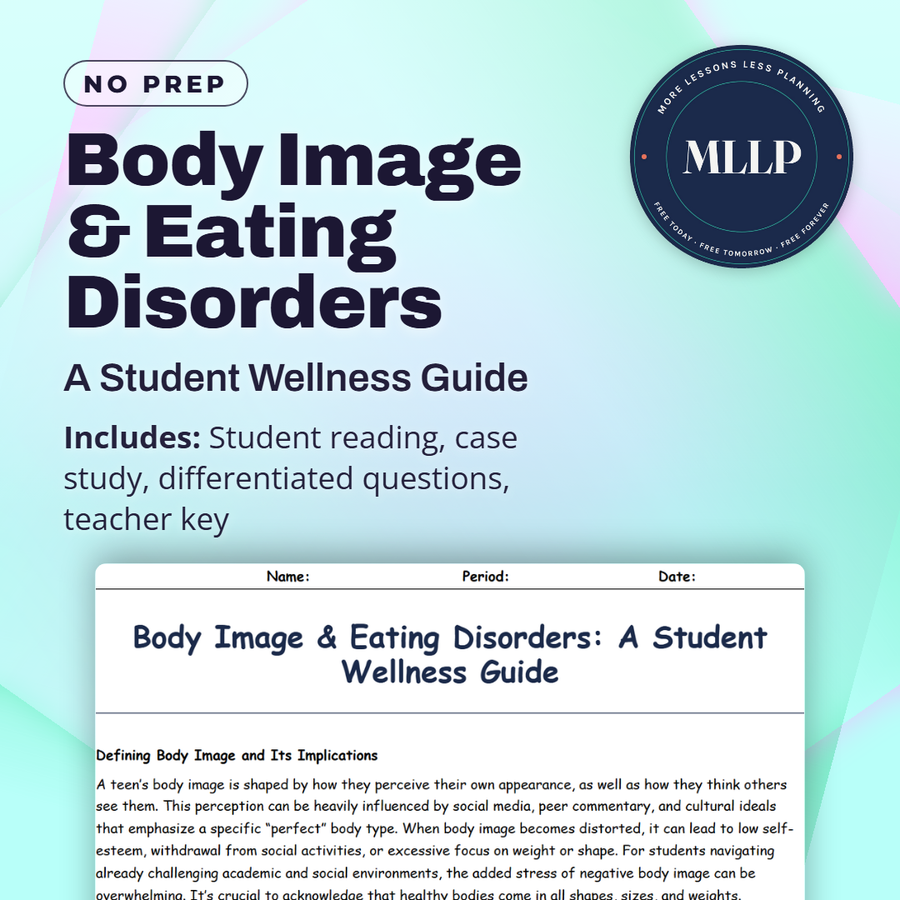
Body Image & Eating Disorders: A Student Wellness Guide
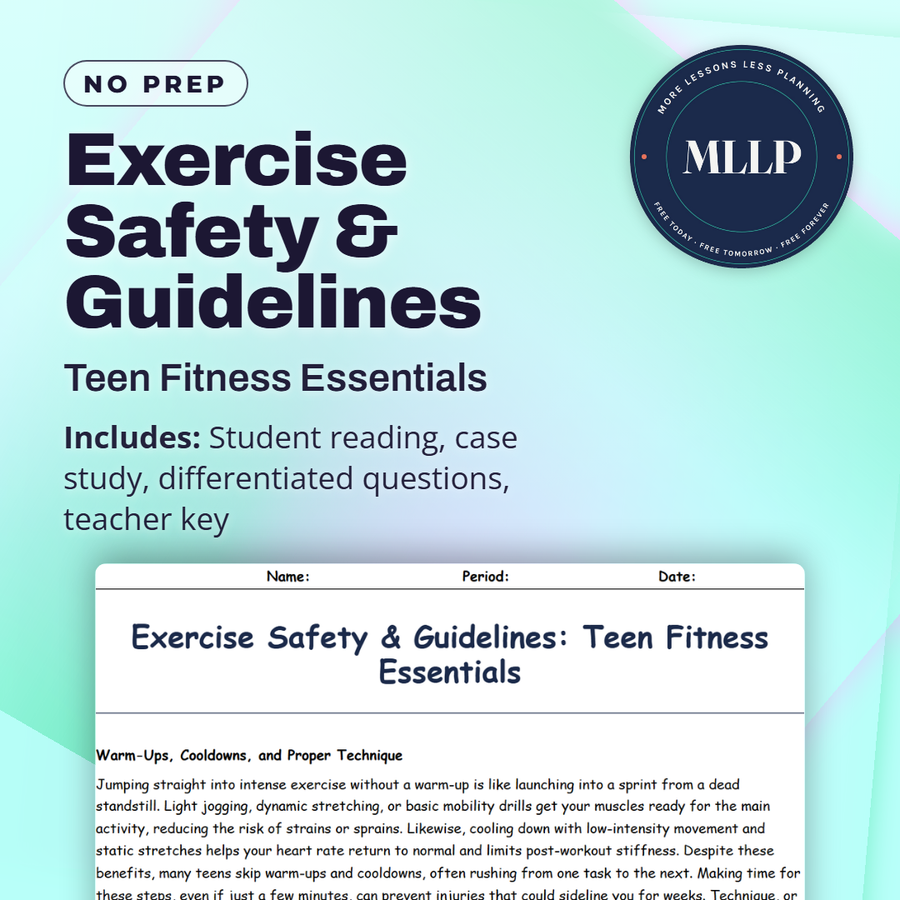
Exercise Safety & Guidelines: Teen Fitness Essentials
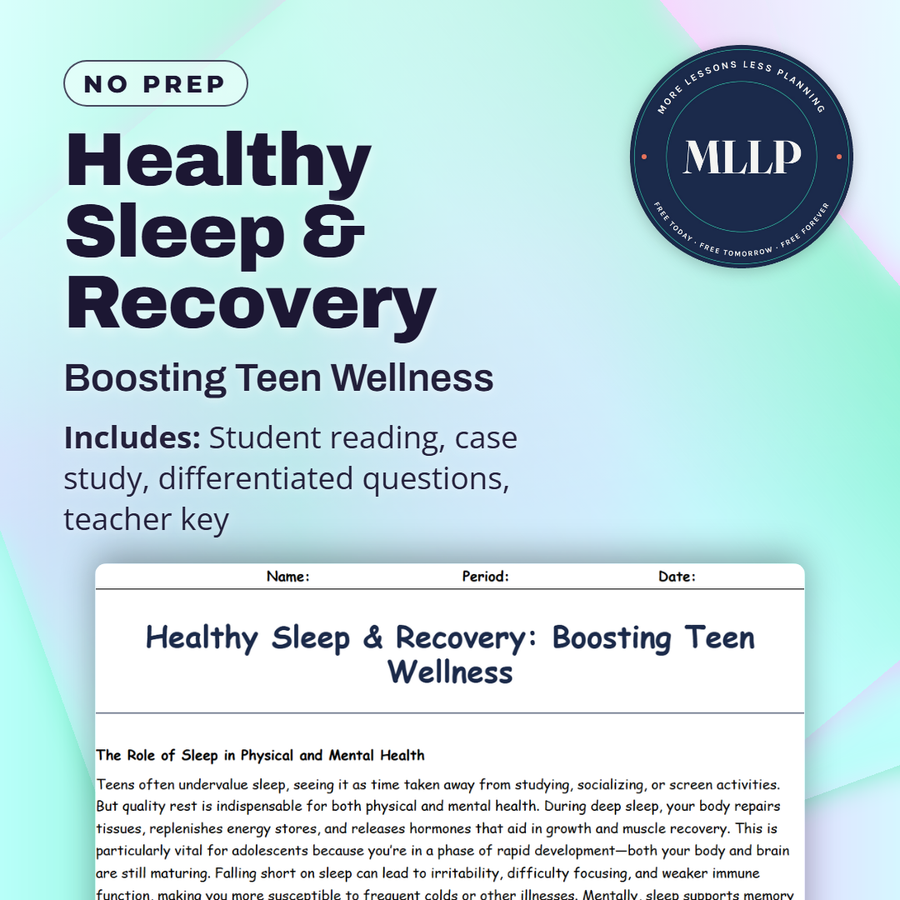
Healthy Sleep & Recovery: Boosting Teen Wellness
Macronutrients: Proteins, Carbs, and Fats for Teens
Master MyPlate: Dietary Guidelines for Teens
Nutrition’s Impact: Health Effects for High Schoolers
Every lesson on this site is free to download and use. If one of them saved you a prep period, you can chip in a few bucks toward my three kids' daycare fund. That's genuinely where tips go.