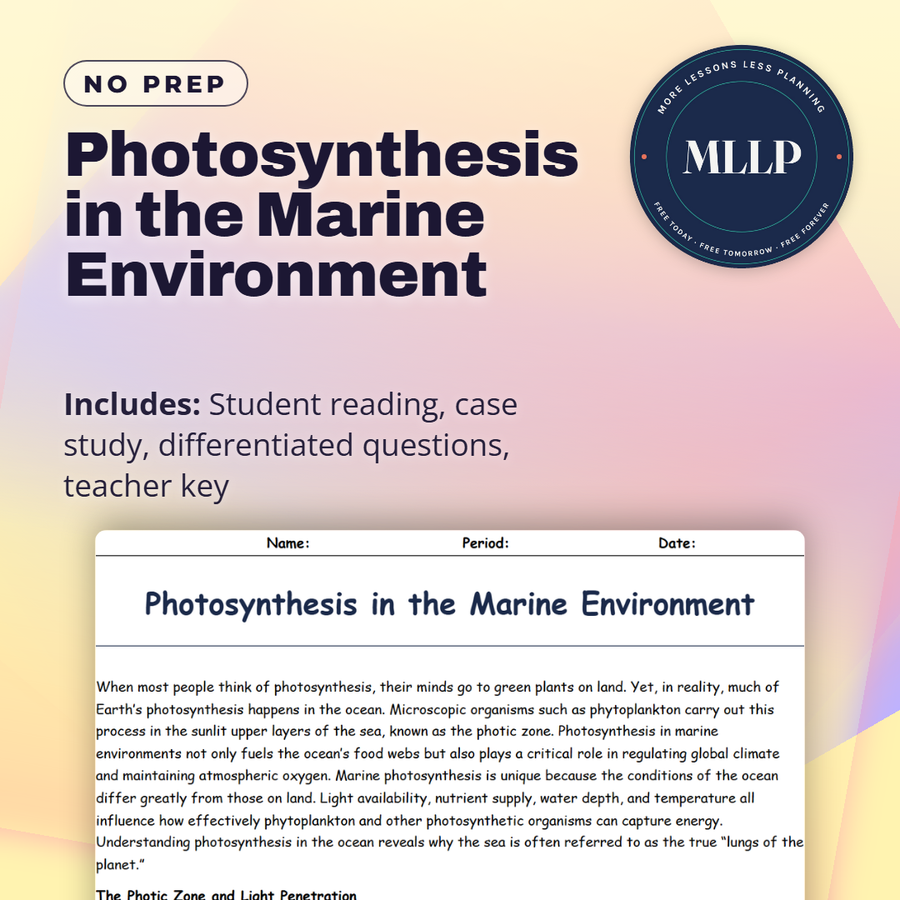
Photosynthesis in the Marine Environment
Quality reviewed September 2026
Facts verified September 14, 2026
- Subject
- Science
- Grades
- Grades 9-12
- Length
- 7-page student worksheet
- Time
- About one 50-minute class period
- Great for
- Sub plans and independent work
- Includes
- Reading passage, comprehension questions + full answer key
- Format
- Print-and-go PDF
What students do
- Match terms like the photic zone, upwelling, the biological pump, and phycobilin pigments to their correct definitions
- Fill in the blank sentences on the photic zone, global fisheries, and Earth's climate
- Answer multiple choice questions on the photic zone, why ocean gyres stay unproductive, and El Niño's effect on upwelling
- Write short answers on why blue and green light penetrate deepest, how photosynthesis supports climate stability, and one marine photosynthesizer adaptation
What it covers
- How light, nutrients, and water movement control photosynthesis in the ocean's photic zone
- The adaptations of diatoms, dinoflagellates, coccolithophores, and cyanobacteria that let them capture light
- A case study on the Peru upwelling system and how El Niño disrupts its productivity
Start reading this worksheet
When most people think of photosynthesis, their minds go to green plants on land. Yet, in reality, much of Earth’s photosynthesis happens in the ocean. Microscopic organisms such as phytoplankton carry out this process in the sunlit upper layers of the sea, known as the photic zone. Photosynthesis in marine environments not only fuels the ocean’s food webs but also plays a critical role in regulating global climate and maintaining atmospheric oxygen. Marine photosynthesis is unique because the conditions of the ocean differ greatly from those on land. Light availability, nutrient supply, water depth, and temperature all influence how effectively phytoplankton and other photosynthetic organisms can capture energy. Understanding photosynthesis in the ocean reveals why the sea is often referred to as the true “lungs of the planet.”
The Photic Zone and Light Penetration
Photosynthesis requires sunlight, so it is restricted to the upper layer of the ocean where light can penetrate. This region, generally extending down about 200 meters, is called the photic zone. Within this zone, organisms like diatoms, dinoflagellates, coccolithophores, and cyanobacteria capture solar energy and convert it into chemical energy in the form of sugars. However, light in water behaves differently than on land. Water absorbs and scatters light, particularly the red wavelengths. As a result, blue and green light penetrate deepest. Marine photosynthetic organisms have adapted by using pigments that absorb a wider range of wavelengths. For example, some cyanobacteria use phycobilin pigments, which allow them to photosynthesize even in dim, deeper layers. These adaptations enable diverse organisms to thrive across a range of marine environments.
Nutrients and Photosynthetic Productivity
Light is essential, but it is not the only factor controlling photosynthesis. Nutrients such as nitrogen, phosphorus, and iron are critical for building the proteins and chlorophyll necessary for photosynthesis. In many parts of the ocean, nutrient availability is limited, especially in the central gyres of the Pacific and Atlantic. These areas, despite having plenty of sunlight, are relatively unproductive because phytoplankton cannot grow without nutrients. By contrast, nutrient-rich regions such as coastal upwelling zones or polar waters support incredible productivity. In upwelling zones, deep, nutrient-rich water rises to the surface, fueling large phytoplankton blooms that support fish populations and entire ecosystems. This uneven distribution of nutrients explains why some parts of the ocean teem with life while others are nearly barren.
Like what you read? The full reading, the case study, and every question set are in the free download below, along with the answer key.
Why this matters
Photosynthesis needs more than sunlight to actually happen at ocean scale. This reading uses the photic zone to show that light, nutrients, and water movement all have to line up first, and the Peru upwelling system shows what that alignment looks like when it works, supporting one of the most productive fisheries on Earth.
I add El Niño's effect on that same system once students start treating productivity as a given, since a disrupted upwelling pattern can turn a reliable fishing economy unstable. It gives an abstract climate pattern a visible economic consequence they can actually picture.
From one teacher to another
Marine photosynthesis drives this reading, starting with the photic zone and the light, nutrient, and water movement factors that control it. The case study examines the Peru upwelling system, one of the most productive fisheries on Earth, and what happens to it during an El Niño event. It ties abstract chemistry and physics concepts to a real fishing economy.
What you get
Download
Where should I send the next one?
Everything here is free and it stays that way. Leave your email and I'll send you the new lessons as they go up. You can unsubscribe from any one of them.
Related resources
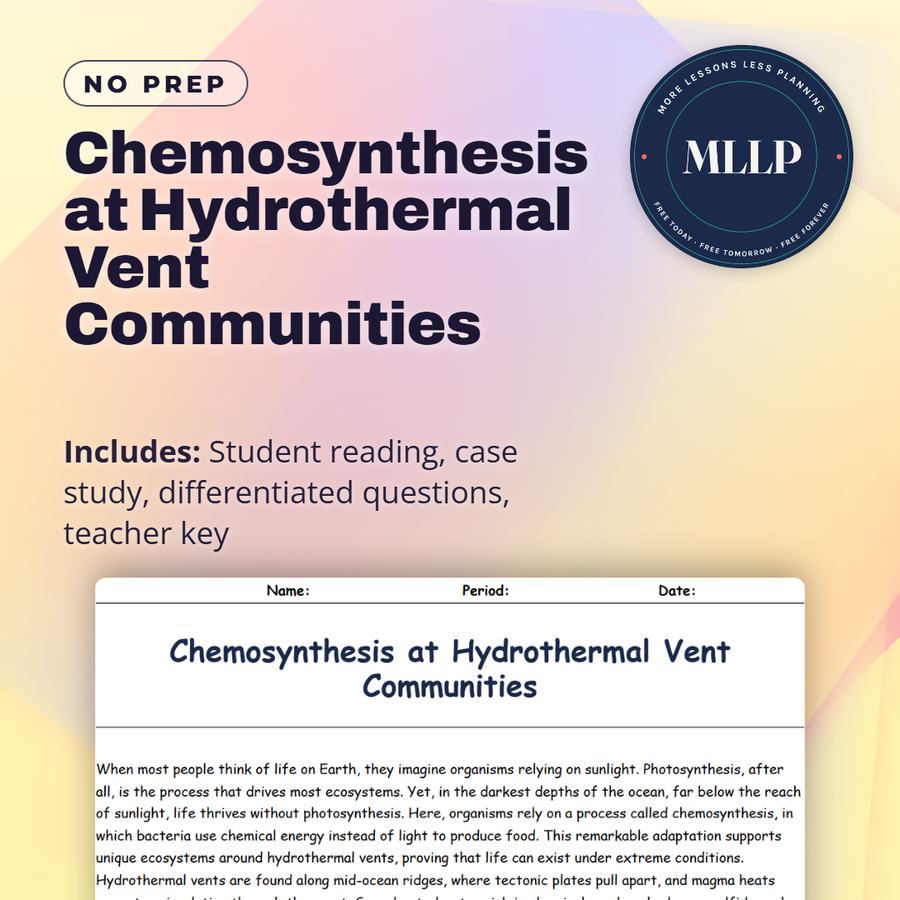
Chemosynthesis at Hydrothermal Vent Communities

Cyanobacteria and the Breath of Life
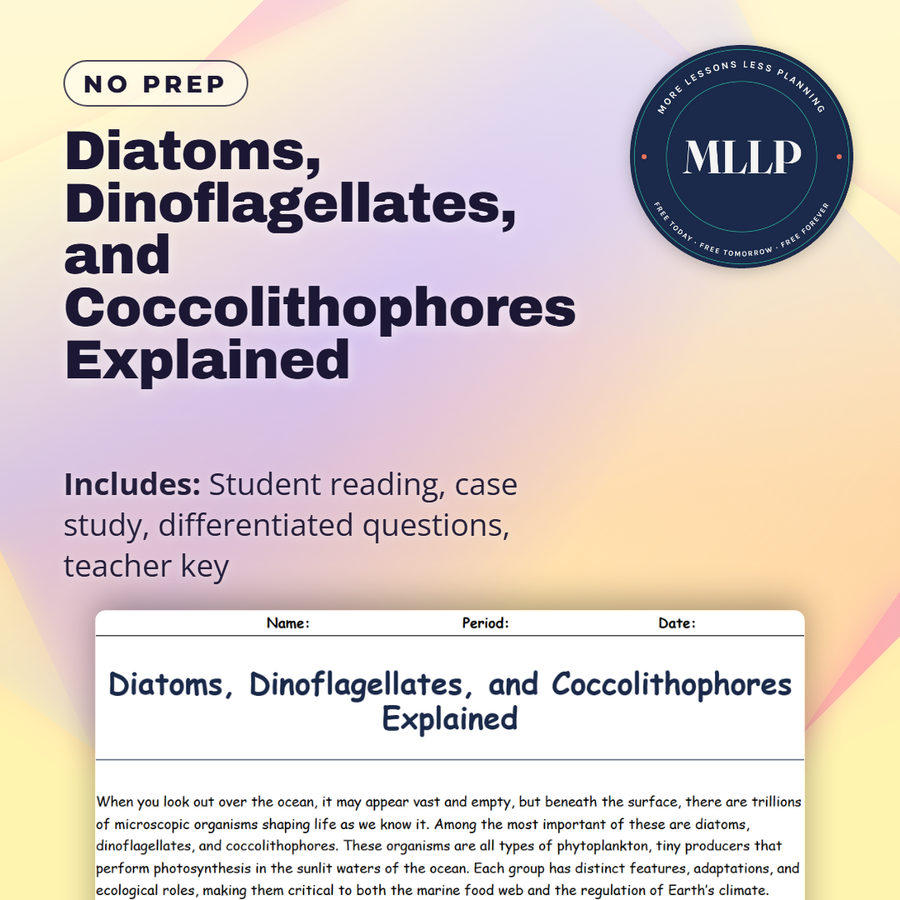
Diatoms, Dinoflagellates, and Coccolithophores Explained
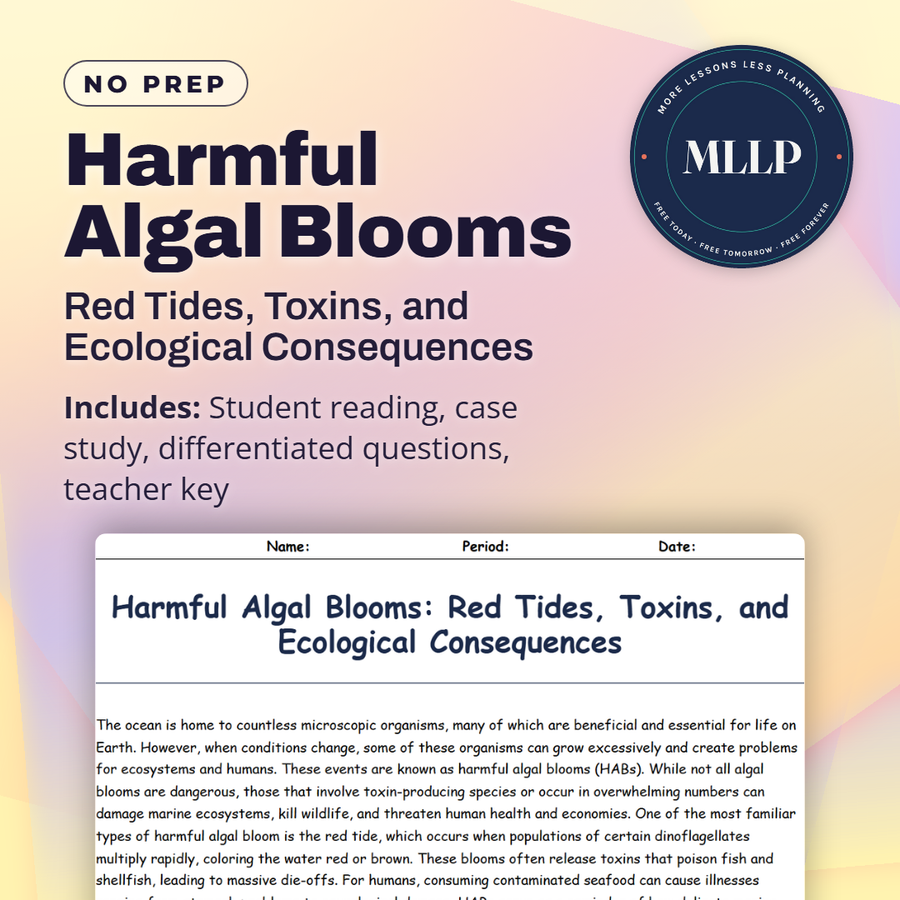
Harmful Algal Blooms: Red Tides, Toxins, and Ecological Consequences
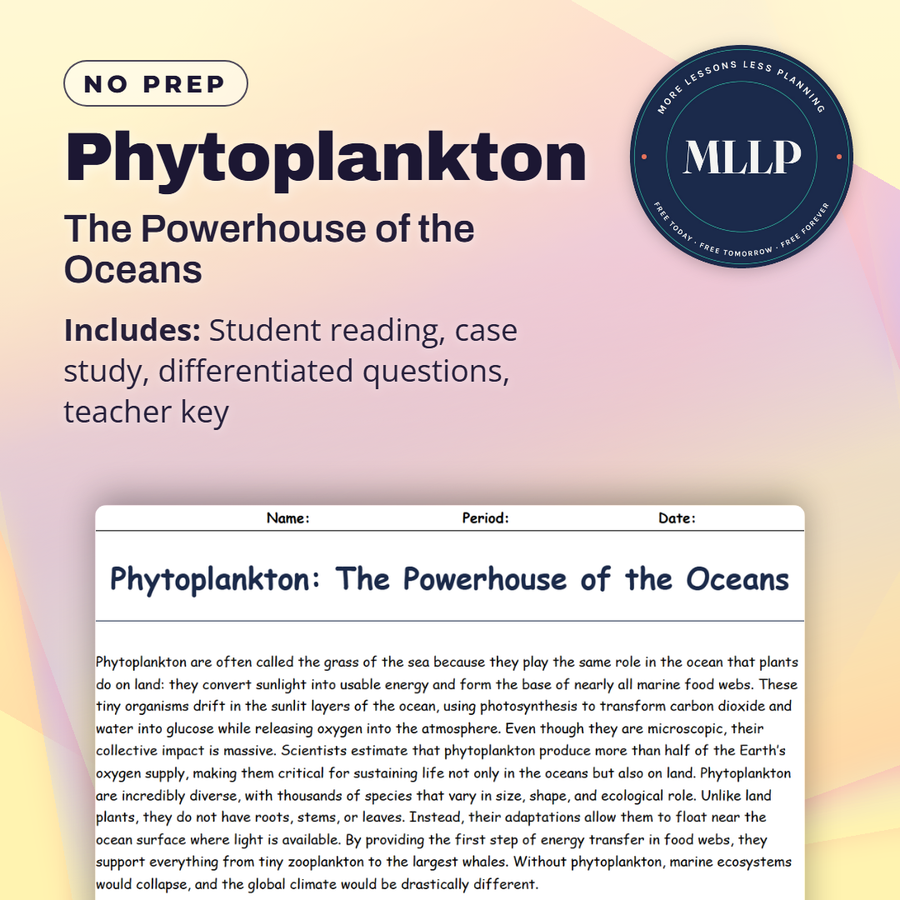
Phytoplankton: The Powerhouse of the Oceans
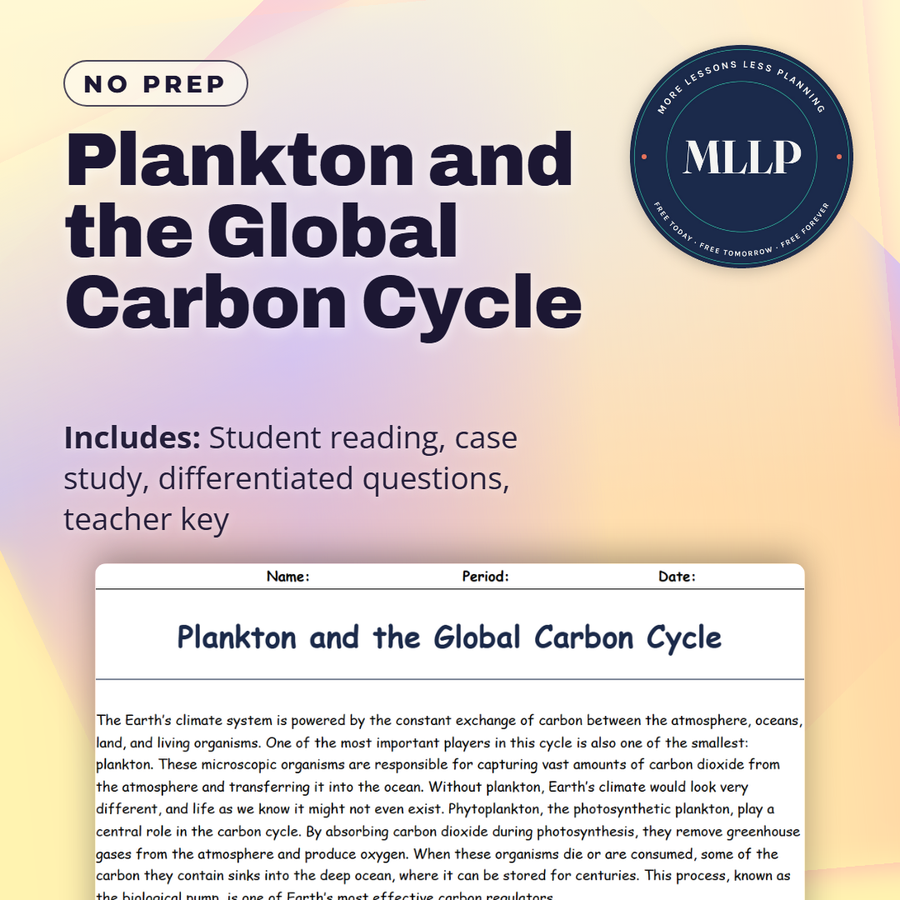
Plankton and the Global Carbon Cycle
Every lesson on this site is free to download and use. If one of them saved you a prep period, you can chip in a few bucks toward my three kids' daycare fund. That's genuinely where tips go.