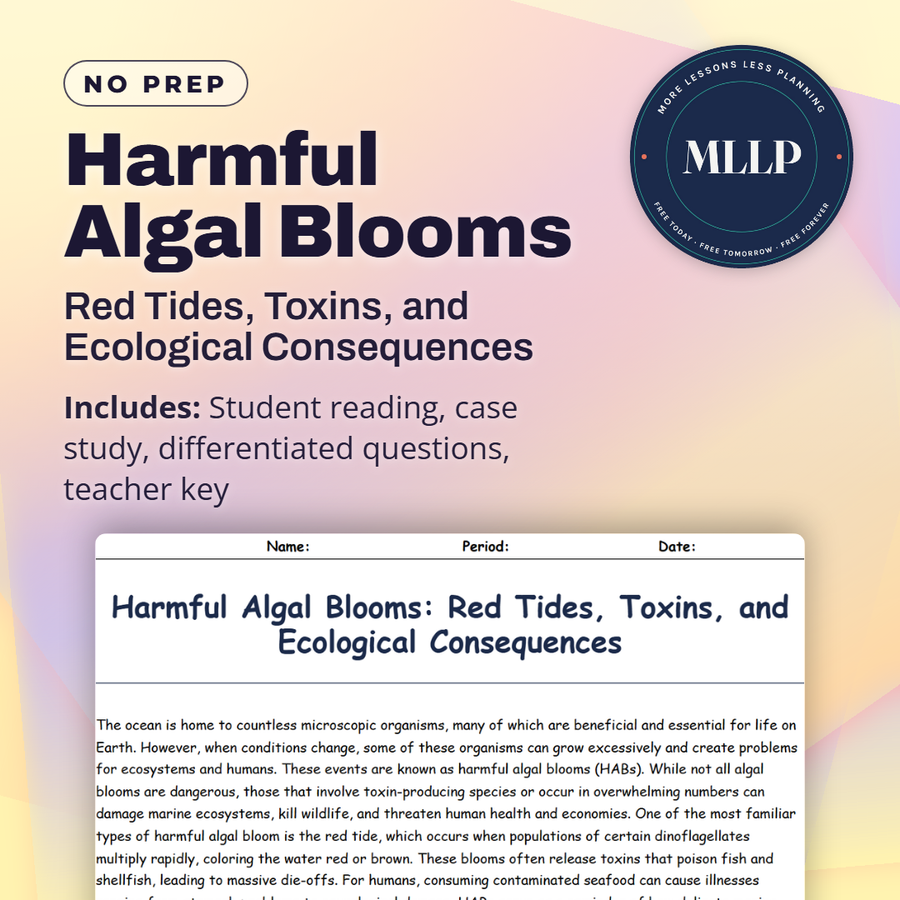
Harmful Algal Blooms: Red Tides, Toxins, and Ecological Consequences
Quality reviewed September 2026
Facts verified September 14, 2026
- Subject
- Science
- Grades
- Grades 9-12
- Length
- 7-page student worksheet
- Time
- About one 50-minute class period
- Great for
- Sub plans and independent work
- Includes
- Reading passage, comprehension questions + full answer key
- Format
- Print-and-go PDF
What students do
- Match terms like Karenia brevis, Alexandrium, ballast water, and bloom decomposition to their correct definitions
- Fill in the blank sentences on red tides, Karenia, and the dead zones blooms can create
- Answer multiple choice questions on brevetoxin, nutrient pollution, and paralytic shellfish poisoning
- Write short answers on how HABs disrupt food webs, why shellfish beds get closed, and how blooms spread globally
What it covers
- The causes of harmful algal blooms, from nutrient pollution to warming seas
- The toxins behind red tides, including brevetoxin, saxitoxin, and microcystins
- A case study on Florida's recurring red tides and their impact on wildlife and tourism
Start reading this worksheet
The ocean is home to countless microscopic organisms, many of which are beneficial and essential for life on Earth. However, when conditions change, some of these organisms can grow excessively and create problems for ecosystems and humans. These events are known as harmful algal blooms (HABs). While not all algal blooms are dangerous, those that involve toxin-producing species or occur in overwhelming numbers can damage marine ecosystems, kill wildlife, and threaten human health and economies. One of the most familiar types of harmful algal bloom is the red tide, which occurs when populations of certain dinoflagellates multiply rapidly, coloring the water red or brown. These blooms often release toxins that poison fish and shellfish, leading to massive die-offs. For humans, consuming contaminated seafood can cause illnesses ranging from stomach problems to neurological damage. HABs serve as a reminder of how delicate marine ecosystems are and how easily nutrient pollution and climate shifts can tip the balance.
Causes of Harmful Algal Blooms
HABs are influenced by a combination of natural and human factors. Naturally, blooms occur when nutrient levels are high and environmental conditions are stable, such as during warm, calm waters. Dinoflagellates, diatoms, and cyanobacteria are common culprits. Human activity has greatly intensified HAB frequency and severity. Nutrient pollution from agriculture, sewage, and urban runoff often adds nitrogen and phosphorus to coastal waters. These nutrients act like fertilizer, fueling explosive growth. Climate change also plays a role. Rising sea surface temperatures create conditions that favor bloom-forming species, while changes in currents can spread blooms over larger regions. As human impacts on the ocean grow, HABs are becoming more frequent, longer-lasting, and more severe.
Toxins and Human Health Impacts
One of the most concerning aspects of HABs is their ability to produce toxins. Different species produce different harmful compounds. For example, the dinoflagellate Karenia brevis, responsible for red tides in the Gulf of Mexico, produces brevetoxins, which can kill fish and accumulate in shellfish. When humans eat contaminated shellfish, they can experience neurotoxic shellfish poisoning, which causes dizziness, nausea, and in severe cases, paralysis. Another dangerous toxin is saxitoxin, produced by certain dinoflagellates, which causes paralytic shellfish poisoning (PSP). Even tiny amounts can be lethal to humans. Cyanobacteria in freshwater can produce microcystins, which damage the liver and have caused major drinking water crises in some cities. The variety of toxins underscores the health risks of HABs and the need for monitoring programs to protect fisheries and public safety.
Like what you read? The full reading, the case study, and every question set are in the free download below, along with the answer key.
Why this matters
Beaches along Florida's Gulf Coast can look perfectly clear and still force shellfish beds to close, because of a toxin called brevetoxin that comes from algae. Karenia brevis blooms recur there, turning nutrient pollution and warm water into fish kills, harm to manatees, and a hit to local tourism.
I teach this right after a unit on nutrient cycles, because it gives students a real consequence for an invisible input, nutrient pollution washing in from far upstream. Students usually assume pollution has to look dirty to be dangerous, and tracing brevetoxin from a bloom to a closed shellfish bed corrects that fast.
From one teacher to another
Red tides and other harmful algal blooms get the full treatment in this worksheet, covering causes, toxins, and ecological fallout. The case study focuses on Florida's Gulf Coast red tides caused by Karenia brevis, tracing the toxin's effects on fish, manatees, and local tourism. It connects nutrient pollution to a bloom problem students may have heard about in the news.
What you get
Download
Where should I send the next one?
Everything here is free and it stays that way. Leave your email and I'll send you the new lessons as they go up. You can unsubscribe from any one of them.
Related resources
Chemosynthesis at Hydrothermal Vent Communities
Cyanobacteria and the Breath of Life
Diatoms, Dinoflagellates, and Coccolithophores Explained
Photosynthesis in the Marine Environment
Phytoplankton: The Powerhouse of the Oceans
Plankton and the Global Carbon Cycle
Every lesson on this site is free to download and use. If one of them saved you a prep period, you can chip in a few bucks toward my three kids' daycare fund. That's genuinely where tips go.