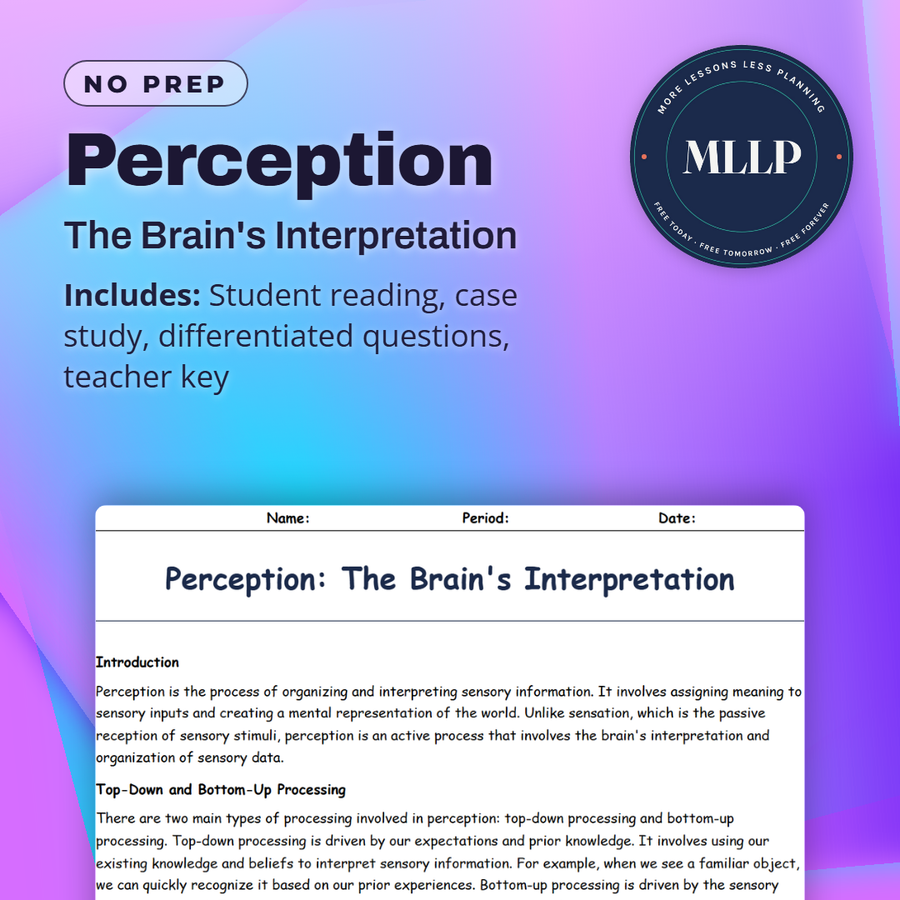
Perception: The Brain's Interpretation
Quality reviewed September 2026
Facts verified September 10, 2026
- Subject
- Social Studies
- Grades
- Grades 9-12
- Length
- 6-page student worksheet
- Time
- About one 50-minute class period
- Great for
- Sub plans and independent work
- Includes
- Reading passage, comprehension questions + full answer key
- Format
- Print-and-go PDF
What students do
- Match top-down processing, bottom-up processing, figure-ground perception, and similarity to their definitions
- Fill in the blank naming top-down processing, bottom-up processing, and the Gestalt principle of proximity
- Explain the difference between top-down and bottom-up processing in a short-answer response
- Read the Kant case study excerpt and decide which type of processing matches his claim that the mind constructs experience
What it covers
- Top-down and bottom-up processing and how each shapes what we perceive
- The Gestalt principles of figure-ground perception, similarity, proximity, and closure
- The role attention plays in perception and how it can create perceptual errors
Start reading this worksheet
Introduction
Perception is the process of organizing and interpreting sensory information. It involves assigning meaning to sensory inputs and creating a mental representation of the world. Unlike sensation, which is the passive reception of sensory stimuli, perception is an active process that involves the brain's interpretation and organization of sensory data.
Top-Down and Bottom-Up Processing
There are two main types of processing involved in perception: top-down processing and bottom-up processing. Top-down processing is driven by our expectations and prior knowledge. It involves using our existing knowledge and beliefs to interpret sensory information. For example, when we see a familiar object, we can quickly recognize it based on our prior experiences. Bottom-up processing is driven by the sensory information itself. It involves processing sensory stimuli in a piecemeal fashion, without relying on prior knowledge or expectations. For example, when we see a new object, we may try to identify its features and compare it to similar objects in our memory. Both top-down and bottom-up processing play a role in perception. Sometimes, top-down processing can lead to perceptual errors, as our expectations can influence how we interpret sensory information. However, top-down processing can also be helpful, as it allows us to quickly recognize familiar objects and situations.
Gestalt Principles of Perception
The Gestalt psychologists proposed a number of principles that govern how we organize sensory information. These principles, known as Gestalt principles, help us to perceive objects as organized wholes rather than as individual parts. Some of the most important Gestalt principles include: Figure-ground perception: This principle states that we tend to perceive objects as figures against a background. For example, when we look at a vase, we can either perceive the vase itself as the figure or the background as the figure. Similarity: This principle states that we tend to group objects together that are similar in appearance or characteristics. For example, we group together objects that are the same color or shape. Proximity: This principle states that we tend to group objects together that are close to each other in space. For example, we group together objects that are physically close to each other. Closure: This principle states that we tend to fill in missing information to create a complete object. For example, if we see a partial circle, we may perceive it as a complete circle.
Like what you read? The full reading, the case study, and every question set are in the free download below, along with the answer key.
Why this matters
Does the brain build what we see, or just record it? Kant's claim that the mind constructs experience is the case study excerpt students use to decide whether a scene is closer to top-down or bottom-up processing, and most find the question harder to settle than they expect.
This is where sensation stops being raw input and starts getting interpreted, sometimes wrongly, which is the whole point once students already know the senses collect information but not what happens to it next. Explaining the Gestalt principle of similarity with their own example is what tells me whether the concept actually landed.
From one teacher to another
I assign this reading right after we cover basic sensation, since it moves students into how the brain actually interprets what the senses deliver. My students match terms like top-down processing and figure-ground perception to their definitions, then use the Kant case study to decide whether his claim about the mind constructing experience matches top-down or bottom-up processing. The short-answer questions ask them to explain the difference between the two types of processing and describe the Gestalt principle of similarity with an example.
What you get
Download
Where should I send the next one?
Everything here is free and it stays that way. Leave your email and I'll send you the new lessons as they go up. You can unsubscribe from any one of them.
Related resources
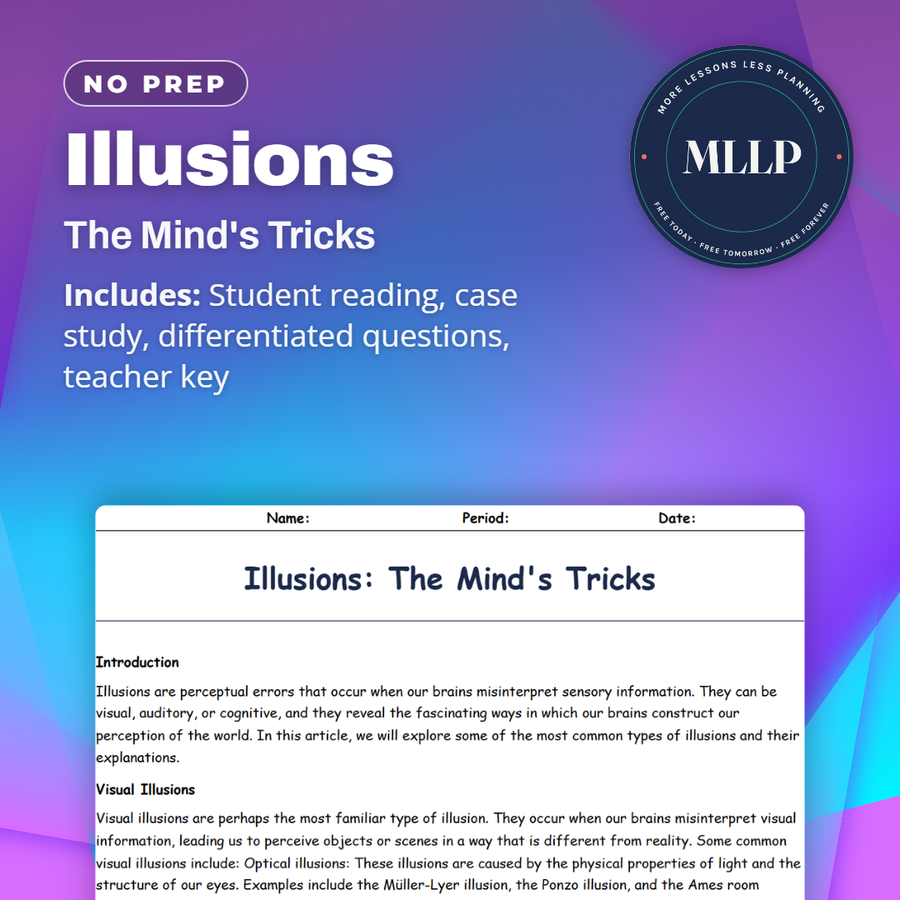
Illusions: The Mind's Tricks
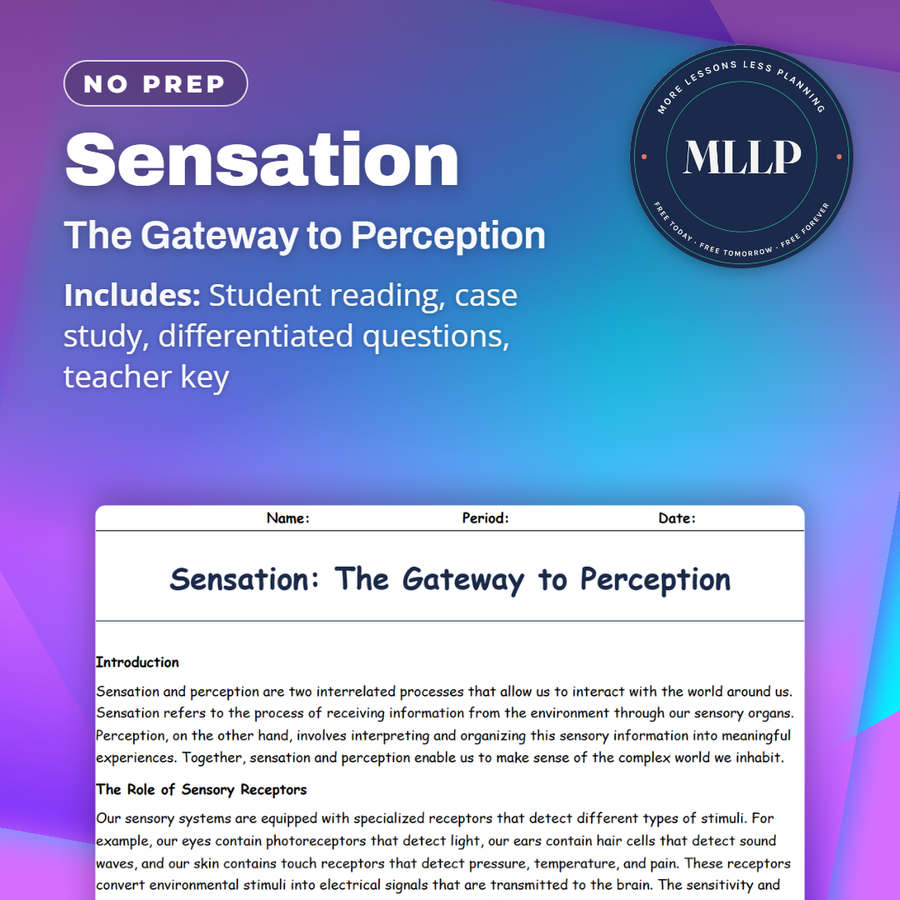
Sensation: The Gateway to Perception
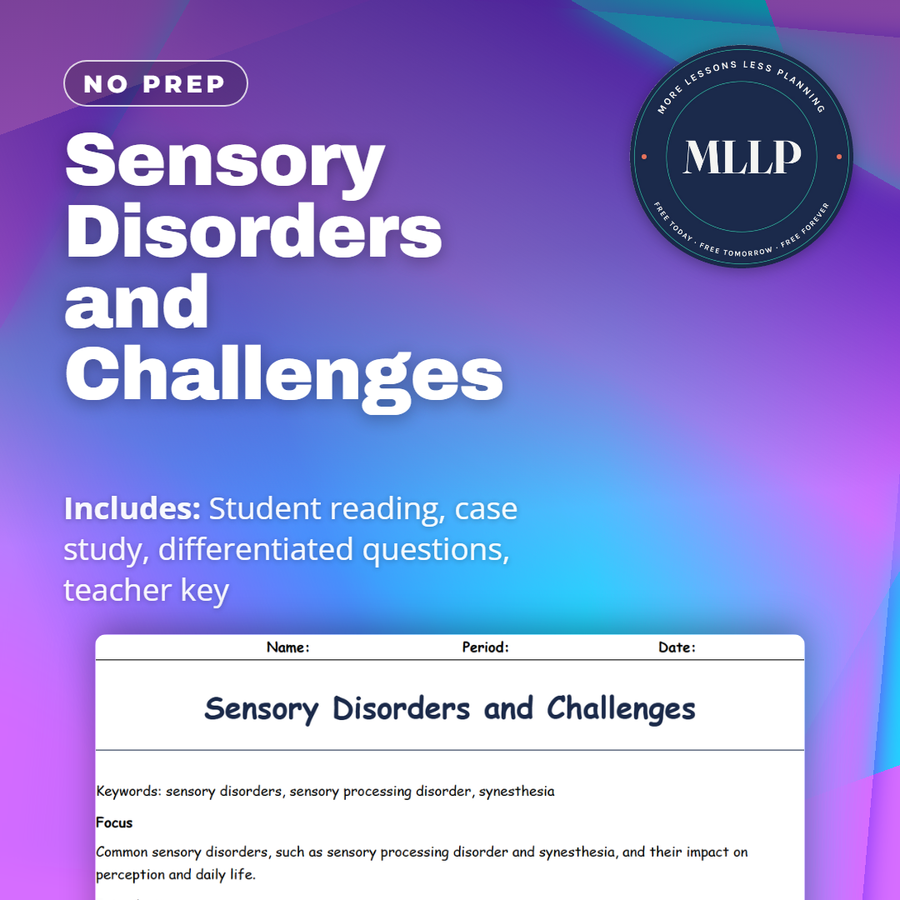
Sensory Disorders and Challenges
The Five Senses: A Closer Look
The Future of Perception Technology
The Impact of Sensory Deprivation
Every lesson on this site is free to download and use. If one of them saved you a prep period, you can chip in a few bucks toward my three kids' daycare fund. That's genuinely where tips go.