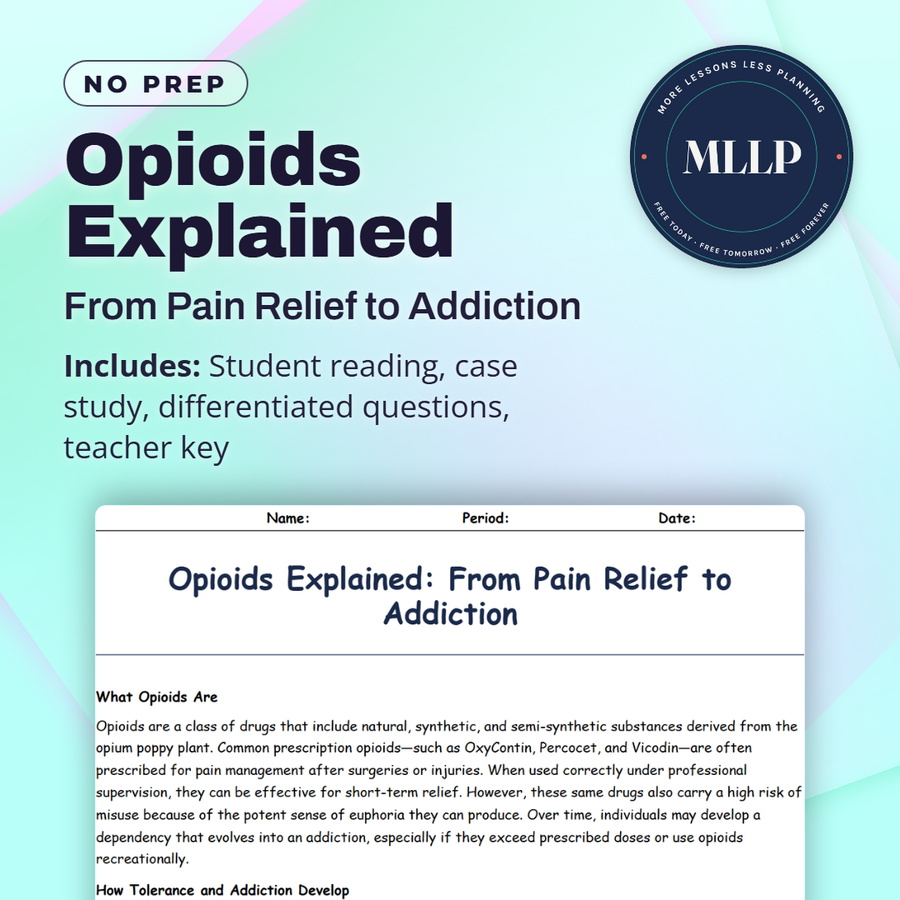
Opioids Explained: From Pain Relief to Addiction
Quality reviewed September 2026
Facts verified September 21, 2026
- Subject
- Career & Life Skills
- Grades
- Grades 9-12
- Length
- 7-page student worksheet
- Time
- About one 50-minute class period
- Great for
- Sub plans and independent work
- Includes
- Reading passage, comprehension questions + full answer key
- Format
- Print-and-go PDF
What students do
- Match five terms - opioid, dependency, overdose, naloxone, and withdrawal - to the definition that names each one
- Fill in three blanks naming fentanyl's strength, the symptoms of withdrawal, and what results from taking more opioids than prescribed
- Answer three multiple-choice questions on what tolerance means, the main danger of fentanyl, and what naloxone does
- Write short answers on how to lower addiction risk with a legitimate prescription, why fentanyl is especially dangerous for teens, and how to support a friend who admits to misuse
What it covers
- How opioid tolerance builds and turns into dependence
- Fentanyl's role in the overdose epidemic and what naloxone, or Narcan, does to reverse an overdose
- Layla's case study, from a legitimate knee-surgery prescription to buying leftover pills from a classmate
Start reading this worksheet
What Opioids Are
Opioids are a class of drugs that include natural, synthetic, and semi-synthetic substances derived from the opium poppy plant. Common prescription opioids (such as OxyContin, Percocet, and Vicodin) are often prescribed for pain management after surgeries or injuries. When used correctly under professional supervision, they can be effective for short-term relief. However, these same drugs also carry a high risk of misuse because of the potent sense of euphoria they can produce. Over time, individuals may develop a dependency that evolves into an addiction, especially if they exceed prescribed doses or use opioids recreationally.
How Tolerance and Addiction Develop
Taking opioids triggers the release of endorphins: feel-good chemicals in the brain. Eventually, the body relies on the drug to produce this sensation, leading to tolerance, where higher amounts are needed to achieve the same effect. This cycle often paves a direct path to addiction, in which a person compulsively seeks out opioids despite harmful consequences. Teens are particularly vulnerable because their brains are still developing, and the emotional highs and lows of adolescence can amplify the allure of pain relief or a temporary escape from stress. It doesn’t take long for casual use to become a compulsion.
Fentanyl and the Overdose Epidemic
One of the most alarming developments in the opioid crisis is the rise of fentanyl, a synthetic opioid up to 50 times stronger than heroin and 100 times stronger than morphine. Even a tiny amount can be lethal. Fentanyl is sometimes mixed into illegal street drugs, like counterfeit pills or powders, without the user’s knowledge, drastically increasing the risk of accidental overdose. Tragically, teens experimenting with what they believe are “safe” prescription pills or party drugs can unwittingly ingest fentanyl, leading to sudden and fatal outcomes. This phenomenon has accelerated the overdose epidemic, causing heartbreak for countless families.
Like what you read? The full reading, the case study, and every question set are in the free download below, along with the answer key.
Why this matters
The fentanyl facts in this reading are the ones I most want students to retain, because a counterfeit pill that looks identical to a real prescription can now be fatal in a way that wasn't true a decade ago. Knowing that naloxone exists and how it works isn't abstract safety trivia; it's the kind of fact that can matter in an actual emergency involving a friend or family member. Layla's case study also matters because her prescription was completely legitimate at the start, which is the version of this problem a student is most likely to actually encounter.
If you or someone you know is struggling, call or text 988 (Suicide & Crisis Lifeline, US) or talk to a trusted adult right away.
From one teacher to another
Fentanyl is the section I make sure nobody skims, because the statistic actually lands: strong enough that a pill a student thinks is a normal painkiller can be fatal. Before that, the reading builds the foundation, covering what opioids are, how tolerance turns into dependence, and why a teenage brain is especially vulnerable to that cycle. Layla's case study carries the human side of it, a legitimate prescription after knee surgery that turns into buying leftover pills from a classmate once her own prescription runs out. The reading ends on naloxone, so students leave knowing an overdose can be reversed if someone recognizes it fast enough.
What you get
Download
Where should I send the next one?
Everything here is free and it stays that way. Leave your email and I'll send you the new lessons as they go up. You can unsubscribe from any one of them.
Related resources
Choosing a Drug-Free Lifestyle: Health, Goals, and You
Cocaine and the Teenage Brain
Crack Cocaine: Fast High, Harsh Consequences
Heroin and Teens: Understanding the Risks and Realities
How Addiction Changes the Brain: Science for Students
How to Handle Peer Pressure and Say No with Confidence
Every lesson on this site is free to download and use. If one of them saved you a prep period, you can chip in a few bucks toward my three kids' daycare fund. That's genuinely where tips go.