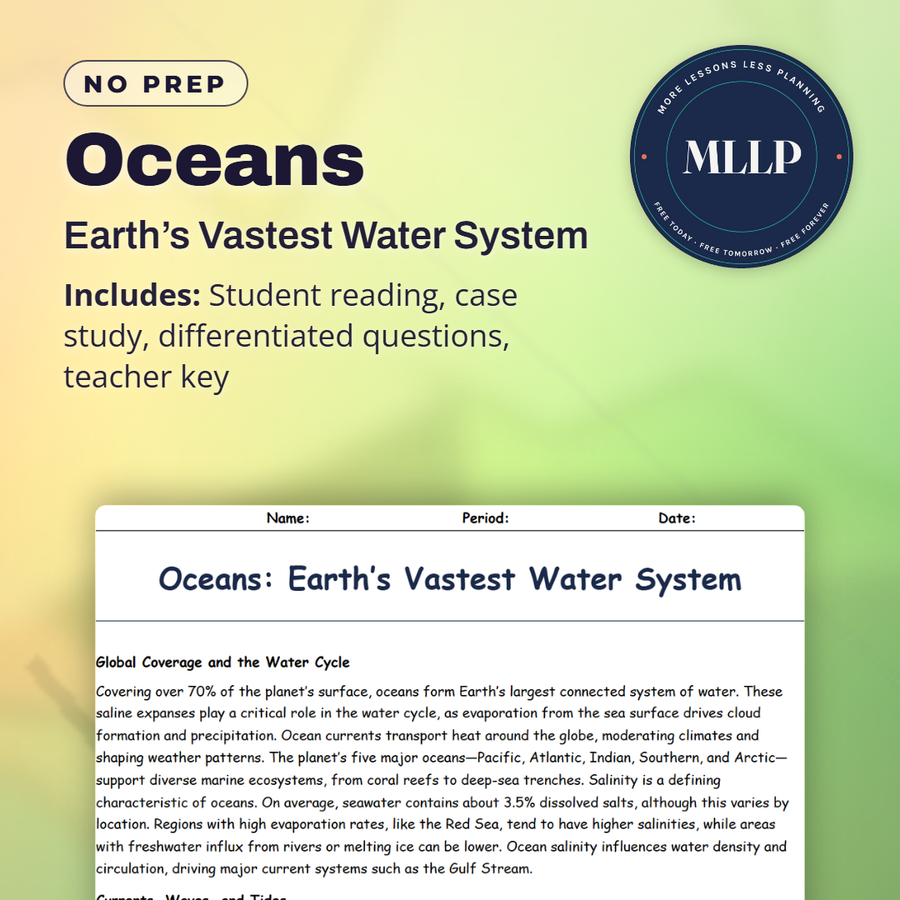
Oceans: Earth’s Vastest Water System
Quality reviewed September 2026
Facts verified September 14, 2026
- Subject
- Social Studies
- Grades
- Grades 9-12
- Length
- 6-page student worksheet
- Time
- About one 50-minute class period
- Great for
- Sub plans and independent work
- Includes
- Reading passage, comprehension questions + full answer key
- Format
- Print-and-go PDF
What students do
- Match terms like thermohaline circulation, ocean acidification, and mangrove to their correct definitions
- Fill in the blank sentences on coral reefs, overfishing, and the water cycle
- Answer multiple choice questions on what causes ocean salinity to vary, what drives tides, and why coral reefs matter
- Write short answers on how ocean currents affect climate, why ocean acidification threatens marine life, and how coastal communities can balance economic growth with conservation
What it covers
- How oceans drive the water cycle and global climate through currents like the Gulf Stream and thermohaline circulation
- Salinity, waves, and tides, including examples like the Red Sea and the Bay of Fundy
- A case study on sustainable fisheries and marine reserves in Australia's Coral Sea, plus a reference table of ocean features
Start reading this worksheet
Global Coverage and the Water Cycle
Covering over 70% of the planet’s surface, oceans form Earth’s largest connected system of water. These saline expanses play a critical role in the water cycle, as evaporation from the sea surface drives cloud formation and precipitation. Ocean currents transport heat around the globe, moderating climates and shaping weather patterns. The planet’s five major oceans (Pacific, Atlantic, Indian, Southern, and Arctic) support diverse marine ecosystems, from coral reefs to deep-sea trenches. Salinity is a defining characteristic of oceans. On average, seawater contains about 3.5% dissolved salts, although this varies by location. Regions with high evaporation rates, like the Red Sea, tend to have higher salinities, while areas with freshwater influx from rivers or melting ice can be lower. Ocean salinity influences water density and circulation, driving major current systems such as the Gulf Stream.
Currents, Waves, and Tides
Ocean currents act like massive conveyer belts, distributing heat, nutrients, and marine life. Surface currents, powered by wind and Earth’s rotation, can span entire basins. Deep currents, driven by differences in temperature and salinity, form global “thermohaline” circulation, sometimes called the “global ocean conveyor belt.” These flows mix water from the poles to the equator, playing a huge role in regulating climate. Waves arise mainly from wind blowing over the water’s surface. Stronger winds and longer durations create larger waves. Tides, the regular rise and fall of sea level, result from gravitational interactions with the Moon (and to a lesser extent, the Sun). Coastal communities adapt to tide cycles for fishing, navigation, and tourism. Some locations have dramatic tidal ranges, like the Bay of Fundy in Canada, while others experience minimal differences.
Like what you read? The full reading, the case study, and every question set are in the free download below, along with the answer key.
Why this matters
The Red Sea and the Bay of Fundy sit in the same reading because each makes an abstract idea concrete: turning salinity, waves, and tides into places students can picture instead of just define. Those local examples matter as much as the Gulf Stream, one of the currents that drive the water cycle and global climate.
Coral reefs and overfishing come up constantly in class, but students rarely connect those threats to a specific management example. Walking through the Coral Sea case, where marine reserves try to balance conservation with the economy, gives them a real decision instead of a vague call to protect the ocean.
From one teacher to another
This reading covers a lot of ground on oceans without feeling scattered, moving from salinity and currents into waves and tides before landing on marine biodiversity and the threats it faces. I appreciate that the case study on the Coral Sea gives students a concrete management example to reference, so the short answer questions have something specific to point back to. It pairs well with a unit on biomes or climate zones.
What you get
Download
Where should I send the next one?
Everything here is free and it stays that way. Leave your email and I'll send you the new lessons as they go up. You can unsubscribe from any one of them.
Related resources
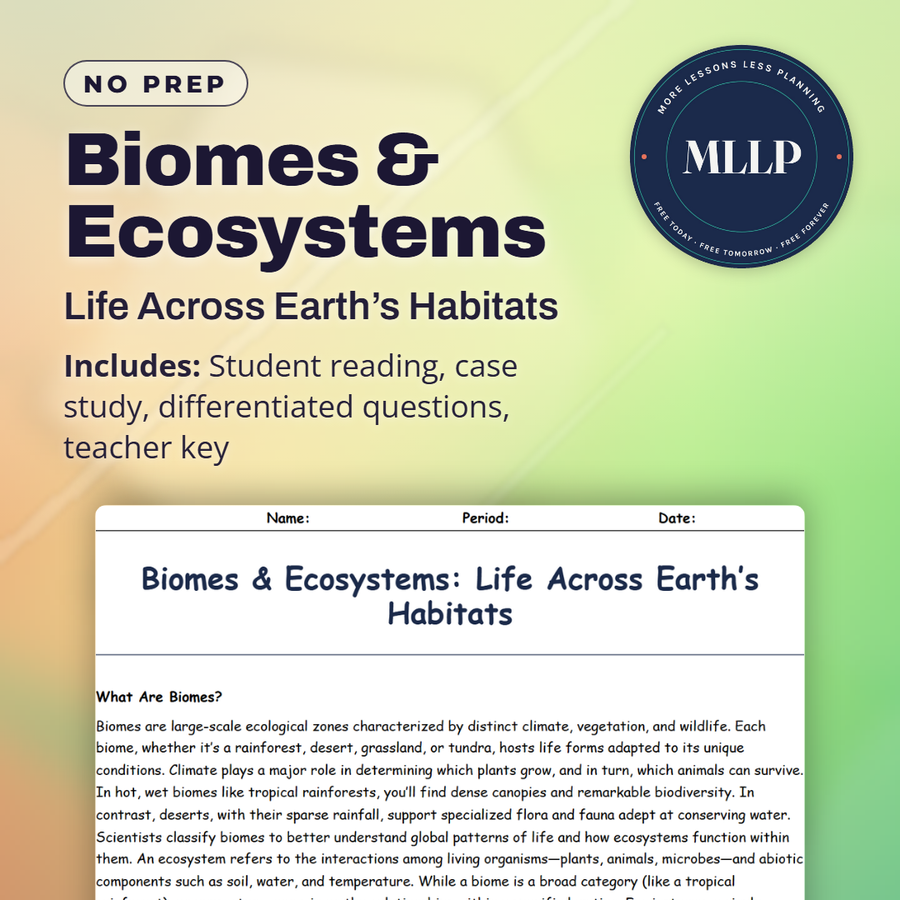
Biomes & Ecosystems: Life Across Earth’s Habitats
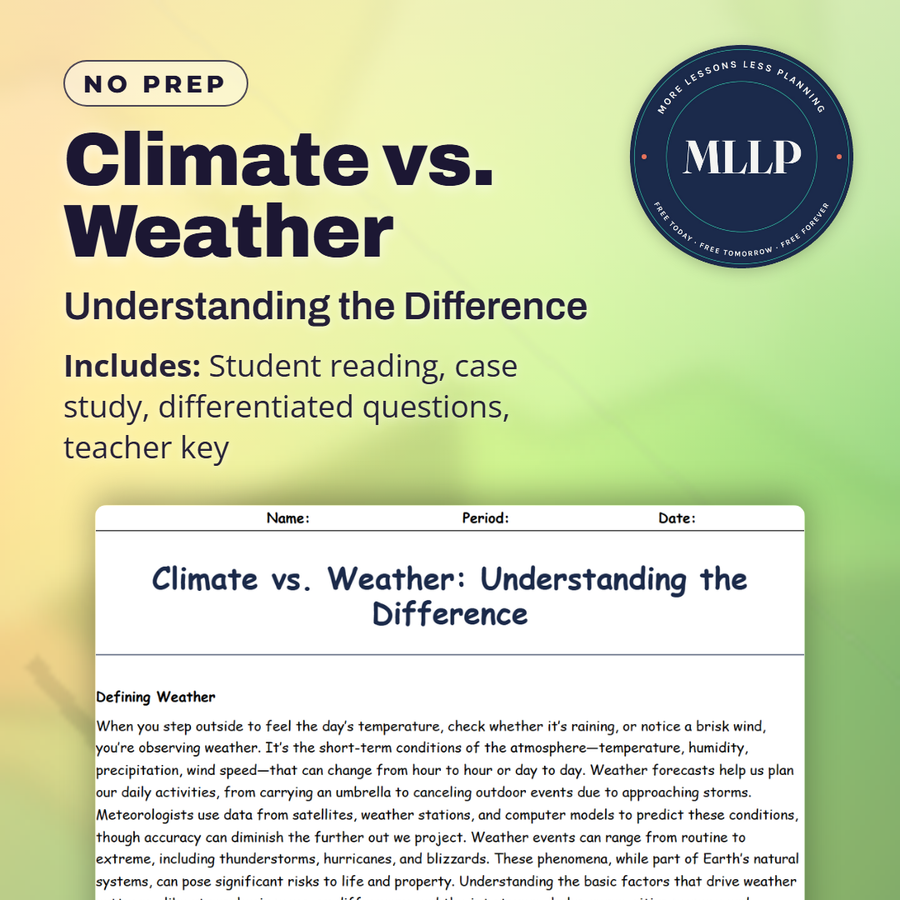
Climate vs. Weather: Understanding the Difference
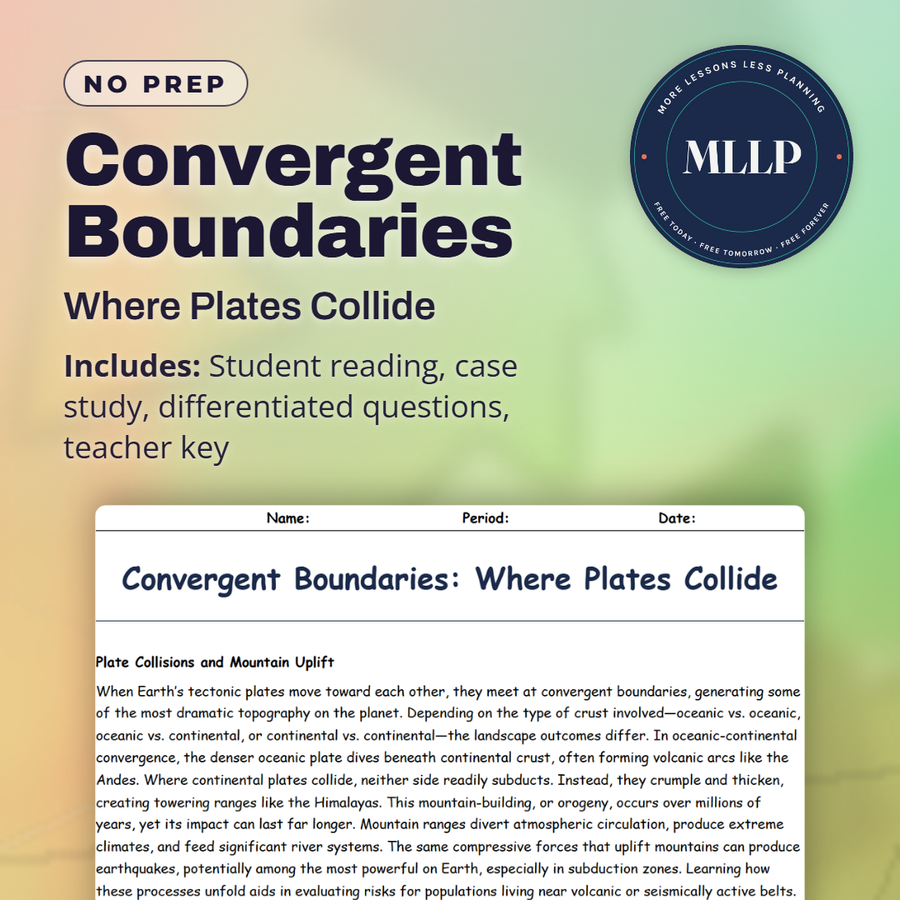
Convergent Boundaries: Where Plates Collide
Deserts: Survival in the Harshest Climates
Divergent Boundaries: Where Plates Pull Apart
Earth’s Layers: From Crust to Core
Every lesson on this site is free to download and use. If one of them saved you a prep period, you can chip in a few bucks toward my three kids' daycare fund. That's genuinely where tips go.