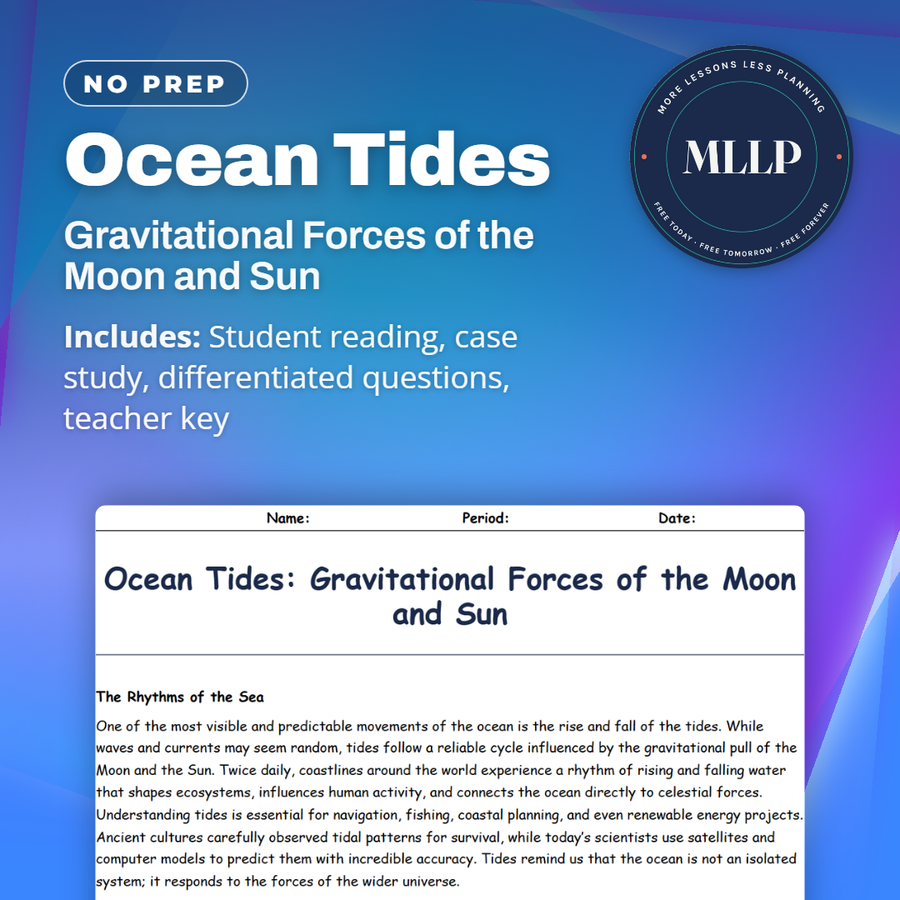
Ocean Tides: Gravitational Forces of the Moon and Sun
Quality reviewed September 2026
Facts verified September 14, 2026
- Subject
- Science
- Grades
- Grades 9-12
- Length
- 6-page student worksheet
- Time
- About one 50-minute class period
- Great for
- Sub plans and independent work
- Includes
- Reading passage, comprehension questions + full answer key
- Format
- Print-and-go PDF
What students do
- Match terms like spring tide, neap tide, high tide, low tide, and the Bay of Fundy to their correct definitions
- Fill in the blank sentences on tidal range, spring tides, and the Bay of Fundy's record-breaking tides
- Answer multiple choice questions on what causes tides, what produces a spring tide, and why the far side of Earth also gets a high tide
- Write short answers on the Sun's role in tides compared to the Moon, why spring tides are stronger than neap tides, and how tidal energy could be harnessed
What it covers
- How the gravitational pull of the Moon and Sun creates the twice-daily rhythm of high and low tides
- The difference between spring tides and neap tides based on the alignment of the Sun, Moon, and Earth
- A case study on the Bay of Fundy, home of the world's largest tidal range
Start reading this worksheet
The Rhythms of the Sea
One of the most visible and predictable movements of the ocean is the rise and fall of the tides. While waves and currents may seem random, tides follow a reliable cycle influenced by the gravitational pull of the Moon and the Sun. Twice daily, coastlines around the world experience a rhythm of rising and falling water that shapes ecosystems, influences human activity, and connects the ocean directly to celestial forces. Understanding tides is essential for navigation, fishing, coastal planning, and even renewable energy projects. Ancient cultures carefully observed tidal patterns for survival, while today’s scientists use satellites and computer models to predict them with incredible accuracy. Tides remind us that the ocean is not an isolated system; it responds to the forces of the wider universe.
Like what you read? The full reading, the case study, and every question set are in the free download below, along with the answer key.
Why this matters
The Bay of Fundy pushes its tidal range past 15 meters, funneling the same gravitational pull that raises tides everywhere else into something dramatic enough to reshape the coastline twice a day. That range only makes sense once students see why the Moon's pull creates two bulges of water on opposite sides of Earth at once.
My students usually expect the bigger Sun to do most of the work raising tides, and it catches them off guard that the Moon's pull already sets up the two bulges before the Sun's pull ever gets added in. Spring and neap tides click once they see the Sun's pull adding to, or canceling, the Moon's.
From one teacher to another
Twice a day, coastlines rise and fall in a rhythm set by the gravitational pull of the Moon and the Sun. The reading breaks down how the Moon's pull creates two bulges of water on opposite sides of Earth, and how the Sun's added pull produces stronger spring tides or weaker neap tides depending on alignment. The case study on the Bay of Fundy explains how a funnel-shaped bay can amplify tidal range past 15 meters, creating both tourism draws and challenges for local fishermen.
What you get
Download
Where should I send the next one?
Everything here is free and it stays that way. Leave your email and I'll send you the new lessons as they go up. You can unsubscribe from any one of them.
Related resources
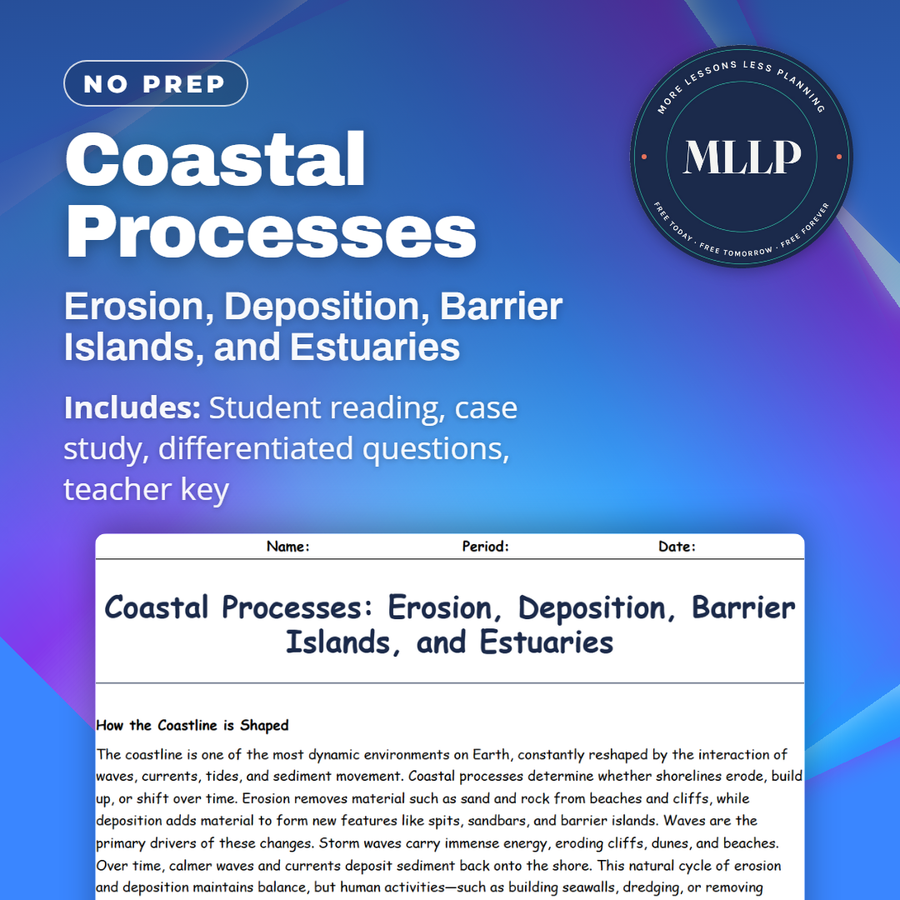
Coastal Processes: Erosion, Deposition, Barrier Islands, and Estuaries
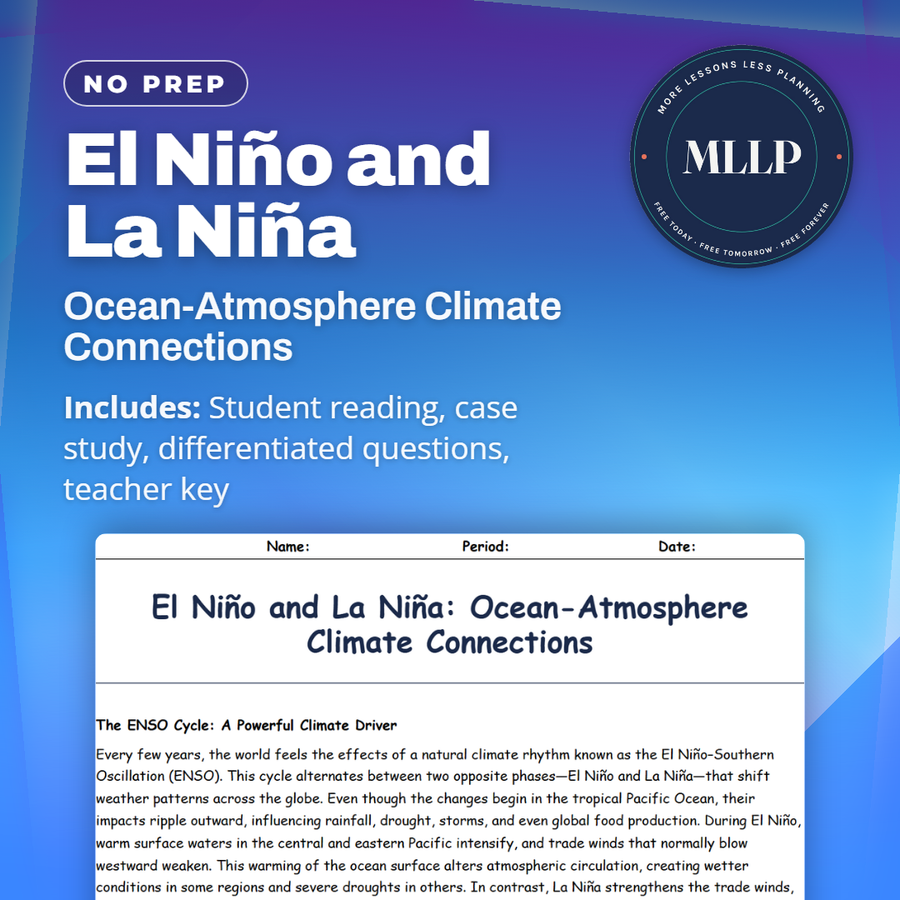
El Niño and La Niña: Ocean-Atmosphere Climate Connections
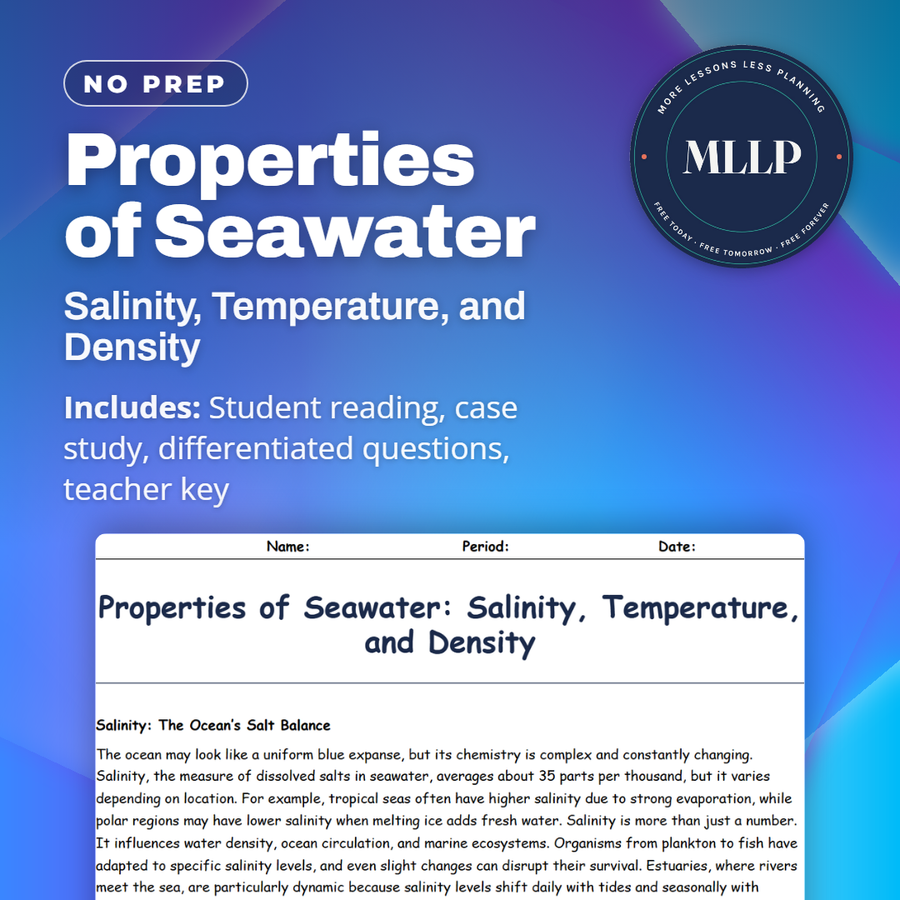
Properties of Seawater: Salinity, Temperature, and Density
Surface Currents and Wind Patterns: The Coriolis Effect and Gyres
The Role of Oceans in Weather and Climate Systems
Thermohaline Circulation and the Global Conveyor Belt
Every lesson on this site is free to download and use. If one of them saved you a prep period, you can chip in a few bucks toward my three kids' daycare fund. That's genuinely where tips go.