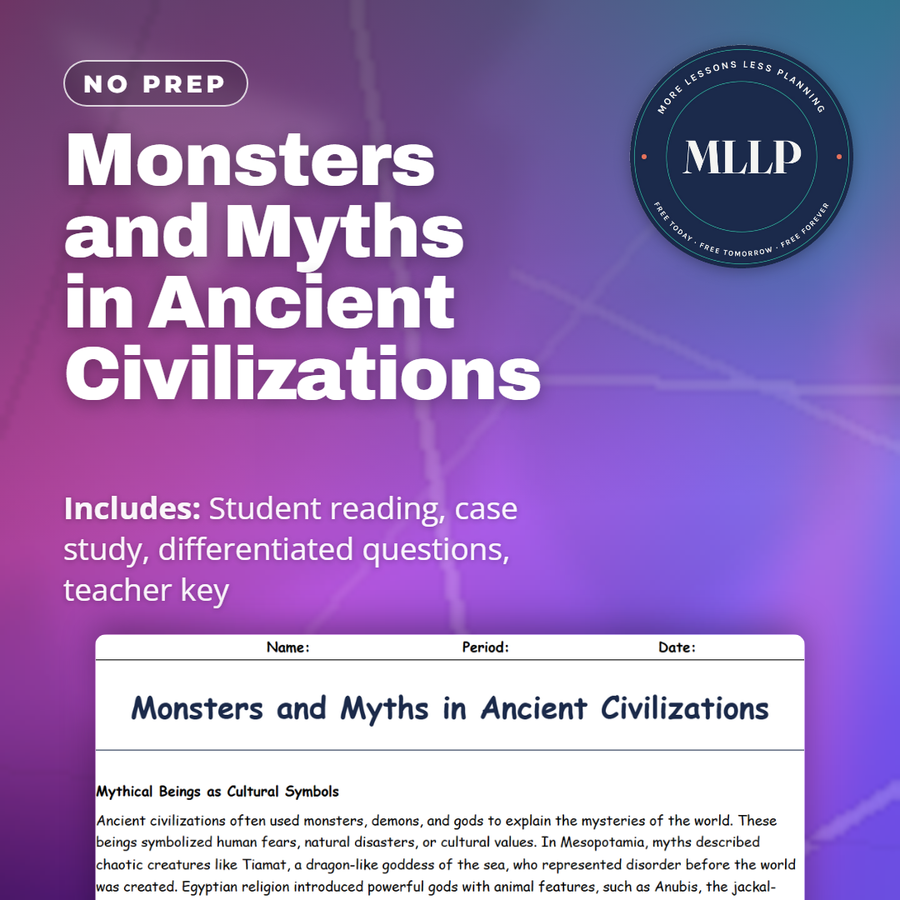
Monsters and Myths in Ancient Civilizations
Quality reviewed September 2026
Facts verified September 9, 2026
- Subject
- Social Studies
- Grades
- Grades 9-12
- Length
- 7-page student worksheet
- Time
- About one 50-minute class period
- Great for
- Sub plans and independent work
- Includes
- Reading passage, comprehension questions + full answer key
- Format
- Print-and-go PDF
What students do
- Identify symbols of chaos and order in ancient mythical creatures
- Compare how cultures interpreted the same creature differently
- Analyze Medusa as punishment and the dangers of crossing boundaries
- Examine how myths reinforced cultural values and heroic ideals
What it covers
- Ancient mythology and monster symbolism
- Cultural differences in interpreting creatures
- Dragons and hybrid beings across civilizations
Start reading this worksheet
Mythical Beings as Cultural Symbols
Ancient civilizations often used monsters, demons, and gods to explain the mysteries of the world. These beings symbolized human fears, natural disasters, or cultural values. In Mesopotamia, myths described chaotic creatures like Tiamat, a dragon-like goddess of the sea, who represented disorder before the world was created. Egyptian religion introduced powerful gods with animal features, such as Anubis, the jackal-headed god of the dead, who guided souls in the afterlife. In Greece, monsters like Medusa symbolized danger and punishment, reminding people of the power of the gods and the consequences of hubris. These mythical beings were not only stories for entertainment but also moral lessons and cultural tools. They offered explanations for natural disasters, justified rulers’ authority, and helped societies understand the struggle between good and evil. For ancient people, myths about terrifying creatures were as real and important as religious rituals.
Shared Themes Across Cultures
Despite cultural differences, many civilizations developed monsters with similar features. Serpents and dragons appeared from China to Mesoamerica, often symbolizing chaos or natural forces. Hybrid beings (half human, half animal) were common in Egypt, Mesopotamia, and Greece, reflecting anxieties about crossing boundaries between the natural and supernatural. Myths also reinforced the importance of heroes, who battled monsters as part of their quests. Gilgamesh, Heracles (Hercules), and other legendary figures gained glory by defeating beings that represented fear itself. The fact that so many cultures invented monsters suggests that they reflect shared human concerns. These myths allowed societies to imagine threats beyond their control and then symbolically conquer them through ritual, story, or heroic acts.
Like what you read? The full reading, the case study, and every question set are in the free download below, along with the answer key.
Why this matters
A dragon in a European story hoards gold and burns down kingdoms. A dragon in a Chinese story brings rain and good fortune. Students who assume monsters are just scary stories can't explain why the same creature means opposite things in places that never talked to each other.
Reading Medusa, Anubis, and Tiamat side by side changes how students see the category. Medusa stops being a random scary woman and becomes a punishment tied to crossing a boundary; Anubis and Tiamat carry their own cultures' fears about order and chaos. I ask students to name what their own culture fears losing, and the myths stop feeling ancient.
From one teacher to another
The thing that hooks students: in Europe, dragons hoard gold and destroy kingdoms, but in China, they bring rain and good fortune. This worksheet plants them in that contradiction and asks them to figure out why the same creature means opposite things. Through Medusa, Anubis, and Tiamat, they see how monsters weren't random scary stories. They were mirrors reflecting what each society feared and valued most.
What you get
Download
Where should I send the next one?
Everything here is free and it stays that way. Leave your email and I'll send you the new lessons as they go up. You can unsubscribe from any one of them.
Related resources
Every lesson on this site is free to download and use. If one of them saved you a prep period, you can chip in a few bucks toward my three kids' daycare fund. That's genuinely where tips go.