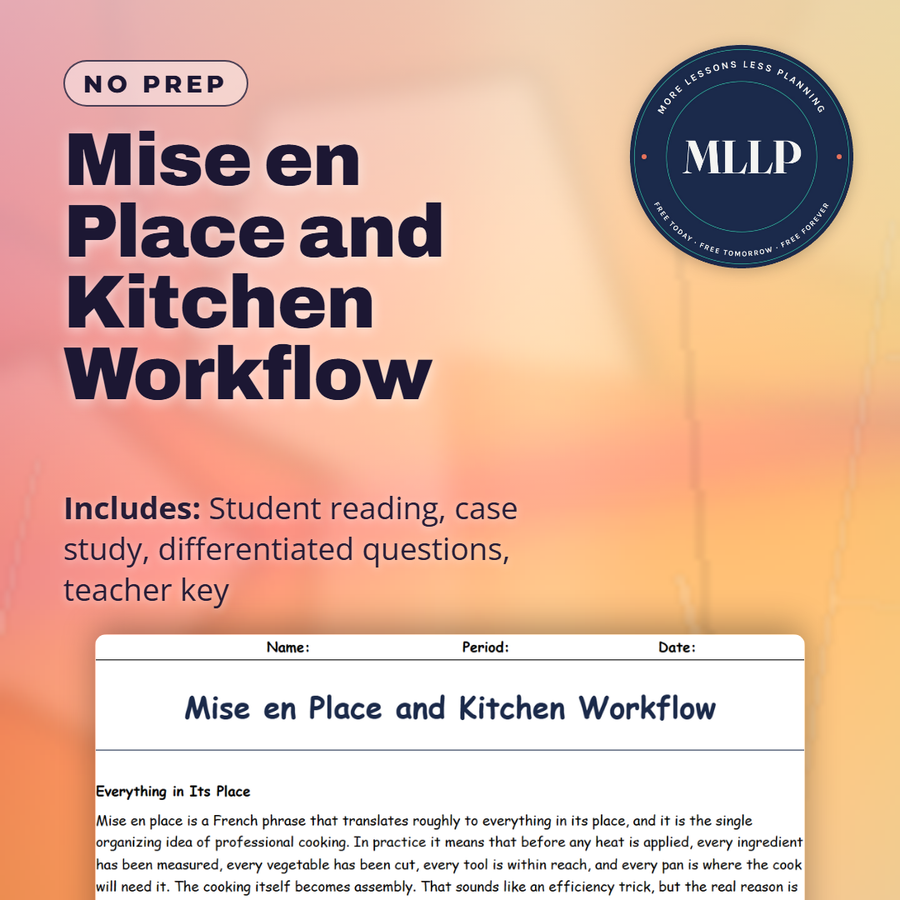
Mise en Place and Kitchen Workflow
Quality reviewed September 2026
Facts verified September 23, 2026
- Subject
- Career & Life Skills
- Grades
- Grades 9-12
- Length
- 8-page student worksheet
- Time
- About one 50-minute class period
- Great for
- Sub plans and independent work
- Includes
- Reading passage, comprehension questions + full answer key
- Format
- Print-and-go PDF
What students do
- Mise en place puts every measurement, cut, and tool in place before heat goes on, and the reading explains why that order matters most in a short lab
- Explain why cleaning as you go makes a cook faster rather than slower
- Kenji starts his garlic in hot oil before slicing a single pepper, and the pan burns while his hands are still on the cutting board
- Explain why kitchens use fixed spoken calls like sharp behind instead of ordinary talk
What it covers
- Why mise en place turns cooking into assembly instead of a series of decisions made under pressure
- How sequencing backward from serving time keeps a rice, a protein, and a sauce from finishing apart
- The fixed kitchen calls, like sharp behind and corner, that keep a shared station safe
Start reading this worksheet
Everything in Its Place
Mise en place is a French phrase that translates roughly to everything in its place, and it is the single organizing idea of professional cooking. In practice it means that before any heat is applied, every ingredient has been measured, every vegetable has been cut, every tool is within reach, and every pan is where the cook will need it. The cooking itself becomes assembly. That sounds like an efficiency trick, but the real reason is that cooking is a series of moments that cannot be paused. Garlic in hot oil goes from fragrant to burnt in about twenty seconds. If your onion is not already diced when the garlic hits that pan, you now have a choice between burning the garlic and rushing a cut, and neither ends well. Every cook who has scorched something was, at that moment, doing a task that should have been finished earlier. Mise en place also reduces the mental load of cooking. Instead of tracking what to chop, what is on the stove, and what comes next all at once, you do the thinking in a calm phase and the doing in a fast phase. Restaurants run on it because service is unforgiving, but a student in a fifty-minute lab actually needs it more than a restaurant does. The phrase comes out of the French brigade system organized by Auguste Escoffier in the late nineteenth century, which divided a kitchen into stations with defined responsibilities. That structure is still the skeleton of professional kitchens today, and mise en place is the habit that makes it run, because a station only works if it is ready before service begins.
The Setup Phase, in Order
A real mise en place happens in a fixed order, and doing it out of order wastes most of the benefit. First, read the entire recipe, which is where you find the chilling step and the pan you do not own. Second, preheat anything that needs preheating, since an oven takes fifteen to twenty minutes to come to temperature and starting it later means standing around waiting. Third, gather every ingredient onto the counter and check them against the list, which is when you discover you are out of baking powder while there is still time to solve it. Fourth, do all measuring and all cutting, placing each prepared ingredient in its own small bowl or a labeled section of the board. Fifth, arrange those containers roughly in the order the recipe uses them, so your hand can move down the line without hunting. Sixth, position tools and pans within reach and put a folded dry towel at your station. Only then does heat go on. The whole setup takes ten to fifteen minutes for a moderately complex dish, and it is the reason experienced cooks look unhurried during the part that everyone else finds stressful. They front-loaded every decision that could be made in advance. The bowls themselves deserve a note. Small prep bowls exist because measured ingredients need somewhere to wait, and a station without them ends up with ingredients measured onto scraps of paper or dumped into the pan early just to get them out of the way. Both of those are exactly how steps get skipped.
Clean as You Go
Clean as you go is the companion habit to mise en place, and it is the one students resist longest because it feels like it slows the work down. It does the opposite. A cluttered station forces you to hunt for things, gives you nowhere to set a hot pan, and creates real safety problems when a knife disappears under a pile of bowls or a spill sits unaddressed on the floor. The practice is straightforward. Wipe the counter whenever the surface is clear enough to wipe. Wash or at least rinse and stack tools during the natural dead time while something simmers, bakes, or rests, since that time is free and there is a lot more of it than people notice. Keep a designated landing zone clear on the counter for hot pans so you are never carrying something heavy and hot while looking for somewhere to put it. Keep a bowl on the board for scraps, so trimmings go into it immediately instead of accumulating around your cutting area and eventually forcing bad knife angles. The payoff arrives at the end of the period, when the group that cleaned as they went has a five-minute cleanup and the group that did not is still working after the bell. There is a simple test for whether a station is genuinely clean as you go. At any random moment, could somebody else step in and find what they need. If the answer is no, the station has drifted, and the fix is thirty seconds of resetting now rather than a large cleanup later under time pressure.
Like what you read? The full reading, the case study, and every question set are in the free download below, along with the answer key.
Why this matters
A short class period leaves almost no room for the kind of mistake Kenji makes, starting a pan before the rest of the ingredients are ready, and this reading gives students the actual fix rather than just telling them to hurry up. It is also the closest thing this unit has to a transferable habit, since doing the thinking in a calm phase before the doing starts applies to a part-time shift in a kitchen just as much as it applies to a lab.
From one teacher to another
Mise en place is a French phrase for everything in its place, and the reading treats it as the one habit that decides whether a cook is calm or scrambling once heat is involved. It walks through the setup in a fixed order, reading the recipe first, then preheating, gathering, measuring and cutting, and arranging, before laying out why sequencing backward from the moment food needs to be served keeps a rice from going cold while a chicken finishes. Clean as you go and the shared kitchen calls, behind, sharp behind, corner, round out the reading as the habits that make a shared station work. Kenji's case study is a stir-fry where the garlic goes into hot oil before a single pepper is sliced, and the pan burns while he is still at the cutting board. This is the reading I hand out right before the first group lab, since most collisions trace back to skipping exactly what it covers.
What you get
Download
Where should I send the next one?
Everything here is free and it stays that way. Leave your email and I'll send you the new lessons as they go up. You can unsubscribe from any one of them.
Related resources
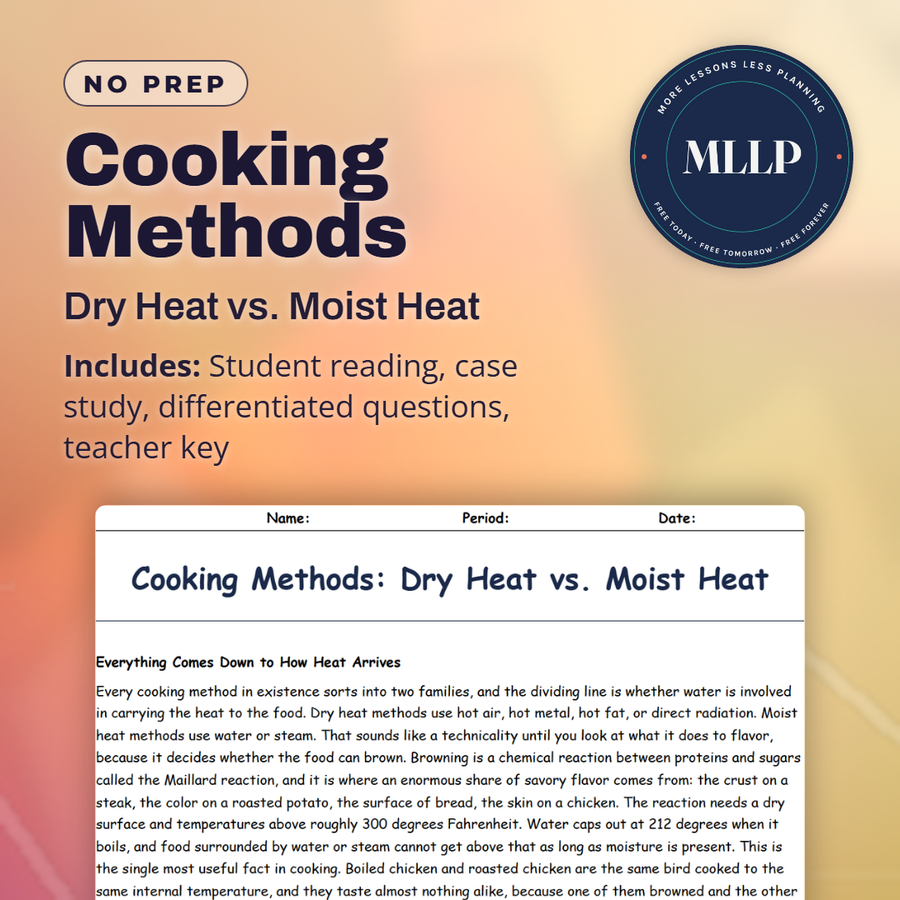
Cooking Methods: Dry Heat vs. Moist Heat
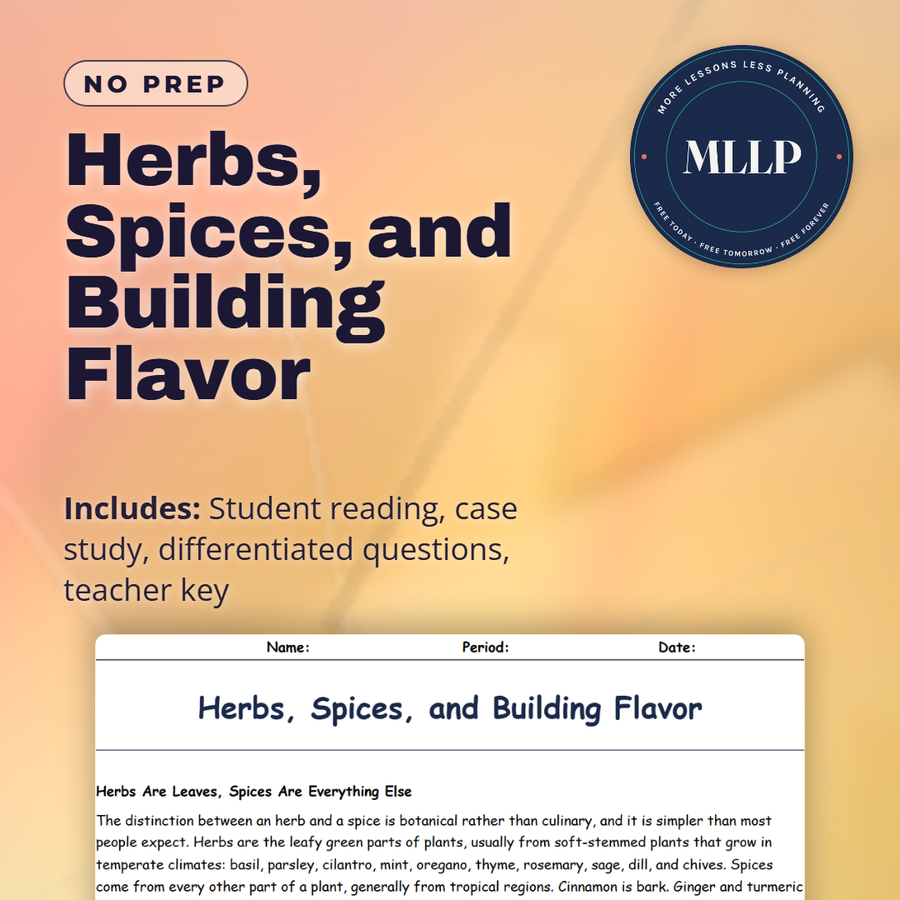
Herbs, Spices, and Building Flavor
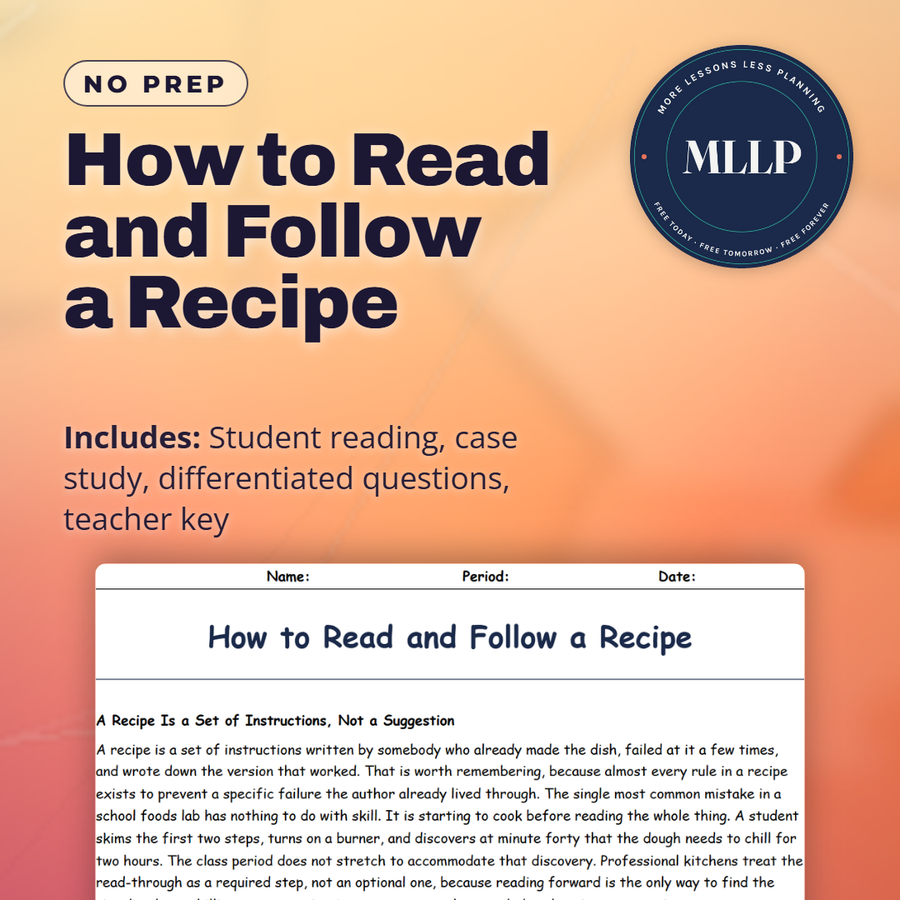
How to Read and Follow a Recipe
Kitchen Tools and Equipment
Knife Skills and the Basic Cuts
Measuring Techniques: Dry, Liquid, and Weight
Every lesson on this site is free to download and use. If one of them saved you a prep period, you can chip in a few bucks toward my three kids' daycare fund. That's genuinely where tips go.