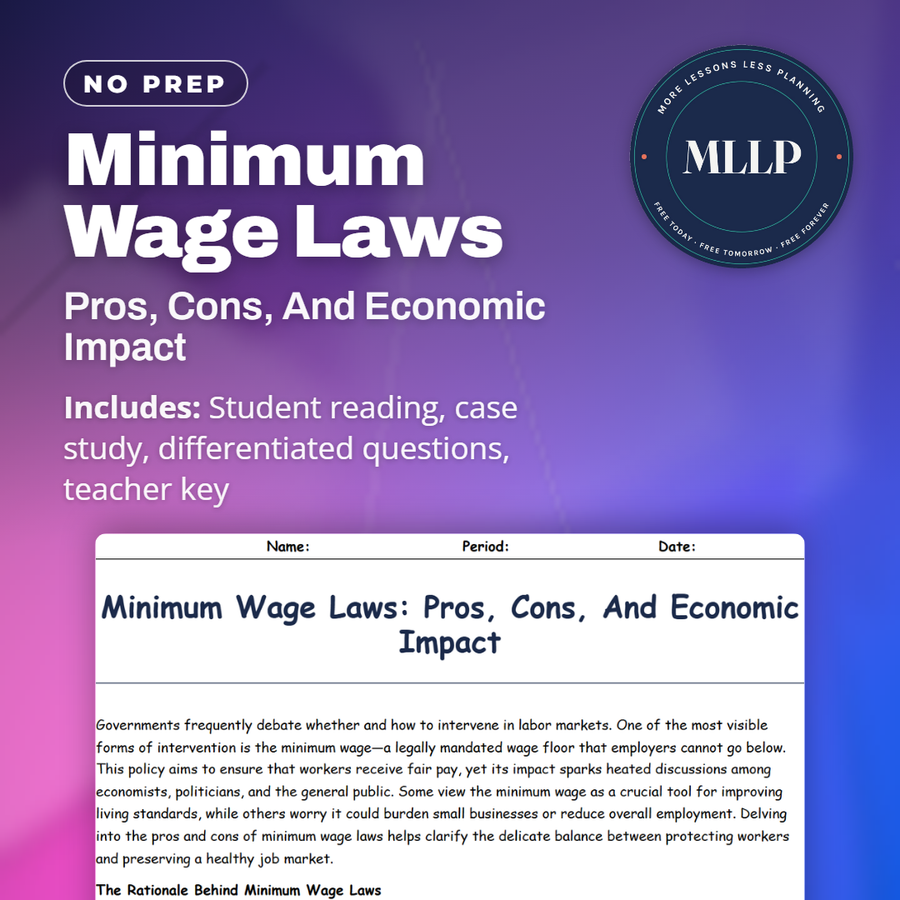
Minimum Wage Laws: Pros, Cons, And Economic Impact
Quality reviewed September 2026
Facts verified September 8, 2026
- Grades
- Grades 9-12
- Length
- 7-page student worksheet
- Time
- About one 50-minute class period
- Great for
- Sub plans and independent work
- Includes
- Reading passage, comprehension questions + full answer key
- Format
- Print-and-go PDF
What students do
- Analyze multiple perspectives on minimum wage increases and potential employment effects
- Read about how a small diner navigated higher payroll costs after a wage increase
- Match pros like lifting low-income workers against cons like potential job losses
- Answer questions about indexed wages and regional cost-of-living differences
What it covers
- Arguments for minimum wage laws protecting workers from extreme low pay exploitation
- Economic concerns including job losses and higher prices for consumers
- Real-world examples from cities like Seattle and San Francisco with wage data
Start reading this worksheet
Governments frequently debate whether and how to intervene in labor markets. One of the most visible forms of intervention is the minimum wage—a legally mandated wage floor that employers cannot go below. This policy aims to ensure that workers receive fair pay, yet its impact sparks heated discussions among economists, politicians, and the general public. Some view the minimum wage as a crucial tool for improving living standards, while others worry it could burden small businesses or reduce overall employment. Delving into the pros and cons of minimum wage laws helps clarify the delicate balance between protecting workers and preserving a healthy job market.
The Rationale Behind Minimum Wage Laws
Minimum wage legislation typically arises from a desire to protect workers from exploitation and extreme low pay. The idea is that every full-time worker should earn enough to afford a basic standard of living, thus preventing the worst forms of wage competition. Historically, minimum wages have been introduced at times of economic stress or labor activism. Supporters argue that a higher minimum wage can reduce income inequality by lifting the earnings of the lowest-paid segment of the workforce. Such laws may also stimulate consumer spending, as workers with higher incomes tend to spend more in local economies. Proponents believe that society has a moral obligation to ensure that hard work pays at least enough to cover essentials like housing, food, and healthcare.
Arguments For and Against Raising the Minimum Wage
On the positive side, raising the minimum wage might encourage consumer demand, because workers who earn more can spend more. This extra spending can ripple through the economy, boosting sales and possibly creating more jobs. Higher wages might also reduce turnover, saving companies money in recruitment and training. However, critics warn about unintended consequences. If the cost of labor jumps significantly, some employers might reduce hiring, replace workers with technology, or shift operations to regions with lower labor costs. Small businesses in sectors like retail or hospitality often operate on tight profit margins, and a wage increase might force them to raise prices or scale back their workforce. Detractors also point out that a single, rigid minimum wage doesn’t account for regional differences in cost of living and might be too high in rural areas or too low in expensive cities.
Like what you read? The full reading, the case study, and every question set are in the free download below, along with the answer key.
Why this matters
A diner owner facing a minimum wage increase has three real options: raise prices, install ordering kiosks, or cut staff hours, and this reading makes them choose among the three before any theory. Seattle and San Francisco data replace guesswork with what happened in cities that raised wages, including which predicted disasters never showed up.
I run the diner's dilemma as a small-group decision before anyone learns the vocabulary, so the tradeoffs are felt before they are labeled. Groups that pick kiosks still have to explain it to a nervous staff, which is not a line on any spreadsheet. The indexed wages section then answers what happens during years of high inflation.
From one teacher to another
I use this worksheet when minimum wage debates heat up in local news or policy discussions. Students see both sides laid out clearly: workers need fair pay to cover basics like housing and food, but business owners face genuine cost pressures when labor expenses jump. The restaurant case study is the hook; they follow a real diner owner deciding whether to raise menu prices, adopt ordering kiosks, or reduce staff hours. My students work through questions using actual data from Seattle and San Francisco rather than assumptions. The section on indexed wages shows how some places solved the problem of keeping pace with inflation. It's a printable worksheet that teaches economic tradeoffs without pushing a particular political view.
What you get
- Answer Key
-
Student Worksheet
The United Kingdom's National Living Wage originally applied only to workers 25 and older before the threshold dropped to 21, one policy choice in the reading's survey of how minimum wage rules vary by place. Early UK data showed slight employment drops in certain low-wage sectors but a stable overall economy, while cities such as Seattle and San Francisco produced mixed results, some workers gaining pay and others losing hours entirely.
Download
Where should I send the next one?
Everything here is free and it stays that way. Leave your email and I'll send you the new lessons as they go up. You can unsubscribe from any one of them.
Related resources
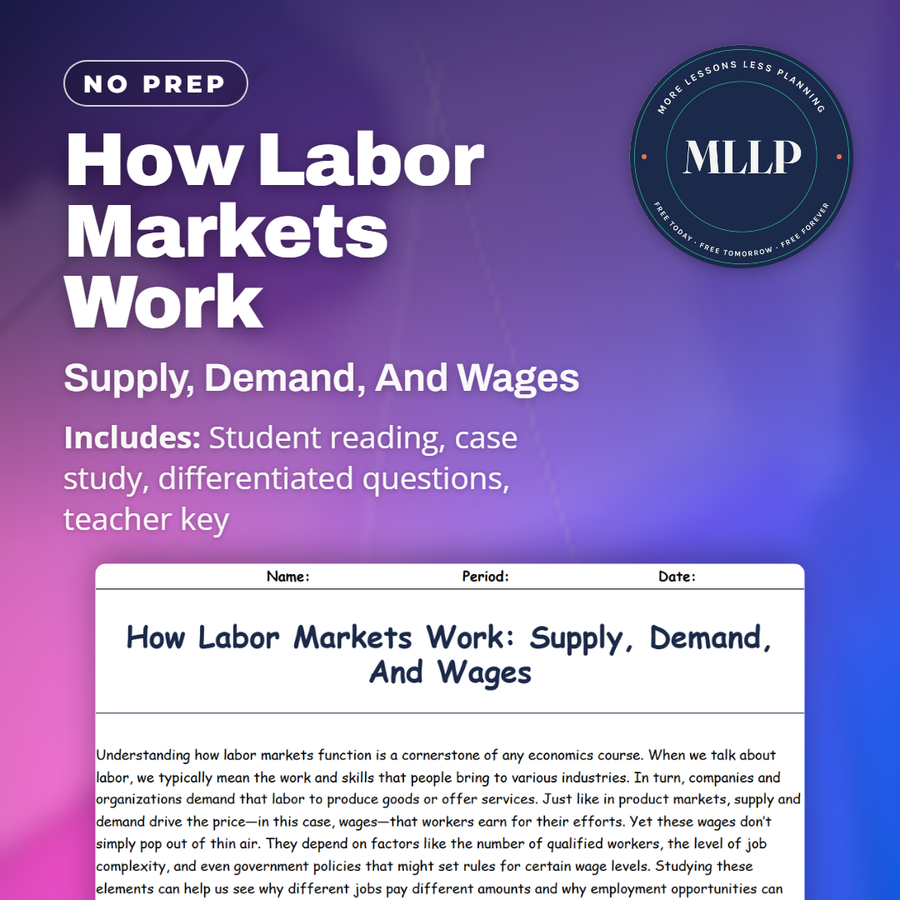
How Labor Markets Work: Supply, Demand, And Wages
How Technology Is Changing The Workforce And Wages
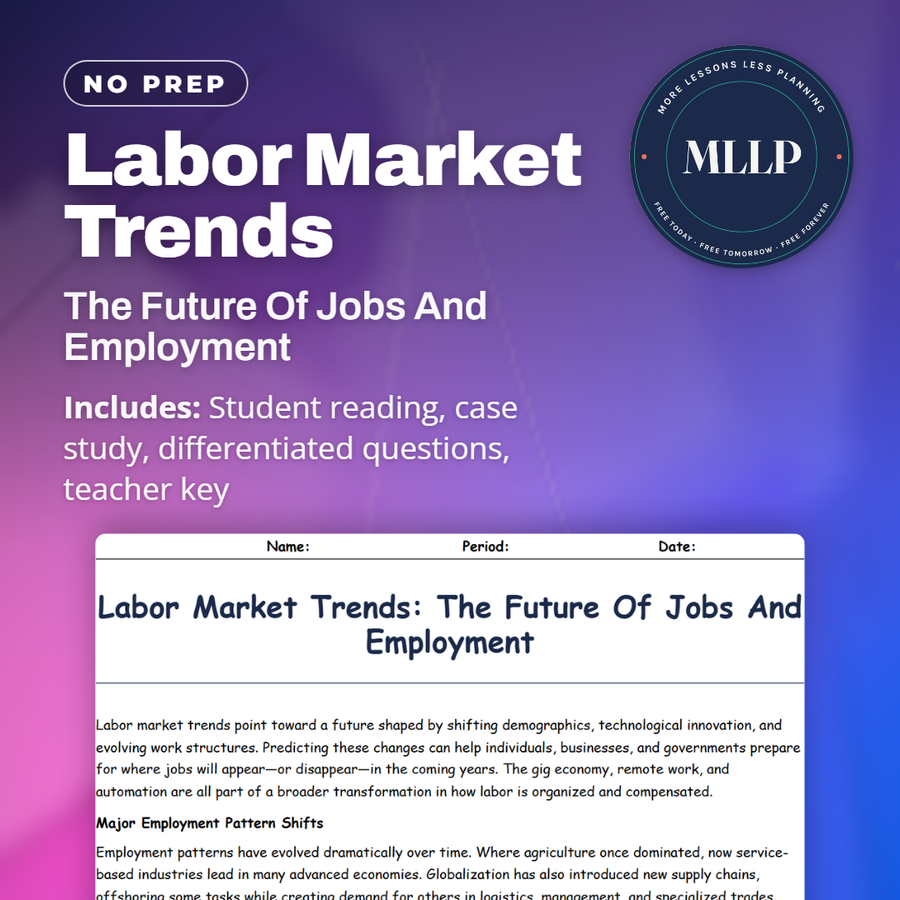
Labor Market Trends: The Future Of Jobs And Employment
Labor Unions And Collective Bargaining: How Workers Gain Power
The Role Of Human Capital: Why Skills And Education Matter
Wage And Income Inequality: Why Some Earn More Than Others
Every lesson on this site is free to download and use. If one of them saved you a prep period, you can chip in a few bucks toward my three kids' daycare fund. That's genuinely where tips go.