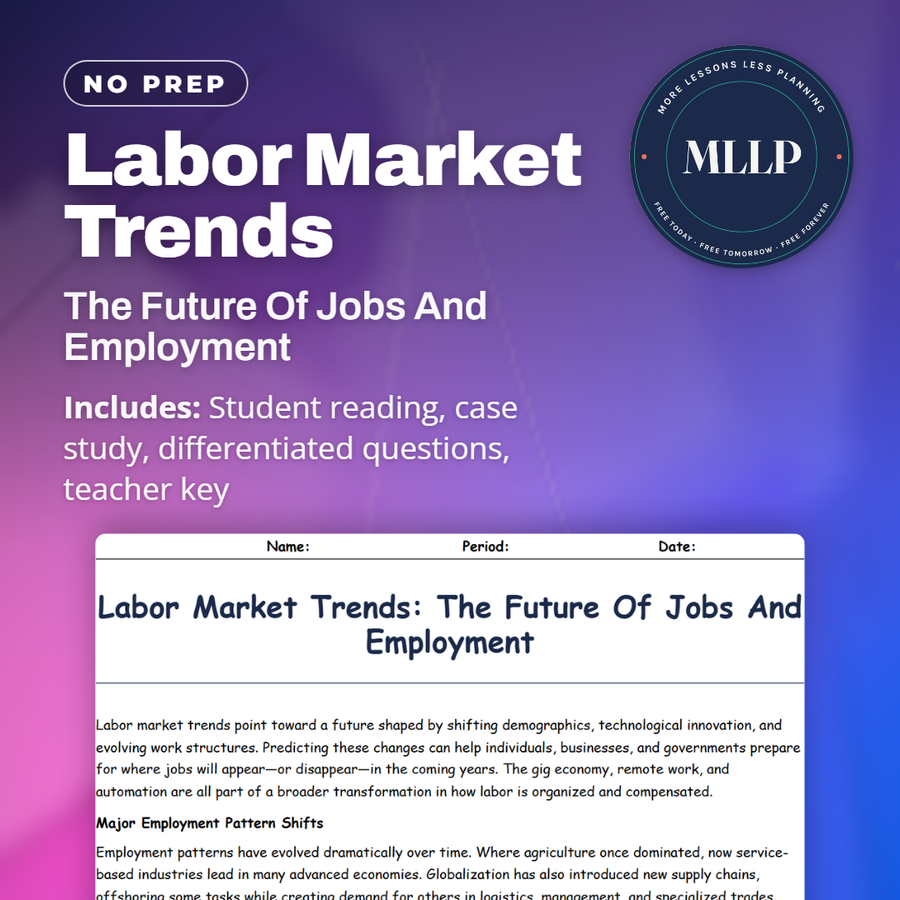
Labor Market Trends: The Future Of Jobs And Employment
Quality reviewed September 2026
Facts verified September 8, 2026
- Grades
- Grades 9-12
- Length
- 6-page student worksheet
- Time
- About one 50-minute class period
- Great for
- Sub plans and independent work
- Includes
- Reading passage, comprehension questions + full answer key
- Format
- Print-and-go PDF
What students do
- Read passages explaining major employment pattern shifts from agriculture to services
- Answer questions about which fields are likely to grow like healthcare and green energy
- Match terms like gig economy benefits with their descriptions and real-world examples
- Analyze how a freelance marketer adapted to income instability by diversifying services
What it covers
- Employment pattern shifts from traditional manufacturing to service and technology sectors
- Growth industries including renewable energy, healthcare, cybersecurity, and AI positions
- Gig economy and flexible work arrangements replacing traditional full-time employment
Start reading this worksheet
Labor market trends point toward a future shaped by shifting demographics, technological innovation, and evolving work structures. Predicting these changes can help individuals, businesses, and governments prepare for where jobs will appear or disappear in the coming years. The gig economy, remote work, and automation are all part of a broader transformation in how labor is organized and compensated.
Major Employment Pattern Shifts
Employment patterns have evolved dramatically over time. Where agriculture once dominated, now service-based industries lead in many advanced economies. Globalization has also introduced new supply chains, offshoring some tasks while creating demand for others in logistics, management, and specialized trades. The information economy continues to expand, elevating jobs in data analytics, software development, and AI. Meanwhile, manufacturing is more automated, requiring fewer but more skilled workers. As consumer preferences change, jobs in renewable energy, healthcare, and technology are likely to grow, while some traditional fields may contract.
The Rise of the Gig Economy
In the gig economy, workers take on short-term contracts or freelance tasks rather than holding traditional full-time jobs. Ride-sharing and delivery apps are well-known examples, but freelancing now extends across creative, technical, and administrative roles. Flexibility is a key selling point for many gig workers. They can set their own hours or juggle multiple clients. However, concerns persist about stability, benefits, and consistent wages. This model changes how people think about employment, potentially reducing the role of traditional employers while placing more responsibility on individuals to manage their careers, taxes, and insurance.
Like what you read? The full reading, the case study, and every question set are in the free download below, along with the answer key.
Why this matters
The economy your students graduate into no longer runs on the jobs their grandparents held, and this reading traces that shift plainly: away from manufacturing and toward healthcare, green energy, and services. The freelancer case study grounds the trend in one decision, showing how she stabilized unpredictable income by offering several related services instead of one.
Vague career advice is easy to tune out, which is what makes this reading different: it names growing sectors backed by hiring data instead of generic encouragement. I schedule it early in the term because every later conversation about their employment future builds on it.
From one teacher to another
I use this reading to help students think about career planning and their own employment futures. The worksheet identifies which sectors are actually expanding based on economic data, so they see evidence behind career advice rather than guesses. My students see that many of them might not have traditional 9-to-5 jobs and need to think about adaptability. They complete a case study about a freelancer who stabilized her income by offering multiple services, showing that skill diversification matters in unpredictable markets. It's a printable worksheet that prompts real conversations about what kinds of jobs will exist when they graduate and enter the labor force.
What you get
- Answer Key
-
Student Worksheet
A freelance digital marketer working from a small town found clients around the world online, but fluctuating workloads left her income unpredictable until she added social media management, graphic design, and content writing to her original service. Repeat clients followed, and a companion hiring table names the specific roles behind the growth numbers, from wind turbine engineer to penetration tester to machine learning engineer.
Download
Where should I send the next one?
Everything here is free and it stays that way. Leave your email and I'll send you the new lessons as they go up. You can unsubscribe from any one of them.
Related resources
How Labor Markets Work: Supply, Demand, And Wages
How Technology Is Changing The Workforce And Wages
Labor Unions And Collective Bargaining: How Workers Gain Power
Minimum Wage Laws: Pros, Cons, And Economic Impact
The Role Of Human Capital: Why Skills And Education Matter
Wage And Income Inequality: Why Some Earn More Than Others
Every lesson on this site is free to download and use. If one of them saved you a prep period, you can chip in a few bucks toward my three kids' daycare fund. That's genuinely where tips go.