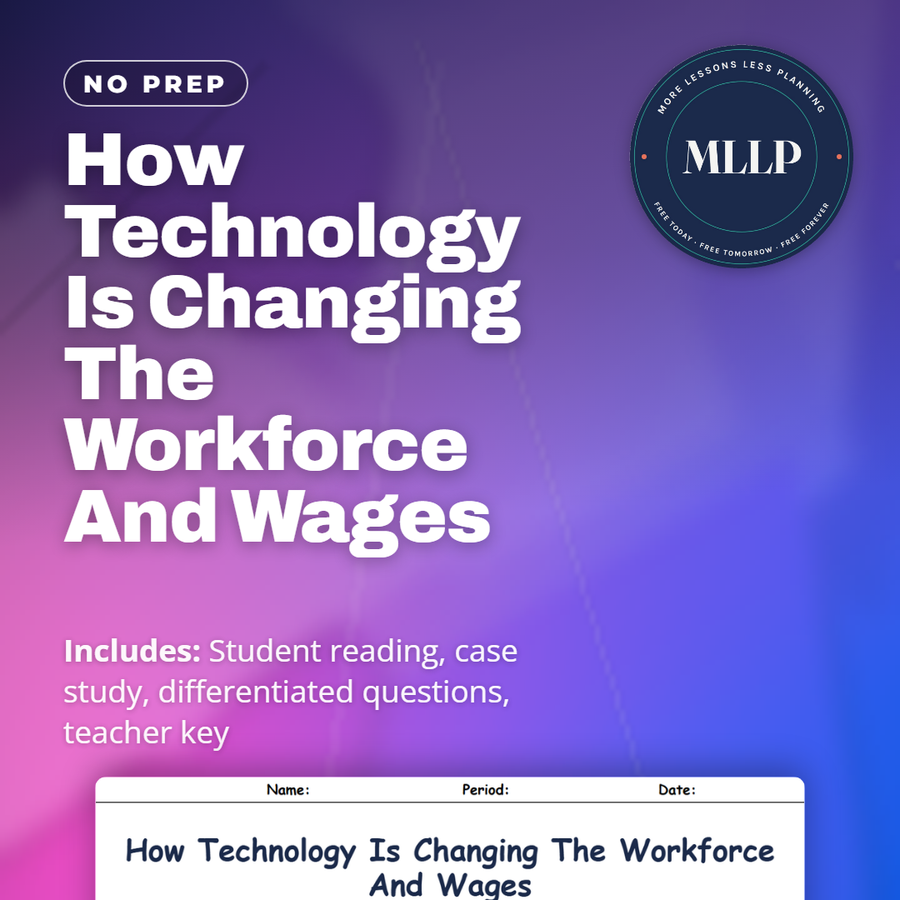
How Technology Is Changing The Workforce And Wages
Quality reviewed September 2026
Facts verified September 8, 2026
- Grades
- Grades 9-12
- Length
- 7-page student worksheet
- Time
- About one 50-minute class period
- Great for
- Sub plans and independent work
- Includes
- Reading passage, comprehension questions + full answer key
- Format
- Print-and-go PDF
What students do
- Understand how automation and AI eliminate routine jobs while creating specialized roles
- Examine a factory worker case study about reskilling and transitioning to robotics positions
- Complete matching exercises connecting technological changes to workforce effects
- Analyze the role of continuous learning in adapting to changing labor market demands
What it covers
- Automation, AI, and their effects on job availability and demand for workers
- Remote work platforms and gig economy arrangements reshaping employment
- Reskilling programs and career adaptability in response to technological shifts
Start reading this worksheet
Advances in technology, including automation, artificial intelligence (AI), and robotics, are reshaping the labor landscape at a rapid pace. While new tech can boost productivity and create brand-new job roles, it can also render some traditional jobs obsolete. Understanding how these changes affect wages and employment patterns can help workers adapt and governments plan for a shifting economic future.
The Rise of Automation and AI
From self-checkout machines at the grocery store to automated manufacturing lines, automation has already reduced the need for certain types of manual labor. Meanwhile, AI algorithms can handle tasks like data analysis and customer service chatbots, further reducing the need for human workers in some areas. These technologies have prompted a re-evaluation of workforce needs. While they eliminate certain low-skill or repetitive roles, they also create demand for tech-savvy employees who can develop, maintain, or optimize automated systems. Many economists argue that the net effect isn’t purely job loss but job transformation, where workers shift into new roles that computers cannot easily handle.
Job Creation vs. Job Elimination
Historically, technological revolutions, such as the Industrial Revolution, ultimately led to higher wages and better living standards, even though many workers feared displacement at first. Today, roles like AI specialist, data scientist, and cybersecurity expert have emerged, often offering competitive salaries. However, the transition is not painless. Workers in highly automatable jobs may find their skills outdated, leading to temporary or prolonged unemployment. Geographic factors also matter; regions that lag in technology adoption might face fewer job disruptions initially, but they may struggle to remain competitive, potentially reducing future wage growth. The key question is how quickly workers can reskill or upskill to enter new high-demand fields.
Like what you read? The full reading, the case study, and every question set are in the free download below, along with the answer key.
Why this matters
A student who hears adults worry about a robot taking someone's job is already asking a labor economics question. This reading answers it through a factory that reskilled workers into robotics roles instead of laying them off. Pairing that with freelance and remote gig work shows two responses to one shift: a role eliminated, a role reshaped.
My students tend to talk about automation as something that only destroys jobs. The factory case study complicates that by showing a company choosing retraining over layoffs, and the gig economy section adds arrangements their parents never had. By the end, most can name one skill they would want if their field started automating.
From one teacher to another
I use this reading when students ask about why truck drivers might worry about their futures or why they hear about AI in job market discussions. The worksheet directly addresses automation and AI without seeming alarmist about technology. Students read a case study where a factory reskilled workers instead of laying them off, grounding the discussion in practical solutions that actually happen. The gig economy section opens conversations about alternative work structures like freelancing and remote positions. My students see how technology constantly reshapes labor markets but also creates new opportunities for those who adapt and learn new skills.
What you get
- Answer Key
-
Student Worksheet
An auto parts factory installed robotic arms on its assembly line and worried workers would be laid off, so it ran a six month training program that taught them to operate and troubleshoot the new machines instead. Some older employees chose early retirement, but most transitioned into higher paid, higher skill roles, and the factory reported fewer production errors afterward.
Download
Where should I send the next one?
Everything here is free and it stays that way. Leave your email and I'll send you the new lessons as they go up. You can unsubscribe from any one of them.
Related resources
How Labor Markets Work: Supply, Demand, And Wages
Labor Market Trends: The Future Of Jobs And Employment
Labor Unions And Collective Bargaining: How Workers Gain Power
Minimum Wage Laws: Pros, Cons, And Economic Impact
The Role Of Human Capital: Why Skills And Education Matter
Wage And Income Inequality: Why Some Earn More Than Others
Every lesson on this site is free to download and use. If one of them saved you a prep period, you can chip in a few bucks toward my three kids' daycare fund. That's genuinely where tips go.