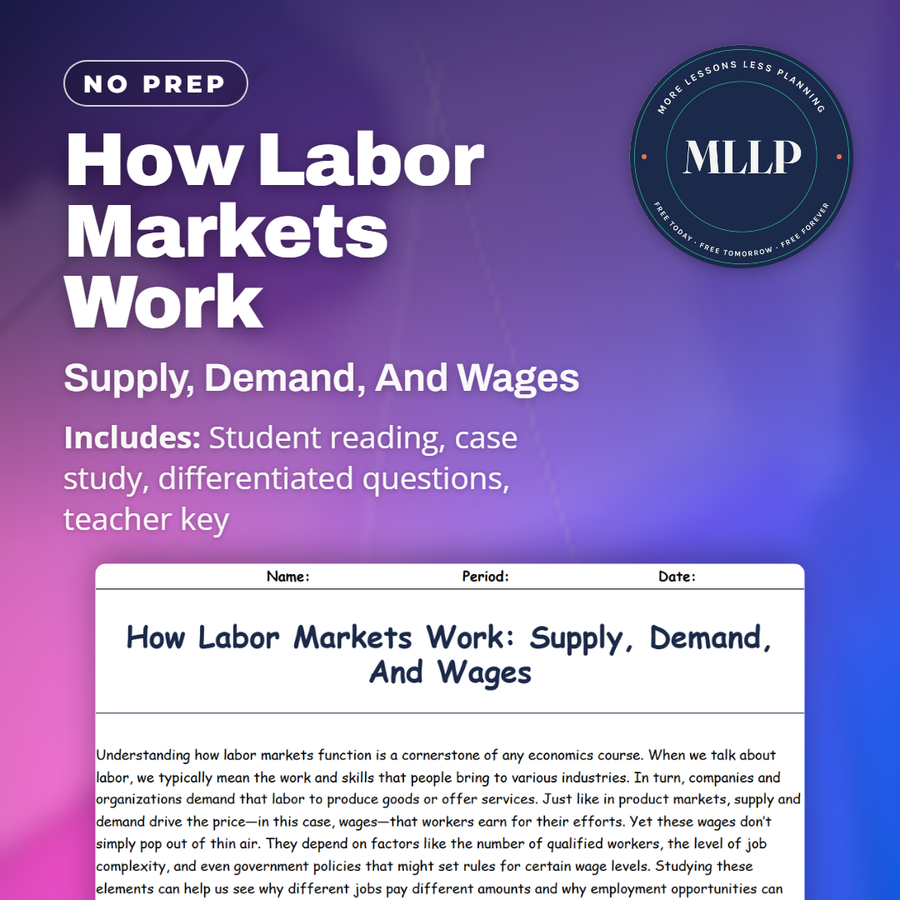
How Labor Markets Work: Supply, Demand, And Wages
Quality reviewed September 2026
Facts verified September 8, 2026
- Grades
- Grades 9-12
- Length
- 7-page student worksheet
- Time
- About one 50-minute class period
- Great for
- Sub plans and independent work
- Includes
- Reading passage, comprehension questions + full answer key
- Format
- Print-and-go PDF
What students do
- Read about equilibrium wage and the role of labor supply and demand
- Answer multiple-choice questions about wage determination in competitive markets
- Match key labor market terms like labor shortage and wage floor with definitions
- Analyze a case study about renewable energy wages and labor shortages
What it covers
- Labor supply and demand fundamentals and market equilibrium
- Government policies affecting wages and employment levels
- Wage gaps across industries based on skill and demand
Start reading this worksheet
Understanding how labor markets function is a cornerstone of any economics course. When we talk about labor, we typically mean the work and skills that people bring to various industries. In turn, companies and organizations demand that labor to produce goods or offer services. Just like in product markets, supply and demand drive the price (in this case, wages) that workers earn for their efforts. Yet these wages don’t simply pop out of thin air. They depend on factors like the number of qualified workers, the level of job complexity, and even government policies that might set rules for certain wage levels. Studying these elements can help us see why different jobs pay different amounts and why employment opportunities can shift over time.
The Basics of Labor Supply and Demand
In a straightforward model, labor supply refers to the number of workers willing and able to work at various wage rates. The higher the wage, the more people are motivated to offer their labor. Some might decide to enter the workforce instead of staying home or retiring early, while others might choose additional part-time jobs. Conversely, labor demand comes from employers. These businesses will hire more workers when wages are lower because they can afford a bigger workforce. When wages rise, employers might reduce the number of positions or switch to automation to control costs. The equilibrium wage, the pay rate at which the number of willing workers equals the number of available jobs, acts like a balancing point. However, labor markets aren’t as simple as setting a price for apples. People differ in their skills, experiences, and personal circumstances, so it’s rare for the labor market to arrive at a single “perfect” wage for everyone.
Impact of Shifting Supply and Demand
Changes in the economy, technology, or even social norms can influence labor supply or demand. When a new industry booms, like technology or renewable energy, employers scramble to hire, pushing wages upward if there aren’t enough qualified workers. On the flip side, if a technology replaces certain jobs, labor demand for those positions falls, potentially driving wages down. Meanwhile, workers’ willingness to relocate or train for new skills affects labor supply. For instance, if a particular region experiences a housing crisis, many people might not move there for jobs, even if wages are higher. These subtle shifts can cause imbalances in the labor market, often seen in shortages or surpluses of labor. A labor shortage means not enough qualified workers are available to fill openings, putting pressure on wages to rise. A surplus means more people are looking for jobs than there are positions, often leading to unemployment or lower wages.
Like what you read? The full reading, the case study, and every question set are in the free download below, along with the answer key.
Why this matters
Wages move for the same reason prices do: when demand outpaces supply, the price rises, and this reading applies that logic to workers instead of goods. The renewable energy case study shows new companies competing for the same skilled workers and wages spiking almost overnight. That is a labor shortage from the employer's side, not a headline phrase.
I assign this right after supply and demand in the product market, so students see the same logic apply to people. The labor shortage and wage floor vocabulary connects to hiring stories they already half know. What changes is that they start asking why a shortage exists, not just noticing a bigger paycheck.
From one teacher to another
I use this reading to help students understand why some industries pay more than others. The worksheet walks them through how labor markets reach equilibrium, using concrete examples like technology sector hiring and wage pressures when demand for skilled workers outpaces supply. My students complete questions about labor shortages and surpluses, which connect directly to real job market trends they recognize from news coverage. The case study about renewable energy shows them how new industries create temporary wage spikes as companies compete for workers. It's a printable one-day lesson that fits well after we cover supply and demand curves in the product market context.
What you get
- Answer Key
-
Student Worksheet
When solar panel installation boomed, there were not enough trained workers to fill open jobs, and pay rose fast as firms chased scarce installers. Vocational schools and community colleges answered by building dedicated solar courses, which eased the spikes as more graduates entered the field. A table of contrasts sits alongside that story, from tech firms bidding up pay for developers to oil drilling roles paying more for danger.
Download
Where should I send the next one?
Everything here is free and it stays that way. Leave your email and I'll send you the new lessons as they go up. You can unsubscribe from any one of them.
Related resources
How Technology Is Changing The Workforce And Wages
Labor Market Trends: The Future Of Jobs And Employment
Labor Unions And Collective Bargaining: How Workers Gain Power
Minimum Wage Laws: Pros, Cons, And Economic Impact
The Role Of Human Capital: Why Skills And Education Matter
Wage And Income Inequality: Why Some Earn More Than Others
Every lesson on this site is free to download and use. If one of them saved you a prep period, you can chip in a few bucks toward my three kids' daycare fund. That's genuinely where tips go.