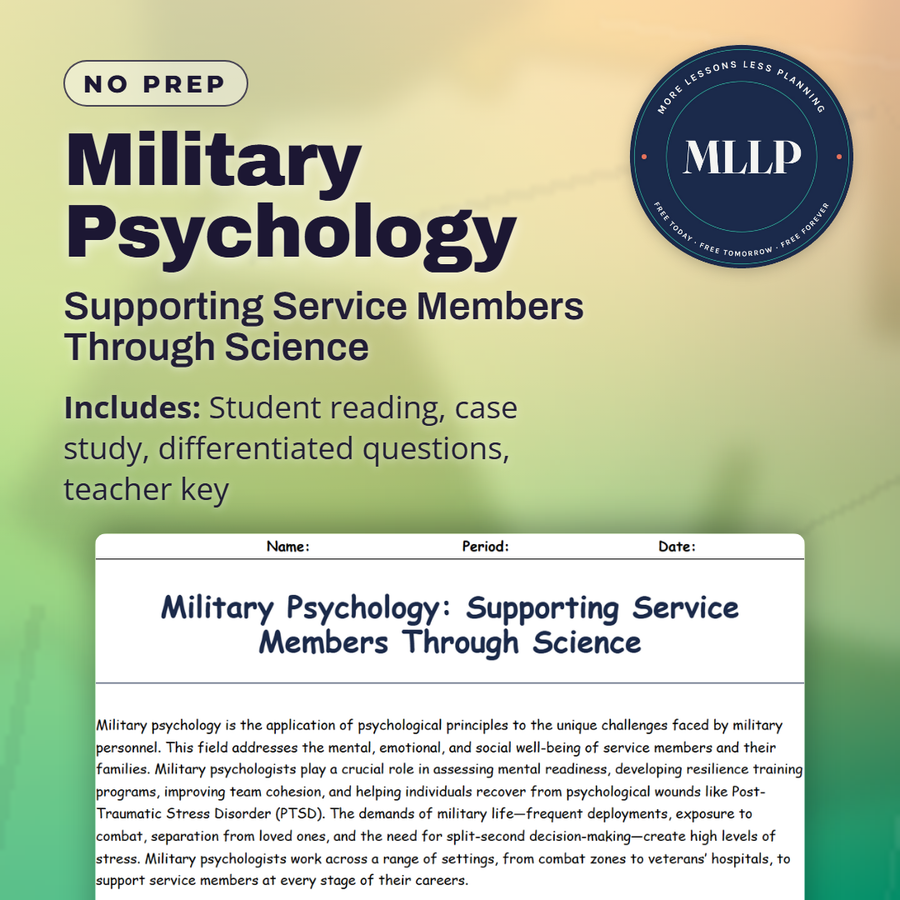
Military Psychology: Supporting Service Members Through Science
Quality reviewed September 2026
Facts verified September 10, 2026
- Subject
- Social Studies
- Grades
- Grades 9-12
- Length
- 7-page student worksheet
- Time
- About one 50-minute class period
- Great for
- Sub plans and independent work
- Includes
- Reading passage, comprehension questions + full answer key
- Format
- Print-and-go PDF
What students do
- Match five terms, including PTSD, resilience training, and team cohesion, to their definitions
- Fill in blanks naming resilience training, PTSD, and EMDR
- Read a case study on rebuilding confidence after deployment and answer how CBT addressed PTSD symptoms
- Write short answers on team cohesion in high-stress environments and the transition to civilian life
What it covers
- Combat readiness and stress management strategies used with service members
- PTSD symptoms and evidence-based recovery approaches like CBT and EMDR
- Team cohesion, morale, and the transition from military to civilian life
Start reading this worksheet
Military psychology is the application of psychological principles to the unique challenges faced by military personnel. This field addresses the mental, emotional, and social well-being of service members and their families. Military psychologists play a crucial role in assessing mental readiness, developing resilience training programs, improving team cohesion, and helping individuals recover from psychological wounds like Post-Traumatic Stress Disorder (PTSD). The demands of military life—frequent deployments, exposure to combat, separation from loved ones, and the need for split-second decision-making—create high levels of stress. Military psychologists work across a range of settings, from combat zones to veterans’ hospitals, to support service members at every stage of their careers.
The Role of Military Psychology in Combat Readiness
One of the primary responsibilities of military psychologists is to ensure soldiers are mentally prepared for the challenges of combat. This involves evaluating their psychological fitness, which includes their ability to handle stress, maintain focus, and make effective decisions under pressure. Psychologists often administer assessments to measure traits like emotional stability, problem-solving skills, and stress tolerance. These evaluations help identify individuals who may benefit from additional support before deployment. Military psychologists also teach coping strategies to manage the intense demands of combat. Techniques like mindfulness, breathing exercises, and visualization help soldiers remain calm and focused in high-stress situations. Another key area is resilience training, which equips service members with the tools to adapt to adversity. Resilience programs focus on fostering mental toughness, self-efficacy, and social support, helping soldiers recover more quickly from setbacks.
Post-Traumatic Stress Disorder and Recovery
Military service members are at an elevated risk for PTSD due to exposure to traumatic events like combat, witnessing injuries, or surviving attacks. PTSD is a mental health condition characterized by symptoms such as flashbacks, hypervigilance, nightmares, and emotional numbness. It can significantly affect a person’s relationships, career, and overall quality of life. Military psychologists use evidence-based therapies to help individuals recover from PTSD. One common approach is Cognitive-Behavioral Therapy (CBT), which helps patients identify and challenge negative thought patterns. Another effective method is Eye Movement Desensitization and Reprocessing (EMDR), which reduces the intensity of traumatic memories. Group therapy and support groups also provide a sense of connection and shared understanding among veterans. Psychologists also work closely with families, providing education and counseling to help them understand and support their loved ones during the recovery process.
Like what you read? The full reading, the case study, and every question set are in the free download below, along with the answer key.
Why this matters
Recovery from PTSD is not just about forgetting what happened. This reading's case study follows a service member rebuilding confidence after deployment, where cognitive-behavioral therapy works directly on the PTSD symptoms getting in the way, alongside evidence-based approaches like EMDR.
My students walk in assuming PTSD looks like the flashbacks they have seen in movies, so putting the deployment case study next to the vocabulary on team cohesion and resilience training gives them a fuller picture. Losing the structure of a unit turns out to be its own adjustment, which is why this reading gives real weight to the transition to civilian life alongside combat-related stress.
From one teacher to another
I bring this one out when we talk about how psychology applies outside a therapist's office, since it looks at PTSD and resilience training through a military lens. Students match PTSD, CBT, and team cohesion to their definitions, fill in blanks on resilience training and EMDR, and read a case study about rebuilding confidence after deployment. The short answer prompts get them explaining why social support matters for veterans recovering from PTSD. Answer key included.
What you get
Download
Where should I send the next one?
Everything here is free and it stays that way. Leave your email and I'll send you the new lessons as they go up. You can unsubscribe from any one of them.
Related resources
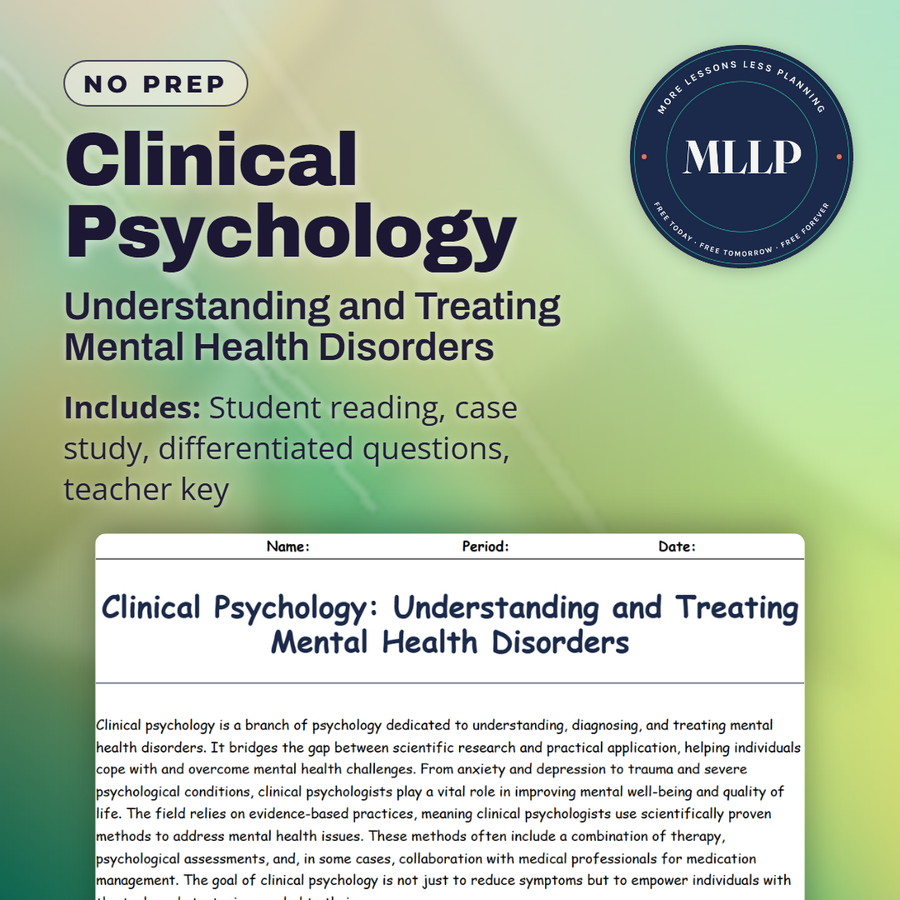
Clinical Psychology: Understanding and Treating Mental Health Disorders
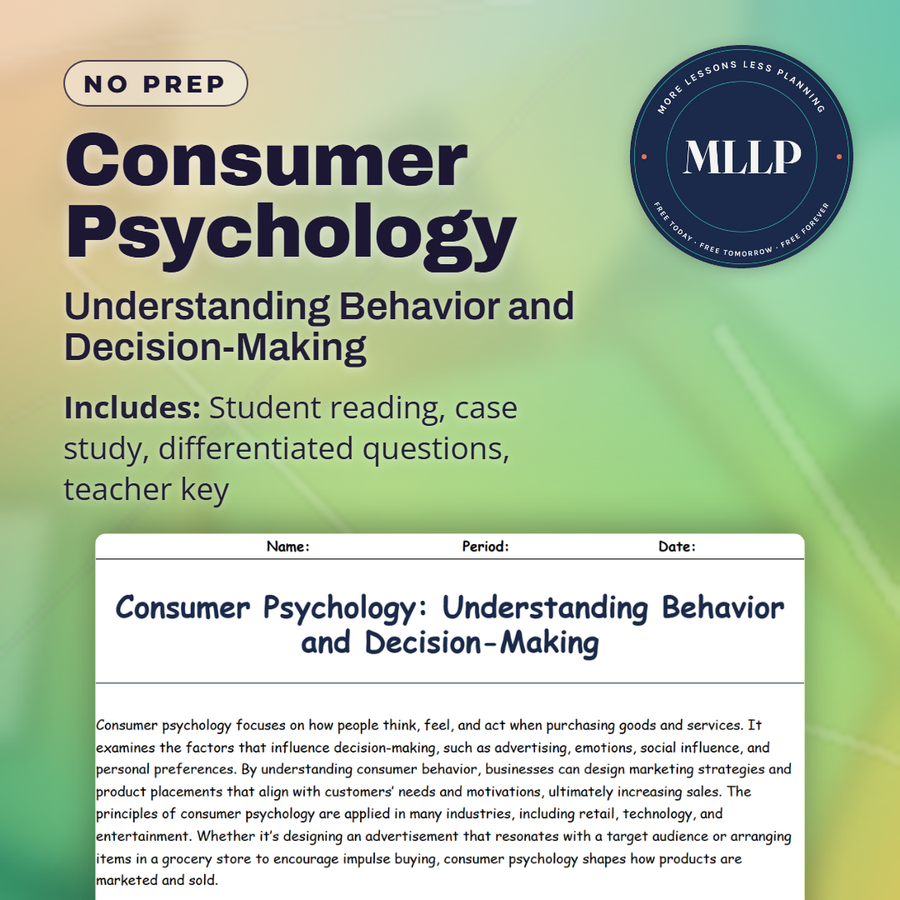
Consumer Psychology: Understanding Behavior and Decision-Making
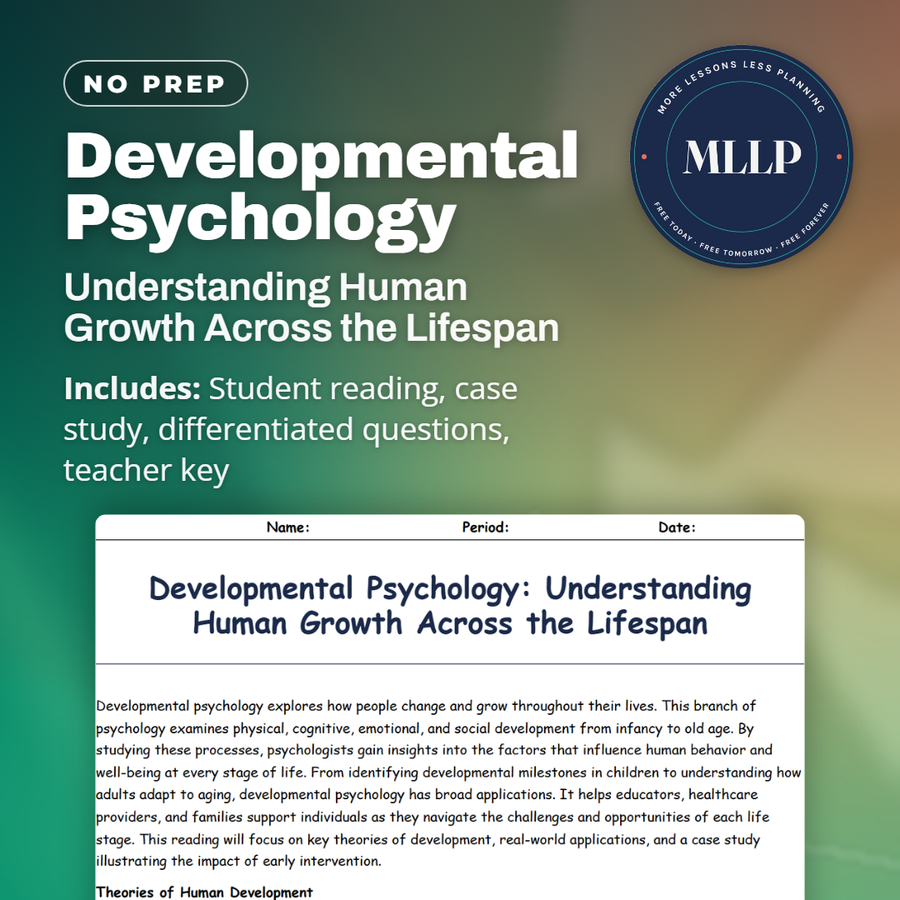
Developmental Psychology: Understanding Human Growth Across the Lifespan
Educational Psychology: Understanding Learning Processes and Teaching Strategies
Health Psychology: The Link Between Mind and Body
Industrial/Organizational Psychology: Understanding Workplace Behavior and Productivity
Every lesson on this site is free to download and use. If one of them saved you a prep period, you can chip in a few bucks toward my three kids' daycare fund. That's genuinely where tips go.