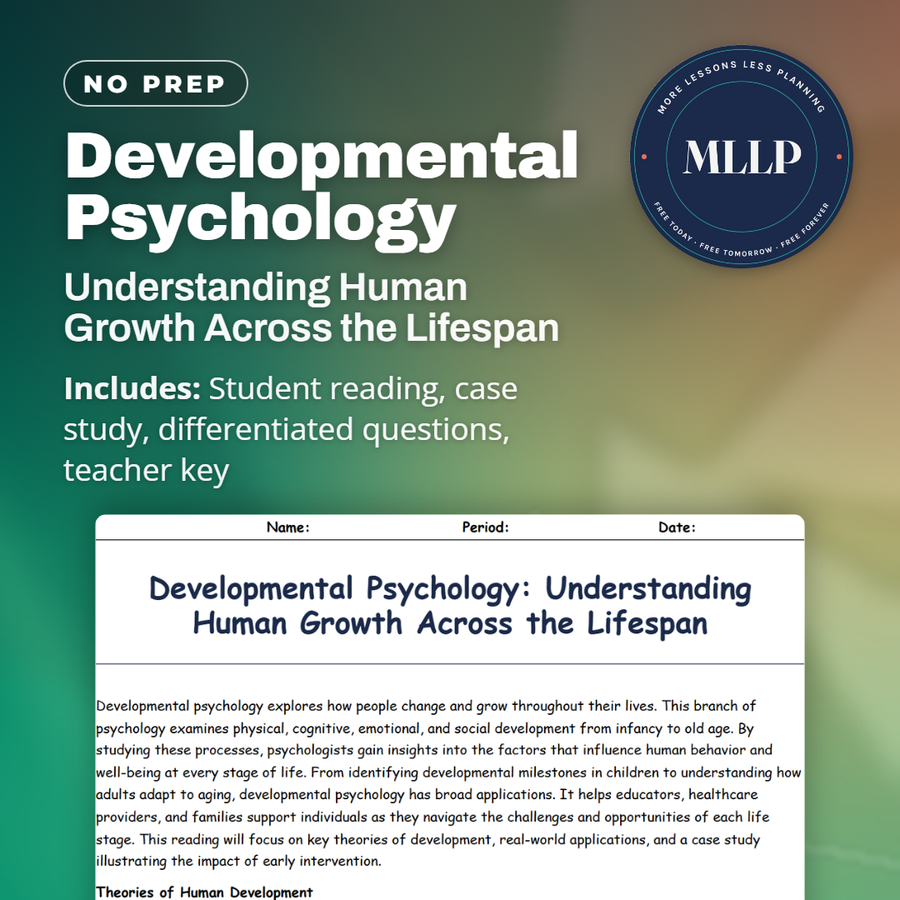
Developmental Psychology: Understanding Human Growth Across the Lifespan
Quality reviewed September 2026
Facts verified September 10, 2026
- Subject
- Social Studies
- Grades
- Grades 9-12
- Length
- 7-page student worksheet
- Time
- About one 50-minute class period
- Great for
- Sub plans and independent work
- Includes
- Reading passage, comprehension questions + full answer key
- Format
- Print-and-go PDF
What students do
- Match five terms, including scaffolding and identity vs. role confusion, to their definitions
- Fill in blanks on scaffolding, Erikson's eight stages, and toddlerhood milestones
- Read a case study on early intervention for a child's speech delay and answer how the therapist supported her
- Write short answers on how developmental milestones and early intervention support students and older adults
What it covers
- Theories of human development from Piaget, Erikson, and Vygotsky
- Developmental milestones and challenges across childhood
- Real-world applications of developmental psychology in education and elder care
Start reading this worksheet
Developmental psychology explores how people change and grow throughout their lives. This branch of psychology examines physical, cognitive, emotional, and social development from infancy to old age. By studying these processes, psychologists gain insights into the factors that influence human behavior and well-being at every stage of life. From identifying developmental milestones in children to understanding how adults adapt to aging, developmental psychology has broad applications. It helps educators, healthcare providers, and families support individuals as they navigate the challenges and opportunities of each life stage. This reading will focus on key theories of development, real-world applications, and a case study illustrating the impact of early intervention.
Theories of Human Development
Developmental psychology is grounded in several influential theories that explain how people grow and change. Jean Piaget’s Cognitive Development Theory outlines how children’s thinking evolves through four stages: sensorimotor, preoperational, concrete operational, and formal operational. Each stage represents a new way of understanding and interacting with the world. For instance, during the sensorimotor stage (birth to 2 years), infants learn about their environment through their senses and actions. Erik Erikson’s Psychosocial Development Theory focuses on social and emotional growth across eight stages, each marked by a specific conflict. For example, during adolescence, individuals face the challenge of identity vs. role confusion, where they explore their sense of self and their place in society. Resolving these conflicts positively leads to healthy development, while unresolved conflicts can cause difficulties in later life. Lev Vygotsky’s Sociocultural Theory emphasizes the role of social interaction in development. According to Vygotsky, children learn best when they are guided by more experienced individuals, a process he called scaffolding. This theory highlights the importance of culture, language, and collaboration in shaping development. These theories provide frameworks for understanding how people progress through life, helping professionals design strategies to support growth and learning.
Developmental Milestones and Challenges
As individuals move through different stages of life, they experience developmental milestones that signal growth in areas like communication, motor skills, and emotional regulation. For example, most infants begin to crawl by 9 months, while toddlers typically start forming short sentences around age 2. These milestones serve as benchmarks for assessing typical development. However, not all individuals follow the same developmental trajectory. Developmental delays occur when children do not reach milestones within the expected time frame. These delays can affect one or more areas of development, such as speech, motor coordination, or social skills. Early detection and intervention are critical in helping children overcome these challenges and achieve their potential. In adolescence, developmental changes often center on identity formation, peer relationships, and increased independence. Adolescents may struggle with self-esteem or decision-making as they navigate these transitions. Support from family, peers, and mentors is essential for healthy development during this stage. Adulthood brings its own set of developmental tasks, such as building relationships, pursuing careers, and raising families. Erikson described this stage as the conflict between intimacy and isolation, where individuals seek meaningful connections with others. In later adulthood, individuals often reflect on their lives, facing the challenge of integrity vs. despair as they evaluate their achievements and legacy.
Like what you read? The full reading, the case study, and every question set are in the free download below, along with the answer key.
Why this matters
Parents worry the moment a toddler seems behind, but knowing what a real delay looks like, not just a late one, separates a caught problem from a missed one. This reading puts Piaget, Erikson, and Vygotsky next to a case study on early speech intervention, so students see theory applied to one real child.
Scaffolding gets used loosely outside class, so students need the real definition before they can apply it anywhere else. Early speech intervention gives the unit one grounded example in the case study, a delay caught early and a therapist working directly with the child, and ending on older adults keeps development from feeling like it only covers childhood.
From one teacher to another
I pull this one out when we cover Piaget, Erikson, and Vygotsky since it gives students a table to work from instead of just lecture notes. They match scaffolding and Erikson's stages to their definitions, fill in blanks on toddlerhood milestones, then read a case study on early speech intervention and explain what the therapist actually did. The short answer section ties development back to classrooms and elder care so it does not feel abstract. Comes with a key.
What you get
Download
Where should I send the next one?
Everything here is free and it stays that way. Leave your email and I'll send you the new lessons as they go up. You can unsubscribe from any one of them.
Related resources
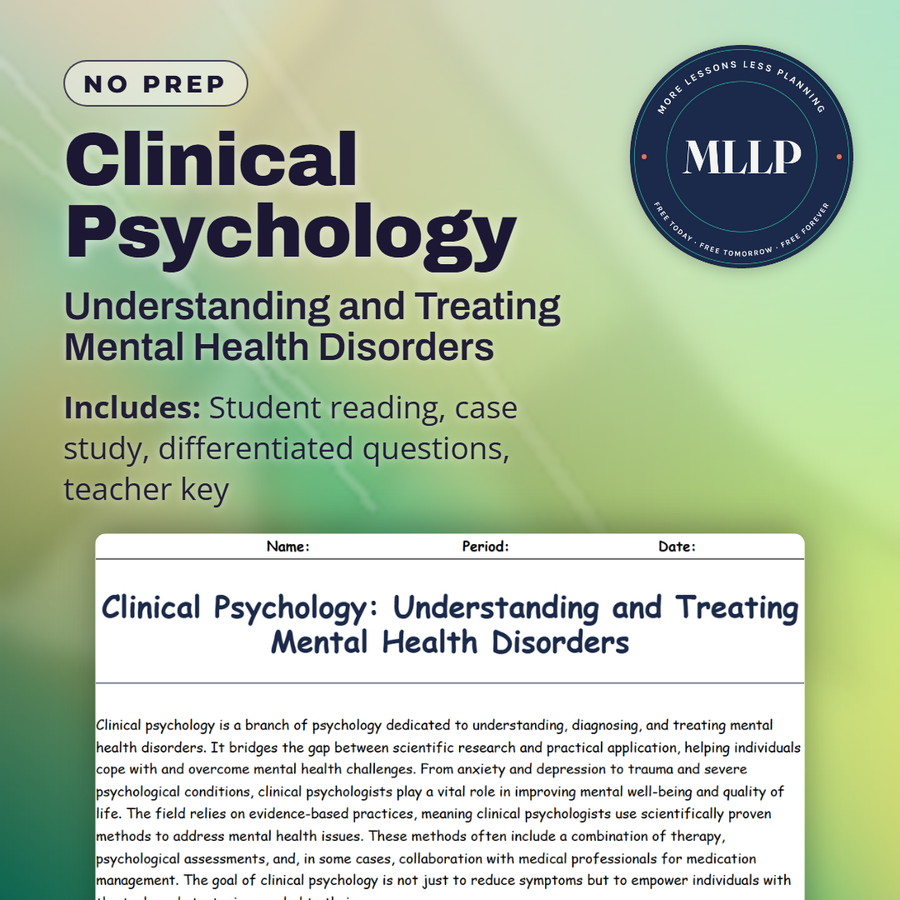
Clinical Psychology: Understanding and Treating Mental Health Disorders
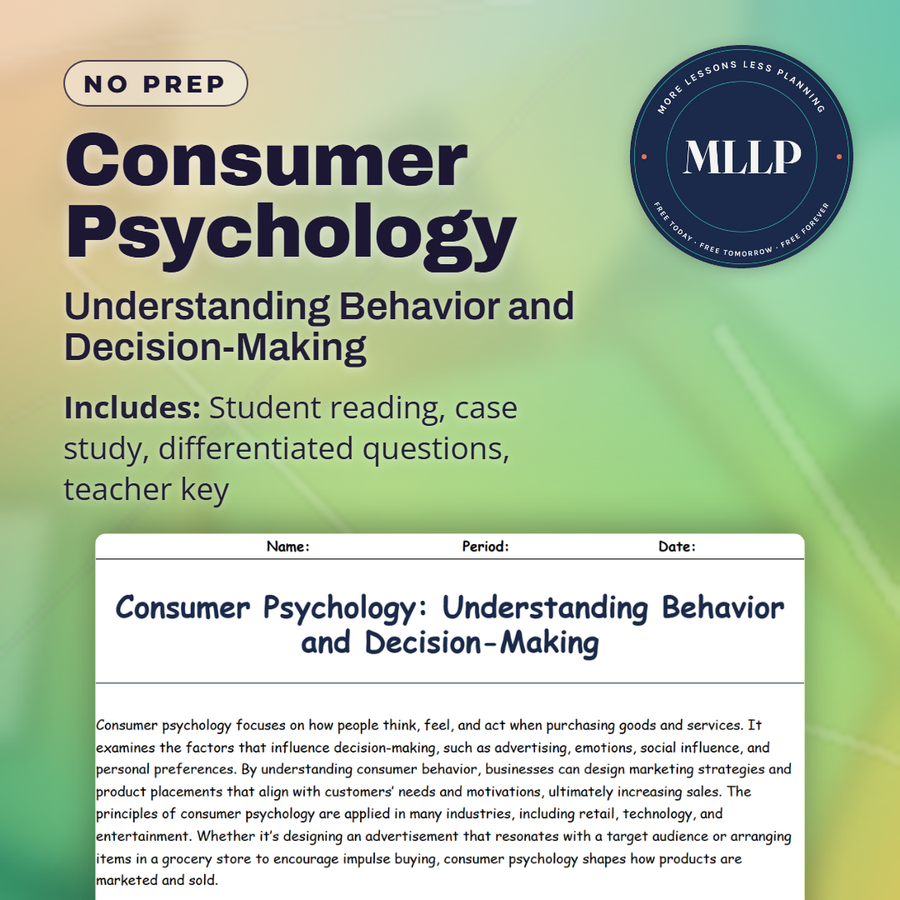
Consumer Psychology: Understanding Behavior and Decision-Making
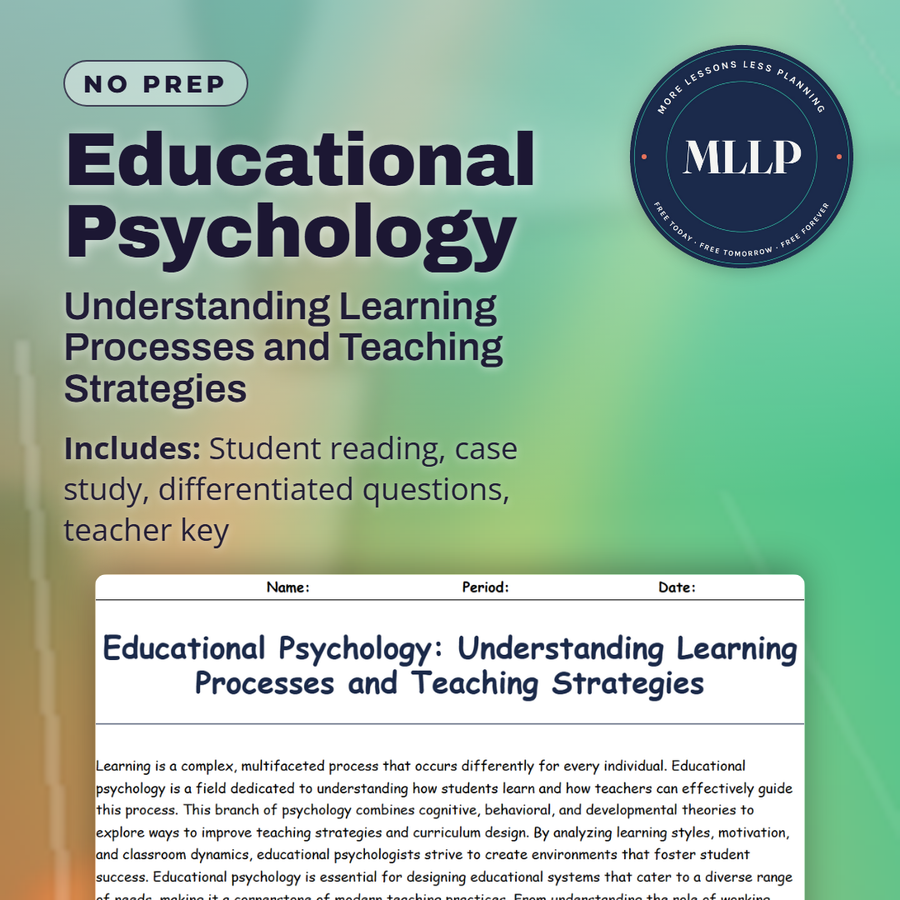
Educational Psychology: Understanding Learning Processes and Teaching Strategies
Health Psychology: The Link Between Mind and Body
Industrial/Organizational Psychology: Understanding Workplace Behavior and Productivity
Military Psychology: Supporting Service Members Through Science
Every lesson on this site is free to download and use. If one of them saved you a prep period, you can chip in a few bucks toward my three kids' daycare fund. That's genuinely where tips go.