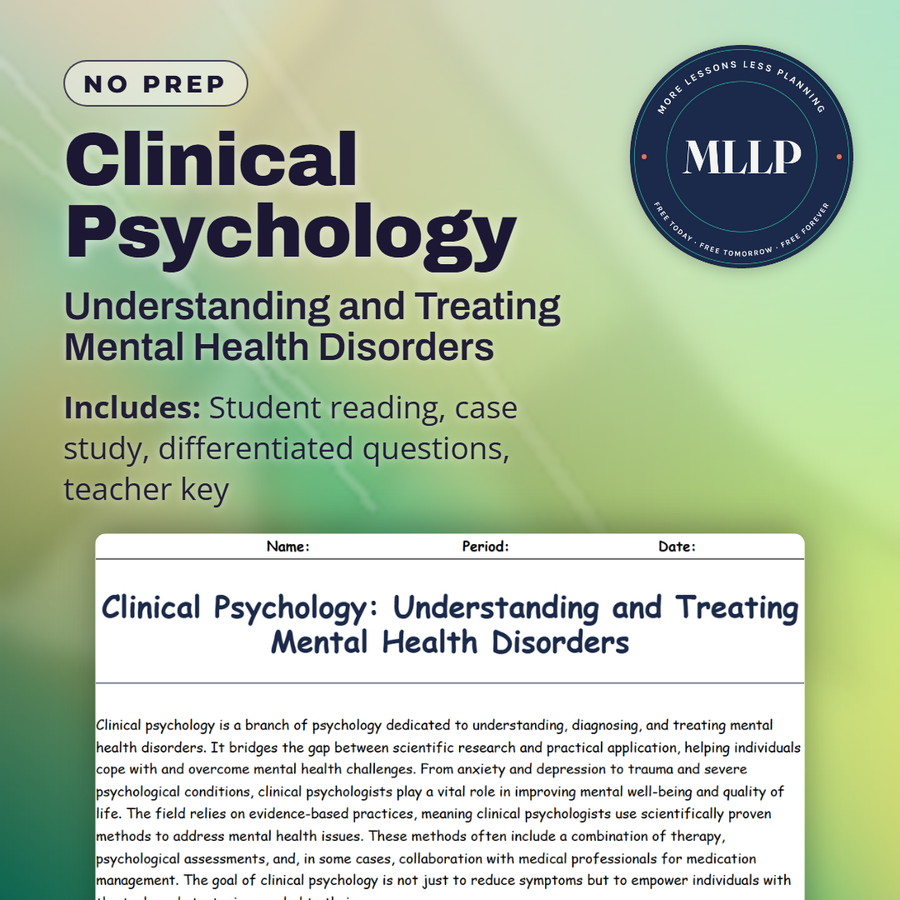
Clinical Psychology: Understanding and Treating Mental Health Disorders
Quality reviewed September 2026
Facts verified September 10, 2026
- Subject
- Social Studies
- Grades
- Grades 9-12
- Length
- 7-page student worksheet
- Time
- About one 50-minute class period
- Great for
- Sub plans and independent work
- Includes
- Reading passage, comprehension questions + full answer key
- Format
- Print-and-go PDF
What students do
- Match five terms like psychodynamic therapy, exposure therapy, and EMDR to their correct definitions
- Fill in blanks naming psychological assessments, exposure therapy, and CBT from the reading
- Read a case study about a paramedic treated for PTSD and answer what CBT strategies her psychologist used
- Write short answers explaining why evidence-based therapy matters and why psychologists work alongside psychiatrists
What it covers
- The role of a clinical psychologist, from assessment through treatment planning
- Common mental health disorders including anxiety, depression, PTSD, OCD, and bipolar disorder
- Evidence-based therapies such as CBT, exposure therapy, and EMDR
Start reading this worksheet
Clinical psychology is a branch of psychology dedicated to understanding, diagnosing, and treating mental health disorders. It bridges the gap between scientific research and practical application, helping individuals cope with and overcome mental health challenges. From anxiety and depression to trauma and severe psychological conditions, clinical psychologists play a vital role in improving mental well-being and quality of life. The field relies on evidence-based practices, meaning clinical psychologists use scientifically proven methods to address mental health issues. These methods often include a combination of therapy, psychological assessments, and, in some cases, collaboration with medical professionals for medication management. The goal of clinical psychology is not just to reduce symptoms but to equip individuals with the tools and strategies needed to thrive.
The Role of a Clinical Psychologist
Clinical psychologists are trained professionals with expertise in diagnosing and treating mental health disorders. Their work typically begins with a thorough assessment, which might include interviews, questionnaires, and standardized psychological tests. This process helps them identify the nature of a client’s challenges, whether it involves anxiety, depression, trauma, or another condition. Once a diagnosis is made, clinical psychologists create a treatment plan tailored to the individual. Common treatment methods include cognitive-behavioral therapy (CBT), which focuses on identifying and changing negative thought patterns, and psychodynamic therapy, which explores how past experiences influence present behavior. Some clinical psychologists specialize in specific populations, such as children, veterans, or individuals with eating disorders. In addition to therapy, clinical psychologists often collaborate with other professionals, such as psychiatrists and social workers. For example, they might work with a psychiatrist to ensure a client receives the right medication while providing therapy to address underlying emotional challenges.
Understanding Common Mental Health Disorders
Clinical psychologists treat a wide range of mental health disorders, each with unique symptoms and impacts. Anxiety disorders are among the most common, affecting millions of people worldwide. These include generalized anxiety disorder (GAD), characterized by excessive worry, and panic disorder, marked by sudden episodes of intense fear. Depression is another prevalent condition, causing persistent sadness, loss of interest in activities, and physical symptoms like fatigue. Other disorders clinical psychologists address include post-traumatic stress disorder (PTSD), which often develops after experiencing or witnessing a traumatic event, and obsessive-compulsive disorder (OCD), characterized by intrusive thoughts and repetitive behaviors. Severe mental health conditions, such as schizophrenia and bipolar disorder, also fall under their purview, requiring specialized interventions and ongoing support.
Like what you read? The full reading, the case study, and every question set are in the free download below, along with the answer key.
Why this matters
What happens when the person trained to handle other people's emergencies has one of her own? This reading follows a paramedic whose PTSD responds to CBT and gradual exposure therapy, evidence-based treatment she works through instead of managing entirely on her own.
What students miss is that psychologists do not just talk, they assess, diagnose, and choose among evidence-based therapies like CBT, exposure therapy, and EMDR based on the disorder in front of them. Walking through why evidence-based methods matter, instead of assuming therapy is one generic thing, changes how seriously students take the difference between a psychologist and a psychiatrist.
From one teacher to another
I use this reading when we cover mental health disorders and treatment approaches in psychology. My students match therapy types to their definitions, fill in blanks on assessments and CBT, and work through a case study about a paramedic recovering from PTSD through gradual exposure and cognitive reframing. The short answer questions push them to explain why psychologists lean on evidence-based methods instead of guessing. It prints in one sitting and comes with an answer key so I am not scoring it by hand.
What you get
Download
Where should I send the next one?
Everything here is free and it stays that way. Leave your email and I'll send you the new lessons as they go up. You can unsubscribe from any one of them.
Related resources
Consumer Psychology: Understanding Behavior and Decision-Making
Developmental Psychology: Understanding Human Growth Across the Lifespan
Educational Psychology: Understanding Learning Processes and Teaching Strategies
Health Psychology: The Link Between Mind and Body
Industrial/Organizational Psychology: Understanding Workplace Behavior and Productivity
Military Psychology: Supporting Service Members Through Science
Every lesson on this site is free to download and use. If one of them saved you a prep period, you can chip in a few bucks toward my three kids' daycare fund. That's genuinely where tips go.